Austin founders get further over coffee
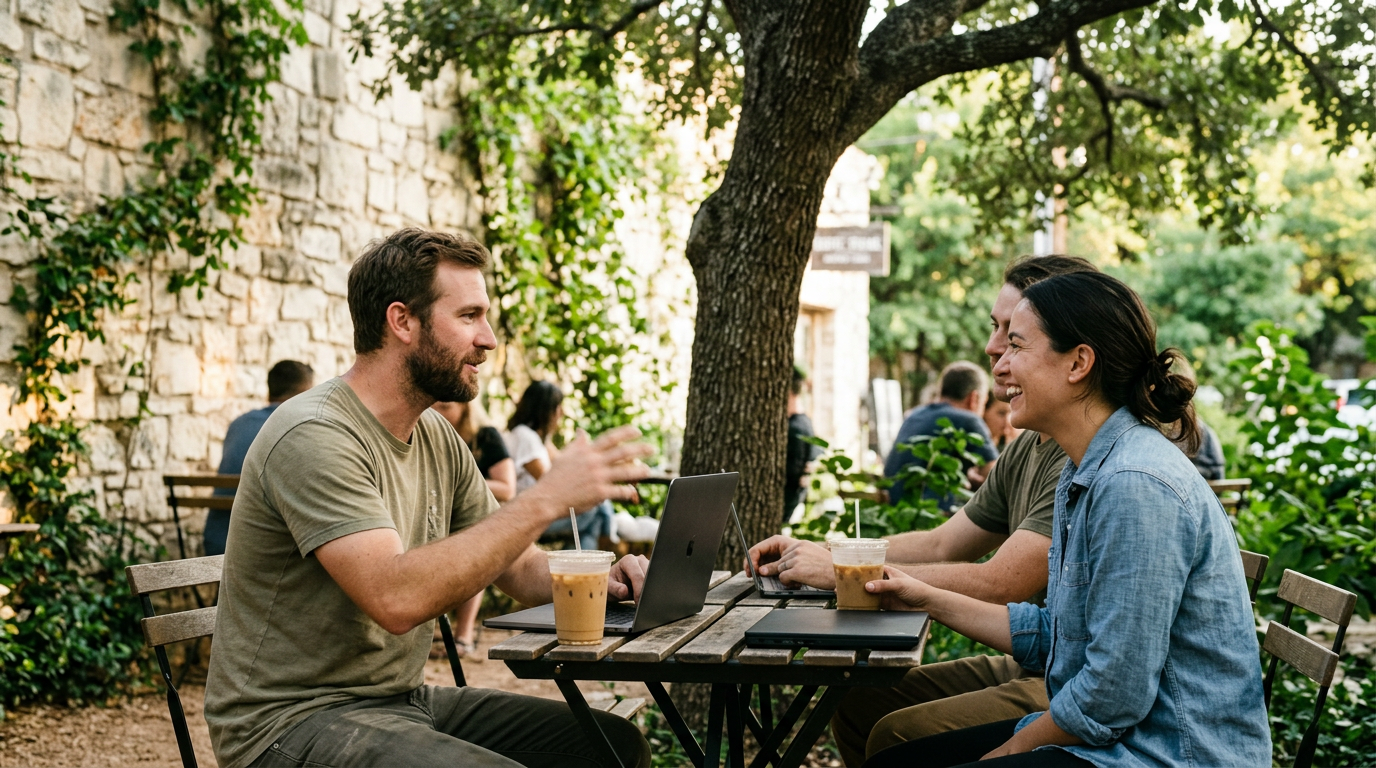
At 8:37 on a Tuesday morning, the useful Austin meeting is not happening in a glass phone booth downtown. It is two founders at a shaded patio table, one iced coffee sweating through a napkin, one laptop closed on purpose, both trying to figure out whether there is enough trust for an intro, a pilot, or a second conversation.
Austin has plenty of coworking. WeWork, Industrious, Spaces, and Capital Factory all have a role. If you need a day pass, a dedicated desk, a boardroom, or a badge that says you are serious, fine. Use them. But for founder meetings, coffee culture usually wins because Austin runs on soft access. People do not want to be trapped in a formal pitch room before they know whether you can carry a normal conversation.
The better room is often a third-wave coffee shop, a roaster cafe, a patio that turns into a beer garden later, or a hybrid coffee-and-food spot where the table can stretch from 25 minutes to 90 without anyone feeling held hostage. That is Austin's actual operating system: casual on the surface, highly filtered underneath.
Why coffee beats coworking in Austin
Coworking is built for working near people. Coffee is built for creating a reason to talk.
That distinction matters in Austin. The city has grown into a serious founder market, but it still resists the hard-edged transactional feel of San Francisco investor corridors or Midtown Manhattan lunch calendars. A founder coffee can be exploratory without being vague. It gives both sides an easy exit.
Coworking spaces tend to create roles before rapport: member, guest, investor, operator, community manager, vendor. Coffee shops flatten that a bit. You can sit with an angel investor, a fractional CFO, a CPG founder, a product designer, and a creator-operator without the meeting feeling like theater.
Coffee also handles Austin's fragmented geography better. Downtown is not the whole scene. South Congress, East Austin, South Lamar, North Loop, Clarksville, and the Domain orbit differently. A good coffee pick signals that you understand where the other person actually moves during the day.
There is another practical reason: Austin meetings often include a second move. Coffee at 9 can become a walk, a taco, a quick intro to the person at the next table, or a later invite to a founder dinner. Coworking usually asks everyone to stay inside the building's script.
The Austin coffee room that works for founder meetings
!Two founders talking inside a modern Austin coffee shop
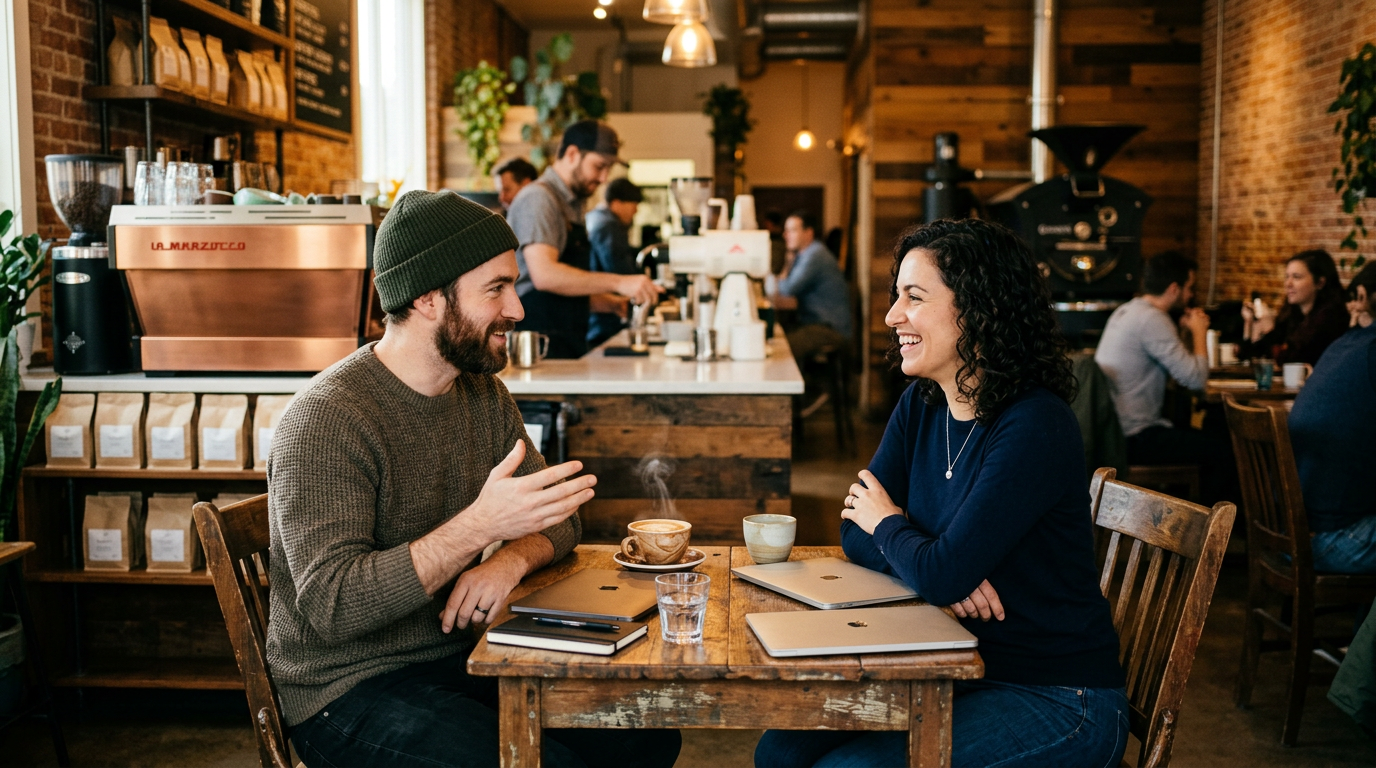
Not every cafe is a founder meeting room. The best ones share a few traits.
Look for places with natural light, two-top tables that are not jammed together, outdoor seating, steady Wi-Fi, and enough ambient noise to cover a candid conversation. You want active, not chaotic. A serious coffee program helps, but you are not there to perform tasting notes on a single-origin pour-over for 12 minutes.
Reliable categories in Austin:
- Third-wave coffee bars with real seating and staff who can handle a morning rush.
- Roaster cafes where people are already used to laptop work and 30-minute meetings.
- Coffee-and-beer gardens like Radio Coffee & Beer or Cosmic Coffee + Beer Garden, especially for late afternoon founder chats.
- Neighborhood institutions like Jo's Coffee when the point is easy access, not quiet intensity.
- Downtown-adjacent coffee near hotels when meeting out-of-town investors or conference people.
- East Austin cafes when the meeting leans creative, product, agency, media, or consumer brand.
- North Austin or Domain-area cafes when the meeting involves enterprise, hardware, SaaS sales, or operators who do not want to cross the river.
Specific names locals actually use include Houndstooth Coffee, Greater Goods Coffee Roasters, Fleet Coffee, Jo's Coffee, Mozart's Coffee Roasters, Radio Coffee & Beer, and Cosmic Coffee + Beer Garden. Each works differently. Houndstooth is cleaner and more focused. Radio and Cosmic are better when you want room to linger. Mozart's is useful for lake-side conversations, though it can skew busy and social. Fleet is smaller, so use it when you know the meeting can stay compact.
The venue choice sends a message. Pick a loud weekend patio for a sensitive funding conversation and you look unserious. Pick a hushed downtown lobby cafe for a casual founder-to-founder intro and you may make it feel heavier than it is.
What to order / what to look for
Order like someone who respects the room and wants to stay mobile.
For morning meetings, a drip coffee, espresso, cortado, cappuccino, or iced Americano is enough. If the shop is known for pour-over and the line is calm, a single-origin pour-over is fine. Do not make your first meeting wait through a complicated order unless the whole point is coffee.
For hot Austin afternoons, iced coffee, cold brew, or sparkling water is the smarter move. Founder meetings suffer when one person is pretending they are not heat-damaged after parking four blocks away in August.
What to look for before you sit:
- Tables with a clear sightline to the entrance, so greeting is easy.
- Enough distance from the line that you are not conducting strategy in public traffic.
- Chairs that allow a 45-minute conversation without turning it into a physical test.
- Outlets only if you truly need them; outlet hunting makes the meeting feel like work before it starts.
- Outdoor shade, not just outdoor seating.
- A setup where ordering a second drink feels normal if the conversation runs long.
If you are the one asking for the meeting, arrive early and buy first. If they insist on paying next time, good. That creates the next time.
Best time of day to go
!Austin coffee garden with shaded tables during late afternoon meetings

Austin has meeting windows, and ignoring them is how you end up sweating through a conversation that should have been useful.
The strongest window is 8:00 to 10:00 a.m. People are alert, parking is usually less annoying, and nobody has been buried by Slack yet. This is the right slot for investor catch-ups, customer discovery, hiring conversations, and founder-to-founder advice.
Late morning, around 10:30 to 11:30, works for warmer relationships. It is less crisp but still productive. Good for someone you already know through AngelList, Lunchclub, Meetup, On Deck, South Park Commons, or a shared investor intro.
Avoid noon if the cafe also serves serious food. The room changes. You are no longer in a coffee meeting; you are occupying lunch traffic.
The 3:00 to 5:00 p.m. window is underrated. It is ideal for Austin because the city's patio culture takes over. Coffee can become Topo Chico, a beer, or an early bite. Use this for creative partnerships, local operator swaps, and second meetings where chemistry matters.
Weekend coffee can work, but be careful. Saturday morning in Austin is dog traffic, stroller traffic, run-club traffic, and friend-group traffic. That can be useful for ambient awareness, but bad for focused business. Sunday afternoon is better for low-pressure founder chats, not urgent asks.
Etiquette and unwritten rules
Austin casual is not Austin sloppy. The dress code may be relaxed, but people read behavior closely.
Be precise about the ask. A good message is: Coffee next week? I am comparing notes with Austin founders selling into health systems and would value 25 minutes. I can meet near East Austin or downtown.
That beats: Would love to pick your brain.
Picking someone's brain sounds lazy. Comparing notes sounds mutual.
Show up with one useful thing to give. A customer lead, a hiring suggestion, a vendor warning, a sharp read on an event, a founder dinner invite, or a relevant intro. Austin's best connectors are allergic to one-way extraction.
Keep laptops closed unless you need to show a deck, metrics, or a product. A closed laptop tells the other person this is a human conversation, not a disguised demo.
Respect table turnover. If the shop is packed and your meeting is done, move. Walk the block. Continue outside. Do not turn a four-seat table into your unpaid office.
Tip well. Not symbolically. Well. Founders who camp, under-order, and under-tip develop a reputation faster than they think.
Do not pitch the barista, do not corner the person wearing headphones, and do not treat a coffee shop like a conference expo. Austin rewards the person who knows when not to push.
How to actually meet people there
The best coffee networking in Austin is not random interruption. It is planned serendipity.
Use coffee shops as Schelling points: obvious meeting places that make coordination easier for people who already half-belong to the same scene. If you are building in AI tooling, climate, CPG, creator software, health tech, or hospitality tech, pick recurring times and places. Tuesday 8:30 at the same East Austin cafe becomes a small signal. People begin to know where to find you.
Tactics that work:
- Schedule two meetings back-to-back at the same place, with a 15-minute buffer.
- Tell the second person: I may be wrapping another founder coffee right before you; if there is overlap, I can introduce you if useful.
- Sit where arrivals can spot you without a search mission.
- Bring one specific question, not a broad life story.
- After the meeting, send the promised intro within 24 hours.
Conversation openers that do not sound like a networking robot:
- What Austin rooms have actually been useful for you lately?
- Who here is underrated in your category?
- What are you hearing from customers that is different from six months ago?
- Are you still taking investor meetings, or are you heads-down right now?
- Which events are worth leaving the house for this month?
The follow-up is where most people lose. Send a short note the same day:
- Good to meet. I took away your point about selling through channel partners before hiring another AE. I will send the ops intro tomorrow.
- Thanks for the coffee. Your warning about pilot purgatory was useful. If you are open, I will report back after our next three customer calls.
- Great comparing notes. I am hosting four founders for an early dinner next month; I will send details when the date is set.
That is how weak ties become useful ties. Not by collecting contacts. By making small promises and keeping them.
Where coworking still earns its keep
Coffee is better for first meetings, loose ties, and Austin-style trust building. Coworking is better when you need infrastructure.
Use Capital Factory when you want proximity to the startup event circuit, visiting investors, panels, pitch nights, and people already in company-building mode. Use WeWork, Industrious, or Spaces when you need a clean day pass, a conference room, a dedicated desk, or a predictable place between meetings. Use a member's club or hotel lobby when privacy and polish matter more than local texture.
Coworking also wins for team days. If you are trying to run a product sprint, interview candidates, record customer calls, or bring a distributed team together, do not pretend a cafe can do that job. Austin cafes are social infrastructure, not your free office.
The mistake is using coworking as your default for every founder interaction. It can make a simple meeting feel like a sales process. Coffee keeps the door lighter. In Austin, lighter often gets you further.
Mistakes to avoid
The biggest mistake is choosing a place because it looks good on Instagram rather than because it works. Founder meetings need sound, shade, seating, and exit options.
Other mistakes:
- Booking a tiny specialty bar for a four-person meeting.
- Suggesting South Austin to someone who clearly lives near the Domain, or vice versa.
- Treating every coffee as a fundraising conversation.
- Asking for intros before earning trust.
- Running 20 minutes late and blaming traffic like nobody else deals with I-35.
- Turning a warm intro into a 60-minute deck review without consent.
- Assuming everyone wants alcohol because the cafe becomes a beer garden later.
- Staying at the table after the meeting while a line of people waits for seats.
Also avoid the conference-week trap. During SXSW and major tech weeks, coffee shops near downtown become staging areas, not calm meeting rooms. If you need a real conversation, move farther out, book earlier, or use a private room.
The practical playbook
If you are new to Austin, build a simple coffee circuit instead of joining every coworking space immediately.
Pick three default zones:
- Downtown or central for visiting investors and conference spillover.
- East Austin for creative operators, consumer founders, media, and design-heavy conversations.
- North Austin or Domain-adjacent for enterprise operators, sales leaders, and people with suburban schedules.
Then create a weekly rhythm:
- Two early founder coffees.
- One late-afternoon patio meeting.
- One event or founder dinner per week, not five.
- One follow-up block where you send intros, notes, and next steps.
This is not about romanticizing coffee. It is about using the room that matches Austin's trust mechanics. The city still has a strong in-person networking culture, but it punishes forced networking. The founders who do well here know the difference between being visible and being noisy.
Austin coworking gives you a desk. Austin coffee gives you a read on people. For founder meetings, that read is usually the whole point.
Discussion (0)
Loading comments…