
Where Brooklyn coffee turns into founder networking
At 10:42 on a Tuesday in Williamsburg, the laptop tables are already sorted by tribe. One corner is product designers in black headphones. Another is two founders talking CAC too loudly. Someone is taking a call outside because even Brooklyn has limits. This is not a networking event, which is exactly why it works.
Brooklyn coffee shops have become one of the better informal rooms for founders, freelancers, creators, operators, and early-stage people who do not want another badge-lanyard evening. The trick is not finding a café with good espresso. Brooklyn has plenty. The trick is reading the room: which places tolerate laptops, which places are better for a 20-minute intro, which places punish people who camp for four hours on one cappuccino, and which places quietly function as neighborhood switchboards.
This is a working map, not a tourist coffee crawl. If your goal is to find the right room, behave like a person people want near them, and leave with new connections, start here.
The Brooklyn coffee networking map
Brooklyn’s coffee scene is mature now. Third-wave coffee is not a novelty; it is baseline infrastructure. The better cafés are not trying to be WeWork. They are neighborhood rooms with espresso machines, natural light, expensive rent, and a limited tolerance for laptop sprawl.
A few reliable zones matter for informal networking:
- Williamsburg: strongest for founders, DTC operators, creative directors, growth marketers, independent investors, and people passing through from Manhattan. Devoción is a known room for high-quality coffee and serious daytime meetings. Partners Coffee and Blue Bottle also draw a professional crowd, though the energy varies by hour.
- Greenpoint: better for quieter operator conversations, product people, designers, writers, and founders who do not need to perform. Cafe Grumpy has long been part of the neighborhood coffee fabric. Expect less flash, more actual work.
- Bushwick: useful for creators, agencies, art-adjacent founders, music people, freelancers, and early teams. Sey Coffee is one of the city’s serious coffee destinations; it is more about coffee and taste than laptop networking, so behave accordingly.
- Downtown Brooklyn and Boerum Hill: better for practical meetings near transit, law, real estate, civic tech, healthcare, and people splitting the difference between Brooklyn and Manhattan.
- DUMBO: still useful for investor-adjacent chats, agency meetings, and startup people who want a polished setting without committing to a member’s club.
The pattern: Williamsburg is the easiest place to bump into startup people. Greenpoint is where you can actually hear them. Bushwick is where you meet the person who will design, shoot, produce, or launch the thing. DUMBO is where the meeting sounds more formal than it is.
What to order / what to look for
!Two people in a focused coffee meeting at a small Brooklyn cafe table

Do not treat the order as a personality test. Treat it as a signal that you understand the room.
If you are sitting down for a first intro, order something fast and normal:
- Cortado or flat white if you want espresso without nursing a giant drink.
- Filter coffee if you are going to talk for 30 minutes and do not want a production.
- Single-origin pour-over only if the café is built for it and the line is calm.
- Sparkling water or tea for a second round if you are extending the conversation.
- Pastry or small food item if you are taking a table during peak hours.
What to look for matters more than what you drink:
- Two-tops near the edge, not the center of the room. Easier to talk without broadcasting your deck.
- A standing ledge or counter if you are doing quick intros. Low commitment. Good for weak ties.
- Outdoor benches when weather allows. Brooklyn sidewalk seating often creates better casual interaction than indoor laptop silence.
- A visible but not dominant laptop culture. If everyone has laptops open, it may be a work room. If nobody does, do not be the person who turns it into one.
- A staff rhythm that is not stressed. If the line is 12 deep and the bar is slammed, it is a bad moment to linger or introduce yourself to strangers.
For serious coffee rooms like Sey or Devoción, respect the coffee. These are not just free offices with better lighting. If the café is known for single-origin coffee, order with curiosity, then get out of the way.
Best time of day to go
The best networking window in Brooklyn coffee is not early morning. Early morning belongs to commuters, parents, and people who do not want to talk.
The better windows:
- Tuesday through Thursday, 10:30 a.m. to noon: founders and freelancers are warmed up but not yet buried. Good for planned intros and soft collisions.
- Tuesday through Thursday, 2:00 p.m. to 4:00 p.m.: best for informal catch-ups, creative meetings, and lower-pressure outreach. The lunch rush is gone. People are more generous.
- Friday, 11:00 a.m. to 1:00 p.m.: surprisingly good for lighter conversations, especially in Williamsburg and Greenpoint. People are wrapping the week and open to a next-week follow-up.
- Sunday late morning: not ideal for business, but useful if you are part of the creator, design, or freelance scene and can keep it human.
Avoid Monday mornings if you want connection. People are triaging. Avoid Saturday peak brunch-adjacent hours unless you want noise, stroller traffic, and no tables. Avoid the last hour before closing unless you are grabbing a quick coffee and leaving.
A useful move: schedule first meetings for 25 minutes, not 60. Brooklyn coffee shops reward concise people. Say it clearly: “Let’s do a short coffee. If it’s useful, we can book a longer one next week.” That line lowers the stakes and makes more people say yes.
Etiquette and unwritten rules
!People chatting with coffee outside a Brooklyn neighborhood cafe
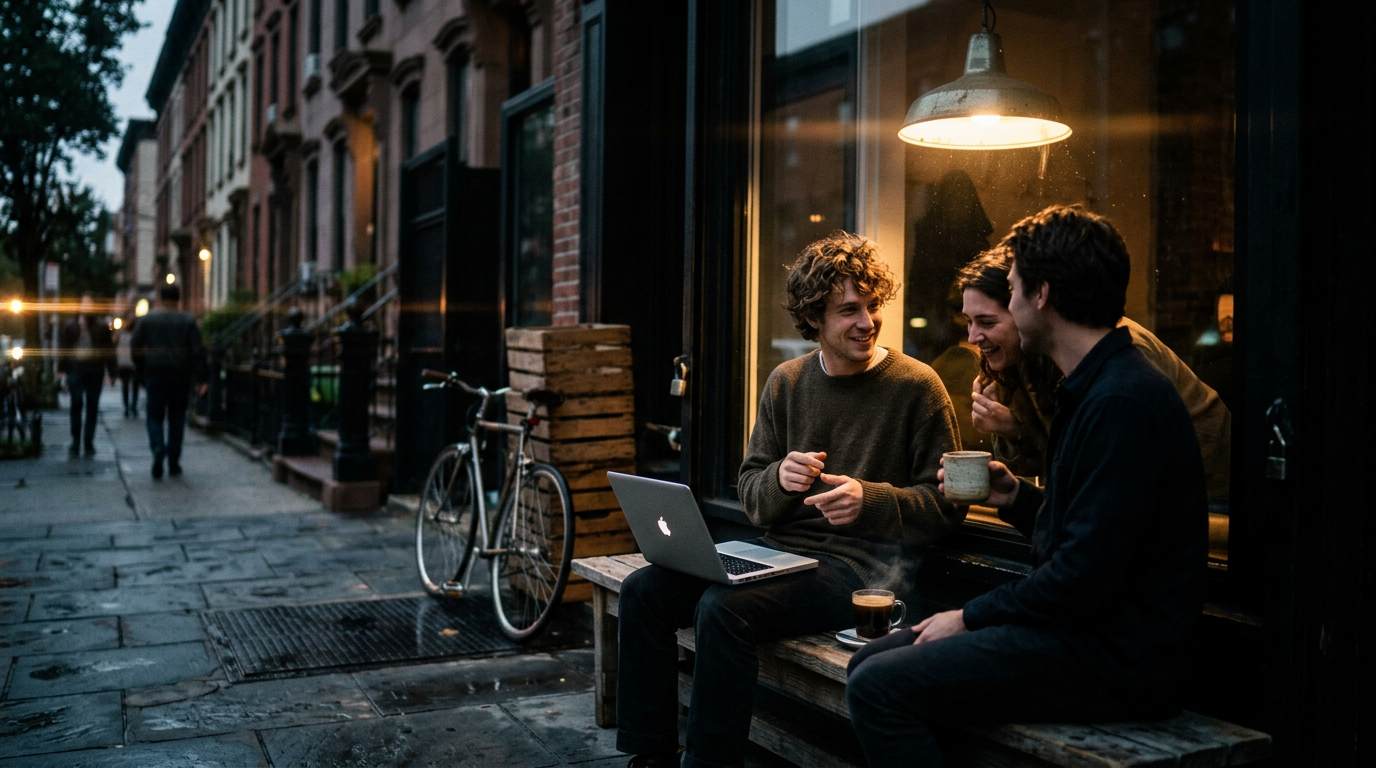
Brooklyn has a strong allergy to networking behavior that feels imported from a conference hotel. The room is informal, but the rules are real.
Follow these:
- Buy something before you sit down. Obvious, still violated.
- Do not take a four-person table alone during peak hours. If you do, expect social judgment.
- Keep calls short and quiet. If you need to pitch, step outside. Nobody wants your investor update in surround sound.
- Do not open with “What do you do?” like a badge scanner. Ask what brought them to the neighborhood or what they are working on this week.
- Do not hover over laptop screens. Brooklyn cafés are full of unreleased decks, client docs, scripts, and personal chaos.
- Tip like you plan to return. Because you do.
- Know when the table has expired. If you have been there two hours, buy another drink or move.
The biggest rule: do not confuse proximity with permission. Sitting near founders does not mean you get to pitch them. A coffee shop is not AngelList, Lunchclub, Meetup, On Deck, or South Park Commons. It is a public room. Act like it.
That said, public rooms are powerful because of weak ties, the Mark Granovetter idea that many opportunities come through loose connections rather than close friends. Brooklyn coffee works because the person two tables away might not hire you today, but they may know the person who does.
How to actually meet people there
The best coffee-shop networking is rarely a cold walk-up. It is a small stack of intentional moves.
Start with scheduled anchors. Book one real meeting in a room where you would not mind staying another hour. If the person cancels, you still get focused work time. If the meeting goes well, you are already in a place where a second collision can happen.
Use conversation openers that fit the setting:
- “Is this a decent place to take a 20-minute intro, or does it get loud in a minute?”
- “I’m trying to find a better weekday work café around here. Do you usually work from this spot?”
- “That notebook-and-laptop setup looks more organized than mine. Are you designing, writing, or avoiding email?”
- “I heard this place is better after the morning rush. Is that true?”
- “I’m meeting a founder here and got here early. Are these tables usually fair game for laptops?”
Keep it light. If they answer with one word and return to headphones, stop. If they turn their body toward you, ask one more question. If they mention a project, do not pitch immediately. Ask, “What kind of people are useful for you to meet right now?”
That question is better than “Can I help?” because it creates a real path. Maybe they need a freelance motion designer, a fractional CFO, a good immigration lawyer, a B2B demand-gen person, a restaurant operator, a seed-stage founder in climate, or someone who knows Shopify retention. If you can make one thoughtful intro, you become useful without performing.
Follow-up should happen the same day:
- Send a short note on LinkedIn or email.
- Reference the café and one specific topic.
- Offer one concrete next step.
- Do not attach a deck unless asked.
Example: “Good meeting you at Devoción today. Your point about creator-led retail stuck with me. I know one operator who has been testing pop-ups in SoHo and Williamsburg; happy to intro if useful.”
That is enough. No essay. No fake urgency.
Venue types that work better than venue lists
Specific cafés matter, but the type of room matters more. Brooklyn changes too fast for lazy permanent rankings.
Look for these categories:
The serious third-wave room
Think Devoción in Williamsburg or Sey Coffee in Bushwick. High standards, strong coffee culture, design-conscious crowd. These rooms attract people with taste and projects. They are good for planned meetings and short conversations, not aggressive laptop camping.
Best use: one-on-one intros, creative founder meetings, investor-adjacent coffee, design-heavy conversations.
The neighborhood work café
This is the place with enough outlets, steady drip coffee, regulars, and staff who know the daily rhythm. It may not have the city’s most discussed espresso, but it has repeat behavior. Cafe Grumpy in Greenpoint fits this kind of long-running neighborhood role.
Best use: becoming recognizable. If you go twice a week at the same time, you start to understand who is building what.
The polished chain with startup overflow
Blue Bottle, Blank Street, and similar rooms are not always romantic, but they are practical. The coffee is consistent, the locations are predictable, and people use them as neutral meeting points. In 2026, that matters. Not every meeting needs personality.
Best use: quick intros, pre-meeting staging, Manhattan-to-Brooklyn bridge meetings.
The café near coworking gravity
Coffee shops near WeWork, Industrious, Spaces, and local studio buildings tend to collect operators between calls. You do not need a hot desk or dedicated desk to benefit from the gravity. You just need to know when people break.
Best use: 11 a.m. and 3 p.m. collisions, especially with startup employees, consultants, and fractional operators.
The coffee-by-day, wine-by-evening room
Brooklyn has plenty of places where the line between café, natural wine bar, and casual restaurant is thin. These can be excellent for relationships that need more time. Coffee starts the conversation; a low-key evening event, supper club, or friend-of-friend dinner continues it.
Best use: moving from transactional intro to actual trust.
A practical Brooklyn coffee circuit
If you are new to the borough or trying to rebuild your in-person network, do not roam randomly. Pick a circuit for four weeks.
Week one: Williamsburg. Set two planned coffees between 10:30 and noon. Arrive early, sit where you can see the room, and note who appears to be taking repeat meetings.
Week two: Greenpoint. Work from a neighborhood café for two afternoon blocks. Say hello to staff. Notice regulars. Do not force it.
Week three: Bushwick. Go for coffee quality and creative density, not convenience. If the room feels quiet and focused, respect that. Ask one thoughtful question only when the moment is natural.
Week four: DUMBO or Downtown Brooklyn. Use it for a practical meeting with someone who works across Manhattan and Brooklyn. Keep it tight. Follow with a walk if the conversation has energy.
The point is repetition. You want to become a familiar face in two or three rooms, not a stranger in 20. Brooklyn rewards regulars.
Mistakes to avoid
The fastest way to lose the room is to treat it like a lead list.
Avoid these mistakes:
- Opening with your pitch. Nobody came to the café to be trapped in your funnel.
- Asking for too much too early. A stranger does not owe you investor intros, client referrals, or free strategy.
- Mistaking expensive coffee for business credibility. Ordering a pour-over does not make your startup better.
- Working all day without buying enough. Cafés are not subsidized coworking spaces.
- Taking video calls from the main seating area. Especially with no headphones. Criminal behavior, socially speaking.
- Name-dropping member’s clubs. Soho House and NeueHouse may have their place, but Brooklyn coffee rooms are more allergic to status theater.
- Ignoring staff. Baristas often understand the room better than anyone. Be normal, be patient, be generous.
- Chasing only founders. The best connection may be an assistant, producer, engineer, chef, recruiter, or community builder.
One more: do not over-index on “networking events.” Meetup groups, founder dinners, demo nights, and operator happy hours have value, especially now that in-person networking has returned with real force. But coffee shops create lower-pressure frequency. You see people before they are performing. That is useful.
The follow-up system that actually works
After each coffee session, take five minutes before you leave the block.
Write down:
- Who you met.
- What they are building or looking for.
- One personal detail that is not creepy.
- One useful intro or resource you can send.
- When to follow up.
Then send the note before the day ends. Brooklyn people are busy, but they are not impossible to reach. The issue is usually that follow-up is vague.
Bad: “Great connecting. Let’s stay in touch.”
Better: “Good meeting you in Greenpoint. I’ll send over the freelance producer I mentioned. If your launch timeline holds, let’s compare notes in two weeks.”
If you want a second meeting, suggest a specific window and keep it short. “I’m usually in Williamsburg Tuesday mornings. Want to do 20 minutes next week?” Easy to answer. Easy to accept.
Brooklyn coffee networking is not about finding the loudest room. It is about choosing the right room for the conversation, respecting the people already in it, and becoming known through small, useful behavior repeated over time. Buy the second coffee. Make the intro. Leave before you become furniture.
Discussion (0)
Loading comments…