Brooklyn coffee shops beat another cold DM
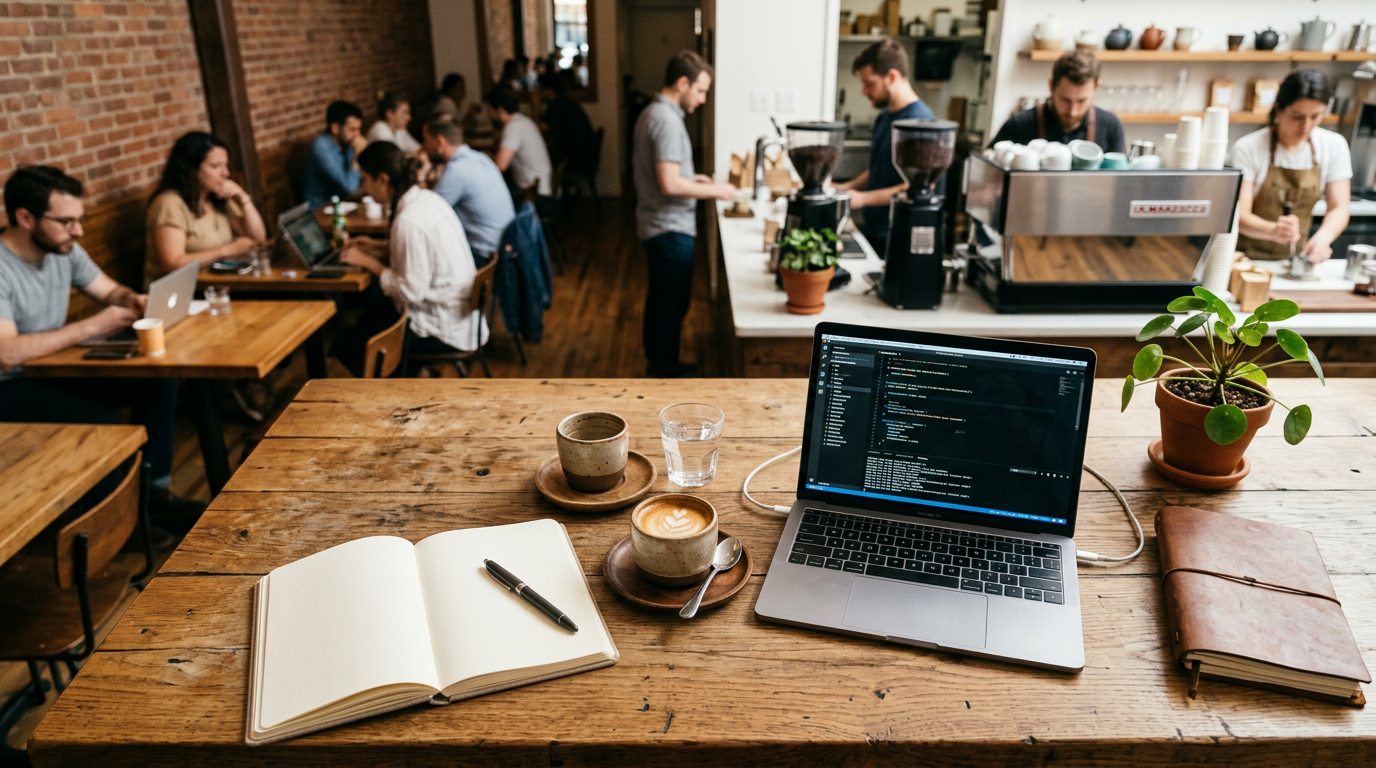
At 10:17 on a Tuesday in Williamsburg, the useful table is not the prettiest one. It is the two-top near the handoff counter, close enough to hear who is talking about a deck, a shoot, a hiring gap, a lease, a seed round, a Substack sponsor, a restaurant opening, or a client who still has not paid. Brooklyn networking does not announce itself. It sits behind laptops, oat cappuccinos, half-finished Figma files, and the person who clearly came in for one espresso and stayed because the room got good.
That is the Brooklyn coffee advantage in 2026. The city is back in rooms, but not everyone wants another panel, founder dinner, member's club, or forced Meetup circle. WeWork is not the default social engine it once was. Day passes at Industrious, Spaces, and boutique coworking spots can be useful, but a lot of real introductions now happen in the softer middle ground: third-wave coffee shops with regulars, outlets, decent acoustics, and enough movement that no one feels trapped.
The job is not to find a magical café. The job is to pick the right room, behave like a regular before you need anything, and leave with one clean next step.
The Brooklyn coffee networking map
Brooklyn is not one scene. Treating it that way is the first sign you do not spend enough time here.
Williamsburg is still the easiest place to run into startup operators, agency people, ecommerce founders, creative directors, independent recruiters, and people who can say CAC with a straight face. Devoción and Partners Coffee are safe reference points for that energy: serious coffee, professional crowd, lots of people between meetings. The better play is not to camp there all day. Use Williamsburg for quick collisions and warm intros.
Greenpoint is slower and better for repeat relationships. Cafe Grumpy and neighborhood third-wave rooms tend to attract designers, editors, film people, product folks, and small business owners who actually live nearby. If Williamsburg is where you overhear the pitch, Greenpoint is where you get the second conversation.
Bushwick is more creator-heavy. Sey Coffee is a known anchor for people who care about coffee as much as their craft. Around Bushwick, the networking is less corporate and more project-based: photographers, musicians, brand designers, stylists, software people with art friends, founders building media or consumer products. Do not walk in trying to sound like a VC podcast. You will look lost.
DUMBO and Downtown Brooklyn are more meeting-driven. Close to offices, agencies, courts, schools, and transit, these cafés work well for scheduled coffees and investor or client pre-meetings. The room may be less socially open than North Brooklyn, but the calendar density is better.
Fort Greene, Clinton Hill, Crown Heights, and Park Slope skew more residential, which is not a weakness. These are strong for freelancers, consultants, nonprofit operators, teachers with side projects, writers, architects, and parents building companies around complicated schedules. If you want status noise, go elsewhere. If you want people who can actually follow through, stay.
What to order / what to look for
!Shared Brooklyn café table with laptops, notebooks, and coffee cups
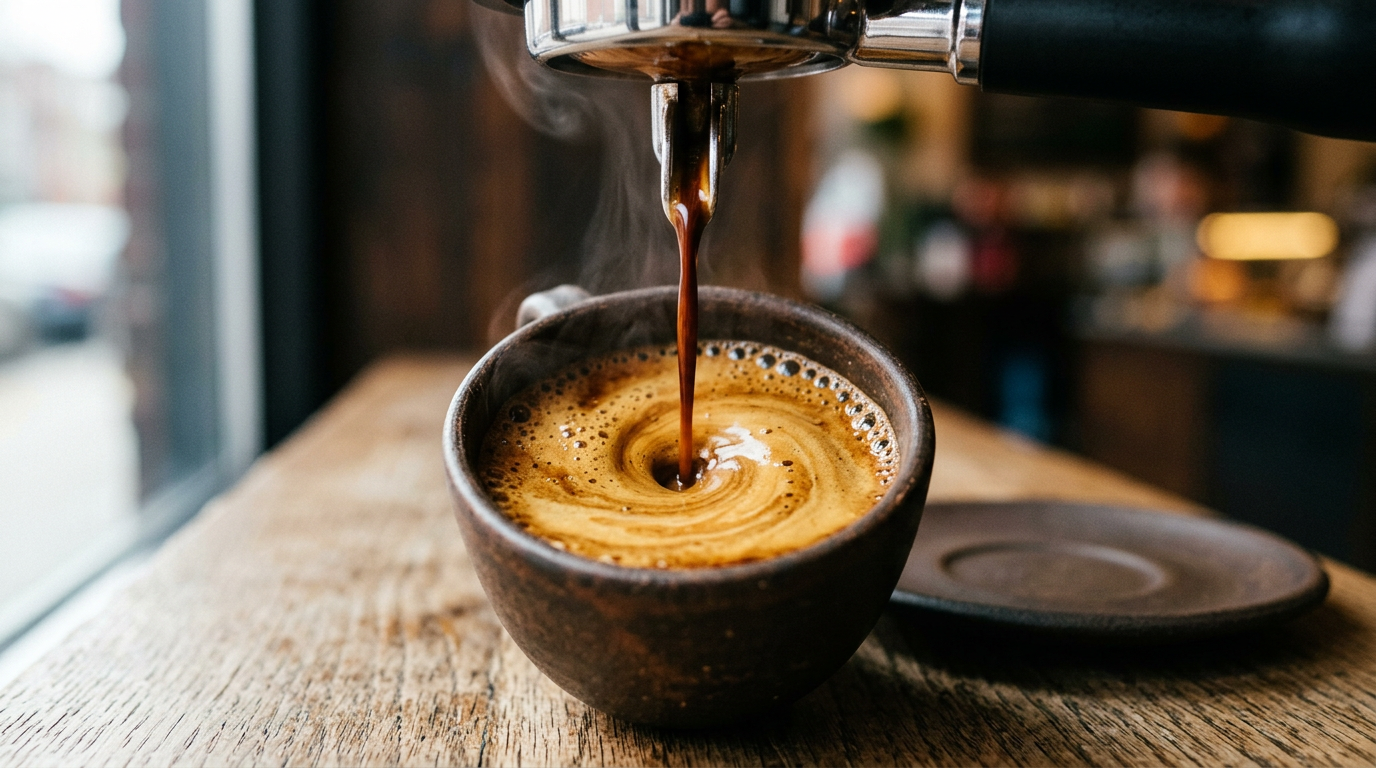
Order in a way that matches your stay. If you are posting up for a 90-minute work block, buy more than a drip coffee and a moral alibi. A second espresso, tea, pastry, or sparkling water is not charity. It is rent for the seat.
Good networking cafés usually have a few signals:
- A real espresso program, batch brew, and at least one single-origin pour-over option
- Communal seating or closely spaced two-tops without feeling like a library
- A mix of laptops and people talking, not only silent screen work
- Baristas who know regulars by face, even if not by name
- Enough turnover that you can enter without becoming the main event
- A handoff area where short comments feel natural
- Afternoon energy that does not collapse after the breakfast rush
For coffee, keep it simple. Espresso, cortado, batch brew, cold brew in summer, or pour-over if you are not in a rush. Do not make the barista perform your personality. If the room has a strong roaster identity, ask one focused question: 'What are you liking on filter today?' Then listen and move on.
Food matters less than seating. A great pastry case with no place to pause is not a networking venue. A beautiful café with hostile laptop rules is also not your office. Respect that. Some Brooklyn cafés are built for a 25-minute coffee, not a hot desk. Others tolerate longer stays if you order, tip, and do not act like the space owes you bandwidth.
The best rooms have a little friction. Not too comfortable. If you can disappear for four hours, you probably will. Informal networking works when you are visible enough to be recognized on the second or third visit.
Best time of day to go
The strongest windows are not random.
8:00 to 9:30 a.m. is regulars and pre-office traffic. Good for recognition, bad for long conversations. If you want to become familiar to staff and locals, this is your window. Keep it brief.
10:00 to 11:30 a.m. is the prime work-and-collision slot. Meetings start, laptops open, and people are caffeinated but not yet fried. This is the best time for founders, freelancers, consultants, and creators who want soft contact without forcing it.
1:30 to 3:30 p.m. is underrated. The lunch crowd clears, the room relaxes, and people doing flexible work take calls, edit decks, or review client notes. If you are trying to meet operators rather than aspirational networkers, go then.
After 4:00 p.m. depends on the shop. Some cafés empty out. Others shift into neighborhood mode, especially if they are near studios, agencies, or apartments full of remote workers. A few café-bar hybrids or coffee-adjacent natural wine bars become more social later, but do not assume every coffee shop wants to become your mixer.
Avoid peak weekend brunch-adjacent hours if your goal is business. Saturday at noon is for friends, dates, parents, dogs, and people recovering from Friday. You can still meet people, but the signal is messy.
The most effective cadence is boring: same neighborhood, same two or three mornings each week, same general seat zone, same polite rhythm. Weak ties, the Granovetter idea that many opportunities come from acquaintances rather than close friends, explain why this works. You are not trying to instantly bond. You are trying to become a familiar, low-pressure node in the room.
Etiquette and unwritten rules
!People leaving a Brooklyn coffee shop after informal meetings
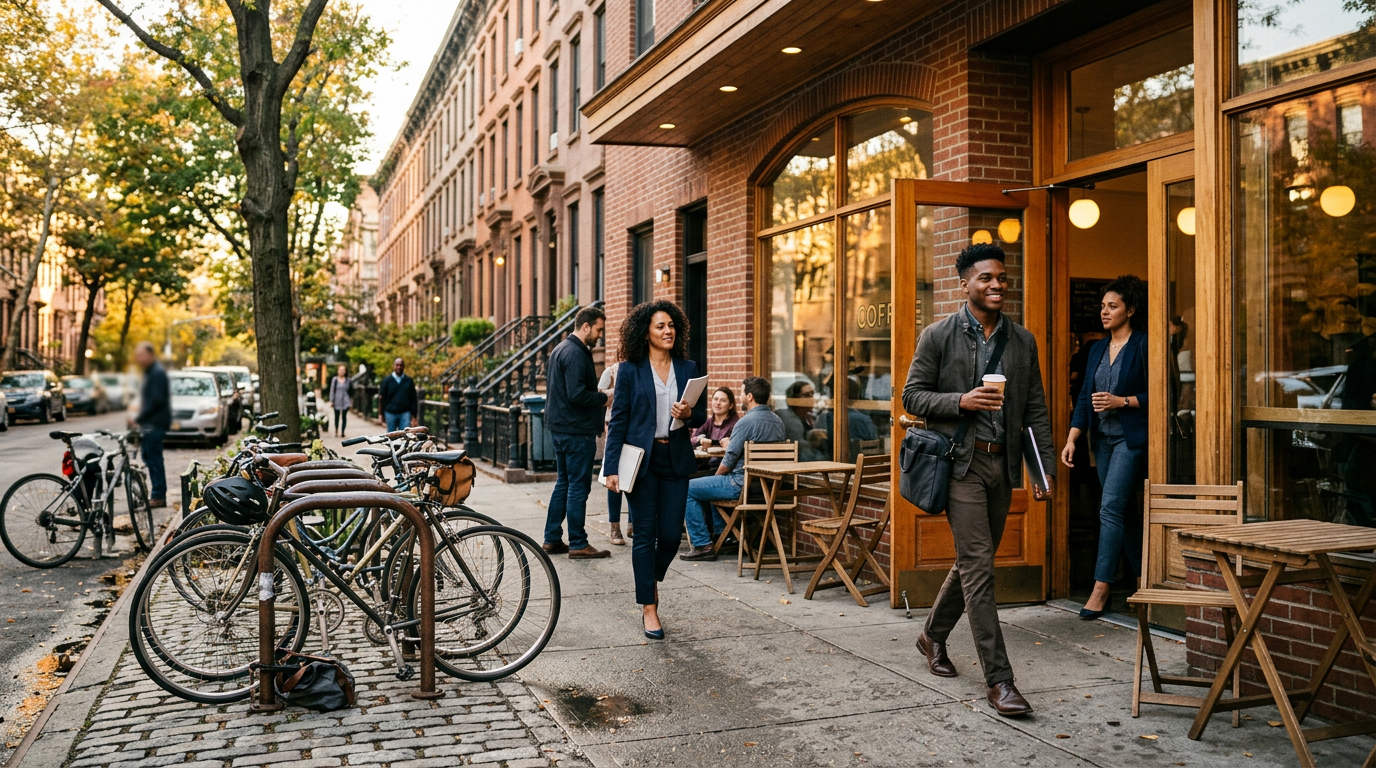
Brooklyn coffee networking has rules. They are not posted.
Do not open with your pitch. Nobody wants to be ambushed between a cortado and a calendar invite. Start with context, not ambition.
Do not treat baristas as concierges. They may know everyone, but they are working. If they introduce you, that is earned over time through normal behavior: tipping, patience, remembering names if offered, not monopolizing the counter.
Do not take calls at full volume. If you need to say confidential numbers, hiring drama, investor names, or client problems, step outside. The fastest way to become the person nobody wants nearby is to turn a café into your sales floor.
Do not camp at a four-top alone. If the room fills, move. If there is a communal table, use it without spreading your whole life across it. Charger, laptop, notebook, drink. That is enough.
Do not ask what someone does as your first sentence. In Brooklyn, that often lands as status sorting. Better openers are more grounded:
- 'Is this seat open, or are you saving it?'
- 'Have you been able to get on the Wi-Fi today, or is it just me?'
- 'That notebook setup looks serious. Are you here working or between meetings?'
- 'I have seen you here a couple mornings. Are you neighborhood-based too?'
- 'Quick local question: is this place better before 10, or did I just get lucky today?'
If they give short answers, stop. That is not a failure. It is social literacy.
How to actually meet people there
The move is not to scan the room like a recruiter. Build small openings.
First visit: observe. Learn the pace, seating norms, noise level, and whether laptops are welcome. Say thank you. Tip. Leave before you overstay.
Second visit: become lightly recognizable. Sit in the same zone. Order without making it complicated. If the same person is nearby, a nod is enough.
Third visit: make one low-stakes comment. Something tied to the room, not the person’s identity. Wi-Fi, seat turnover, the coffee, the weather, the fact that every call in Brooklyn seems to start three minutes late. Keep it human.
When a conversation starts, resist the résumé. Use a three-line version:
- 'I work with early-stage consumer teams on growth and partnerships.'
- 'I am based in Greenpoint, usually here a couple mornings a week.'
- 'Right now I am trying to meet more operators in food, wellness, and media.'
Then ask something specific: 'What kind of work brings you here during the day?' or 'Are you mostly client-side or building your own thing?'
If there is a real overlap, make the follow-up easy. Do not say, 'We should connect sometime,' and let it die. Say:
- 'Want me to send you the name of that event?'
- 'I know one person who thinks about that market. Should I make a quick intro?'
- 'I am here most Tuesdays around 10. If you are around next week, I can bring the article I mentioned.'
- 'Are you on LinkedIn, email, or Instagram for work stuff?'
Use the channel that matches the person. A founder may prefer email or LinkedIn. A photographer may prefer Instagram. An operator may want a calendar link only after there is a reason.
The follow-up note should be short:
'Good running into you at Devoción this morning. Sending the retail ops newsletter I mentioned. No need to reply fast. If useful, happy to introduce you to Maya, who has been hiring store managers in Brooklyn.'
That is enough. Useful, specific, no pressure.
The venues that work, and the ones that do not
Strong informal networking venues are not always the most famous cafés. In Brooklyn, look for categories.
Roaster cafés work because coffee people, founders, and serious freelancers all tolerate them. Devoción, Sey Coffee, Partners Coffee, Variety Coffee, Hungry Ghost, and Cafe Grumpy are examples of brands or rooms with enough reputation that interesting people pass through. The exact location matters less than the rhythm of the room.
Communal-table cafés work when the table is truly shared, not just decorative. Sit with your headphones off for the first few minutes. If everyone is locked in, work. If the room is chatty, participate lightly.
Coworking-adjacent cafés work near DUMBO, Williamsburg, and Downtown Brooklyn because people leave member's clubs, hot desk setups, day passes, and office buildings for a more relaxed one-on-one. These are ideal for scheduled first coffees.
Café-to-evening rooms can be useful when they shift toward wine, small plates, or community events, but be careful. A natural wine bar with laptops at 3 p.m. is not the same room at 7 p.m. The social code changes. At night, bring more warmth and less work talk.
The rooms that do not work: tiny destination cafés with no seating, shops with clear no-laptop policies, places packed with tourists taking photos, and any café where the staff looks exhausted by people holding meetings over one small coffee.
Mistakes to avoid
Do not confuse proximity with permission. Sitting next to someone editing a pitch deck does not mean you get to comment on their business.
Do not name-drop your way into relevance. Brooklyn has heard it. AngelList, Lunchclub, On Deck, South Park Commons, Soho House, NeueHouse, VC friends, accelerator friends: mention them only if they are directly relevant.
Do not turn every encounter into a transaction. The strongest coffee-shop networkers share useful links, make clean intros, remember what people are working on, and ask for very little at first.
Do not over-index on Williamsburg. It is efficient, but it can become a hall of mirrors. Add Greenpoint for depth, Bushwick for creative range, and Fort Greene or Clinton Hill for grounded operators.
Do not assume headphones mean never talk. One earbud out can mean open. Full noise-canceling posture usually means no. Read the room.
Do not skip events entirely. Coffee shops are the front porch, not the whole house. Pair them with founder dinners, small Meetup groups, gallery openings, product breakfasts, and invite-only community nights. The café makes the second touch easier: 'Good to see you again' beats a cold intro every time.
A practical Brooklyn routine
Pick two anchor cafés and one rotation spot. For example: a Williamsburg roaster for Tuesday morning collisions, a Greenpoint neighborhood café for Thursday consistency, and a Bushwick or DUMBO room when you have scheduled meetings.
Go for four weeks before judging results. The first week teaches the room. The second week makes you familiar. The third week starts conversations. The fourth week reveals whether the room fits your work and personality.
Track lightly. Not a CRM for every stranger. Just a note with names, context, and promised follow-ups. If you said you would send something, send it the same day. If you said you would introduce someone, ask both sides first. Brooklyn is large, but the working scenes are smaller than people think.
The best informal networking in Brooklyn does not feel like networking while it is happening. It feels like being in the right room often enough that people stop being strangers. That is the edge. Not a louder pitch. A better Tuesday.
Discussion (0)
Loading comments…