The Brooklyn coffee counter rule newcomers miss
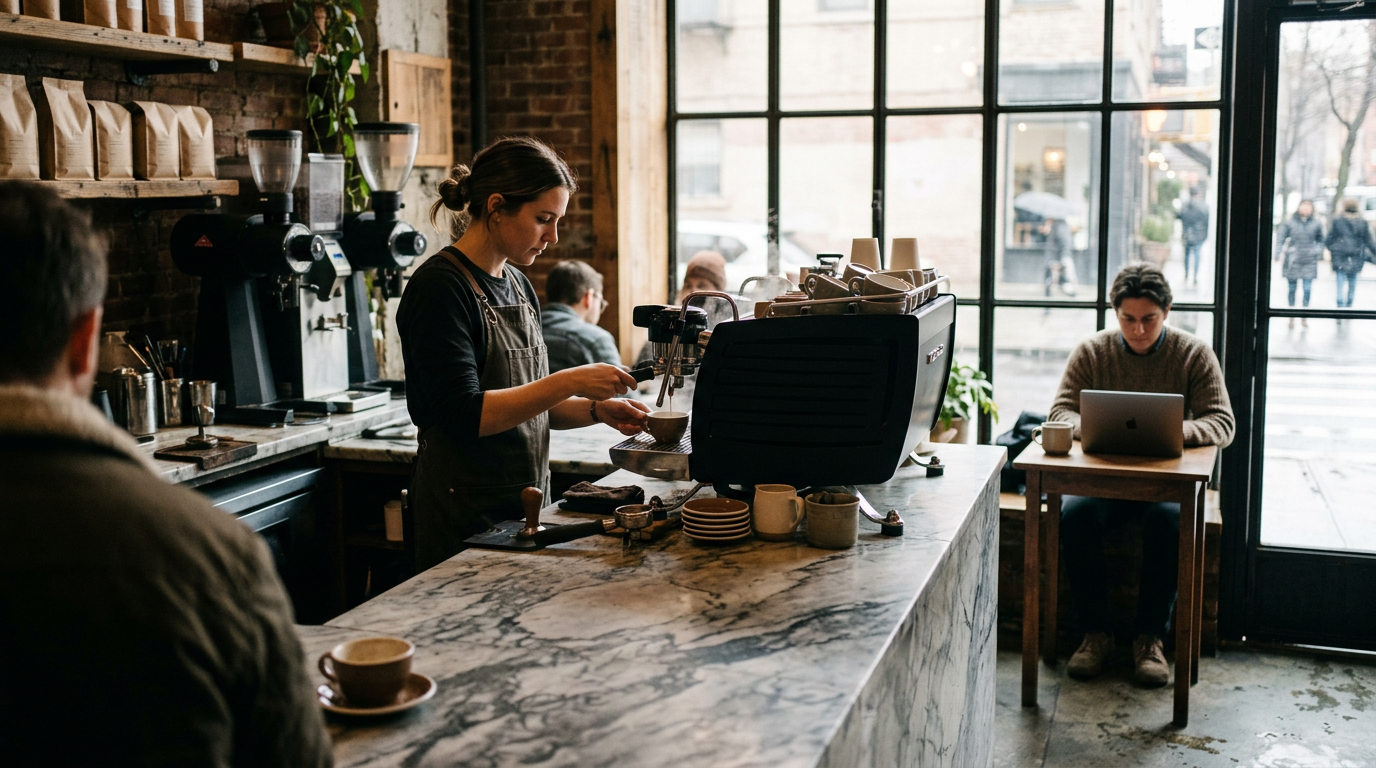
At 9:12 on a weekday morning in Williamsburg, the line is not a social experiment. It is a production queue. Someone is late to a client call. Someone else is trying to get a pour-over before the L train breaks their schedule. The barista is calibrating espresso, watching milk, answering a question about beans, and silently praying nobody asks for “whatever is most popular.”
This is where people get third-wave coffee wrong in Brooklyn and, honestly, across serious coffee rooms in New York. They think the trick is knowing more words. Gesha. Anaerobic. Washed. Natural. Flat white. Single-origin. That helps, but only if you use the words like a regular human.
The real move is simpler: know what kind of coffee bar you are in, order with a point of view, and do not turn the counter into your personal tasting seminar when six people are behind you.
Brooklyn’s coffee scene in 2026 is mature. Blue Bottle is no longer novel. Stumptown is institutional. Devoción made Colombian sourcing part of the local vocabulary. Sey Coffee helped make light-roast, high-transparency coffee feel normal to a certain kind of design-founder crowd. Plenty of newer independent shops now serve excellent beans without making a religion out of it.
If you are a founder, freelancer, operator, or creator using coffee shops as your daytime third place, your order is part of your social signal. Not because people are judging your oat cortado. They are judging whether you understand the room.
The room matters more than the menu
There are really four types of third-wave coffee shops you will run into around Brooklyn and lower Manhattan.
- The espresso bar: small, fast, often limited seating, better for a quick cappuccino and a five-minute conversation than a laptop session.
- The roaster café: bags on shelves, rotating single-origin options, baristas who can talk processing methods if the line is calm.
- The work-friendly café: decent tables, some outlets, people on Notion, Figma, Slack, and pitch decks from 10 a.m. to 3 p.m.
- The coffee-by-day, wine-by-night room: natural wine bottles on the wall, better for casual founder catch-ups than heads-down work.
Your order should fit the format. At an espresso bar, get espresso, macchiato, cortado, cappuccino, or batch brew. At a roaster café, ask what is on filter or what single-origin pour-over is drinking well. At a work café, order enough to justify the seat. At the wine-bar hybrid, do not set up a second monitor and act surprised when the lights go low at 4:30.
This is also why tourists sound like tourists. They walk into a tiny counter-service room and ask twelve questions as if they are buying a mattress. Regulars read the constraint. They know when to ask and when to move.
What to order / what to look for
!Barista pouring cappuccino beside batch brew in a Brooklyn coffee shop
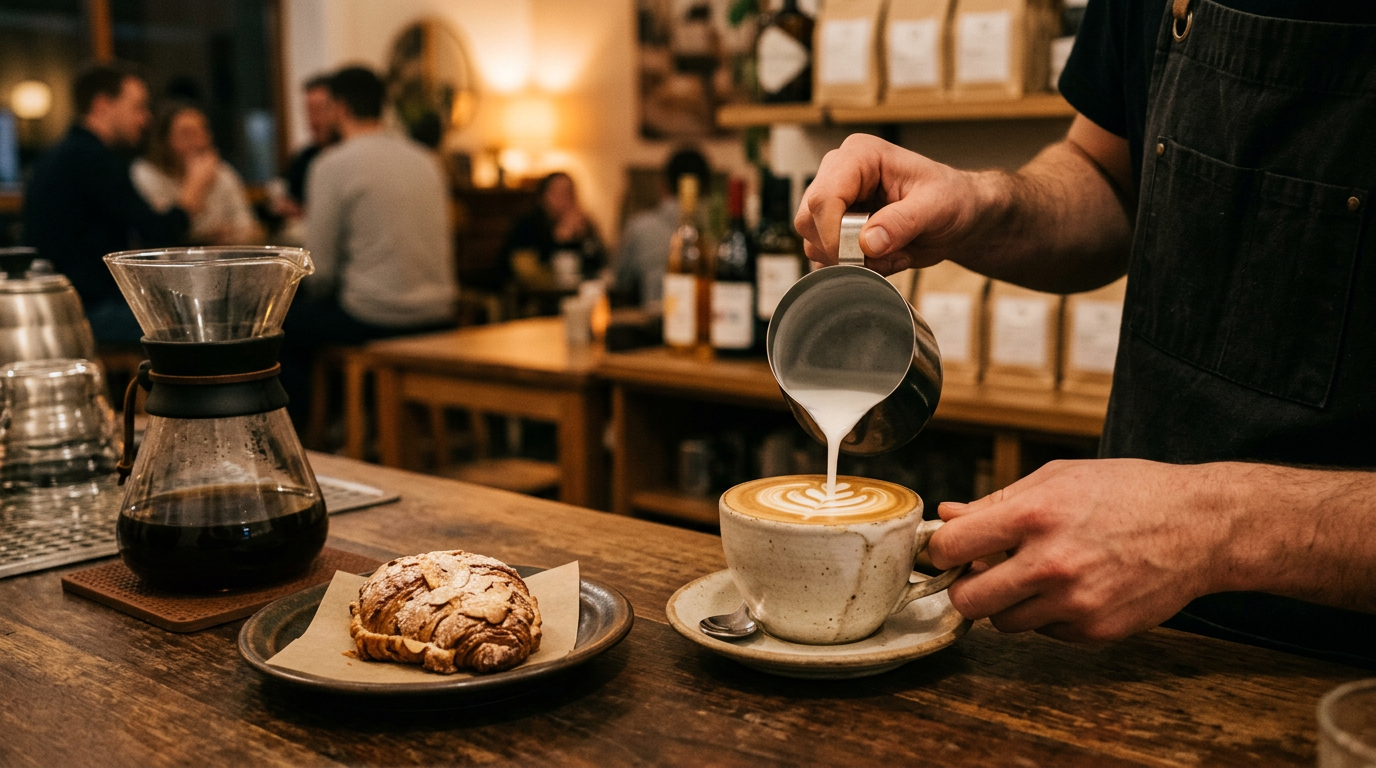
If you want the short version: order batch brew in the morning, espresso drinks when the bar is moving, pour-over when the room is calm, and beans when you actually plan to brew at home.
The least performative serious order is often the best one:
- “Batch brew, please. What’s on today?”
- “Cortado with whole milk.”
- “Cappuccino for here.”
- “I’ll do the washed Colombia on pour-over if now is a good time.”
- “What’s tasting best on filter today?”
That last line is the cleanest way to sound like you know coffee without cosplaying as a green buyer. It gives the barista room to recommend something and signals that you understand coffee changes day to day.
A few ordering notes that will save you embarrassment:
- Batch brew is not a downgrade. In a good third-wave shop, batch can be the smartest order. It is dialed in, fast, affordable relative to pour-over, and often better than a rushed hand brew.
- A cortado is not a tiny latte with a personality disorder. It is espresso with a small amount of steamed milk, usually balanced and quick to drink. Good for meetings where you do not want a giant cup sitting between you and the other person.
- A cappuccino “for here” still carries weight. Ceramic cup, proper texture, no lid. If the shop offers it, take it when you have ten minutes.
- Pour-over is situational. Order it when the bar has the staffing and the room is not slammed. If you see one barista handling register, espresso, and food, do not be the pour-over hero.
- Natural process coffees can be fruity and loud. Washed coffees are usually cleaner and more structured. If you are new, ask for the washed option first.
- Oat milk is normal now. Nobody cares. Just order it clearly and pay the upcharge without making it a politics speech.
If you want to buy beans, ask one practical question: “I brew at home with a V60” or “I use a Baratza Encore and a drip machine.” That tells the barista how to help you. Do not say, “I like coffee that tastes like coffee.” That usually means dark roast, and many third-wave shops will not have what you think you want.
Best time of day to go
The best time depends on the job you need the room to do.
For a clean, fast order, go between 8 and 9:30 a.m. and know exactly what you want. This is not the hour for a bean lecture. It is the hour for batch brew, cortado, cappuccino, drip refill if offered, and out.
For working, the sweet spot is usually 10:15 a.m. to 1 p.m. The rush has thinned, the tables have turned over, and the serious laptop crowd has settled in. This is when you can take a booth or small table without feeling like you stole oxygen from the room. Buy coffee first, then a pastry or second drink if you stay past ninety minutes.
For actual conversation, use the 2:30 to 4:30 p.m. window. People are less caffeinated and less guarded. A founder who would never talk at 8:45 may give you ten minutes in the afternoon. This is also when baristas can answer a question about a single-origin pour-over without visibly calculating how to end the exchange.
Avoid the fake productivity block from 4:45 to 6 p.m. unless you know the shop. Some rooms shift energy hard. Chairs get stacked. Wine service starts. Parents arrive with strollers. The Wi-Fi becomes irrelevant. If you need a real work session after 5, go to a coworking day pass at Industrious, Spaces, or a neighborhood independent coworking space. Coffee shops are not discount offices, and Brooklyn is less patient about that than it was in 2021.
Etiquette and unwritten rules
!Two people talking over coffee at a small Brooklyn café table

Third-wave etiquette is not precious. It is mostly about speed, space, and reciprocity.
Order in one clean sentence. If you need guidance, ask one tight question. “What’s best on filter today?” is fine. “Can you explain all the coffees?” is fine only when nobody is behind you.
Do not camp on a four-top alone at 10 a.m. If the room fills up, move to a bar seat or invite someone to share. This is basic New York citizenship.
Keep calls short or take them outside. Nobody came to hear your seed deck, your client conflict, or your therapist-level download about a cofounder. If you need to speak for more than three minutes, you need a phone booth at a coworking space, not a cortado.
Tip. Especially if you are asking questions, ordering a hand brew, or staying. You do not have to turn a $5 coffee into a moral crisis, but treating service labor like a subscription plan is a bad look.
Do not touch the ceramics station like you work there. If you need water, ask or use the self-serve setup if it is obvious. If there is a bus bin, use it. If there is not, do not create a wet pile of cups near the register.
And please stop calling every serious café “hipster.” It is lazy, dated, and tells everyone you have not updated your city vocabulary since 2014.
How to actually meet people there
Coffee shops are good for weak ties, the sociologist Mark Granovetter’s term for the loose connections that often carry opportunity. Not your closest friends. The person you see twice a week who knows a designer hiring. The founder at the next table who just left an accelerator. The operator who can introduce you to a better bookkeeper.
But you do not build weak ties by ambushing strangers mid-email.
Start with proximity and repetition. Pick two or three rooms and become a low-drama regular. Same days. Similar time. Similar order. Baristas and regulars notice consistency faster than you think.
Good conversation openers are light and situational:
- “Is that seat taken, or are you saving it for a meeting?”
- “I’ve seen you here a few times. Are you working nearby or just using this as your office like the rest of us?”
- “Quick question: have you found any good quiet rooms around here for calls?”
- “That notebook setup looks serious. Are you designing, writing, or pretending to do both?”
- “I’m trying to find a better afternoon work spot around here. Any places you trust?”
The point is not to pitch. The point is to create a normal human opening. If they answer with headphones back in, leave them alone. If they ask a question back, continue.
For founders and freelancers, the strongest move is to connect the café world to a second room. Invite someone to a specific, low-friction next step:
- “A few of us are doing a loose founder coffee here next Tuesday at 9. Want me to send the details?”
- “I’m going to a Meetup in Dumbo this week. If it looks useful, I can forward it.”
- “I’m trying a coworking day pass nearby on Thursday because I need call rooms. Want the link?”
- “I host a small breakfast every other Friday. Mostly operators and solo founders. No panel, no pitch night.”
Then follow up the same day. Short note. No essay.
“Good meeting you at the café. Here’s the coworking day pass I mentioned. If you end up going Thursday, I’ll be there 10 to 2.”
That is enough. The coffee shop created the ambient trust. The follow-up creates the next node.
Mistakes to avoid
The first mistake is ordering for status. If you do not like bright, acidic coffee, do not force yourself through a hyper-light single-origin pour-over while making tasting-face at the table. Order a cappuccino. Order batch. Drink what you like.
The second mistake is asking for Starbucks translations. “What size is closest to a grande?” will not kill you, but it does mark you as someone who has not read the menu. Most serious shops keep sizes simple. Small milk drink, larger milk drink, drip, espresso. Look up for five seconds before asking.
The third mistake is treating baristas like networking targets. Baristas know everybody, yes. They also have a job. If you become a respectful regular, they may naturally point you toward events, roasters, pop-ups, supper clubs, or neighborhood people worth knowing. If you interrogate them during the rush, they will remember you for the wrong reason.
The fourth mistake is overworking the table. Two laptops, external keyboard, cold pastry crumbs, one drip coffee over four hours. That behavior is why more cafés removed outlets, shortened Wi-Fi windows, or went laptop-free on weekends. Post-pandemic coworking shifted the math. If you need office infrastructure, pay for office infrastructure.
The fifth mistake is performing expertise. Nobody needs to hear you announce that you “only drink natural Ethiopians” unless you are actually talking about a specific coffee with someone who asked. The more serious the coffee person, the less they usually need to posture.
A clean ordering script for different situations
When the line is long:
“Batch brew, please. Whatever is on is fine.”
When you want milk:
“Cortado with whole milk, for here.”
When you want something iced without sounding lost:
“Iced americano, light ice if that’s okay.” Or: “Cold brew, no milk.”
When you are curious about pour-over:
“If it’s a good time, I’d love a pour-over. What’s tasting best today?”
When you are buying beans:
“I brew with a V60 at home and like cleaner coffees. Which bag would you take?”
When you are meeting someone:
“I’ll grab the table. Do you want a drip, cappuccino, or something else?”
That last one matters. In New York, hosting well is a signal. If you invited the meeting, get there early, claim the right kind of table, and offer to order. Do not make your guest stand in line twice because you were “just checking email.”
The order that never sounds touristy
If you are unsure, order a batch brew and ask what it is. That is the Brooklyn move. It is efficient, respectful, and still gives you a line into the coffee itself.
“Batch brew, please. What’s on today?”
If the barista says “washed Colombia,” you can say, “Great.” If they mention tasting notes, listen. If the room is quiet, ask one follow-up: “Is that one pretty clean or more fruit-forward?” Now you are in the conversation without blocking the counter.
The goal is not to pass as a coffee insider. The goal is to be the kind of person people do not mind sharing a room with: clear at the register, generous with space, curious without being needy, and capable of turning a familiar face into a real connection.
That is the rule newcomers miss. The coffee matters. The room matters more.
Discussion (0)
Loading comments…