The Brooklyn third-wave coffee test newcomers learn fast
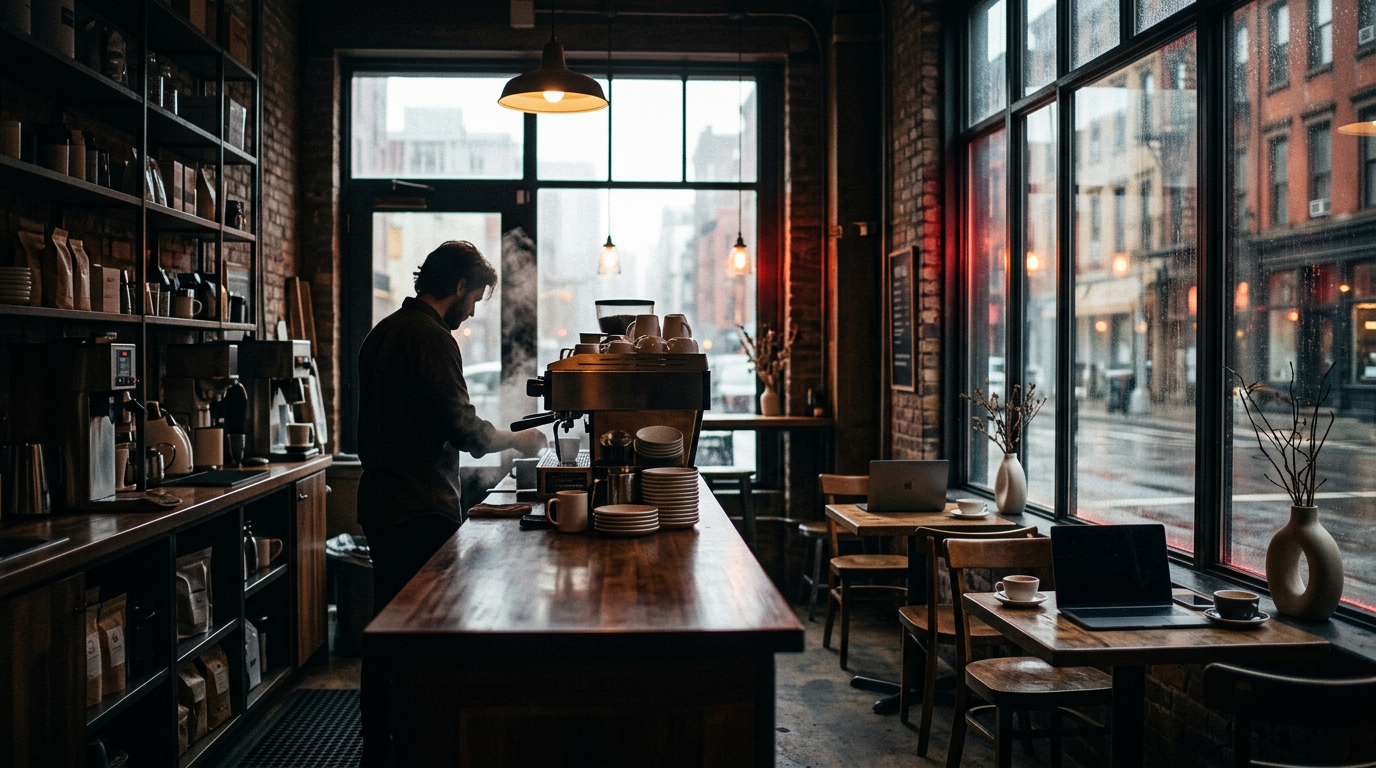
At 9:12 on a weekday in Williamsburg, the difference shows up before the first sip. One room smells like warmed milk, vanilla syrup, and a pastry case working too hard. Another smells like ground coffee, wet paper filter, and a barista calmly asking whether you want the Ethiopian as espresso or pour-over.
That is the test.
Brooklyn has been living with third-wave coffee long enough that the good rooms no longer need to perform expertise. Devoción in Williamsburg, Sey Coffee in Bushwick, Blue Bottle, Joe Coffee, Cafe Grumpy, Stumptown, La Colombe, and Birch all helped train New Yorkers to expect more than a caffeine counter. But in 2026, the scene is mature and messy. Plenty of shops now borrow the costume: pale wood, a tight menu, bags of beans on a shelf, one serious-looking grinder, oat milk as default. Some are excellent. Some are stage sets for laptops and $7 drinks.
If you are a founder, freelancer, designer, operator, or remote employee trying to choose the right room, this matters. A real third-wave coffee shop gives you better coffee, yes. It also gives you better social signal. You can read the neighborhood, meet useful weak ties, and avoid wasting two hours in a place built for photos instead of people.
The actual third-wave signal in Brooklyn
Third-wave coffee is not just small cups and severe baristas. At its best, it treats coffee like a sourced agricultural product: origin, processing method, roast profile, grind, water, brew ratio, and service all matter. The room may be casual, but the system is not.
In Brooklyn, the real ones usually have a few tells:
- Transparent sourcing. You can see country, region, farm or producer, variety, and process on the retail bags or menu. “Single-origin” should mean more than a buzzword.
- A focused coffee program. Espresso, batch brew, pour-over, maybe a seasonal signature drink. Not a 42-item dessert menu wearing a coffee hat.
- Dialed-in espresso. The barista tastes shots, adjusts grind, and does not treat espresso like a button press.
- Fresh retail beans. Bags show roast dates, not vague “best by” dates six months out.
- Staff who can explain without lecturing. If you ask what the natural process coffee tastes like, you get a clear answer, not a sermon.
- A room designed for turnover and rhythm. Real coffee shops understand the morning rush, the laptop crowd, the meeting crowd, and the regulars. Wannabes get jammed at all four.
The wannabe version over-indexes on aesthetics. The cups look right. The merch wall looks right. The playlist is expensive-sounding. But the barista cannot tell you what is on espresso, the batch brew tastes baked, and every table is occupied by one person nursing a cold drink for three hours.
That does not make the place evil. It just means it is not the room you think it is.
What to order / what to look for
!Barista preparing a pour-over at a clean specialty coffee bar

If you want to judge a shop quickly, do not start with the most complicated drink. Order the thing that exposes the operation.
Order one of these
- Batch brew, black. This is the fastest truth serum. A serious shop keeps batch coffee fresh, balanced, and hot enough without scorching it.
- Espresso. Not for everyone, but it shows technique. You are looking for sweetness, structure, and a finish that does not taste like ash or lemon peel abuse.
- Single-origin pour-over. Order this when the shop is not slammed. It should come with a short explanation and taste distinct from the house coffee.
- Cappuccino. Milk texture reveals training. Glossy, integrated microfoam beats stiff foam sitting on top like insulation.
Look for these details
- Roast date on bags. Two to 21 days off roast is a healthy window for many coffees, though exact timing varies.
- Clean equipment. Steam wand wiped, counters not sticky, grinders not caked with old grounds.
- Water station that is maintained. Small thing, big signal.
- Menu restraint. A shop can sell excellent matcha or chai, but if coffee is buried under flavored lattes, understand what business you are in.
- Staff pacing. Calm speed is a very New York excellence marker. Panic is not the same as being busy.
Ask one clean question: “What are you excited about on filter right now?”
A real barista can answer that in 15 seconds. “We have a washed Colombia that’s more citrus and caramel, and a natural Ethiopia that’s fruitier” is enough. You are not testing for poetry. You are testing for care.
Best time of day to go
Brooklyn coffee has time zones. Pick the wrong one and you will misread the room.
7:30 to 9:30 a.m. is the regulars’ lane. Parents, commuters, studio people, architects, agency workers, founders trying to get one quiet hour before Slack gets loud. This is a good time to evaluate speed and consistency. It is a bad time to ask five questions about anaerobic processing while the line is out the door.
10:00 to 11:30 a.m. is the sweet spot for scouting. The rush has softened. Baristas can talk. Tables turn. If you are new to the neighborhood, this is when you can read whether the shop is a serious coffee room, a laptop corral, or a social clubhouse.
1:30 to 4:00 p.m. is the laptop and meeting window. This is where the post-pandemic shift shows up. Some cafés now tolerate remote work because weekday revenue needs it. Others have tightened laptop rules because one cappuccino cannot subsidize a four-hour hot desk. Both positions are fair.
After 4:00 p.m. is not always coffee time anymore. The better 2026 neighborhood pattern is coffee by day, wine or low-ABV service nearby at night. If the room starts shifting energy, do not fight it. Move the meeting to a natural wine bar, hotel lobby, member’s club, or coworking lounge if the conversation needs another hour.
For actual work, pair coffee with infrastructure. Do the first meeting at a café. Then, if you need calls, move to a day pass at Industrious, Spaces, or a good local coworking room. WeWork is still useful in parts of NYC, but the value depends heavily on building, floor, and phone booth availability.
Etiquette and unwritten rules
!Two people talking over coffee at a small Brooklyn cafe table
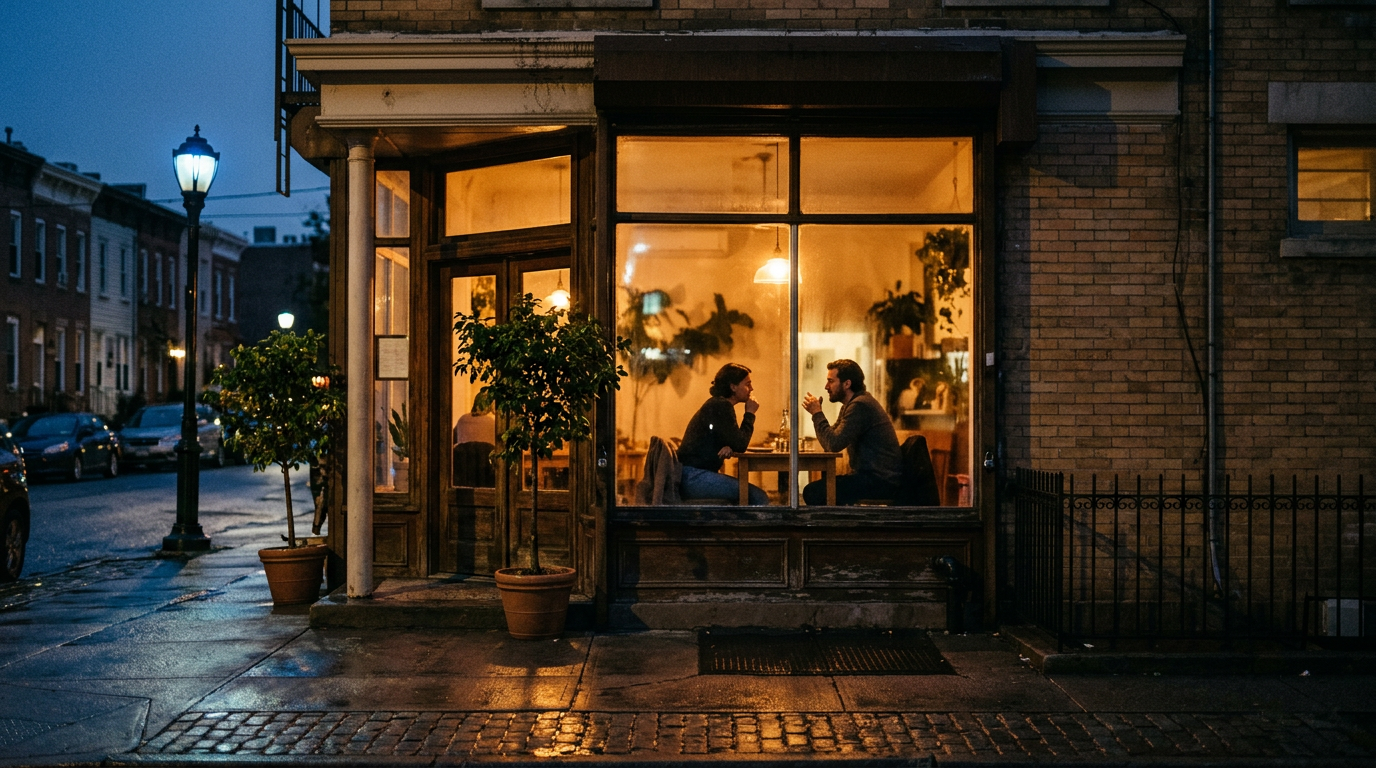
The unwritten rules are not complicated, but newcomers break them constantly.
- Do not camp on a two-top during the rush. If it is before 10 a.m. and seats are scarce, drink, meet, move.
- Buy like you are using the room. One drink per 90 minutes is a decent baseline if you are staying. Add food if you take a prime table.
- Take calls outside. A quick logistics call is one thing. A fundraising update on speaker is social malpractice.
- Do not turn the café into your pitch deck theater. No laptop angled across the table, no loud TAM monologue, no “we’re raising” performance for strangers.
- Respect laptop signals. Some shops post no-laptop hours or restrict larger tables. Believe them.
- Tip like a regular if you want regular treatment. Not theatrically. Consistently.
- Ask before photographing the bar. Especially if staff faces are in the frame.
Brooklyn rewards low-friction people. The barista remembers the customer who knows their order, clears their table, keeps meetings tight, and does not make the room heavier.
How to actually meet people there
A real third-wave café is not a networking event, which is why it can be useful. The connections are softer. Granovetter called them weak ties: people outside your tight circle who often carry new information, jobs, clients, intros, and opportunities. Coffee rooms are good weak-tie machines if you behave like a person instead of a scanner.
Start with repeat presence. Pick one or two shops near your real orbit: apartment, studio, coworking space, gym, subway stop. Show up at the same window twice a week. Familiarity does more work than cleverness.
Use openers that fit the room:
- To a barista, when it is not busy: “I’m trying to learn the coffee map here. Who else in Brooklyn is doing filter really well right now?”
- To someone with an interesting notebook, camera, or sample deck: “Quick question, are you working on interiors, product, or something else? I’m asking because that setup looks very specific.”
- To another regular near the bar: “Do you know if this place gets laptop-heavy after lunch, or does it stay pretty social?”
- After a good event nearby: “Were you at the founder dinner down the street last night, or just caught in the same coffee line as everyone who was?”
Keep it short. The goal is not to close the room. It is to create a second conversation.
Follow-up matters more than the opener:
- If they mention a project, ask for the name and look it up later.
- If the chat is useful, say, “I’m here most Tuesdays around 10. Good to run into you.” That is less needy than forcing a calendar invite.
- If there is real overlap, send a same-day note: “Good meeting you at coffee. Here’s the article/tool/person I mentioned. No rush to reply.”
- If they are a founder, creator, or investor type, connect on LinkedIn or AngelList only after the conversation has substance.
Lunchclub, Meetup, On Deck alumni circles, South Park Commons-adjacent networks, and founder dinners all still matter. But cafés are where the pre-event and post-event social tissue forms. The room tells you who is actually in motion.
The wannabe warning signs
Some shops look expensive but operate like a concept deck. Watch for these flags.
- No one can describe the coffee. “It’s medium roast” is not enough if the menu is priced like specialty.
- The milk drinks hide everything. If every signature drink is syrup, foam, spice, and drizzle, the coffee may be an ingredient, not the point.
- Retail beans have no roast date. Serious roasters are not shy about freshness.
- The grinder area is dirty. Old grounds are flavor debt.
- The shop sells third-wave language but serves office-pot coffee. Words are cheap. Batch brew tells the truth.
- Every seat is optimized for photos, not use. Tiny tables, bad outlets, harsh stools, nowhere to put a bag. Fine for a date, bad for work.
- The staff seems trapped in a brand performance. A good coffee shop can be stylish without making service feel like theater.
A wannabe can still be useful. It may be fine for a quick iced latte with someone you already know. It may photograph well for a creator meeting. It may sit near the train. Just do not confuse it with a place that will teach you the local coffee culture or give you a credible room for a serious first conversation.
Mistakes to avoid
The biggest mistake is treating every coffee shop like a coworking space. A café is hospitality with a work side effect. A coworking space is infrastructure with coffee nearby. Different contract.
Avoid these common errors:
- Ordering a pour-over during peak line pressure. If ten people are behind you, get batch brew and come back later for the slow cup.
- Mistaking attitude for expertise. Some excellent baristas are warm. Some mediocre shops act severe. Judge the cup and the operation.
- Assuming all third-wave shops want laptops. Many do not, especially in smaller Brooklyn rooms with limited seating.
- Holding first investor meetings in loud cafés. Use coffee for chemistry. Move sensitive numbers to a phone booth, office, or quieter lobby.
- Over-networking the staff. Baristas are not your concierge team. Be curious, not extractive.
- Chasing famous names only. Blue Bottle, Devoción, Stumptown, Joe Coffee, Cafe Grumpy, La Colombe, and Birch are useful reference points, but neighborhood independents can be sharper than chains on any given block.
The better move: build a small circuit. One shop for serious coffee. One for casual meetings. One near a subway line for 20-minute handoffs. One coworking day-pass option for calls. One wine bar or izakaya nearby when a coffee chat earns a second act.
The room you actually want
A real third-wave coffee shop in Brooklyn does three things at once. It serves coffee with traceable intent. It runs a room that respects time. It attracts people who are doing actual work without making work the whole personality of the place.
You can feel it after a few visits. The barista knows what is on bar. The regulars do not need to announce themselves. The seating has a rhythm. The coffee tastes alive but not chaotic. The room lets a 12-minute conversation happen without turning into a networking scrum.
That is the standard. Not marble counters. Not a viral latte. Not a wall of merch. The real shop makes you want to come back next Tuesday, order the filter coffee, say hello to the person you met last week, and leave before you wear out your welcome.
Discussion (0)
Loading comments…