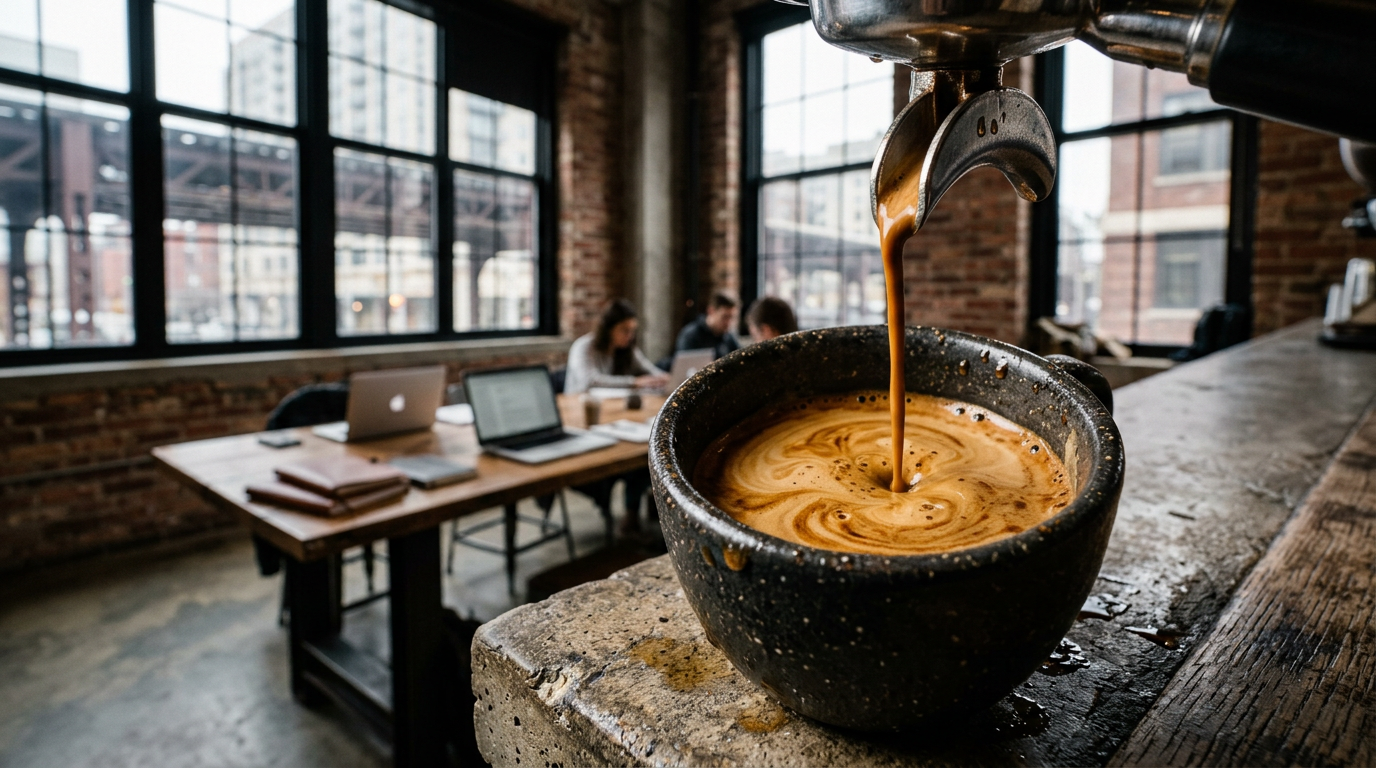
Chicago founders work the West Loop café circuit
The West Loop founder day often starts under the Green Line, not in a glass office. Someone is walking in from Ogilvie with a backpack and a calendar stacked in 25-minute blocks. Someone else is trying to take a customer call before a lunch on Randolph. A VC associate is pretending not to scan the room. The barista has already seen three pitch decks by 9:15.
Chicago is not San Francisco with colder winters. The West Loop has its own operating rhythm: practical, relationship-driven, allergic to theater. People here will take the meeting if you have a real reason for it. They will also remember if you camped at a four-top for five hours after buying one drip coffee.
A good coworking café workflow in Fulton Market and the West Loop is not about finding a magical laptop room. It is about matching the right task to the right room: heads-down work in a proper coworking space, first coffee in a café with traffic, lunch in a room where operators actually talk, and a clean follow-up before the day gets swallowed by Slack.
The West Loop founder workflow is a circuit, not one seat
The mistake newcomers make is trying to force one venue to do every job. West Loop rooms specialize, even when they do not advertise it.
Use the neighborhood like this:
- 8:00 to 10:00 a.m. for solo work, inbox triage, warm intro replies, and light relationship maintenance.
- 10:00 a.m. to noon for short in-person meetings, founder coffees, candidate screens, and partner check-ins.
- Noon to 2:00 p.m. for lunches where the real conversation starts after the ordering is done.
- 2:00 to 5:00 p.m. for calls and execution in an actual coworking room, hotel workspace, or your office.
- After 5:00 p.m. for the second layer: founder dinners, Meetup events, operator drinks, natural wine bar hangs, or member's club introductions.
The West Loop rewards proximity. Being near Randolph, Fulton, Morgan, Halsted, and the Clinton transit corridor means you can stack a coffee, a customer meeting, and a working block without losing half the day in rideshares.
This is also why the café choice matters. A beautiful room that is bad for calls is still useful if you use it for the right thing. A loud communal table can be better for meeting people than a silent hot desk. The trick is to stop treating every chair with Wi-Fi as coworking.
Rooms that fit the job
!Early morning West Loop café with laptops at a communal table
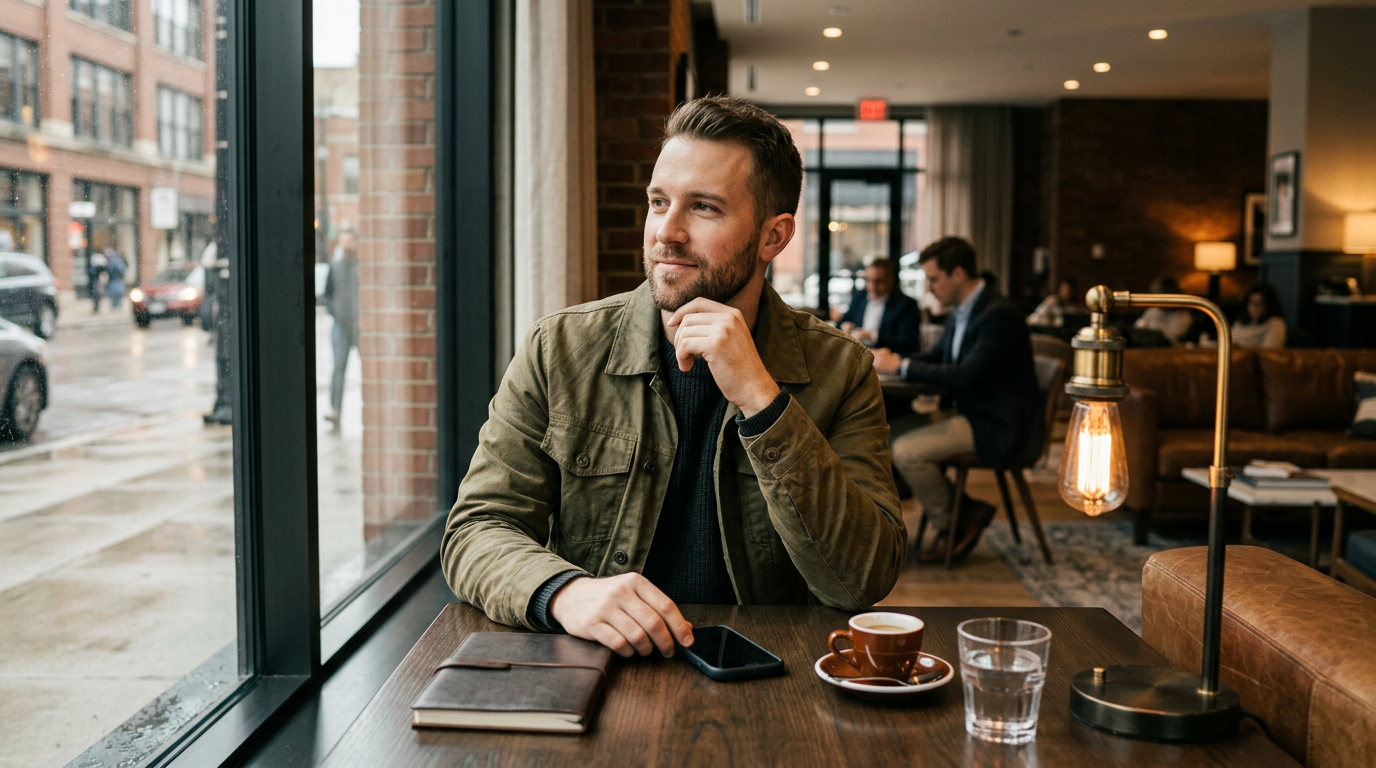
For a real West Loop founder day, think in venue types first, names second.
Third-wave coffee bars for first meetings. Sawada Coffee and La Colombe are the kind of West Loop names people know, and they work for short, concrete meetings. The point is not privacy. The point is energy, easy arrival, and a low-friction exit. Keep it to 30 minutes unless both sides are clearly extending.
Hotel lobbies for polished, flexible meetings. The Hoxton Chicago has become a familiar Fulton Market anchor for laptop workers, visiting founders, agency operators, and out-of-town teams. Hotel lobbies work when you need a room that feels adult but not formal. Buy coffee, tea, or food. Do not treat it like a free office.
Restaurant cafés for breakfast-to-lunch transitions. Beatrix in Fulton Market is useful because it can handle coffee, breakfast, and a sit-down meal without moving the conversation across town. These rooms are better for relationship-building than raw focus. Bring one agenda, not a full company download.
Market halls and casual food rooms for group collisions. Time Out Market Chicago and similar Fulton Market food halls are not quiet. That is the point. They work for informal founder meetups, team lunches, quick customer hangs, and low-stakes introductions where nobody wants the pressure of a white-tablecloth reservation.
Actual coworking spaces for execution. If you need three Zoom calls, a clean restroom, a phone booth, and a predictable seat, buy the day pass or use your membership. WeWork, Industrious, and Spaces are not as culturally hot as they were in 2018, but in 2026 they are useful again because founders finally stopped expecting cafés to absorb full workdays. Hot desk for flexibility. Dedicated desk if you are in the neighborhood three or more days a week. Day pass when the calendar is call-heavy.
Member's clubs for warm-network days. Soho House Chicago can be effective if you are a member or invited by someone who is. It is not a prospecting floor. Treat it as a relationship room, not a place to cold-pitch strangers between emails.
What to order / what to look for
Order like you understand the room is a business, not your personal lease.
For a 30-minute coffee meeting, a drip coffee, espresso drink, cold brew, tea, or sparkling water is fine. If you are staying longer, add food or a second drink. If you are taking the better seat, pay accordingly. Chicago staff notice. Regulars notice too.
If the café is serious third-wave coffee, do not overcomplicate the ritual unless you actually care. A single-origin pour-over is great when you have time and the bar is not slammed. It is annoying when ordered as a status signal five minutes before your meeting starts. For founder mornings, reliability beats performance. Get the coffee, sit down, start on time.
Look for these details before opening your laptop:
- Outlet density. If only two walls have power, this is not an all-day room.
- Table shape. Two-tops are for meetings. Communal tables are for light work and chance conversation. Four-tops belong to groups and diners.
- Sound behavior. If nobody else is on calls, you are not the exception.
- Staff pacing. If servers are turning tables for lunch, close the laptop or move.
- Arrival friction. A good West Loop meeting spot is easy from Morgan, Clinton, Ogilvie, Union Station, or a quick rideshare from River North.
For coworking cafés, the best order is often coffee plus a pastry early, then a proper lunch elsewhere. Do not nickel-and-dime a room you want to keep using.
Best time of day to go
!Chicago coworking space with hot desks and phone booths
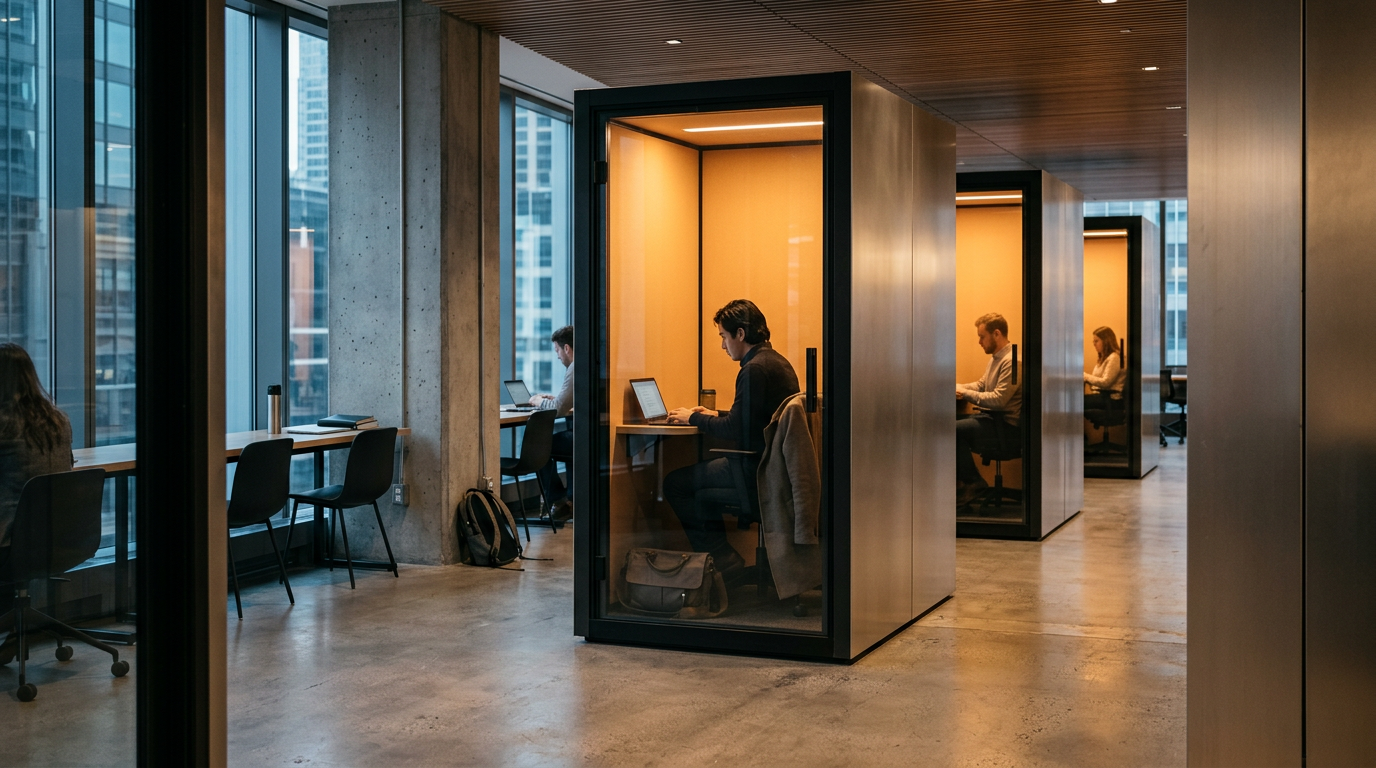
The strongest West Loop café window is 8:15 to 10:30 a.m. You get real seats, caffeinated people, and a room that has not yet shifted into lunch economics. This is when founder coffees work best.
From 10:30 a.m. to noon, the room gets more mixed: freelancers, sales calls, agency folks, recruiters, and founders trying to squeeze one more meeting in before lunch. Still useful, but less focused.
Noon to 1:30 p.m. is not laptop time in restaurant-adjacent spaces. If the place serves a real lunch crowd, respect it. Close the machine, order food, or leave. West Loop restaurants pay serious rent. Your Notion board is not more important than table turnover.
The underrated window is 2:30 to 4:30 p.m. Hotel lobbies, quieter cafés, and coworking common areas settle down. This is good for writing investor updates, reviewing a model, or having a more candid operator conversation. It is not ideal for high-energy networking.
After 5:00 p.m., the founder workflow moves. The useful rooms become bar seats, private dining tables, Meetup venues, small founder dinners, and industry events. Chicago still runs on trust built in person. AngelList, Lunchclub, On Deck alumni groups, South Park Commons friends passing through, university networks, and niche Slack communities can all create the introduction. But the relationship usually gets real over coffee, lunch, or a drink.
Etiquette and unwritten rules
Chicago gives you room if you act like an adult. The unwritten rules are simple and enforced socially.
- Buy something early. Do not sit first, work for 40 minutes, then maybe order.
- Keep calls short or take them outside. A two-minute logistics call is fine. A board update is not.
- Use headphones, but do not hide behind them all day. If you want to meet people, make yourself lightly available.
- Do not spread out. One person, one seat, one bag under the chair.
- Tip normally. Especially if you are becoming a regular.
- Read the lunch shift. If menus are dropping and servers are moving fast, your coworking session is over.
- Never pitch the staff. They are working. Be kind, be efficient, be remembered for the right reasons.
West Loop culture is direct but not transactional. The best local networkers do not sound like they are running a funnel. They ask specific questions, make useful introductions, and leave people alone when the timing is wrong.
How to actually meet people there
Most useful relationships come from weak ties, the Mark Granovetter idea that acquaintances often open doors your close circle cannot. The West Loop is built for that if you stop forcing it.
Start with proximity plus a reason. Sit at the communal table when you are doing light work, not confidential work. Keep your laptop angle normal. Have one visible cue if appropriate: a product mockup, a notebook with customer notes, a book about your industry. Not merch. Not a giant pitch deck.
Use openers that fit Chicago:
- For another founder: I have seen you here a few times. Are you working nearby or just using Fulton Market between meetings?
- For an operator: Quick question, are you seeing hiring pick up again in your corner of the market?
- For an investor or advisor type: I am comparing notes with people close to Midwest B2B. Is there one event here that is still worth showing up for?
- For a café regular: I am trying to find a reliable afternoon call spot around here. Have you found one that is not chaos?
Keep it short. If they engage, continue. If they answer politely and return to work, stop. That restraint is what lets you come back tomorrow without being that person.
The follow-up matters more than the opener. Send a LinkedIn note or email the same day:
- Great meeting you at coffee near Fulton this morning. I will send the logistics founder intro I mentioned.
- Good to compare notes on Chicago hiring. If useful, I can connect you with two operators who have been testing fractional finance help.
- Enjoyed the quick chat. I am hosting three founders for breakfast next month, low-key and no pitch format. Want me to include you?
Then actually do the thing. In Chicago, reliability compounds faster than charisma.
Mistakes to avoid
The first mistake is using a café as a phone booth. If your day has more than two real calls, go to a coworking space. Pay for the hot desk, day pass, or meeting room. Everyone around you will be happier, and your work will be better.
The second mistake is over-indexing on scene. A room can look founder-friendly and still be wrong for your job. Sawada can be great for a sharp coffee meeting. A hotel lobby can be right for an investor intro. A WeWork phone booth can be the only sane choice for customer calls. Pick the room by task.
The third mistake is trying to network during peak service. Staff are busy, diners are moving, and nobody wants an unsolicited company summary while waiting for a table. If you want to meet operators, host something small or attend something built for that purpose.
The fourth mistake is skipping the nearby coworking layer. Post-pandemic coworking is less about identity and more about infrastructure. Founders use member's clubs, cafés, and hot desks in combination. The people who look most casual about it usually have the cleanest system.
The fifth mistake is being vague. Do not ask to pick someone’s brain. Ask for one specific perspective. Do not say you are building in AI for enterprises. Say you are selling workflow software to mid-market logistics teams and trying to understand Chicago buyer cycles. Specificity gets respect.
A practical West Loop day that works
Here is the clean version.
Start with coffee around Fulton Market at 8:30. Use that first hour for email, your top three priorities, and one warm intro reply. Take a 9:30 founder coffee at a two-top. Keep it crisp: what are you building, what are you learning, who would be useful to meet?
At 10:30, move if you need calls. If the calendar is heavy, go to a coworking space with phone booths. If it is light, a hotel lobby can work for writing and one quiet meeting. Do not gamble with an important customer call in a loud café.
Book lunch with intent. One person is usually better than four. West Loop lunches are expensive enough that they should create trust, not just calories. Bring one topic: hiring, customer intros, fundraising timing, pricing, expansion, or partnerships.
Use 2:30 to 4:30 for execution. Investor update. Sales follow-up. Product notes. The work that proves the morning conversations were not just social activity.
After 5:00, choose one in-person node per week: a founder dinner, a Meetup with real operators, a university alumni event, an AngelList-adjacent gathering, a niche industry happy hour, or a quiet drink with someone who can make two credible introductions. You do not need to be everywhere. You need to be consistently useful in the rooms you choose.
That is the West Loop advantage. Dense rooms, serious operators, short travel times, and a local culture that still rewards showing up prepared. The café is not the office. It is the front porch of the network. Use it that way.
Discussion (0)
Loading comments…