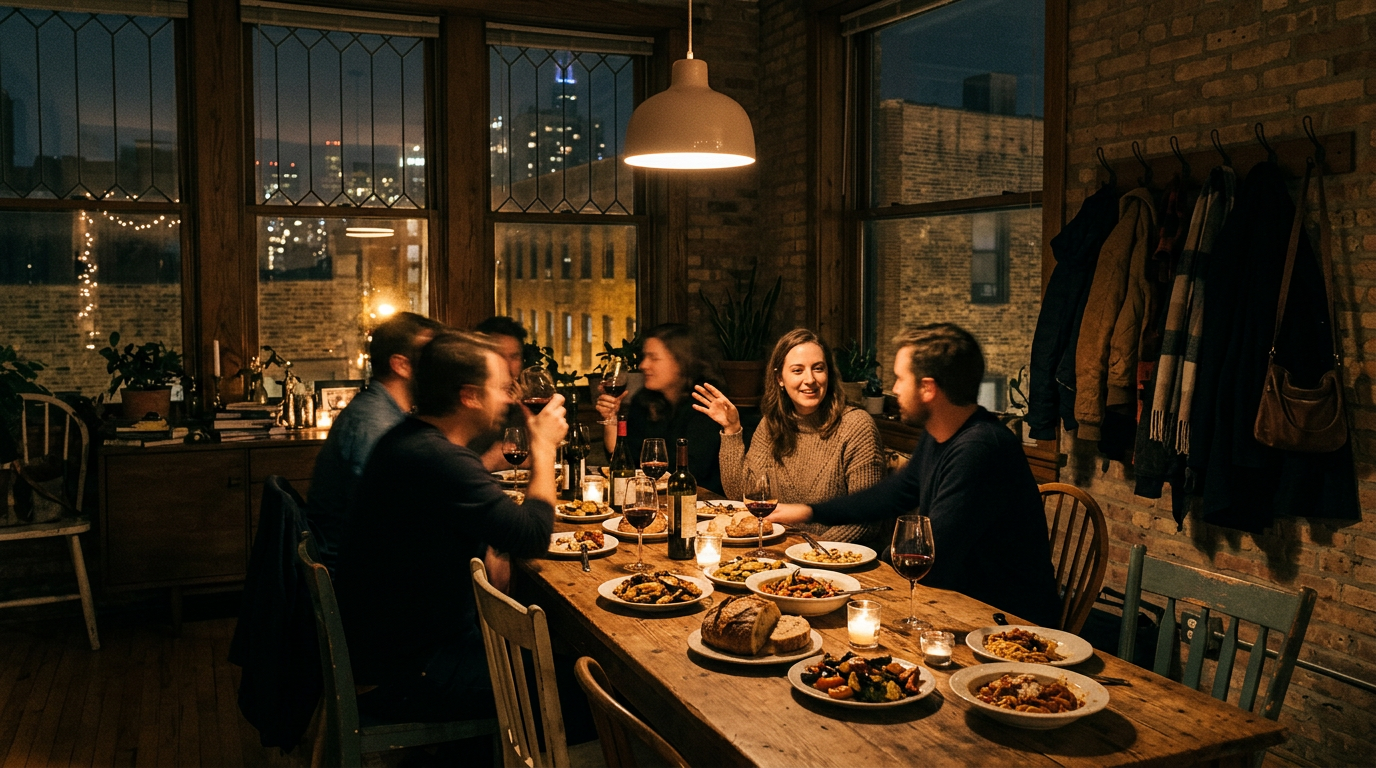
The Chicago supper club invite is earned, not found
A Chicago supper club invite usually does not arrive from a glossy landing page. It comes after you have shown up twice at the same natural wine shop tasting, stayed late after a gallery opening in West Town, or helped a friend of a friend fill two seats at a long table in Logan Square when someone bailed.
That is the first thing to understand: Chicago is not Los Angeles private-dinner theater and it is not New York reservation warfare with better lighting. The city is warmer than both, but less impressed by status signaling. The rooms that matter here are built around neighborhood trust, chef networks, artists, operators, wine people, and friends who still text instead of posting.
If you are a founder, freelancer, creator, investor, chef, designer, or operator trying to use supper clubs as a real social and professional channel, the job is not to “find the link.” The job is to become easy to invite.
What Chicago supper clubs actually are in 2026
In Chicago, “supper club” can mean several things, and confusing them is how newcomers end up in the wrong room.
There are chef-led pop-up dinners: a cook between restaurant projects, a sous-chef testing a menu, or a small team using a borrowed kitchen on an off night. These often move through private homes, event lofts, wine shops, small galleries, or restaurant spaces on Mondays and Tuesdays.
There are social-table dinners: a host curates 10 to 20 people around a theme — founders, writers, women in tech, hospitality operators, new Chicago arrivals, climate people, art collectors, or just “good talkers who won’t dominate the table.” These are less about the food as product and more about room design.
There are private club and member-room dinners: Soho House Chicago in the West Loop is the obvious known reference point, and coworking operators like Industrious, WeWork, and Spaces sometimes host founder dinners, community meals, or partner events around their Chicago locations. These are easier to access, but they are also more polished and less intimate.
Then there are old-school Chicago dinner circles that would never use the phrase “supper club” online. A Bridgeport apartment dinner after an opening. A Pilsen studio meal. A Ukrainian Village backyard table in September. A chef’s birthday dinner that somehow includes three restaurant people, two designers, a VC scout, and someone building a consumer app no one has announced yet.
The last category is where the best connections often happen. It is also the hardest to enter cold.
Chicago’s advantage is density without New York churn. People remember if you were thoughtful. They also remember if you came in hunting for “high-quality network” energy. Don’t do that.
Where the rooms tend to form
!Guests gather around a Chicago wine shop counter before a small tasting

You are looking for scenes, not addresses.
The strongest supper club pipelines in Chicago usually sit around:
- Natural wine shops and wine bars that run tastings, producer nights, and small-format dinners. These rooms attract chefs, designers, media people, operators, and founders who prefer conversation to bottle-service noise.
- Independent restaurants with serious regulars, especially places with bar seating, chef counters, or Monday industry-night overlap. You do not need the hardest reservation in town. You need a place where staff recognize repeat guests.
- Gallery openings and artist-run spaces in neighborhoods like West Town, Pilsen, Bridgeport, Logan Square, and Ukrainian Village. The after-dinner is often where the real room happens.
- Coworking and member spaces where the community manager actually knows people. A hot desk alone will not do it, but a day pass used well can lead to an event invite.
- Founder and operator circles built through Meetup, AngelList-adjacent groups, Lunchclub-style introductions, alumni networks, On Deck remnants, and private Slack or WhatsApp groups.
- Food-world Instagram accounts and newsletters run by chefs, sommeliers, bakers, and small producers. Not every announcement is public for long.
Specific named venues are less useful than behavior here. Yes, you can sit at the bar at a serious Chicago restaurant, drink something interesting, and talk respectfully with staff. You can attend events tied to places with durable reputations like Lula Cafe, avec, The Publican, Daisies, or Kasama. But do not treat restaurant staff like gatekeepers to be mined. Become a good regular first.
The reliable pattern is this: the public venue is the front door. The private dinner is the second room.
What to order / what to look for
At public events, your order is a signal. Not because anyone cares whether you picked the rarest bottle. Because your choices show whether you understand the room.
Look for:
- Communal formats: family-style dinners, chef collaborations, wine-pairing nights, cookbook dinners, guest-chef pop-ups, seafood boils, pasta nights, backyard grills, and Sunday sauce-style meals.
- Small producers: natural wine, cider, sake, amaro, local bread, farmers market produce, Midwestern cheese, preserved vegetables, and seasonal menus that feel personal rather than corporate.
- Chef-present rooms: if the person cooking is also introducing dishes, pacing the table, or pouring a pairing, you are closer to the actual network.
- Tables with mixed professions: a good supper club room is not 14 SaaS founders talking runway. It has operators, hospitality people, artists, lawyers, designers, writers, investors, and one person who seems to know everyone.
What to order when you have a choice:
- Start with the house recommendation, not the most expensive bottle.
- If it is BYOB, bring one thoughtful bottle plus something nonalcoholic that is genuinely good.
- If it is family-style, take smaller first portions. There is always a person who grabs too much too early. Do not be that person.
- If there is a suggested donation or fixed contribution, pay promptly and round up when appropriate.
- If a chef is testing something unusual — offal, bitter greens, tinned fish, fermented items, low-intervention wine — be curious without performing expertise.
Conversation openers that work in Chicago:
- “How do you know the host?”
- “What neighborhood are you usually in during the week?”
- “What have you been working on that is not on LinkedIn yet?”
- “Who in Chicago is doing dinners or events you think more people should know about?”
- “What’s the best room you’ve been in lately?”
Bad openers:
- “So what do you do?” as the first line.
- “Are there investors here?”
- “Can you add me to the list?” before you have had a real exchange.
- “I just moved from New York, and Chicago is so underrated.” Chicago people hear this constantly.
Best time of day to go
!A Chicago coworking lounge set for an intimate founder dinner
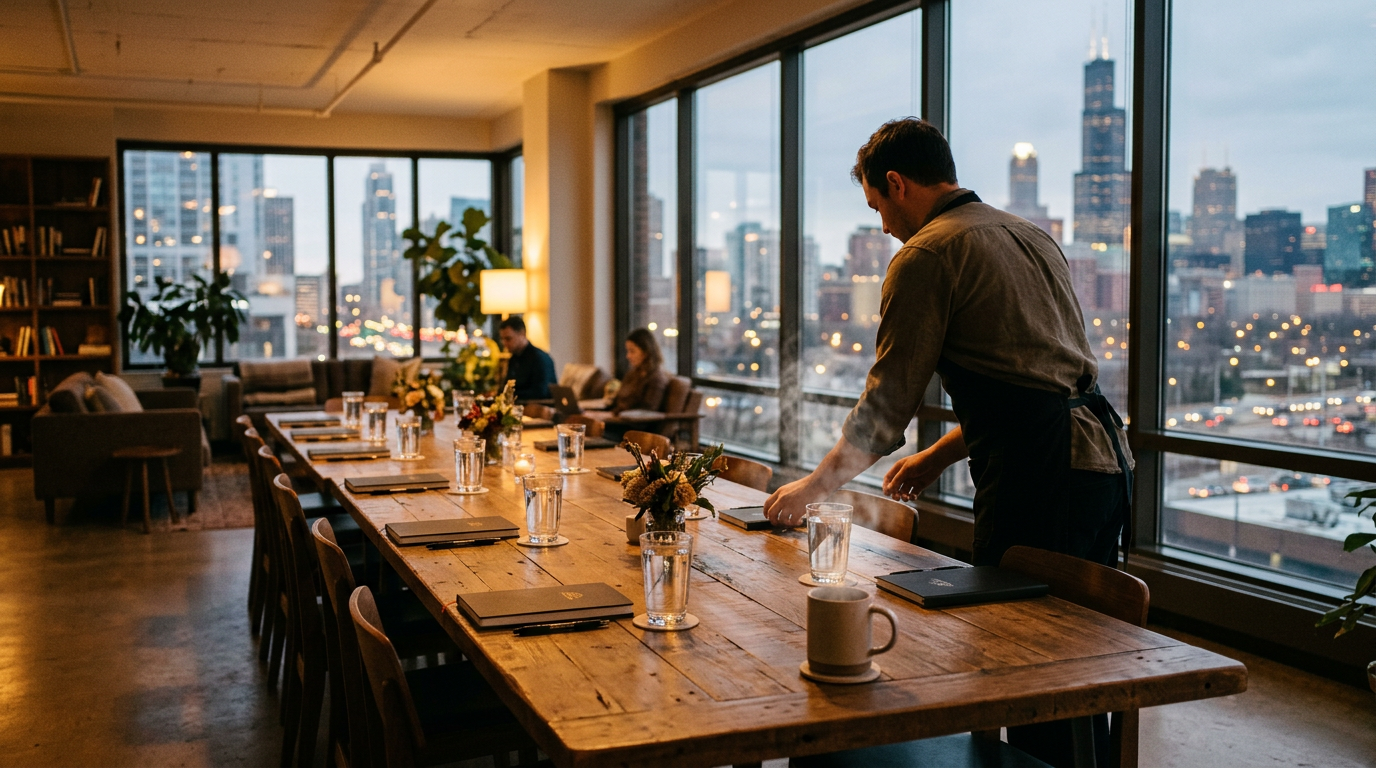
Supper clubs are not only dinner. The invite often forms earlier.
Weekday mornings are for ambient awareness. If you work from a third-wave coffee shop in Logan Square, West Loop, Wicker Park, or River North, go at the same time for two weeks. Order like a regular. Do not camp for six hours on one latte. Places like Intelligentsia, La Colombe, and local independent coffee bars are not supper clubs, but they are where freelancers and operators build light familiarity.
Late afternoon is underrated. Wine shops, restaurant bars, and coworking lounges are more conversational before peak service. A 4:30 p.m. glass of something interesting can produce a better lead than a packed 8:30 p.m. room.
Monday and Tuesday evenings matter because restaurant people are more available. Pop-ups, industry dinners, and chef collaborations often land early in the week. If you only go out Thursday through Saturday, you are mostly meeting people in consumer mode.
Sunday dinners are the most intimate. These tend to be friend-of-friend meals, apartment dinners, and backyard tables. The way into Sunday is not asking for Sunday. It is being useful at Wednesday’s public event.
September through November is prime Chicago supper club season. Summer is scattered: patios, weddings, lake houses, travel. Deep winter creates excellent rooms too, but the bar for leaving home goes up. Early fall is when hosts rebuild calendars and people say yes.
Etiquette and unwritten rules
Chicago supper club etiquette is simple but strict.
Do not arrive empty-handed unless told not to. Bring wine, flowers, dessert, ice, NA drinks, or something practical. If the host says they have it covered, send a thank-you the next day and offer to contribute next time.
Be on time, but not aggressively early. Ten minutes late is fine for a home dinner. Thirty minutes late is rude unless you warned the host. Early can be worse if the host is still plating.
Respect the room’s privacy. Ask before posting faces, tables, addresses, menus, or chef experiments. Many of the best Chicago dinners are intentionally under-posted. If you need content, take one discreet food or room-detail shot without identifying everyone.
Do not pitch at the table. You can talk about your company, studio, fund, or project. You cannot turn the meal into office hours. Supper club networking works because it is indirect. Sociologist Mark Granovetter’s idea of weak ties applies here: the person who changes your trajectory is often not your closest friend, but a looser connection who trusts the way you behaved in a shared room.
Learn names and use them. Chicago is relational. “The woman from fintech” is not good enough. Write names down after you leave if you need to.
Help without making a show of helping. Clear plates. Refill water. Move chairs. Split a rideshare. Introduce two people who should talk. The host notices.
Do not overstay the close. If the host starts stacking glasses, lowering music, or mentioning an early morning, leave. The people invited back are the ones who can read the ending.
How to actually meet people there
Your goal is not to collect contacts. It is to create enough trust that a second conversation feels natural.
Use a three-step approach.
1. Become a repeat face before you need anything
Pick two or three public rooms and return. A wine tasting. A gallery opening series. A coworking breakfast. A chef pop-up. A founder dinner hosted through a credible community. Show up more than once.
If you are using coworking, do not just buy a day pass and disappear into headphones. Ask the community manager one specific question: “Are there any small dinners or founder breakfasts here that are worth showing up to if I’m building locally?” Then attend the thing they mention and follow up with a thank-you.
2. Make one useful introduction per room
The fastest way to become invite-worthy is to connect other people without centering yourself.
Try:
- “You both mentioned food logistics. You should compare notes.”
- “You’re hiring a designer? I met someone here last month who may be relevant.”
- “You’re doing a dinner series? I know a photographer who shoots restaurants without making everything look sterile.”
Do this only when there is real fit. Forced networking feels like conference behavior, and conference behavior kills dinner rooms.
3. Follow up like a normal person
Send the note within 24 hours.
Good follow-up:
- “Great talking at Maya’s dinner. I liked your point about neighborhood loyalty mattering more than follower count. If useful, I can introduce you to a Logan Square operator who runs small brand events.”
- “Good to meet you last night. No ask — just enjoyed the conversation about Chicago’s Monday food scene. I’ll send that wine shop event when I see the next date.”
- “Thanks again for hosting. The pacing was excellent, and the squash dish was the one I kept thinking about. Happy to bring NA options or help with setup next time.”
Bad follow-up:
- A calendar link with no context.
- A pitch deck.
- “Add me to any private dinners.”
- A seven-paragraph life story.
If you want an invite, earn it by lowering the host’s workload or improving the room.
Mistakes to avoid
The biggest mistake is treating supper clubs like a secret restaurant category. They are social infrastructure. Food is the center, but trust is the currency.
Avoid these rookie moves:
- Chasing lists instead of relationships. If a dinner is widely blasted, it may still be fun, but the deeper room usually comes through repeat presence.
- Asking the host who else will be there. It sounds transactional. Ask what you can bring instead.
- Name-dropping Chicago chefs or investors you barely know. This city is smaller than it looks. People can verify proximity fast.
- Arriving with dietary restrictions you did not disclose. Serious allergies are real. Surprise preferences are annoying. Tell the host early and offer to bring something safe.
- Turning every conversation toward funding, clients, or hiring. Operators can smell extraction.
- Posting the address. Never do this.
- Assuming West Loop polish equals better network. Some of the strongest rooms are in apartments, studios, and borrowed spaces far from restaurant-row obviousness.
- Ignoring the unglamorous guests. The quiet person refilling water may be the chef’s partner, the angel investor, the gallery owner, or the person who decides next month’s table.
A practical 30-day plan for getting invited
If you are starting from zero in Chicago, do this for one month.
Week one: choose your lanes. Pick one food lane, one work lane, and one culture lane. For example: natural wine tastings, founder breakfasts, and gallery openings. Put two events from each on your calendar.
Week two: become visible. Go to the same coffee bar or lunch counter twice at the same time. Attend one public dinner or tasting. Talk to three people, not 20. Ask how they know the room.
Week three: contribute. Bring a friend who improves an event. Send one thoughtful introduction. Offer a host practical help: photos, setup, guest suggestions, playlist, NA drinks, cleanup, sourcing, or simply reliable attendance.
Week four: ask lightly. Not “invite me to a supper club.” Try: “If you ever need one more thoughtful person at a small food or operator dinner, I’d be glad to join and contribute.” Then leave it alone.
That line works because it signals the right things: you understand the room is curated, you are not entitled, and you will add something.
The Chicago read
The Chicago supper club scene rewards people who can hold two modes at once: serious taste and low ego. Know good food, but do not audition as a critic. Build ambitious things, but do not pitch between courses. Be curious about neighborhoods. Tip well. Remember names. Bring something useful. Leave before the room gets tired.
You will not get every invite. Good. Scarcity is part of why these dinners still work.
The win is not one private table. It is becoming the kind of person hosts think of when they have two open seats and want the night to feel smarter, warmer, and easier. In Chicago, that is the invitation that matters.
Discussion (0)
Loading comments…