The Chicago dinner invite nobody gets by asking
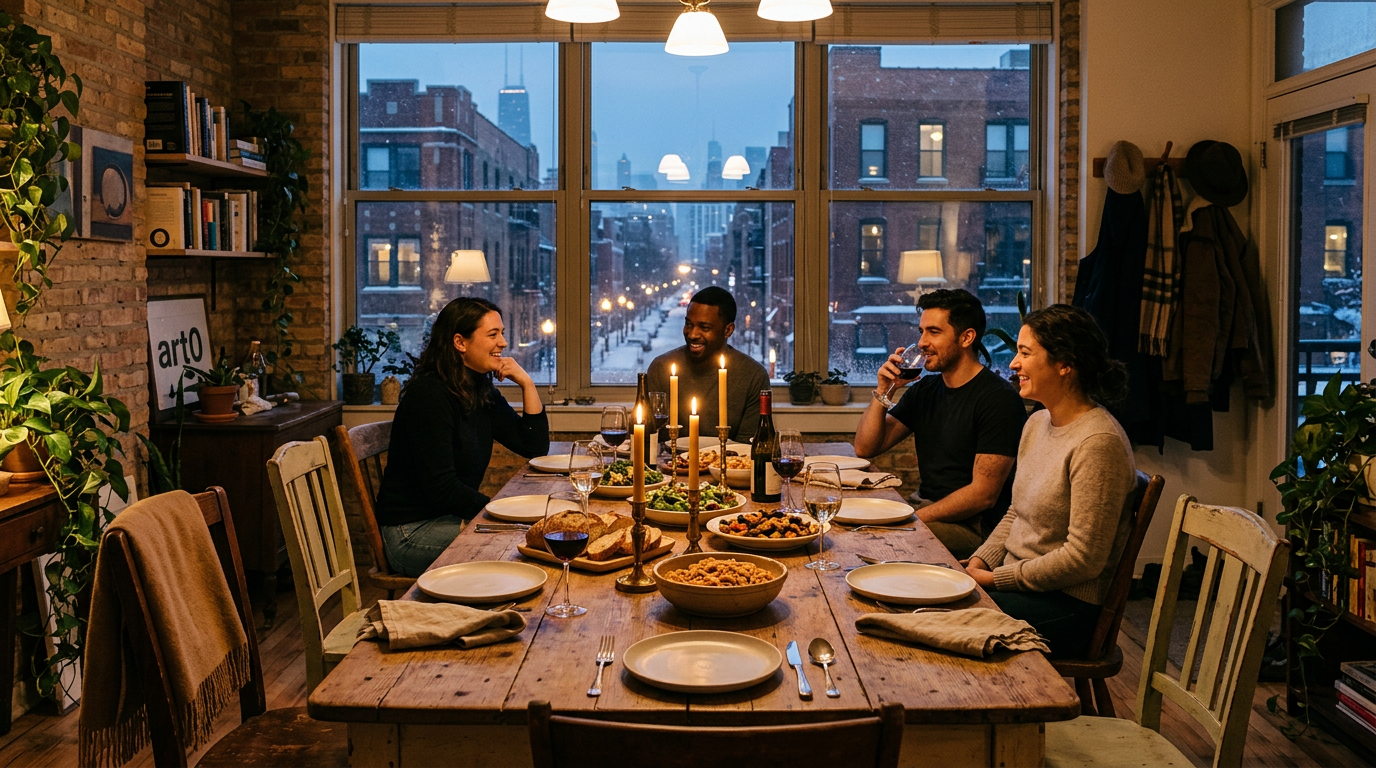
A six-top in Logan Square turns into twelve after someone drags over folding chairs. There is a pot of something braised, three bottles from a natural wine shop, one founder who biked over from Fulton Market, a chef on her night off, and a ceramicist from Pilsen who knows half the room. Nobody calls it networking. That would ruin it.
Chicago supper clubs in 2026 sit somewhere between dinner party, chef pop-up, art salon, neighborhood fundraiser, and operator therapy session. The city has always been better at rooms than scenes. It is less transactional than New York, less performative than Los Angeles, less conference-coded than Austin. Chicago still rewards the person who shows up on time, helps clear plates, and remembers the server’s name.
The hard part is not finding food. The hard part is getting into the right room without acting like you are trying to get into the right room.
What Chicago supper clubs actually are now
Forget the old steakhouse meaning of “supper club.” In Chicago, the modern version usually falls into one of these buckets:
- Chef-led pop-up dinners in restaurants on off nights, shared kitchens, galleries, or private apartments.
- Natural wine bar or bottle shop dinners where the guest list comes through regulars, newsletters, and Instagram stories.
- Founder dinners built around operators, investors, designers, and product people who want a real table instead of another panel.
- Neighborhood art dinners in Pilsen, Bridgeport, Humboldt Park, or Ukrainian Village, often connected to studio openings or small cultural organizations.
- Industry Monday meals where chefs, bartenders, coffee people, and hospitality operators gather when the rest of the city is at work.
- Member’s club dinners at places like Soho House Chicago or Guild Row, where the event calendar is public to members but the valuable invites still come from people, not listings.
Some are ticketed. Some are donation-based. Some are technically private. Many start as an email list, a chef’s Instagram post, or a friend saying, “Come through, but don’t make it weird.”
The city’s supper club map changes every month, but the feeder routes stay consistent: third-wave coffee counters, natural wine bars, independent bookstores, small galleries, coworking lounges, and restaurant bars where regulars actually talk to each other. If your only strategy is refreshing Resy, you are looking in the wrong place.
Where the rooms form before the dinner
!Chicago coffee shop communal table with laptops and morning espresso

Chicago does not hand you the invitation at the door. You earn it in the places where people gather before anyone commits to a table.
Start with coffee, because Chicago coffee still works as a weak-tie machine. Intelligentsia, Metric Coffee, Dark Matter Coffee, La Colombe, and Sawada Coffee all sit in different parts of the city’s work-life rhythm. You are not there to pitch your startup over a cortado. You are there to become a familiar, low-friction person. Bring your laptop, order well, tip, and do not occupy a four-top for three hours alone during the rush.
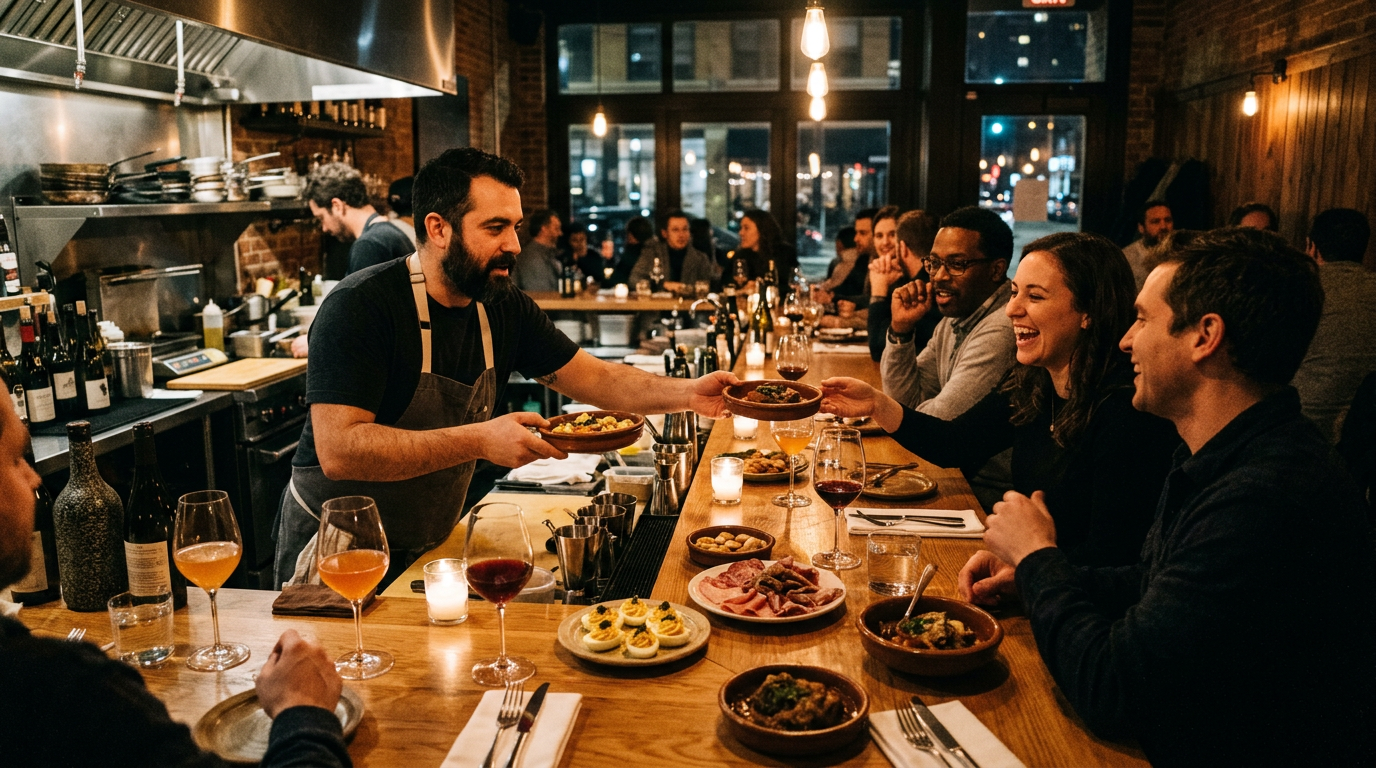
Natural wine bars and restaurants with serious bar seating are the next layer. Look for places where the staff can explain a bottle without giving a speech, where chefs wander through the room, and where people eat at the bar instead of treating it as a waiting area. Chicago’s better dinner invitations often begin as two people comparing notes over a glass of something cloudy and a small plate.
Coworking still matters, but differently than it did in 2019. WeWork, Industrious, Spaces, and local member-based rooms are not automatic community engines anymore. The hot desk alone will not save you. The event calendar can, if you choose the smaller sessions: breakfast roundtables, demo nights with twenty people, founder dinners, operator office hours. If the room has a microphone and a step-and-repeat, it is probably not where supper club invitations begin.
Also watch the cultural edge: gallery openings, chef book events, artist talks, nonprofit benefit dinners, and neighborhood market after-parties. Chicago’s serious connectors cross food, design, real estate, tech, and the arts more than outsiders expect.
What to order / what to look for
At the dinner itself, your order is a social signal. Not a status signal. A compatibility signal.
If it is a ticketed supper club, do not ask for custom treatment unless you have a real dietary restriction and you disclosed it early. These dinners are usually small teams working without the safety net of a full-service restaurant. Be easy.
If wine is part of the table, you do not need to perform expertise. Ask one clean question: “What are you excited to pour tonight?” Then listen. If someone brings up skin-contact wine, Jura, volcanic whites, or a producer you do not know, do not fake it. Curiosity beats bluffing every time.
If the meal is family-style, take less than you want on the first pass. The person who scrapes the serving dish before half the table has eaten does not get the next invite.
Look for these signs that the room is worth your time:
- The host introduces people by interest, not job title.
- There is a mix of regulars and newcomers.
- The chef, host, or organizer gives a short frame for the night and then lets the room breathe.
- People ask specific questions instead of trading LinkedIn headlines.
- Nobody is filming every course with flash.
- The table includes at least one person who is clearly there to support someone else’s work.
Bring something only if the host says it is welcome. A bottle is fine when appropriate, but not every dinner needs one. Better: offer to arrive early, help set candles, connect the host to a photographer, or send a clean guest list spreadsheet after the event if they are managing chaos.
Best time of day to go
!Small Chicago restaurant bar with shared plates and wine
For actually finding supper club routes, timing matters.
Weekday mornings, 8 to 10 a.m. are for coffee familiarity. This is when founders, freelancers, hospitality people, and remote operators form small routines. Same place, same day, four weeks in a row. That repetition does more than a cold DM.
Monday and Tuesday evenings are the most underrated. Restaurant people are off, rooms are cheaper to rent, and experimental dinners are more likely to happen. If you only go out Thursday through Saturday, you will mostly meet people who are entertaining clients or dates.
Sunday late afternoon works for neighborhood events, cookouts, and informal salons. Chicago people like a long table that ends early enough to be useful on Monday.
After 9 p.m. at restaurant bars can work if you are already part of the rhythm. Do not hover near chefs and force conversation. Sit at the bar, order a real meal, and let the night open naturally.
For founder-oriented rooms, watch the week around major tech, design, and food events. Chicago has a practical operator class: logistics, marketplaces, food businesses, consumer brands, climate, health care, real estate, B2B SaaS. The best dinners often happen adjacent to conferences, not inside them.
Etiquette and unwritten rules
Chicago supper club etiquette is not complicated, but it is enforced quietly. You usually do not get corrected. You just stop getting invited.
- Do not ask “Who else is coming?” like you are vetting the room. Ask what the host is trying to build that night.
- Do not show up empty-handed emotionally. Have a real point of view, a recent problem, a recommendation, or a useful question.
- Do not pitch at the table. If someone asks, give the 20-second version and move on.
- Do not treat the host like a concierge. They are taking social risk by including you.
- Do not bring an unapproved plus-one. Chicago rooms are often space-constrained and trust-constrained.
- Pay fast. Venmo, Zelle, ticket link, donation jar, whatever. Do not make the host chase you.
- Respect neighborhood context. A Pilsen art dinner is not a West Loop brand activation. A Hyde Park faculty-adjacent salon is not a River North client dinner.
- Do not over-post. Ask before filming people, art, home interiors, or the chef at work.
The useful concept here is weak ties, from sociologist Mark Granovetter. Your next meaningful opportunity is often not from your closest friend, but from someone just outside your circle. Supper clubs are built for those ties. The catch: weak ties only work when you are trusted enough to be passed along.
How to actually meet people there
Do not arrive with a stack of verbal business cards. Arrive with a few human openers that fit the room.
Good Chicago dinner openers:
- “How do you know the host?”
- “What neighborhood are you usually in?”
- “What brought you to this table tonight?”
- “What have you been working on that is harder than it looks?”
- “Who in Chicago is doing work you think more people should know about?”
- “What is your Tuesday-night spot when you do not want a scene?”
If someone gives you a real answer, ask one follow-up before you talk about yourself. That one move separates you from half the room.
Your own introduction should be short and specific. Try:
“I run operations for a small consumer brand, mostly supply chain and retail partnerships. I’m here because I’m trying to meet more people building real businesses in Chicago, not just people passing through.”
Or:
“I’m a freelance producer. I help restaurants and founders make events that do not feel like corporate homework.”
That is enough. If they are interested, they will ask.
The best move is to become useful without taking over. Connect two people at the table because they share a problem. Offer a vendor name. Send a link to a grant, a space, a printer, a photographer, a line cook, a CPA who understands restaurants. Chicago respects practical help.
The follow-up that gets you invited back
Follow-up should happen within 24 hours, while the night still has a shape.
Send the host a short note:
“Thank you for last night. The room had a real point of view, and I appreciated being included. I especially liked the conversation around independent retail and food costs. If useful, I can introduce you to two people who would be additive for a future table: one runs community at a coworking space, the other produces small dinners for arts groups.”
That note does three things. It shows you were paying attention. It offers value. It does not demand another invite.
For guests you met, do not send a generic LinkedIn request with no context. Use the thread of the conversation:
“Good meeting you at dinner last night. Your point about pop-ups needing better back-of-house systems stuck with me. Want me to send the checklist I mentioned?”
If you promised something, send it. If you did not promise anything, do not invent a meeting. A good follow-up can simply be: “I liked talking with you. If you are ever putting together a small operator table, I would be glad to contribute.”
The second invite usually comes from being remembered as steady, not spectacular.
Mistakes to avoid
The fastest way to stay outside Chicago supper clubs is to act like the invitation is the achievement.
Common mistakes:
- DMing hosts with “Would love to collab” and no actual idea. Say what you can contribute.
- Using a dinner as content first and community second. People can feel it.
- Name-dropping Soho House, AngelList, On Deck, South Park Commons, Lunchclub, or investors as proof of belonging. If those networks matter, they will surface naturally.
- Confusing expensive with interesting. Some of the best tables happen in apartments, shared kitchens, church halls, and back patios.
- Showing up hungry for access instead of dinner. Eat, listen, participate.
- Ignoring the staff. In Chicago, hospitality people often control the social map more than the loudest founder.
- Leaving without thanking the host in person. Basic, still missed.
Also avoid asking for the guest list after the fact. If you connected with someone, ask that person directly. The host is not your CRM.
A practical plan for the next 30 days
If you are new to Chicago or newly serious about finding better rooms, run this for one month.
Week one: choose one coffee spot and become a respectful regular. Same two mornings. Learn the rhythm. Notice who talks to whom.
Week two: attend one small event at a coworking space, gallery, bookstore, or member’s club. Skip the giant mixer. Choose the roundtable.
Week three: sit at the bar of a restaurant known for industry regulars on a Monday or Tuesday. Eat dinner there, not just a drink. Ask the bartender what pop-ups or chef nights are worth watching.
Week four: invite three people to a small dinner yourself. Not a “supper club brand.” Just a table with a reason. One operator, one creative, one hospitality person. Pay attention to chemistry. Afterward, introduce two of them to each other properly.
That is the Chicago path. Build one good table, and better tables start finding you.
Supper clubs here are not locked doors. They are trust systems. The city does not need you to be famous, loud, or perfectly connected. It needs you to be generous, punctual, curious, and useful when the bill arrives.
Discussion (0)
Loading comments…