Denver work cafés without the WeWork lobby feel
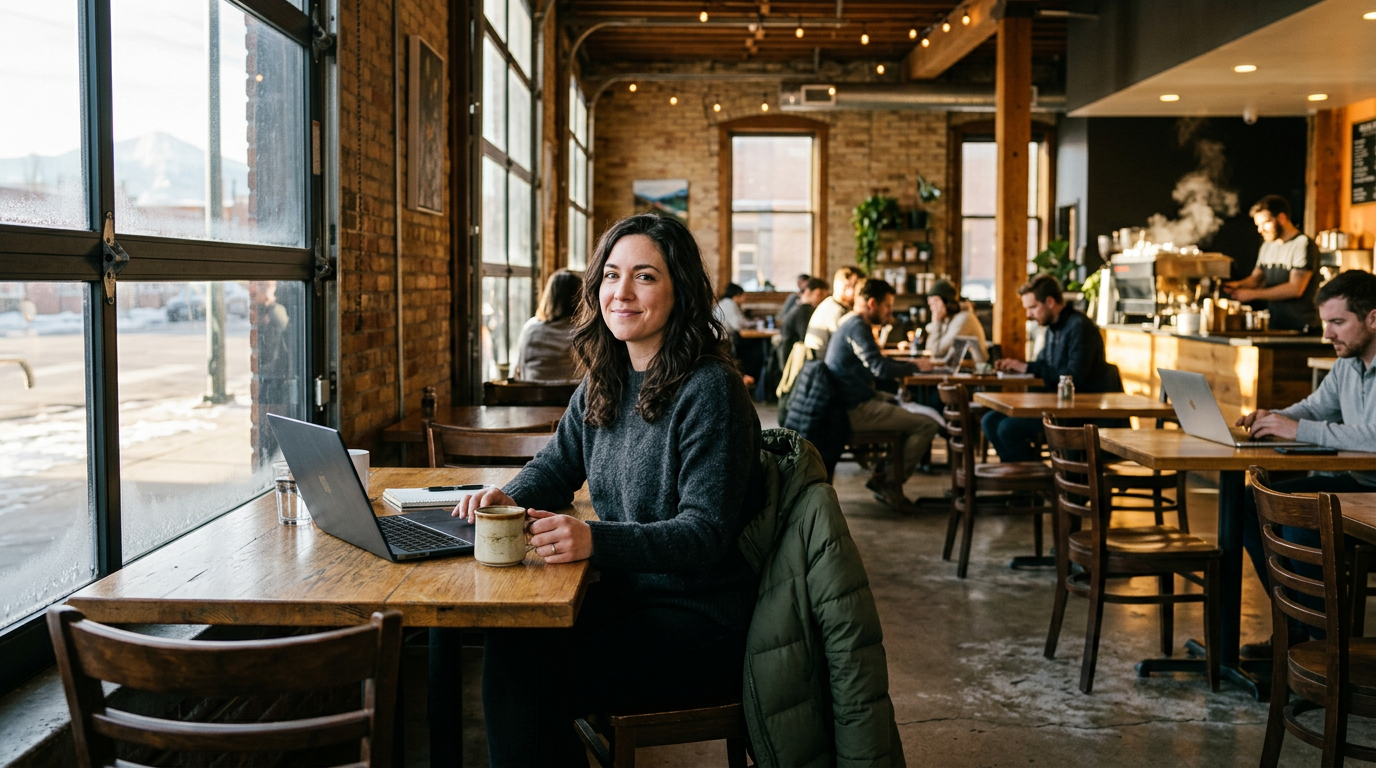
At 8:37 on a Tuesday, Denver laptops are already open before the puffy jackets come off. Someone in RiNo is editing a deck beside a half-finished cortado. A fractional CFO is taking a silent call from a corner banquette. Two product people are doing the Denver version of networking: ten minutes of business, then twenty minutes comparing trail conditions.
That is the room you want if you hate WeWork lobbies. Not a glass box with badge taps and startup wallpaper. Not a corporate lounge where every conversation sounds like a pitch rehearsal. A Denver coworking café should give you three things: decent coffee, permission to work without feeling stranded, and enough ambient awareness to spot people worth talking to.
The trick is choosing the right kind of room for the work you actually have that day. Denver has plenty of third-wave coffee now; that part is mature. The harder part is finding places that can absorb remote workers without turning into a silent laptop farm.
The Denver coworking café is not one thing
Denver remote work culture is a blend of early-rising outdoor people, operators who moved here from bigger tech markets, local agency owners, climate and outdoor-industry folks, real estate people, and a healthy number of founders who split time between Denver, Boulder, Austin, and the Bay Area.
That mix changes the room.
In New York, a laptop café can feel like a negotiation over inches. In San Francisco, it can feel like a fundraising lobby with better espresso. In Denver, the best work cafés are less performative. People are dressed for weather, not for status. Conversations start casually, but they often turn useful fast.
For remote workers, the practical map looks like this:
- Third-wave coffee shops for focused morning work and light meetings.
- All-day cafés and coffee-bar hybrids for longer sessions when you need food, outlets, and a little noise.
- Hotel lobbies and market halls for low-stakes meetings, especially near Union Station, RiNo, and LoDo.
- Day-pass coworking spaces when you have real calls, client work, or a need for a door that closes.
- Community events when the job is not work, but weak ties. Granovetter was right: your next useful intro usually comes from someone slightly outside your usual circle.
If you try to make one place do all five jobs, you become the person everyone resents: one cold brew, six hours, three Zoom calls, laptop charger stretched across a walkway. Denver notices.
Rooms that work better than a lobby
!Remote work setup on a café table in Denver afternoon light
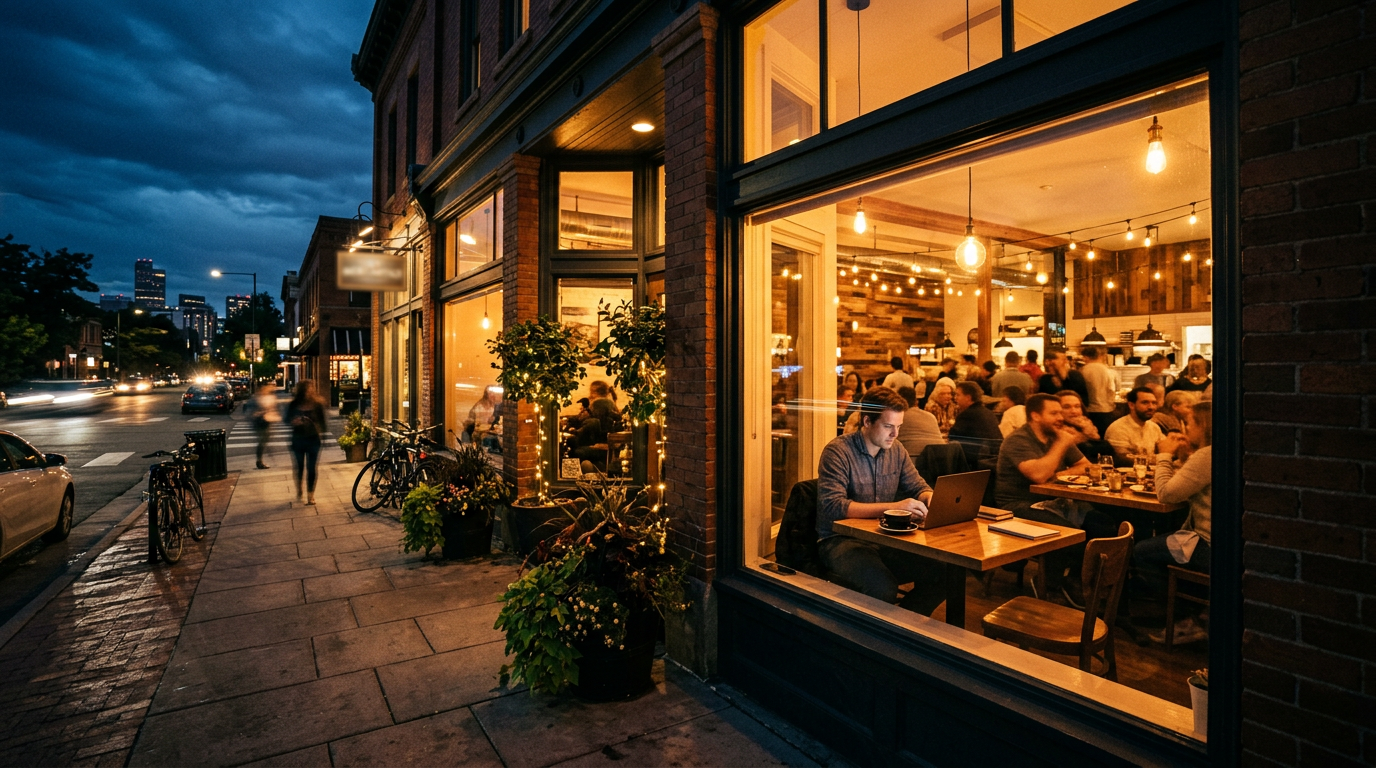
Start with the café types, then pick the neighborhood.
Serious coffee shops for heads-down mornings
Denver has credible third-wave coffee, not just pretty espresso bars. Huckleberry Roasters, Little Owl Coffee, Thump Coffee, Corvus Coffee, Novo Coffee, Queen City Collective Coffee, and Sweet Bloom all have enough reputation that you do not need to overthink the cup.
Use these places for:
- Writing, inbox cleanup, design review, research, and sales follow-up.
- One-on-one conversations under 45 minutes.
- Working near other operators without needing to force interaction.
Do not use them for:
- Back-to-back Zoom calls.
- Multi-person team meetings.
- All-day camping during the morning rush.
The best Denver coffee shops are not trying to be free coworking offices. That is why they are still good.
All-day cafés and hybrid rooms for longer work blocks
If you need food, room to move, and a less precious atmosphere, pick an all-day café, coffee-bar hybrid, or casual counter-service spot. RiNo and Five Points are especially useful here because the neighborhood already mixes creative offices, breweries, apartments, and walkable meeting spots.
Improper City is one of the better-known examples of a Denver room that can handle people posting up, meeting friends, and drifting from coffee into later-day drinks. Stowaway Kitchen has long had the kind of daytime energy that works for a real meeting, not just a laptop cave. The point is not to turn these places into an office. The point is to pick rooms built for duration.
Look for:
- Counter ordering or flexible service.
- Multiple seating zones.
- Food beyond pastry.
- Background noise that makes quiet conversation normal.
- A crowd that changes between morning, lunch, and late afternoon.
Hotel lobbies and market halls for first meetings
If you are meeting a founder, recruiter, investor, freelance client, or someone from AngelList, Lunchclub, Meetup, or a Denver Startup Week thread, do not always default to a tiny café table.
Use a hotel lobby, market hall, or public-facing mixed-use space when the meeting is exploratory. Union Station and the areas around LoDo, Dairy Block, and RiNo are useful because people can arrive from different parts of town without making the meeting feel like a commitment.
These rooms are good for first contact because nobody has to perform intimacy. You can have a 25-minute conversation, decide whether there is chemistry, and leave cleanly.
Paid desks when the work is not café work
If you need a phone booth, client privacy, a second monitor, or three hours of video calls, buy a day pass or hot desk. Denver has national coworking options such as Industrious and Spaces, plus local and regional coworking rooms that often feel less sterile than the big lobby model.
Use coworking when you need infrastructure. Use cafés when you need energy.
That split will save your week.
What to order / what to look for
Order like someone who understands the room has to make money.
For a short work block, coffee is fine. At a serious third-wave counter, a drip coffee, espresso drink, single-origin pour-over, or tea buys you a seat for a reasonable amount of time. If you are staying past one work sprint, order again. If the place serves food, eat there instead of unpacking a protein bar like you are at a gate in DIA.
What to look for before opening the laptop:
- Outlet reality: Do not assume. If you see two outlets and twelve laptops, this is a battery-only room.
- Table depth: Tiny two-tops are fine for coffee, bad for laptop plus notebook plus call notes.
- Chair comfort: Denver has a lot of beautiful hard chairs. Fine for 45 minutes. Not fine for quarterly planning.
- Acoustics: Concrete, tile, and grinders can make calls brutal. Great for privacy, bad for comprehension.
- Staff tempo: If the line keeps hitting the door, you are in the wrong place for a long stay.
- Neighborhood context: RiNo is better for creative and startup overlap. Cherry Creek is better for client polish. Cap Hill and Uptown can work for solo focus. Union Station is best for logistics.
For food-and-work rooms, look for a menu that supports a second order without making you feel like you are loitering. Breakfast into lunch is ideal. Coffee into an NA drink or beer later can work if the room naturally shifts that way.
Best time of day to go
!Denver remote workers walking near Union Station after work
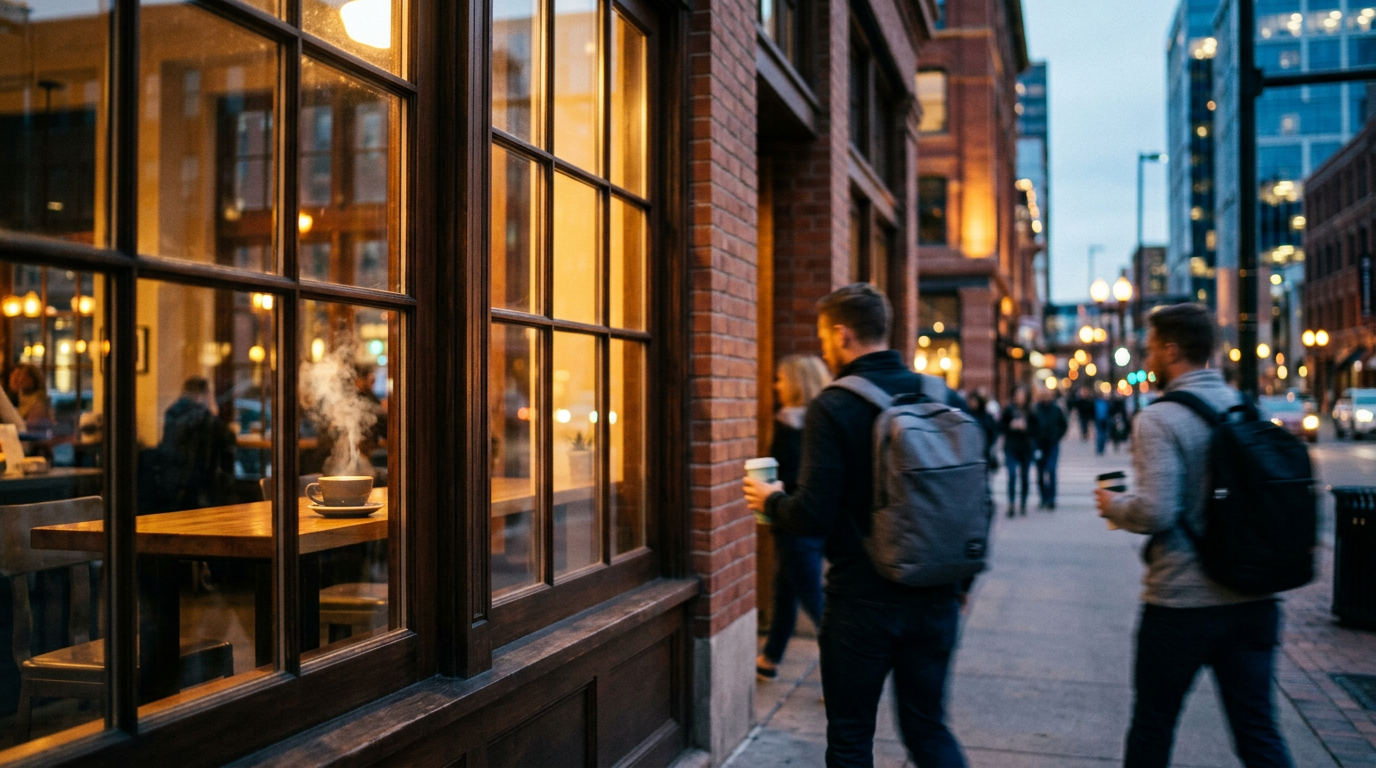
Denver starts earlier than coastal remote workers expect.
The strongest work window is usually 7:30 to 10:30 a.m. You get the serious people, the best seats, and the cleanest mental state. This is when to write, plan, ship, and send follow-ups.
The most socially useful window is 10:30 a.m. to noon. The first rush has thinned, and people are more willing to talk. If you want to meet someone for coffee, aim here. It does not wreck the day.
The worst window for laptop camping is noon to 1:30 p.m. If a café serves real food, lunch belongs to lunch customers. Either order food, move to a less pressured room, or take a walk.
The best second session is 2:30 to 5 p.m. This is underrated in Denver. People come back from meetings, the room gets looser, and the transition to an early drink or nearby founder dinner is easy.
Evening depends on neighborhood. RiNo can support a coffee-to-drinks arc. LoDo is better for planned meetings. South Broadway can work if you know the room. Cherry Creek is more polished, less random.
Weather matters, too. On bluebird snow days, expect schedules to bend. On hot summer Fridays, many people are halfway out the door by lunch. If you are trying to meet operators in Denver, Tuesday through Thursday still carries the week.
Etiquette and unwritten rules
Denver is casual, not careless. The room is relaxed, but people have a low tolerance for entitlement.
Follow these rules and you will be fine:
- Buy early, then buy again. One drink does not cover half a workday.
- Do not take calls in quiet coffee shops. Step outside or choose a louder hybrid room.
- Use headphones, always. Speaker audio is a civic offense.
- Keep your footprint small. One seat, one table, no charger tripwire.
- Move during rushes. If every table is full and you are nursing hour three, relocate.
- Tip like a regular, not a tourist. Staff remember who treats the room well.
- Do not treat baristas as concierges. Ask for coffee recommendations, not a neighborhood operating manual during a line.
- Read the room before networking. Headphones on means no. Closed laptop and eye contact means maybe.
The most Denver-specific rule: do not confuse friendliness with availability. People will chat. That does not mean they want a pitch.
How to actually meet people there
The wrong move is walking into a café and trying to network with strangers like you are at a conference mixer. Nobody wants that.
The right move is to become lightly recognizable.
Pick two or three rooms and build a weekly rhythm. Same mornings. Same general seat. Same respectful ordering pattern. You are not trying to become a mascot. You are creating enough familiarity that a normal conversation can start.
Use openers that fit the moment:
- At a communal table: “Are you good if I take this corner for an hour?” Simple, polite, non-salesy.
- After overhearing a relevant work detail: “I heard you mention climate ops. I’m working near that space too. Worth swapping notes another time?”
- At a laptop-heavy café: “Do you know if this place gets impossible around lunch, or is it usually workable?”
- Before an event nearby: “Are you heading to the Meetup at six, or just working here?”
- With another regular: “I keep seeing you here on Tuesdays. I’m usually doing client work from this side of town.”
Notice the pattern. No pitch. No deck. No trapped audience.
The follow-up matters more than the opener. If there is a real thread, say:
- “I’m going to send one useful thing, not a giant intro email.”
- “Want to do a 20-minute coffee next week instead of trying to solve it here?”
- “I know one person in Denver who may be relevant. If it is useful, I’ll make a clean intro.”
Then actually do it within 24 hours. Denver’s professional scene is smaller than newcomers think. Flaky follow-up travels.
For more structured connection, pair café work with one real-world anchor each week: Denver Startup Week when it is running, a specific Meetup, a founder dinner, a climate tech gathering, an outdoor-industry event, or a coworking open house. The café is where the weak tie warms up. The event is where it becomes a real conversation.
Mistakes to avoid
The first mistake is chasing the most photogenic café. Pretty rooms often have bad working conditions: tiny tables, scarce outlets, loud surfaces, and staff who need turnover. Great for a cappuccino. Bad for a four-hour strategy block.
The second mistake is overusing RiNo. RiNo is useful, especially for founders, designers, and agency people, but it is not the whole city. Try Cap Hill for solo focus, Cherry Creek for polished client meetings, Union Station for logistics, LoHi for relationship coffees, and Baker or South Broadway when you want less startup theater.
The third mistake is taking confidential calls in public. Nobody wants to hear your client’s numbers, hiring drama, or investor update. If privacy matters, buy a day pass, book a phone room, or work from home.
The fourth mistake is expecting Denver to behave like Austin or Miami. The networking here is less loud. People may be ambitious, but they often lead with lifestyle, craft, and trust. A hard sell lands badly.
The fifth mistake is staying too long in the wrong room because you like the vibe. If your battery is dying, your back hurts, and you are avoiding calls, the room has stopped serving the work.
A practical weekly rotation
Here is the pattern that works for most remote operators who want café energy without the WeWork-lobby feeling.
Monday: stay close to home or use a paid hot desk. Monday is for planning, calls, and admin. Do not burn social energy early.
Tuesday morning: serious coffee shop for focused work. Huckleberry, Little Owl, Thump, Corvus, Novo, Queen City, Sweet Bloom, or a comparable neighborhood café. One deep work block. No calls.
Tuesday late morning: one planned coffee with a founder, freelancer, or operator. Keep it under 45 minutes.
Wednesday: day pass or dedicated desk if you have meetings. This is the day to use real coworking infrastructure.
Thursday afternoon: all-day café or hybrid room in RiNo, Five Points, LoHi, or near Union Station. Leave room for an event, supper club, founder dinner, natural wine bar meet-up, or casual handoff into the evening.
Friday: neighborhood café only if you can keep it light. Denver Fridays are slippery. People are thinking about mountains, kids, flights, or patios.
The point is not to find one perfect coworking café. The point is to stop asking cafés to solve every remote-work problem. Use the right Denver room for the job in front of you: coffee shop for focus, hybrid café for duration, lobby or market hall for first meetings, paid coworking for calls, events for actual connection.
Do that, and you get the part of coworking people still want in 2026: being around humans who are building things, without spending your day inside a branded lobby pretending the kombucha tap is culture.
Discussion (0)
Loading comments…