The LA breakfast rooms founders use without performing
The 8:17 a.m. meeting in LA has a very specific energy: sunglasses still on, oat cappuccino half-finished, someone coming from a workout in Venice, someone else already worried about the 10. Founders here do breakfast because dinner gets political, drinks get messy, and lunch destroys the middle of the day. Breakfast is efficient. It also exposes whether you understand the city.
LA is not a one-room startup town. The breakfast scene splits by geography, industry, and tolerance for driving. Venice and Santa Monica skew SaaS, consumer, creator tools, wellness, and capital-adjacent operators. Culver City pulls media-tech, entertainment infrastructure, agencies, and product people who need to be near studios without acting like they work at one. Silver Lake and Los Feliz have builders, designers, music people, and second-time founders who do not want a Westside morning. West Hollywood and Beverly Hills handle investor coffees, brand founders, and people who still take appearance seriously. Downtown and the Arts District work when the meeting is tied to real estate, fashion, logistics, restaurants, or someone already has a reason to be east of the 110.
The trick is not finding a famous breakfast place. It is choosing a room where a business conversation can happen without turning into theater.
The LA breakfast map that actually matters
For founder breakfasts, LA rooms fall into five useful types.
- Third-wave coffee bars with real seating: Good for first meetings, investor warm-ups, and 30-minute calibration. Think Verve, Blue Bottle, Intelligentsia, La Colombe, Stumptown-adjacent culture, and neighborhood shops that care about espresso but do not punish laptop users before 9.
- All-day cafes with food that arrives fast: Better when the meeting needs 60 to 75 minutes. You want eggs, grain bowls, toast, and coffee refills without a server trying to turn the table every eight minutes.
- Hotel lobby restaurants and lobby lounges: Strong for out-of-town investors, later-stage founders, and anyone who needs neutral territory. The downside is cost and the occasional finance cosplay.
- Membership-adjacent rooms: Soho House, NeueHouse, and similar member's club environments are useful if both people already belong to that orbit. Bad if one person feels like they are being auditioned.
- Coworking-adjacent cafes: Near WeWork, Industrious, Spaces, or an independent coworking operator, breakfast becomes a pre-office handshake. Great for operators who need to move into a hot desk, day pass, or dedicated desk afterward.
The most reliable founder breakfast does not require explaining the choice. If you have to sell the room, it is probably the wrong room.
What to order / what to look for
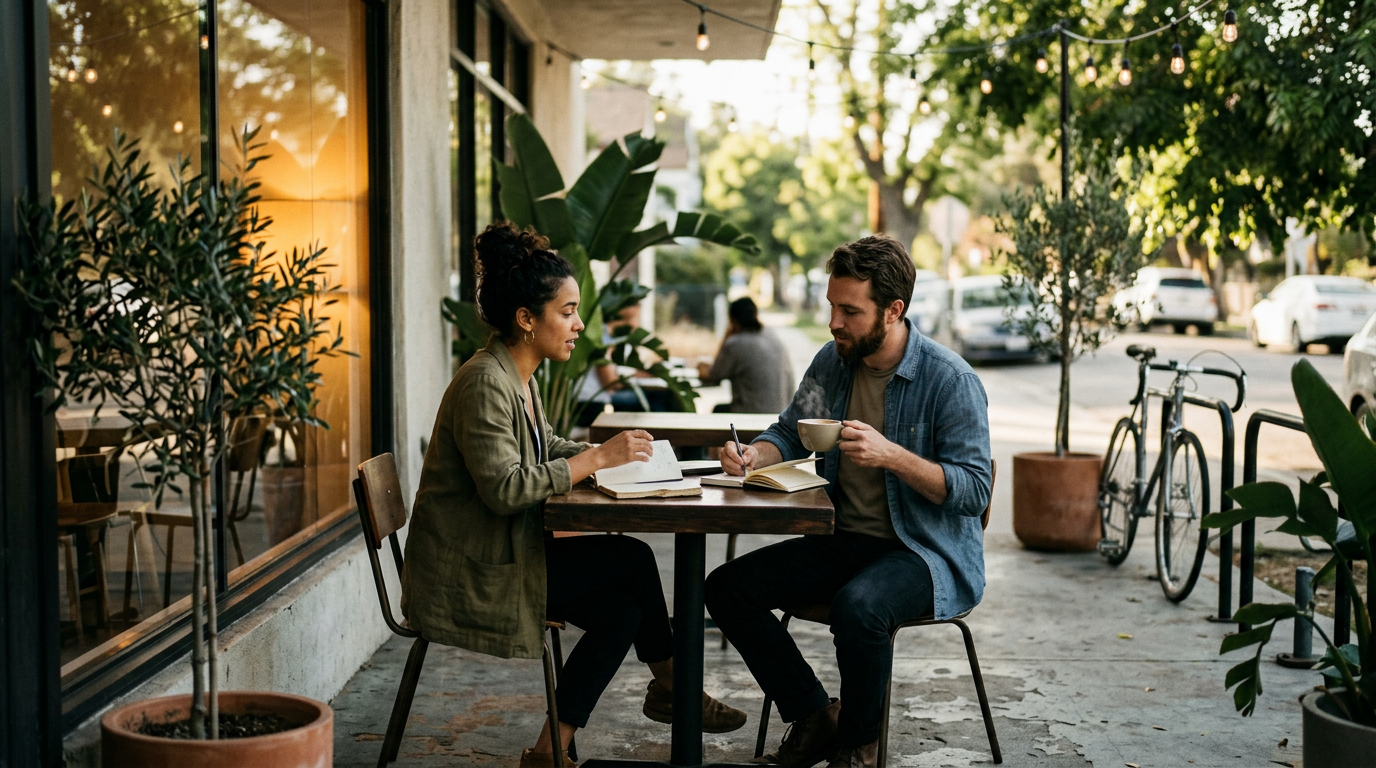
!Founders meeting over coffee on a sunny Los Angeles cafe patio
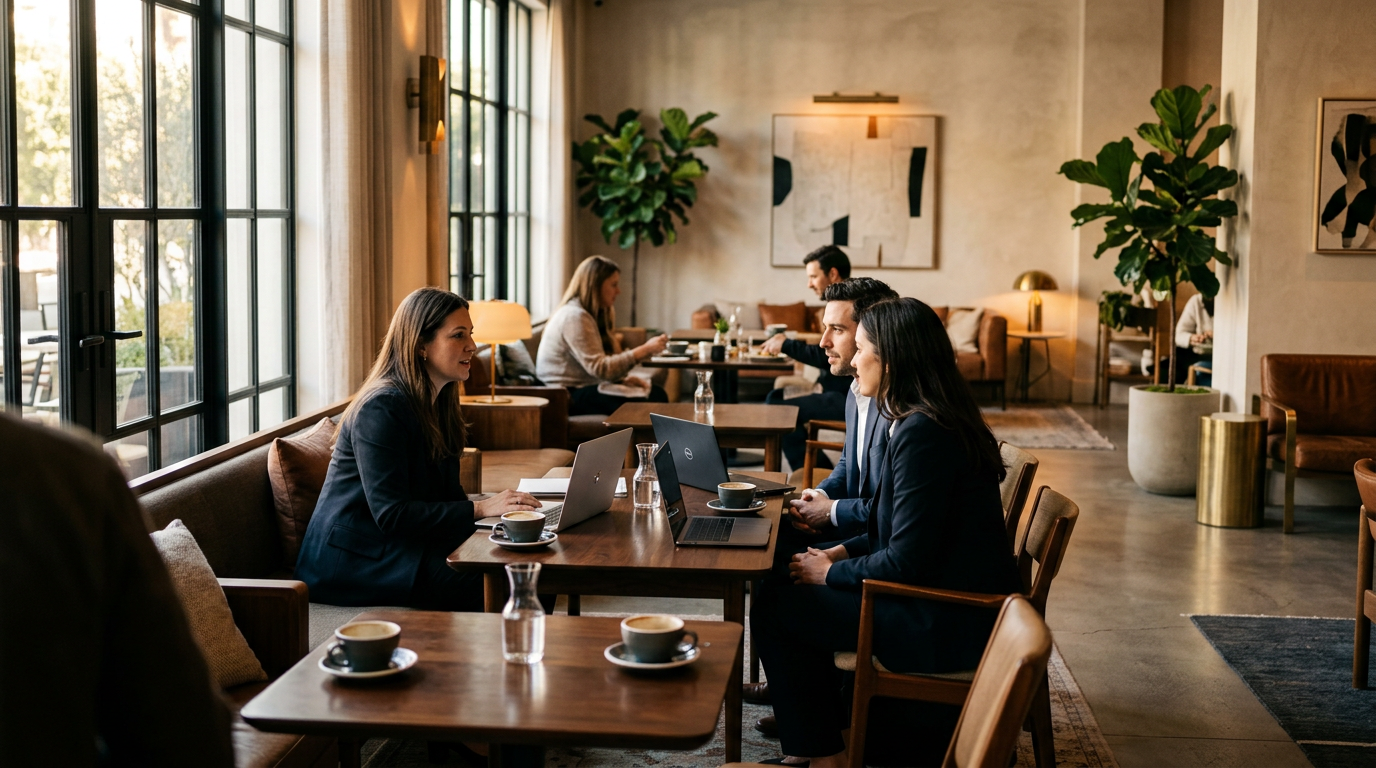
Order like you plan to have a conversation, not like you are staging a personal brand shoot.
For coffee meetings, the safest order is simple: espresso, drip, cappuccino, cold brew, or a single-origin pour-over only if the bar is built for it and the line is not hostile. A pour-over can be a nice signal in a third-wave coffee room; it can also make you look like you ignored the clock. Read the line.
For food, choose something that keeps your hands and attention free.
- Soft-scrambled eggs, toast, yogurt, or a breakfast bowl
- A pastry if this is a true 30-minute meet
- No giant sandwich that collapses mid-sentence
- No over-customized order unless you have a real allergy
- No messy green juice situation on a small two-top
Look for three things before you commit to a venue type:
- Acoustics: A loud room kills nuance. A silent room makes every ARR number feel public.
- Table spacing: LA has plenty of beautiful rooms that are terrible for business because the next table can hear every word.
- Exit paths: The best breakfast spot lets one person leave cleanly at 45 minutes while the other can stay and answer Slack.
If you are meeting someone for the first time, do not pick a place that requires valet, a waitlist, and a 20-minute explanation of why it is worth it. That is not taste. That is friction.
Best time of day to go
The serious LA breakfast window is narrower than newcomers think.
7:30 to 8:15 a.m. is for operators, parents, fitness people, and anyone trying to beat traffic. These meetings are crisp. You can get real agenda-setting done before the city starts dragging.
8:30 to 9:30 a.m. is the main founder slot. Strong for first investor chats, advisor meetings, recruiting conversations, and founder-to-founder referrals. Rooms are awake but not yet chaotic.
9:45 to 10:30 a.m. is the creative-founder window. Better for brand, entertainment, creator economy, design, and people whose workday starts later but runs long. Also useful if one person is crossing town.
Avoid 10:45 a.m. if the place gets brunchy. Brunch energy is not founder energy. The tables slow down, the room gets louder, and the meeting starts feeling like a social plan with a calendar invite attached.
Monday breakfast can be productive but slightly defensive. Everyone is triaging. Tuesday and Wednesday are the strongest days. Thursday works for relationship-building. Friday breakfast is good for people who already know each other; first meetings on Friday can feel like a soft pass unless there is a clear reason.
Etiquette and unwritten rules
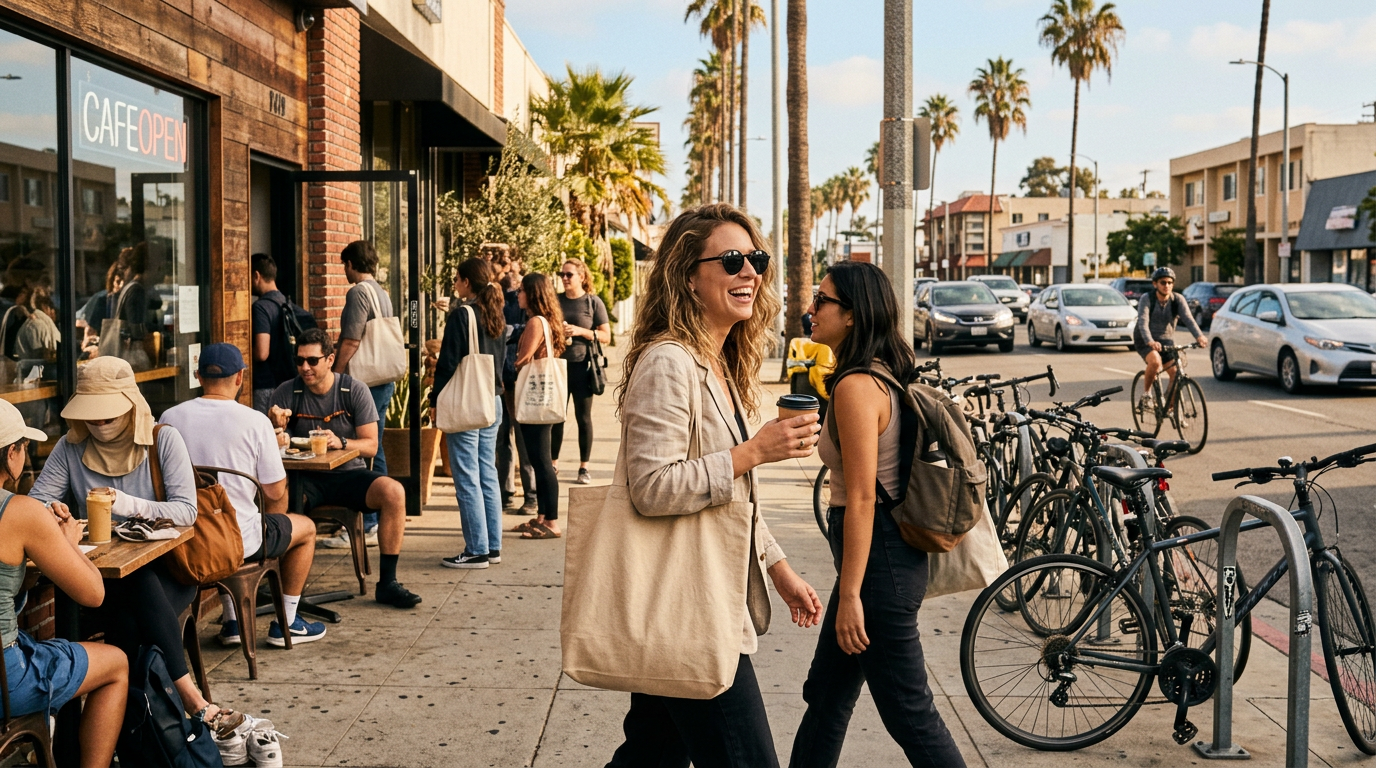
!Morning arrivals outside a Westside Los Angeles cafe
LA founder breakfast has its own operating system.
First rule: do not make someone cross the city unless the power balance justifies it. If you are asking for advice, capital, a favor, or an intro, you travel. If both people are peers, split the distance or choose a room near the next commitment.
Second: name the exact duration when you book it. Say: 30 minutes is perfect, and I can come to your side of town. That line does more than politeness. It tells the other person you understand opportunity cost.
Third: do not open with your deck. Breakfast is not Demo Day. Start with context, not slides. If the conversation earns the deck, send it after.
Fourth: respect the room. In a tight cafe, keep fundraising numbers, cap table drama, and employee issues quiet. LA rooms are full of people who know people. The person pretending not to listen may be friends with your lead investor.
Fifth: pay quickly if you invited. Do not create a check negotiation over two coffees and eggs. If the other person insists, fine. But be prepared.
The best founders are easy to meet. They confirm the night before, arrive five minutes early, order without a production, and end on time.
How to actually meet people there
A breakfast room is not a networking event. That is why it works.
You meet people in LA breakfast spots through repeated presence, soft introductions, and low-pressure recognition. This is where weak ties matter. Granovetter's old point still holds: the person who changes your path often is not your closest friend, but the loose connection one circle over. Breakfast is where those loose connections become usable without a name tag.
Use these moves.
- Become a regular at one primary room: Same two mornings each week, same general time. Baristas and regulars notice consistency faster than charisma.
- Host a two-person breakfast, then expand to three: One founder, one operator, one investor-adjacent friend. Three people is enough for new information, not enough for performance.
- Use a precise opener: I keep seeing smart people take 8:30s here. Are you usually working out of this neighborhood? Simple. Local. Not thirsty.
- Ask for context, not extraction: What are you seeing in early-stage hiring right now? lands better than Can you introduce me to funds?
- Trade one useful thing: A candidate lead, a vendor warning, a real estate note, a customer insight, an event worth attending.
If you are coming from AngelList, Lunchclub, Meetup, On Deck alumni circles, South Park Commons friends, or a founder Slack, move the relationship into breakfast quickly. LA is full of digital almost-connections. The person who says, I am in your neighborhood Wednesday morning, want to do 30 minutes before work?, wins.
Follow-up the same day. Not three days later. Send a short note with one useful artifact: the intro you promised, the restaurant group contact, the coworking day pass note, the deck link, the article, the hiring lead. Keep it clean.
Venue plays by neighborhood
You do not need one perfect LA spot. You need the right room for the relationship.
Venice and Santa Monica
Use this zone for Westside founders, product people, wellness operators, consumer startups, and investors who live west of the 405. Third-wave coffee with seating works early. Gjusta is a known power breakfast room, but it can feel like a scene and is not always ideal for sensitive conversations. Great White is useful for a more polished breakfast, though you should assume it may skew social depending on the hour. Hotel-adjacent rooms in Santa Monica work for visiting investors who need parking and a clean exit.
Best move: suggest 8:30, offer two specific options, and mention whether you need food or just coffee.
Culver City
Culver is the compromise zone when one person is Westside and the other refuses to go fully west. It is also practical for entertainment-tech, media, agency, and studio-adjacent meetings. Look for an all-day cafe with reservations or a coffee room near office clusters. The goal here is logistics, not mythology.
Best move: use Culver when the meeting matters but neither person should win the commute.
Silver Lake, Los Feliz, and Echo Park
Eastside breakfast is better for design-heavy founders, creators, writers, music people, and builders who would rather talk product than status. Intelligentsia Silver Lake remains a recognizable coffee anchor, though it can be more visible than private. Neighborhood cafes with patios are often better than the famous room.
Best move: keep the meeting casual and specific. Eastside people can smell forced networking immediately.
West Hollywood and Beverly Hills
This is the lane for brand founders, investors, talent-adjacent operators, hospitality people, and anyone pairing breakfast with showrooms, agencies, or later meetings. Joan's on Third is a durable reference point. Hotel restaurants can work if the other person is senior or visiting. Soho House can be effective if membership is already part of the relationship; do not use it as a flex.
Best move: make the logistics painless. Parking, timing, and table availability matter more than the name.
Downtown and Arts District
Use DTLA when there is a real reason: a courthouse-adjacent matter, real estate, fashion, food and beverage, logistics, or someone based downtown. Arts District cafes can be excellent for operator meetings, especially when the conversation is about physical businesses rather than pure software.
Best move: do not drag a Westside VC downtown for a cold intro breakfast unless there is a clear agenda.
Breakfast plus coworking is underrated
The post-pandemic coworking shift made breakfast more useful, not less. People no longer treat the office as the default place to meet. They stack a breakfast, a hot desk, a partner call, and a founder dinner invite into the same day.
If you are near a WeWork, Industrious, Spaces, NeueHouse, or a serious independent coworking space, use breakfast as the front door. Meet at 8:30, then move into a day pass or dedicated desk environment if the work continues. This is especially useful for cofounder trials, advisor work sessions, and investor diligence that needs more than a vibe check.
The key is to separate the two invitations. Breakfast first. Work session only if useful. Nobody wants to feel trapped in your productivity maze.
Mistakes to avoid
The easiest way to make an LA breakfast feel forced is to overbuild it.
- Picking the most photographed room instead of the most functional one
- Asking someone to cross from Silver Lake to Santa Monica for a vague coffee
- Booking 10:30 and pretending it is still a work breakfast
- Opening with fundraising before trust exists
- Bringing a laptop to a tiny table and turning breakfast into a pitch booth
- Inviting five people when two would have been better
- Treating the barista like background staff in a room where regularity matters
- Staying past the agreed time because the conversation is going well
- Sending a generic nice to meet you note with no next step
The better version is simple. Choose the right neighborhood. Make the time short. Give the other person an easy yes. Order cleanly. Share one real piece of context. Leave before the energy drops. Follow up with something useful.
That is why breakfast works in LA. It cuts through the city's performative layer without pretending status does not exist. The room still matters. So does the coffee, the parking, the table, the neighborhood, the person who walks in late from the 10. But when you get the setup right, breakfast becomes the least awkward way to turn a loose LA connection into an actual working relationship.
Discussion (0)
Loading comments…