The LA omakase rules founders learn too late
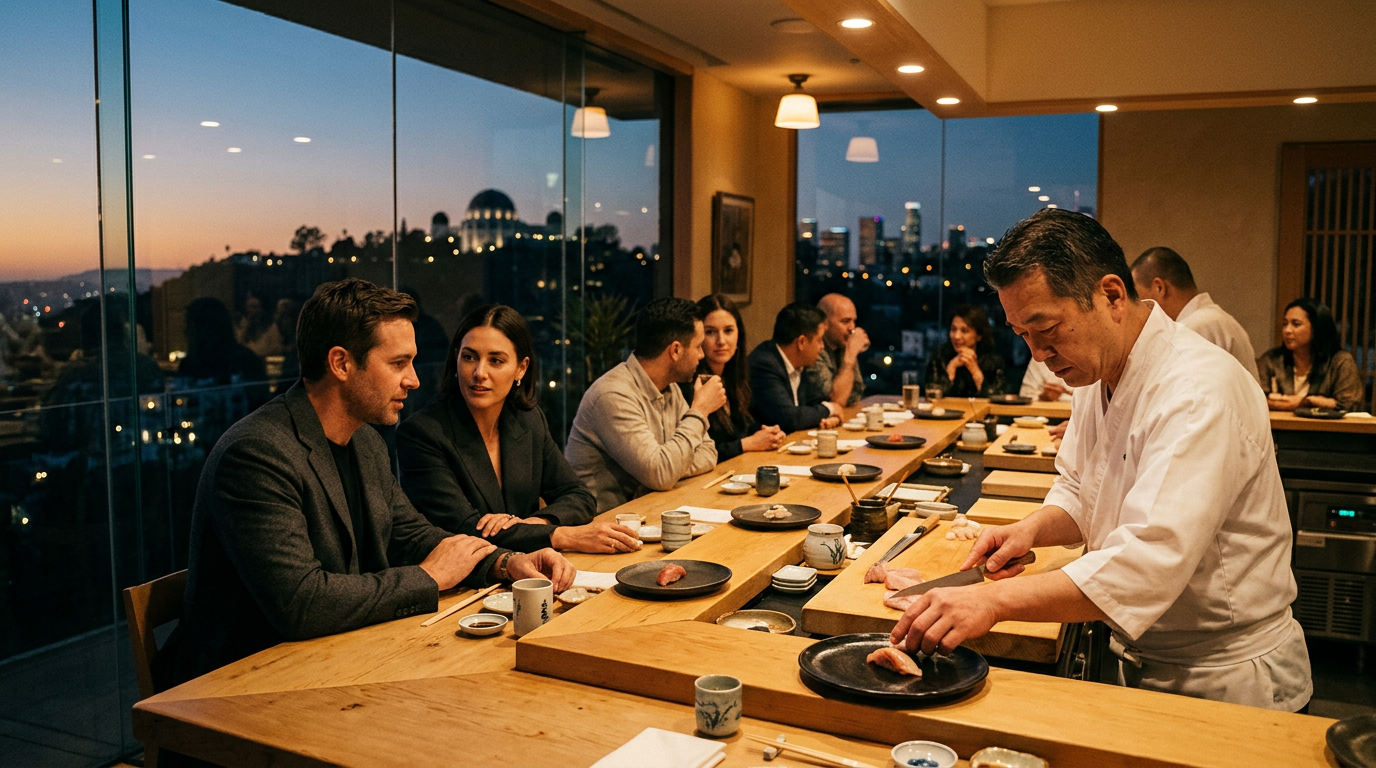
At 7:12 p.m. in West Hollywood, the founder who arrived on time is already behind. The host is checking the seating chart, the chef is moving with quiet precision, and three investors have somehow turned the sidewalk wait into a cap-table conversation without saying the word “fundraise.” That is LA omakase networking in 2026: expensive, quiet, relationship-heavy, and far less forgiving than a coffee chat at Verve or a loud dinner in Arts District.
A founder dinner at an omakase counter is not just dinner. It is a test of taste, timing, restraint, and whether you can read a room before trying to own it. LA has plenty of sushi bars with serious reputations, from Sushi Park and Nozawa Bar to Morihiro, Shunji, and Q Sushi. But the more important choice is the type of room: a chef-led counter with limited seats, a private-room omakase format, or a sushi-adjacent spot where the social goal matters more than purity.
If you are a first-time founder walking into one of these dinners, your job is simple: do not embarrass the host, do not turn the meal into a pitch deck, and leave with two or three people who would actually take your call next week.
LA omakase is not a steakhouse founder dinner
LA business meals used to split cleanly: breakfast in Beverly Hills, coffee in Santa Monica, investor dinner in West Hollywood, late drinks in Venice or Silver Lake. Omakase cuts across that map. It brings entertainment money, tech money, creator money, family office money, and operator circles into one quiet room.
That changes the rules.
At a steakhouse, volume covers sins. At an omakase counter, everyone hears your timing, your questions, your interruptions, your phone buzzing, your awkward attempt to explain AI agents over kohada. The counter makes status visible. Who defers. Who performs. Who knows when not to speak.
LA adds its own layer. People here are allergic to obvious networking, even when the entire dinner exists for networking. The polished move is to be direct without being needy. You can say what you are building. You cannot hijack the first ten minutes with market size.
The best founder dinners use omakase as a forcing function. Small group. Set progression. Shared attention. Natural pauses. The format gives you what loose cocktail events rarely do: repeated micro-moments with the same people over two hours. That is where weak ties, Granovetter’s old but still useful idea, actually pay off. The person two seats away may not invest, hire, or partner today. They may introduce you to the person who does.
Pick the right room before you worry about the fish
!Warm omakase counter place setting with chopsticks and sake glass
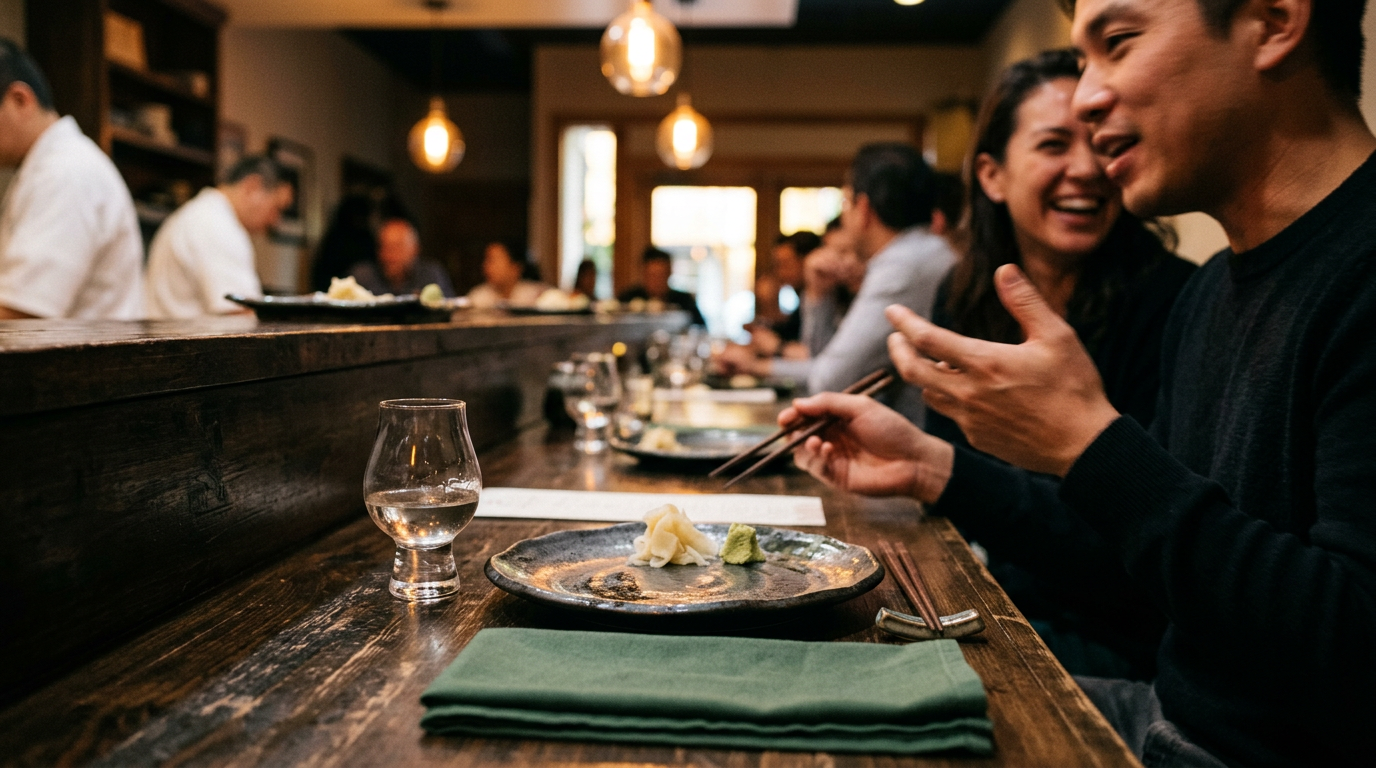
For a first-time founder dinner, the venue type matters more than whether the uni is from Hokkaido or Santa Barbara.
Look for one of four formats:
- Serious sushi counter, eight to twelve seats: Best for high-trust dinners with investors, acquirers, senior operators, or a small founder circle. Conversation is quieter and more intentional.
- Private-room omakase: Better when the group includes people who do not already know each other, or when the host wants occasional business talk without disturbing the counter.
- Sushi bar with a set menu but looser energy: Good for pre-seed founder groups, creator-operator dinners, or post-event meetups after a panel in Santa Monica, Culver City, or Beverly Hills.
- Sushi-adjacent Japanese restaurant with izakaya flexibility: Useful when budget sensitivity is real, dietary restrictions are mixed, or the dinner goal is bonding rather than signaling.
If you are not the host, do not suggest a venue based on Instagram. Ask what kind of dinner it is:
- “Is this more counter-style and quiet, or are we actually trying to talk business?”
- “Do you want this to feel investor-facing or founder-to-founder?”
- “Any dietary constraints I should know before I say yes?”
If you are the host, be honest in the invite. “Small omakase dinner, mostly founders and operators, light intros, not a pitch night” is better than vague social language. LA people will still read between the lines, but you have set the temperature.
What to order / what to look for
At true omakase, you are not really ordering. That is the point. The chef decides the progression, and your job is to receive it well.
Look for these signs of a dinner that will work for founder networking:
- A clear start time: Omakase is not LA-flexible. Late arrivals disrupt the counter.
- A set progression: It keeps the meal moving and limits menu negotiation.
- Reasonable sake or wine options: You want pacing, not a table that becomes sloppy by course six.
- Seats close enough for cross-talk: A long counter can strand people. Private rooms solve this but lose some chef interaction.
- A host who has pre-cleared dietary issues: No one should announce a surprise shellfish allergy after the first course lands.
What to drink depends on the room. Sake is the cleanest fit if you drink, but do not turn the dinner into a sake seminar unless someone asks. Champagne works. A crisp white works. Natural wine can work in LA, especially with founder-creator crowds, but not every sushi counter wants that energy.
If you do not drink, say it plainly and early. “I’m staying off alcohol tonight, but I’m good with tea or sparkling water” is enough. No speech required.
What not to ask for: spicy mayo, extra soy sauce baths, heavy wasabi, substitutions without need, or “Can you make it less fishy?” If you are new to omakase, that is fine. Act curious, not demanding.
Good quiet questions:
- “What should I notice about this piece?”
- “Is this better eaten right away?”
- “Is the rice temperature part of the style here?”
Bad questions:
- “What’s your most expensive fish?”
- “Is this like Nobu?”
- “Can I get a roll after this?”
Best time of day to go
!Small private Japanese dining room with founders in conversation
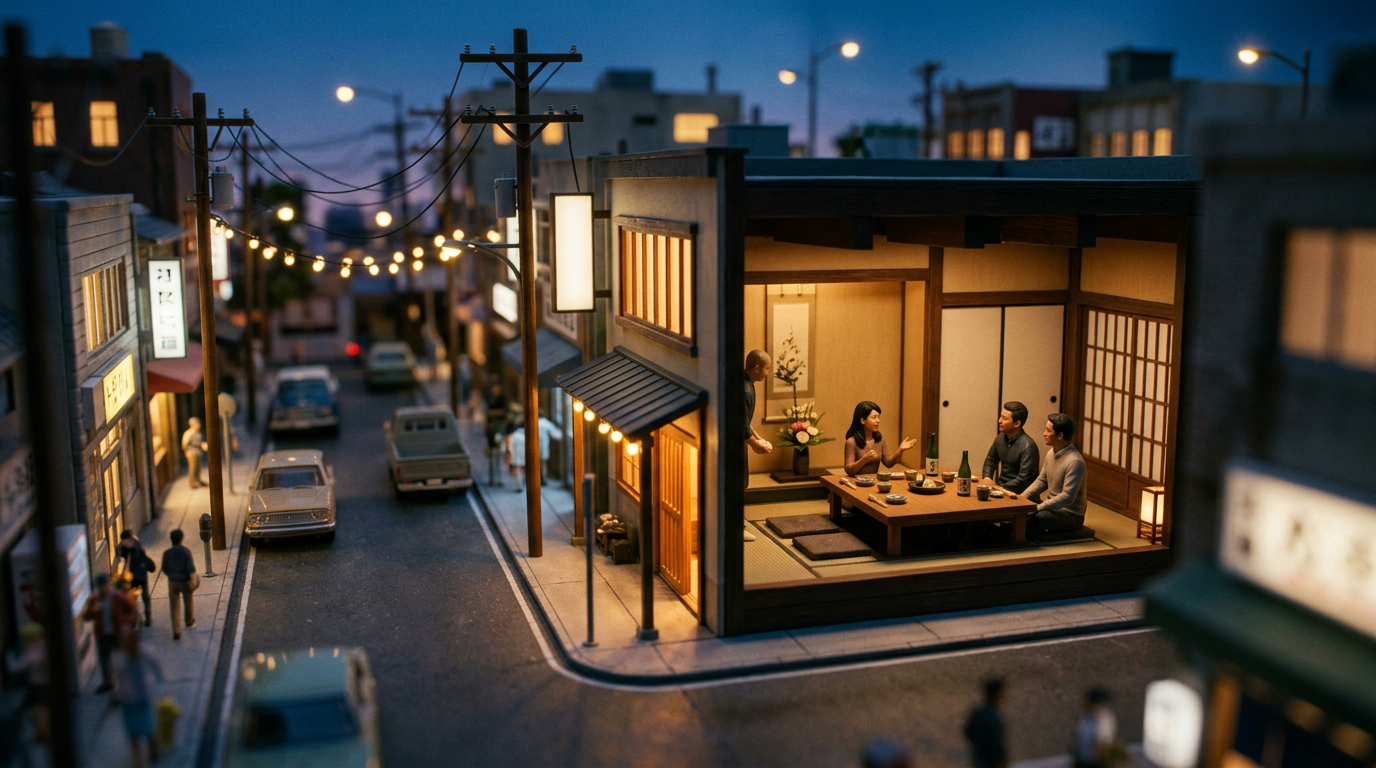
For founder dinners, the best omakase seating is usually early enough to keep people sharp and late enough that they are not coming directly from a board call.
6:00 to 6:30 p.m. works for serious investor-facing dinners. People arrive clearer, drink less, and can still make a later commitment in Beverly Hills, Venice, or Hollywood if needed.
7:00 to 7:30 p.m. is the sweet spot for peer founder dinners. The day is over, traffic has softened a little, and the meal can carry into one controlled follow-up drink if the chemistry is real.
After 8:30 p.m. gets riskier. In LA, late omakase can become half-dinner, half-performance. It works for entertainment founders, creator economy groups, and people who treat sleep as a rumor. It is worse for focused relationship-building.
Plan around geography. A Santa Monica founder should not casually accept a Downtown LA counter at peak traffic unless the guest list is worth it. A Silver Lake operator may say yes to Atwater, Hollywood, or Arts District and quietly pass on Beverly Hills unless the host is strong. LA networking is not just who is in the room. It is whether the room is worth the drive.
Etiquette and unwritten rules
The core rule: respect the chef, then respect the host, then work the room.
At the counter, eat each piece when it is placed in front of you. Many pieces are seasoned already. If the chef tells you no soy sauce, listen. Use your hands if that seems to be the house style and you are comfortable; chopsticks are also fine. Do not let a piece sit while you finish a story about your seed round.
Phone etiquette is sharper here than at most LA dinners. One quick photo, if the room allows it, is usually fine. A full content shoot is not. No flash. No filming the chef’s hands without asking. If you have to take a call, step out between courses and apologize to the host, not the whole counter.
Founder-specific rules:
- Do not pitch before the third course. Let people settle.
- Do not ask for checks, intros, or allocations at the counter. Save direct asks for follow-up.
- Do not over-explain your company. One clean sentence beats five minutes of category design.
- Do not correct the chef or the host. Even if you know more, nobody likes that person.
- Do not make the bill weird. If the host invited, assume the host has a plan. If it is split, pay fast and without commentary.
Your self-introduction should sound like a person, not a LinkedIn headline.
Try:
- “I’m building workflow software for independent clinics. Very unglamorous. Very sticky.”
- “I run ops for a consumer brand in Culver City, mostly supply chain and retail headaches.”
- “I’m between companies after an acquisition, mostly meeting people before I pick the next thing.”
Avoid:
- “We are redefining the future of human productivity.”
- “I can’t say much, but it’s massive.”
- “We’re raising, but I’m not here to pitch.” Then pitching.
How to actually meet people there
The host should not have to do all the work. Your job is to create easy conversational openings without turning the dinner into a panel.
Before sitting, make one low-pressure connection near the entrance or while coats are being handled.
Good openers:
- “How do you know the host?”
- “Are you more LA or SF these days?”
- “What kind of week are you coming out of?”
- “Have you done many of these counter dinners, or is this your first one too?”
Once seated, talk across one seat, not across the entire counter. If someone is two seats away and you want to meet them, wait for a natural pause and ask the person between you to pull them in.
Try:
- “That’s actually related to what Maya was saying about hiring. Maya, can I bring you into this?”
- “You mentioned marketplaces earlier. I want to ask you one thing after this course.”
That last phrase is useful because it respects the meal. It says: I noticed you, but I am not going to trample the moment.
The best founder dinner conversations are specific but not extractive. Ask about constraints, not success theater.
- “What part of the company is taking more founder time than you expected?”
- “Which hire changed the slope for you?”
- “What LA network has actually been useful lately?”
- “Are you doing more dinners, coworking days, or structured groups this year?”
References to the local scene help. Mentioning a WeWork or Industrious location is fine if it is relevant. Same with Soho House, NeueHouse, Meetup groups, AngelList circles, Lunchclub matches, On Deck alumni threads, or people orbiting South Park Commons up north. But do not name-drop as a dominance move. LA hears that instantly.
The follow-up move that does not feel thirsty
The follow-up should land within 24 hours. Not three days later. Not after you need something.
Send a short note:
“Great meeting you last night. I liked your point about enterprise buyers wanting fewer tools, not better dashboards. If useful, I can send you the ops recruiter I mentioned. No rush.”
That works because it proves you listened and offers something specific.
If you want a second meeting, make it light:
- “Coffee next week in Santa Monica or West Hollywood?”
- “Want to compare notes after your partner meeting?”
- “I’m hosting two founders for a casual breakfast later this month. You’d fit the room if you’re open.”
Do not send a deck unless they asked. Do not add them to your newsletter. Do not send a giant recap with twelve links. The move is continuity, not capture.
If you are the host, send a group thank-you and then make one or two private introductions only where there is obvious fit. A good host protects the network from noise.
Mistakes to avoid
The biggest mistake is treating omakase like a status prop. People can tell when you are there because the room photographs well. Serious sushi counters are not content studios, and serious founder dinners are not audition tapes.
Other common errors:
- Arriving late and acting casual about it: In LA, traffic is real. So is planning.
- Wearing too much scent: You are sitting inches from raw fish and warm rice. Keep it minimal.
- Overdrinking early: Sake goes down clean until it does not.
- Talking only to the highest-status guest: Everyone notices. The associate may become the partner. The operator may become the buyer.
- Performing dietary preferences as personality: If you have restrictions, communicate early and plainly.
- Trying to split attention between dinner and Slack: If you cannot be present, decline.
- Making a hard ask at the table: The counter is for trust. The ask comes later.
The founder who wins the room is rarely the loudest. It is the person who asks good questions, eats on time, keeps the conversation moving, and follows up with precision.
A simple playbook for your first LA omakase founder dinner
If you are attending, use this sequence.
Before dinner:
- Confirm time, location, and dress code.
- Tell the host any dietary restrictions immediately.
- Look up the guest list if shared, but do not over-research.
- Prepare a one-sentence description of what you do.
- Decide what kind of connection would make the night worthwhile.
At dinner:
- Arrive ten minutes early.
- Greet the host first.
- Keep your phone away.
- Eat each piece promptly.
- Ask two thoughtful questions before explaining your company.
- Make one useful offer without attaching an ask.
After dinner:
- Thank the host that night.
- Follow up with two people the next morning.
- Offer the intro, note, or resource you mentioned.
- Suggest a specific next step if there is real fit.
LA rewards taste, but it rewards social judgment more. The omakase counter makes that obvious. You cannot hide behind volume, slides, or a crowd. You get a seat, a sequence, and a few chances to show you know how to be in the room.
That is enough if you use it well.
Discussion (0)
Loading comments…