The LA omakase rules founders learn too late
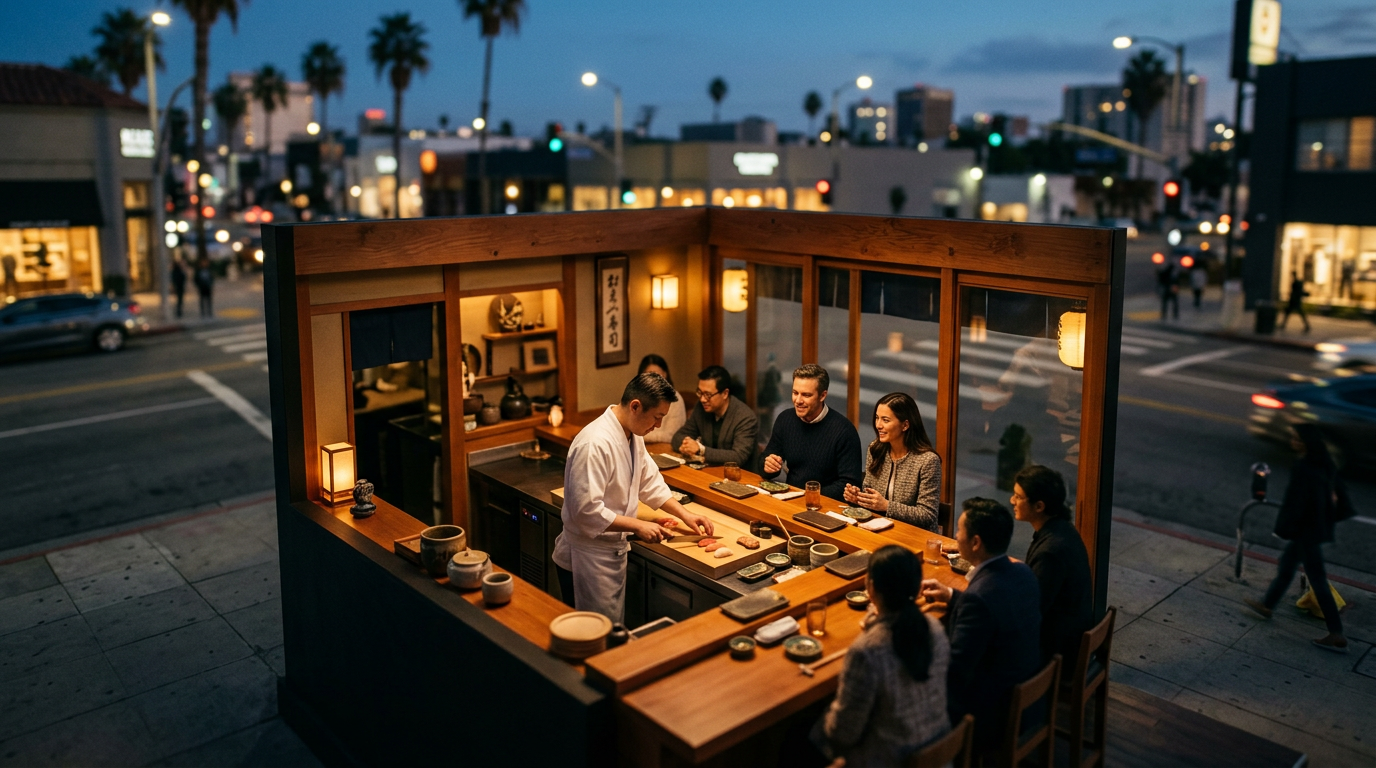
At 7:28 p.m. on a Thursday, someone is still circling Melrose for parking, someone else is texting from the 10, and the chef is already placing the first course in front of eight people who were supposed to be “casual, no agenda.” That is the Los Angeles founder dinner in miniature: expensive, intimate, relationship-heavy, and very easy to mishandle if you treat it like a pitch meeting with better fish.
Omakase works in LA because the city rewards small rooms. The useful conversations rarely happen in the loudest restaurant or the largest tech mixer. They happen at a counter in Beverly Grove, a quiet Westside sushi room, a high-trust table after a demo day, or a chef-led dinner where nobody wants to be the person doing a five-minute monologue over uni.
For a first-time founder dinner, your job is not to “network hard.” It is to read the room, respect the format, and create enough trust that people want to keep talking later. LA is not New York, where directness can pass as efficiency. It is not San Francisco, where everyone assumes the business context. Here, the founder, the operator, the investor, the producer, the creator, and the brand person may all be at the same counter. The social operating system is softer. The follow-up still needs to be sharp.
The room matters more than the restaurant name
For founder dinners, do not obsess over chasing the most famous reservation in town. Some well-known LA sushi rooms have earned their reputations over years: Sushi Gen in Little Tokyo, Sushi Park in West Hollywood, Nozawa Bar in Beverly Hills, Q in Downtown LA, Morihiro in Atwater Village, Shunji on the Westside, and Sushi Ginza Onodera in West Hollywood are all part of the city’s serious sushi conversation. But a founder dinner is not the same as a personal splurge dinner.
You need a room that supports conversation without disrespecting the chef.
Look for:
- A counter or small table format where six to ten people can hear each other
- A reservation team that is clear about dietary restrictions, deposits, and timing
- A chef-led pace, but not a silent temple where every side conversation feels rude
- Easy enough access for the group’s geography: Westside, Hollywood, DTLA, or the east side
- A total spend everyone can handle without resentment
LA founder dinners split by neighborhood more than outsiders expect. Venice and Santa Monica skew toward consumer, climate, AI tools, design, and early-stage venture. Culver City pulls media, gaming, agencies, and growth teams. West Hollywood and Beverly Grove work for investor-heavy dinners and creator-adjacent rooms. Downtown and the Arts District are better when you have operators coming from Pasadena, Silver Lake, Echo Park, or Koreatown. Studio City and Sherman Oaks are underrated for people who actually live in the Valley and do not want to pretend the 405 is a personality test.
If you are hosting for the first time, choose reliability over status. A polished neighborhood omakase or sushi bar with clear pacing beats a trophy reservation where half the table is stressed before the first bite.
What to order / what to look for
!Small founder dinner setup at an intimate Los Angeles sushi counter
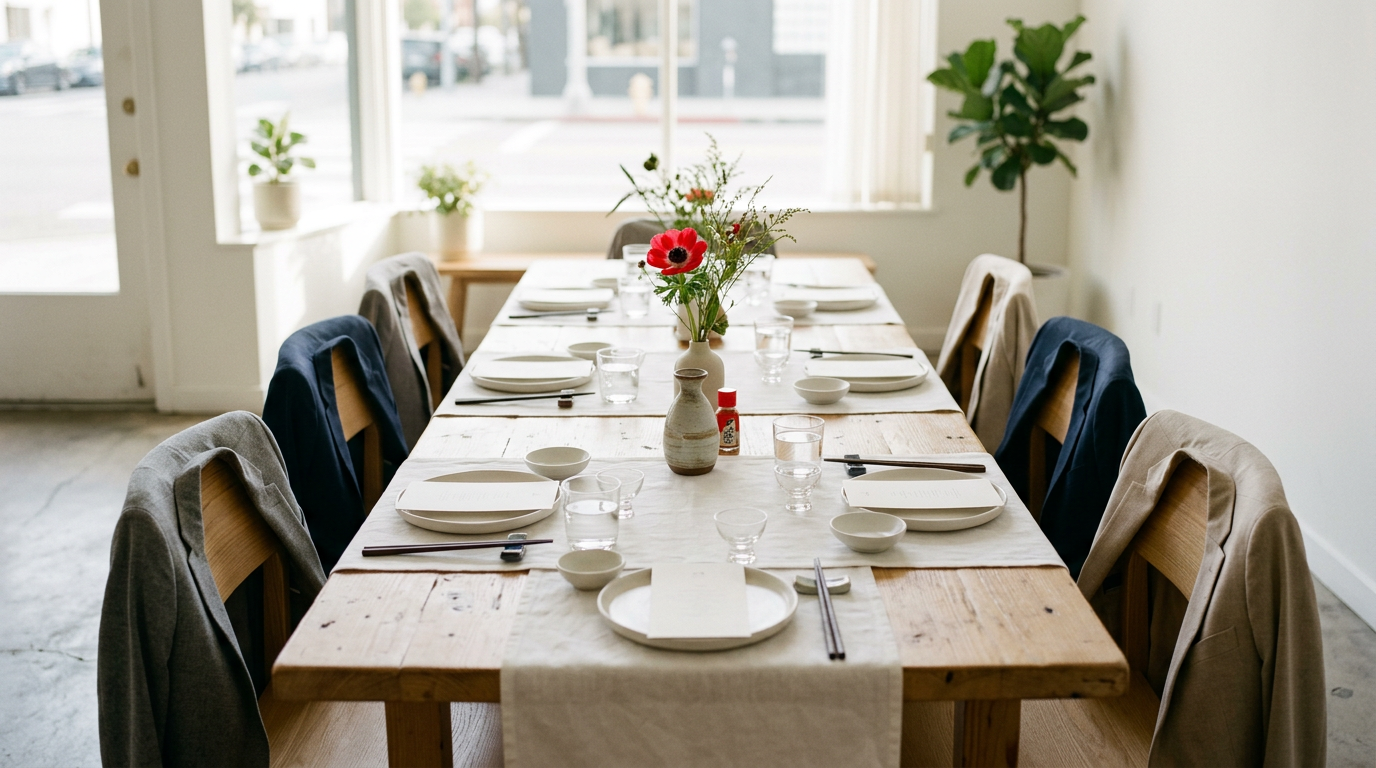
At a true omakase counter, the first rule is simple: do not try to control the meal like you are editing a Notion doc. Omakase means you are putting yourself in the chef’s hands. That does not mean you have no agency. It means your agency happens before the dinner.
Before booking, confirm:
- Whether the restaurant can handle allergies or strict dietary restrictions
- Whether substitutions are possible or discouraged
- Whether the dinner is counter-only or includes tables
- Whether sake pairing, wine, or à la carte add-ons are part of the format
- Whether the pace allows for a founder dinner or is better for a focused food experience
At the counter, eat what is placed in front of you when it is placed in front of you. Nigiri is timed. Rice temperature matters. The chef is not sending food so you can finish a story about your seed round before touching it.
What to look for in the meal:
- Rice that is warm, seasoned, and intentionally shaped
- Fish served at the right temperature, not fridge-cold slabs
- Minimal garnish unless it has a clear purpose
- A chef or server who tells you when soy sauce is unnecessary
- A beverage list that does not force everyone into heavy drinking
For a founder dinner, keep alcohol optional. LA has a larger sober and low-alcohol social scene than many people realize, especially among fitness-heavy operators, entertainment people with early calls, and founders who do not want to lose Friday morning. Sake can be excellent, but do not make it the group’s bonding mechanism.
If you are the host, ask the restaurant about the expected flow. You do not need to request menu details; you need to know when there might be a natural pause for introductions or a toast. That one detail can save the whole night.
Best time of day to go
The best founder omakase dinner in LA usually starts earlier than people think. Aim for a 6:00 or 6:30 p.m. seating when you want people alert, punctual, and capable of a second stop. A 9:00 p.m. seating sounds sleek until two guests are coming from Santa Monica, one has a 7 a.m. product call, and the investor has already eaten a protein bar in the car.
For first-time groups, earlier is better.
- 6:00 p.m. works for serious conversation and clean follow-up energy.
- 7:00 p.m. is the safest social compromise if people are crossing town.
- 8:30 p.m. or later is better for close friends, not a mixed founder table.
Build in LA traffic without making it the center of the night. Send the calendar invite with the real arrival time, parking notes, and the reservation name. Not “around 7.” Not “let’s gather then.” If the seating is at 7:00, tell people to arrive at 6:45.
The strongest move is a short pre-dinner coffee or post-dinner drink nearby, not both. Before dinner, a quiet third-wave coffee bar can help two people connect without forcing the whole table into early small talk. After dinner, a natural wine bar or calm hotel lobby bar gives the people with chemistry a second room. Do not drag everyone. Invite lightly.
A good line: “A few of us may grab one drink nearby after, no pressure. I’ll send the spot once we see how timing lands.”
That gives people permission to opt in without turning dinner into a hostage situation.
Etiquette and unwritten rules
!Guests arriving at a discreet Los Angeles sushi restaurant at night
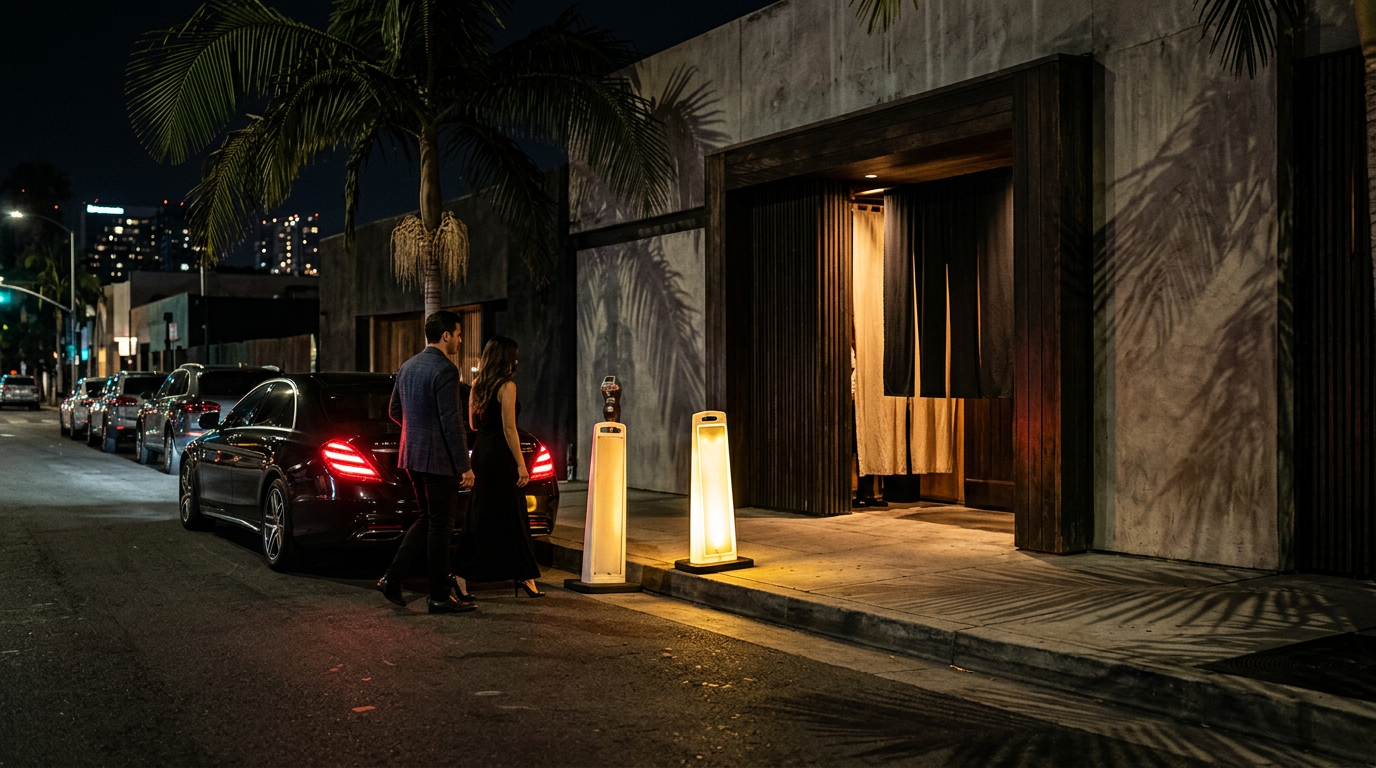
LA omakase etiquette is half Japanese dining respect, half local social fluency. The mistakes are rarely dramatic. They are small signals that tell people you have not been in rooms like this before.
Start here:
- Arrive early. Late arrivals disrupt the chef, not just the table.
- Put your phone away unless you are checking one urgent message.
- Do not film every course. A quick photo is fine if the room allows it. A content shoot is not.
- Tell the host about allergies before the reservation is confirmed, not at the counter.
- Eat nigiri promptly. Do not let it sit while you finish a thought.
- Do not drown the fish in soy sauce.
- Do not ask for extra wasabi unless you know the style allows it.
- Keep fragrance light. Heavy perfume at a sushi counter is hostile.
- Avoid performative food commentary. Nobody needs your lecture on Tokyo unless asked.
The founder layer adds more rules.
Do not open with fundraising. Do not ask an investor, “So what size checks are you writing?” before the second course. Do not pitch across the chef’s hands. Do not turn the counter into a cap table support group.
Better openings:
- “What are you seeing in LA right now that feels underpriced?”
- “Which customer segment has surprised you this year?”
- “What kind of founders are you saying yes to faster lately?”
- “What are you trying to get smarter about before the end of the quarter?”
- “Who in town is building quietly but seriously?”
These questions work because they invite judgment without demanding a transaction.
If you are seated next to someone important, do not panic-fill the space. At omakase, pauses are normal. Let the meal carry some of the rhythm. The chef is not background entertainment; the chef is part of the room.
How to actually meet people there
The best founder dinners create weak ties, not instant best friends. Mark Granovetter’s old point still holds: many career-changing opportunities come through acquaintances, not your closest circle. An omakase counter is good for this because it limits the room and raises the trust floor. You are not collecting 40 business cards. You are trying to leave with three real next steps.
If you are hosting, curate for adjacency rather than sameness. A dull table is eight SaaS founders all trying to sound inevitable. A better LA table might include:
- One early-stage founder
- One operator from a later-stage company
- One angel or emerging fund partner
- One creator-economy or media person
- One product-minded designer
- One person who knows distribution cold
- One wildcard with a real reason to be there
Send a short pre-read, not a dossier. Two lines per person is enough: name, company, why they are interesting. Avoid turning it into a public ranking of who has money or status.
At dinner, use small bridges:
- “You two should compare notes on retail partnerships.”
- “You both mentioned hiring fractional finance help.”
- “There’s a clean overlap between your customer base and her distribution work.”
- “You should talk for five minutes after dinner; not now, but definitely tonight.”
If you are attending, come with one useful thing to offer. A hiring lead. A customer intro. A clear vendor recommendation. A sharp read on a market. LA can smell extraction. The person who only “wants to pick your brain” gets remembered for the wrong reason.
The follow-up should land within 24 hours. Keep it specific.
Use this format:
- “Great sitting next to you at dinner last night.”
- “Your point about enterprise pilots dragging without an internal champion stuck with me.”
- “I mentioned a founder dealing with the same issue; want an intro?”
- “If useful, I can send a short note with context.”
That beats a generic “Let’s stay connected” every time.
The check, the host, and money awkwardness
Money kills founder dinners when expectations are vague. Omakase is not a casual taco run. The host should be explicit before anyone accepts.
There are three clean models:
- Host covers. Best for investor-hosted dinners, client cultivation, or a founder thanking a tight group.
- Split evenly. Fine for peer dinners, but state it upfront.
- Company or sponsor covers. Acceptable only if the commercial context is clear.
Do not surprise people with a huge split after ordering premium sake. If one person controls beverage choices, that person needs to control the bill or get consent. The line is simple: “I’m going to order a bottle for the table; everyone good with that?”
If you are a guest and the host covers, do not perform a long fake wallet fight. Say thank you once, sincerely. Then follow up the next day with something useful: an intro, a thoughtful note, or an offer to host the next smaller thing.
If you are the founder trying to impress investors, do not overspend to signal momentum. In LA, that can read insecure fast. A well-chosen room, a tight guest list, and a graceful check process do more for your reputation than ordering like you just closed a round.
Mistakes to avoid
The most common mistake is choosing a restaurant for status instead of fit. A revered omakase counter may be wrong for a first-time founder group if the format is too quiet, too long, or too rigid for conversation.
Other avoidable errors:
- Inviting people who are actively competitive without telling them
- Adding last-minute guests to a fixed counter reservation
- Ignoring dietary restrictions until arrival
- Treating the chef like staff in your private conference room
- Asking for investment advice in a way that traps someone socially
- Talking only to the highest-status person at the table
- Letting one loud guest dominate every pause
- Drinking past the quality of your judgment
- Posting the whole dinner in real time without checking the room
- Sending a lazy follow-up with no context
The phone issue deserves its own note. LA is a media city. People understand photos. They also understand discretion. If someone at the table is in entertainment, venture, or a sensitive operating role, do not assume they want to appear in your story, reel, or LinkedIn carousel. Ask before posting faces or tags.
And if the dinner includes anyone from a fund, do not use their attendance as implied endorsement. “Great dinner with X from Y fund” can look harmless to you and annoying to them. Better to keep the public internet out of it unless the host explicitly frames the dinner as public.
The LA-specific move after dinner
The best post-dinner move is not a loud bar. It is a smaller room within the room.
In West Hollywood, that may mean a quiet lobby bar or a natural wine spot close enough that nobody has to re-park twice. On the Westside, it may be a low-key drink near Santa Monica or Venice for the three people who still have energy. Downtown, it might be a calm Arts District bar if the group is already there. On the east side, do not make Westside people drive another 25 minutes after a long meal unless the connection is truly worth it.
Keep the invitation narrow and practical:
“Three of us are going to grab one drink nearby and compare notes on hiring. Join if you want, no pressure.”
That line works because it names a purpose and an exit. Founders appreciate exits.
The next morning, do not spray everyone with the same message. Send individual notes. If you promised an intro, ask both sides first. If someone gave you advice, tell them what you are going to do with it. If the conversation had no clear next step, that is fine. Not every dinner needs to become a pipeline.
A strong LA founder dinner feels easy because the host did the work early: the right room, the right mix, the right timing, the right expectations. At the counter, your job is to be present, useful, and socially precise. Respect the chef. Respect the table. Leave people with one reason to take your next message seriously.
Discussion (0)
Loading comments…