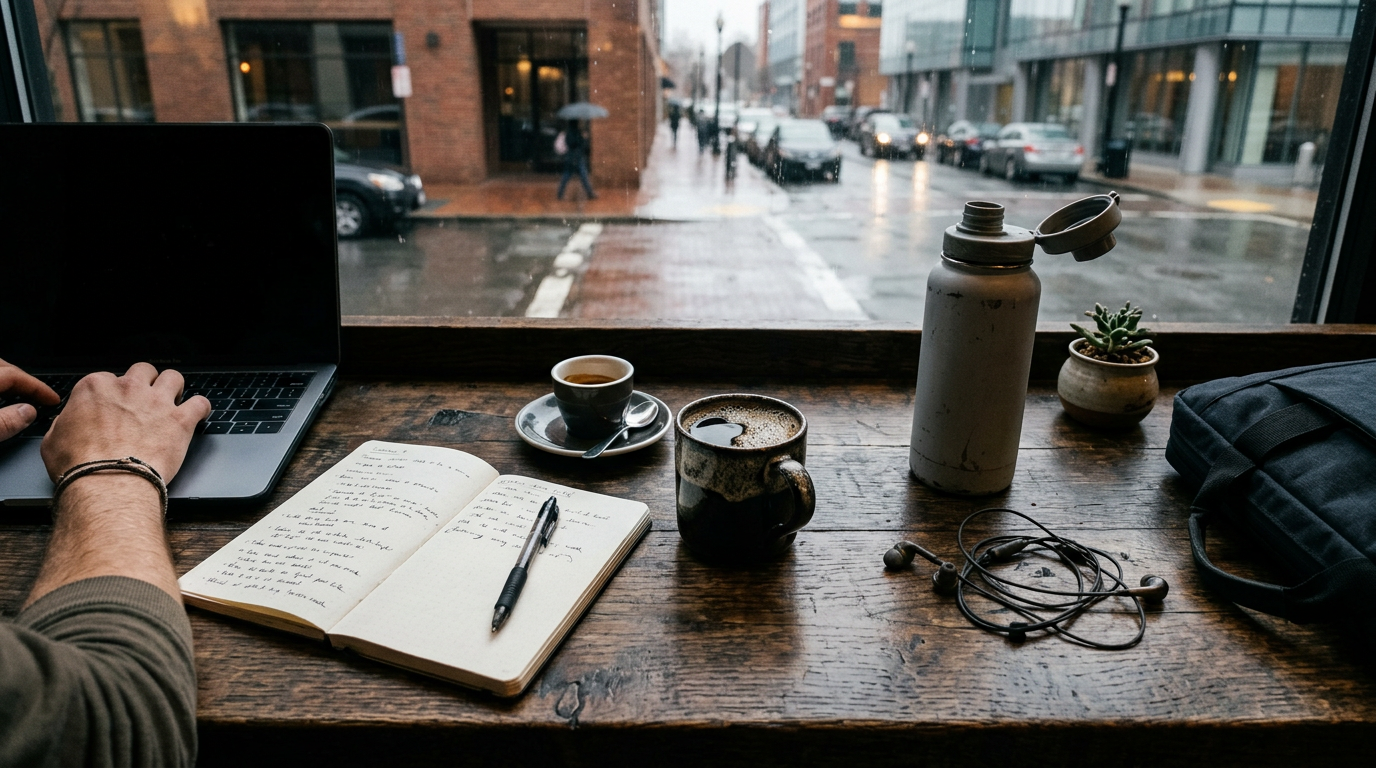
Where MIT and Harvard founders actually take coffee
At 8:40 on a Tuesday in Kendall, the line tells you more than LinkedIn does. One person is in a Patagonia vest with a biotech badge half-tucked into a laptop sleeve. Another is arguing quietly about GPU credits. A postdoc is buying drip before heading back to lab. Two first-time founders are doing the awkward laptop half-open thing, waiting for an angel who said they had exactly twenty minutes.
That is the MIT and Harvard coffee circuit in 2026. It is not one scene. It is several overlapping rooms: Kendall for venture-backed science and AI, Central for scrappier builders and freelancers, Harvard Square for students, visiting fellows, and ambitious generalists, and the side streets for people who want a real conversation without being watched by half their cohort.
Boston founders do use coffee shops. They just use them differently than founders in New York or Austin. The tone is lower-key. Less performative. Fewer loud pitch decks. More cautious questions. More credentials, but also more skepticism of credentials. If you can read the room, Cambridge coffee can be a serious source of weak ties, the kind sociologist Mark Granovetter wrote about: not your closest friends, but the loose connections that carry jobs, intros, early customers, lab access, and investor context.
This is not about camping with a laptop all day. It is about choosing the right room for the job.
The Cambridge coffee map founders actually use
The useful founder coffee geography is tighter than outsiders think.
Kendall Square and the MIT edge are for direct startup utility. If someone says they are near MIT, The Engine, a lab, a biotech office, or a robotics group, this is usually the easiest place to meet. Tatte, Flour Bakery + Cafe, Blue Bottle, and the better cafe counters around Kendall all function as neutral territory. You will see operators, early employees, PhDs, recruiters, and investors passing through. It is efficient, but not relaxed.
Central Square is where the room gets messier in a good way. 1369 Coffee House has long been part of Cambridge’s working-cafe fabric, and the Central corridor pulls in software people, artists, nonprofit operators, grad students, and founders who do not want every conversation to happen under venture lighting. It is better for longer thinking sessions and less polished first meetings.
Harvard Square is more complicated. Tatte and Flour are heavily used because they are obvious Schelling points: places both sides can find without a planning thread. Broadsheet Coffee Roasters, slightly away from the most obvious Harvard Square churn, is a better fit when you want coffee to be the point, not just the excuse. Harvard Square also has more tourists, parents, undergrads, visiting academics, and admissions energy. Useful, but noisy socially.
Inman and the Harvard-Central side streets work when you already have the meeting and want the pressure turned down. This is where a founder can talk about a messy cofounder issue, a pivot, or a not-yet-public raise without sitting beside someone from the same accelerator.
The mistake is asking, “What is the best coffee shop near MIT?” The better question is, “What kind of meeting am I actually trying to have?”
What to order / what to look for
!Morning coffee meeting setup at a small cafe table near Harvard Square
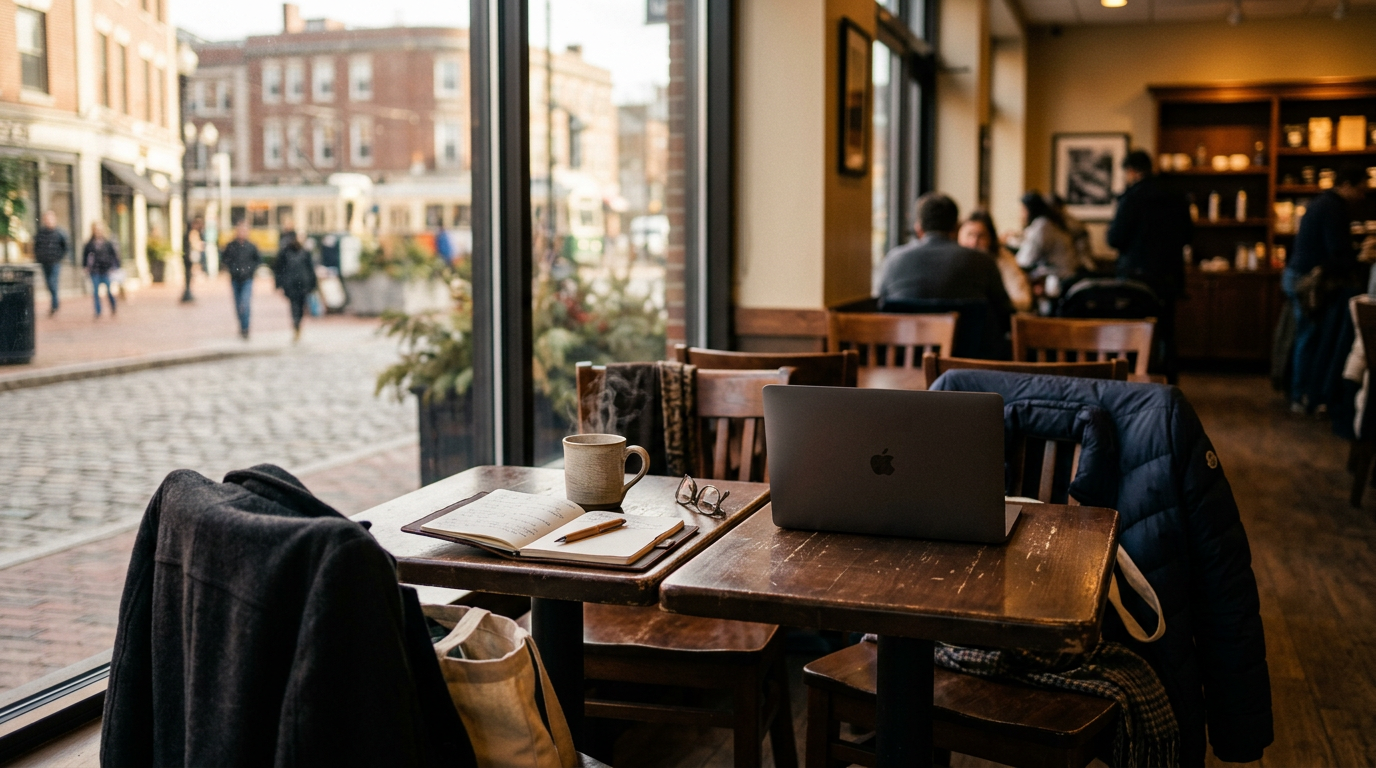
Founders are not judging you for ordering drip. They are judging whether you understand time, space, and pace.
For a short first meeting, order something fast: drip coffee, cold brew, espresso, or a simple cappuccino. Do not make a 20-minute meeting wait on a complicated drink if the line is moving slowly. If the place does a proper single-origin pour-over and you have a longer conversation planned, that can work, but do it when you are early, not when someone is already sitting down.
What to look for matters more than the menu:
- Two-tops near the wall, not four-tops in the middle of the room.
- A stable Wi-Fi and outlet situation if you are working before or after, but do not assume every good coffee bar wants to be your office.
- Laptop density with movement. A room full of laptops where nobody looks up is bad for meeting people. A room with turnover, short meetings, and people waiting for someone is better.
- Natural pause points. Espresso bars, pickup counters, and outdoor benches create easier openings than silent laptop rows.
- Noise that protects privacy without killing conversation. Kendall can be too exposed. Harvard Square can be too chaotic. Central often hits the middle.
If you care about coffee quality, Cambridge gives you options: Blue Bottle for consistent third-wave execution, Broadsheet for a more coffee-forward stop, Tatte and Flour for reliable meeting logistics, 1369 for the older Cambridge cafe rhythm. None of these rooms are perfect. That is the point. Pick the imperfection you can work with.
Best time of day to go
Tuesday through Thursday is the real workweek for founder coffee. Monday is full of internal catch-up. Friday gets soft, especially in summer when half the city appears to be on Cape Cod, in Maine, or pretending not to check Slack.
Near MIT and Kendall, the best windows are:
- 7:45 to 9:15 a.m. for pre-lab, pre-office, investor-before-calendar traffic.
- 10:30 to 11:30 a.m. for focused first meetings after the commuter rush.
- 2:30 to 4:30 p.m. for softer conversations, recruiting chats, advisor check-ins, and founder-to-founder sanity checks.
Avoid noon in Kendall unless lunch is part of the plan. The room gets transactional and seating gets worse. If you are meeting someone senior, do not make them hunt for a chair while carrying a salad and a laptop.
Harvard Square runs differently. Mornings are stronger for serious conversation. Mid-afternoon can turn into student traffic, visiting families, and people killing time before a lecture. If you want to meet a Harvard founder, fellow, or grad student, suggest a morning coffee near the Square or a short walk toward the river after grabbing drinks.
Central Square is better later than Kendall. It can handle a 4 p.m. decompression meeting. It is also more forgiving if you need to sit for an hour and think through hiring, product scope, or whether your cofounder conversation went as badly as you think it did.
Etiquette and unwritten rules
!People carrying coffee outside a Cambridge cafe near startup offices
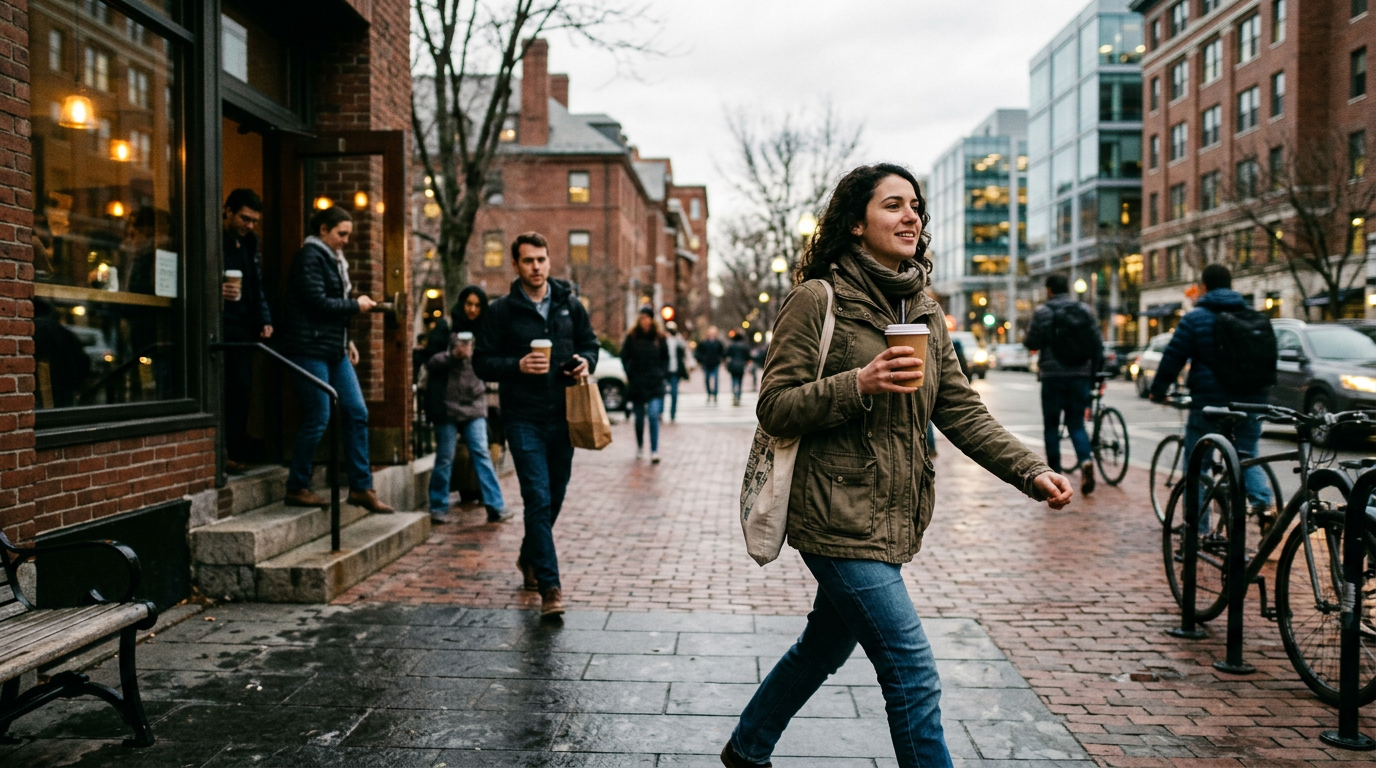
Cambridge is dense with smart people who are tired of being treated like props in someone else’s network-building plan. The bar is simple: be direct, be brief, buy something, and leave the table better than you found it.
A few rules locals follow:
- Do not occupy a four-top alone during peak hours. If you need space, go off-peak or use a coworking day pass.
- Order again if you stay. A coffee shop is not an unpaid hot desk. If you are there more than 90 minutes, buy another drink or food.
- Keep calls short and quiet. If you need to discuss runway, layoffs, term sheets, patient data, or anything involving legal exposure, step outside.
- Do not pitch strangers with a deck open. A coffee shop is a room, not a demo day.
- Respect headphones. One earbud out can mean maybe. Big headphones and closed posture mean no.
- Do not name-drop MIT or Harvard as a personality. Everyone here has heard it. Say what you are building and why it matters.
Boston also has a strong competence culture. People respond better to specificity than hype. “We are testing a workflow tool for wet-lab inventory teams” will beat “We are reinventing the future of lab operations” every time.
How to actually meet people there
The best coffee-shop networking in Cambridge starts before you walk in. Use the cafe as the meeting point, not the whole strategy.
Set up two or three light-touch meetings in the same area. One founder coffee at 9:00, one operator intro at 10:00, one open hour at 11:00. That open hour is where the useful accident happens. You run into someone from an MIT event, a Harvard i-lab session, a Meetup, Lunchclub, AngelList outreach, On Deck alumni thread, South Park Commons connection, or a Slack community you forgot you joined.
Conversation openers that work here are specific but not invasive:
- “Are you coming from campus or Kendall?”
- “Are you building, researching, or just trying to get through email?”
- “I saw the notebook and the lab badge energy. Are you in biotech or adjacent?”
- “I am meeting a founder here and have ten minutes. Is this a good room for calls, or should I move?”
- “Do you know if people still use this spot for Harvard i-lab overflow, or has that moved?”
The goal is not to trap someone. It is to create a small opening they can accept or decline without social cost.
If the conversation lands, keep it clean:
- Ask what they are working on in one sentence.
- Offer one relevant pointer, not five.
- If there is clear fit, ask: “Worth swapping emails, or should we leave it here?”
- Send the follow-up the same day.
A strong follow-up in Boston is short and useful. “Good meeting you at Tatte near Kendall. You mentioned hiring a fractional regulatory lead; I know one person who may be relevant. Want an intro?” That beats a long recap and three attachments.
Coffee shops versus coworking near MIT and Harvard
Coffee is for serendipity, first meetings, and low-friction check-ins. Coworking is for actual work.
Post-pandemic coworking in Boston has shifted. WeWork is no longer the default answer it once was, but it is still part of the map. Industrious and Spaces serve teams that need a more predictable room, and university-adjacent innovation spaces still matter for people with the right affiliation. The Engine’s orbit is especially relevant for tough tech. Harvard i-lab remains important for Harvard-connected founders.
Use a coffee shop when:
- You are meeting someone for the first time.
- You need neutral ground between MIT and Harvard.
- You want a 25-minute conversation before either side commits more time.
- You are hoping to create weak-tie collisions around a familiar room.
Use a coworking day pass, hot desk, dedicated desk, or member’s club when:
- You need to take investor calls.
- You need reliable video and privacy.
- You plan to stay more than two hours.
- You are hosting more than two people.
- You need to look operationally serious for a candidate or partner.
Boston is not New York; people will not assume a loud Soho House-style meeting means you are important. They may assume you are avoiding real work. Choose the quieter room when the conversation has weight.
Mistakes to avoid
The most common mistake is treating the MIT-Harvard corridor like a startup conference with better coffee. It is not. The density is real, but the social permission is earned.
Avoid these moves:
- Showing up with no plan. Wandering between cafes hoping to meet investors is a bad use of a morning.
- Over-indexing on Harvard Square. It is famous, but not always founder-dense. Kendall and Central are often more useful.
- Pitching too early. Ask one smart question before explaining your company.
- Ignoring the academic calendar. Finals, move-in, reunions, and graduation periods change the room completely.
- Assuming biotech and AI people want the same pitch. They do not. Technical depth matters here.
- Taking sensitive calls inside. Cambridge rooms are smaller than they feel. Someone knows someone.
- Staying all day on one coffee. People notice, and staff should not have to manage around you.
Also avoid the costume. The founder vest, the loud traction claim, the performative Notion dashboard. Boston respects ambition, but it has a low tolerance for theater.
A practical morning circuit
If you are new to the Cambridge founder scene, do not try to cover everything. Run one clean circuit.
Start in Kendall around 8:30 with a planned coffee at Tatte, Flour, Blue Bottle, or another reliable cafe close to your counterpart’s office or lab. Keep it to 30 minutes. If there is a second conversation, walk. The walk from Kendall toward Central is often better than sitting through another latte.
Book a second meeting in Central around 10:00 or 10:30. 1369 works when you want less polish and more room for a real conversation. If coffee quality and a calmer Harvard-side location matter more, Broadsheet can be the better call.
Leave one open block before lunch. This is when you send two follow-ups, make the intro you promised, and message the person you almost did not reach out to: “I am in Cambridge until noon if a 15-minute coffee near Central is useful.”
That is the whole play. Not glamorous. Effective.
The founders who get value from Boston coffee shops are not the loudest people in the room. They are the ones who know which room they are in, keep the ask small, and follow through before the next cup gets cold.
Discussion (0)
Loading comments…