Nashville founder dinners work better off Broadway
The worst founder dinner in Nashville starts with valet gridlock, a table of twelve shouting over a pedal tavern playlist, and one person quietly checking AngelList under the table because nobody can hear the customer story being told three seats away.
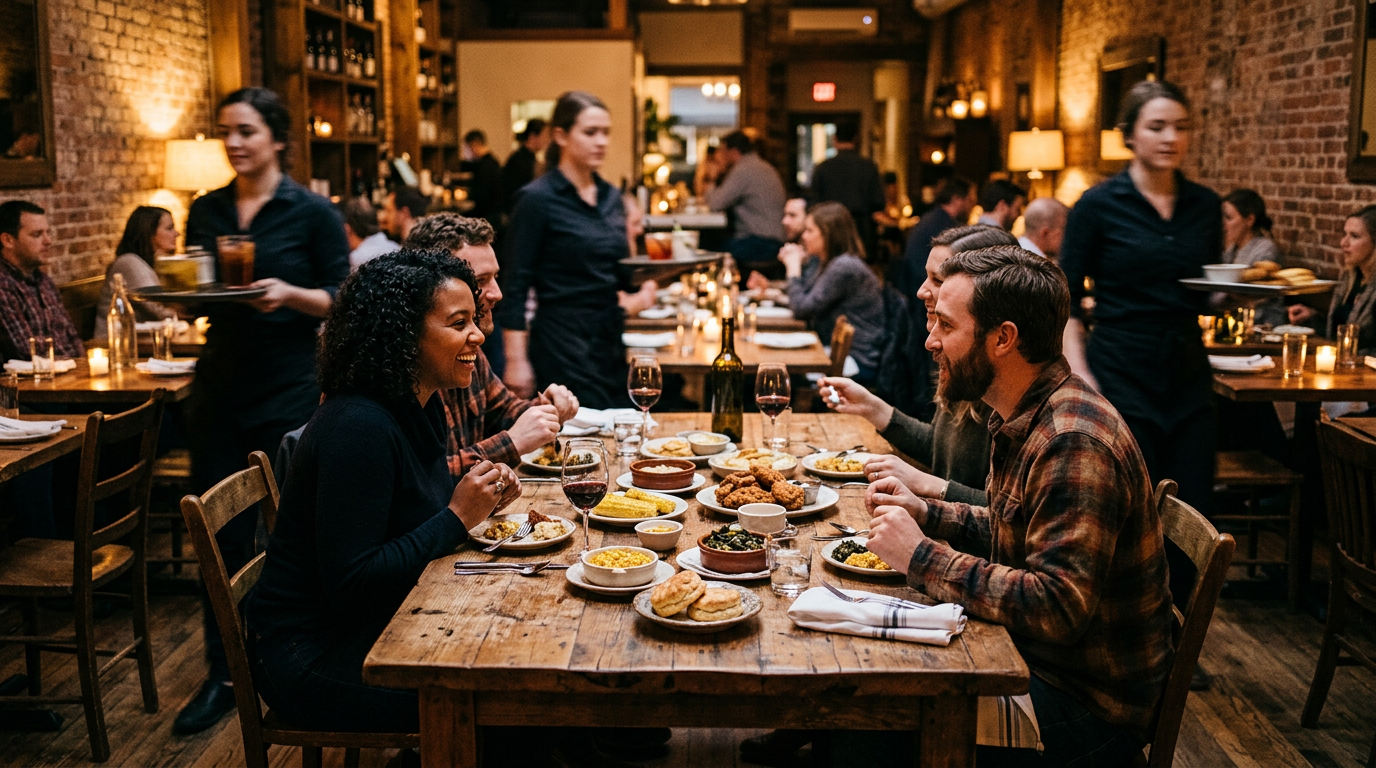
Nashville will give you a good room if you ask the city correctly. Not Broadway. Not the rooftop with a step-and-repeat energy. Not the celebrity-name spot where half the table is watching the door. The useful dinners happen in neighborhood restaurants where the service team can pace a real conversation, the wine list is not an afterthought, and the table can move from introductions to actual trust before dessert.
The founder scene here is a mix: healthcare operators, music-tech people, creator economy folks, Vanderbilt-adjacent builders, bootstrapped SaaS, logistics, real estate, and a steady stream of coastal transplants still learning that Nashville does not reward performative networking. People are friendly. They are also paying attention.
This is a local playbook for Nashville restaurants for founder dinners that are not on every obvious list, or at least are not used in the obvious way.
The Nashville room you actually want
For a founder dinner, the room matters more than the hype. You are optimizing for conversation density, not Instagram evidence.
Look for one of these formats:
- Chef-owned neighborhood restaurants in East Nashville, Germantown, Wedgewood-Houston, Sylvan Park, or West Nashville.
- Shared-plate rooms where the table can order broadly without turning the night into a plated banquet.
- Wine-forward restaurants with a staff that can guide natural wine, low-intervention bottles, or crisp whites without making it a lecture.
- Small bar-adjacent dining rooms where a six-person table feels intentional, not squeezed in.
- Restaurants with early-week availability because Tuesday is often more useful than Friday.
A few real Nashville rooms that can work, depending on party size and reservation discipline: Rolf and Daughters in Germantown, City House in Germantown, Henrietta Red in Germantown, Butcher & Bee in East Nashville, Folk in East Nashville, Margot Café & Bar in East Nashville, Lockeland Table in East Nashville, Lyra in East Nashville, Bastion in Wedgewood-Houston, Hathorne in West Nashville, and Sperry’s in Belle Meade when the group skews investor, healthcare, or old Nashville relationship capital.
Do not read that as a reservation dump. Each room has a different job. Bastion can feel tight and intentional. Butcher & Bee handles shared plates well. City House is better for people who understand the Nashville food scene and do not need the newest room. Sperry’s is not cool in the startup sense, which is exactly why it can work for certain capital conversations.
Match the venue type to the dinner job
!Quiet East Nashville restaurant bar before dinner service
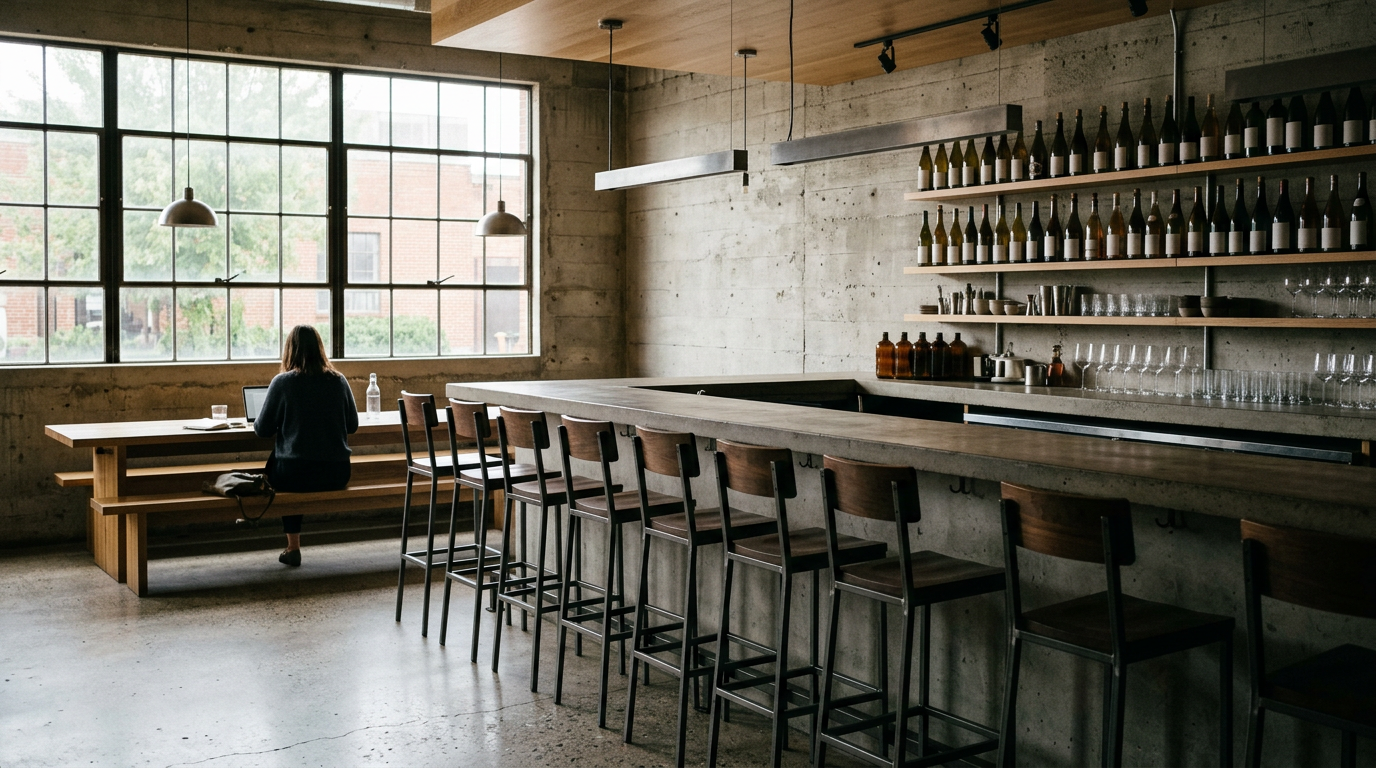
A founder dinner should not be one generic thing. Pick the room based on what you want the night to do.
For first-time founder introductions
Go with a warm, casual shared-plate restaurant. Butcher & Bee, Lyra, or a similar East Nashville room works because the table can relax fast. You want food arriving in waves and enough menu variety for the gluten-free, vegetarian, and protein-focused people without making them announce their entire life.
Keep it to six or eight. Ten is the ceiling unless you are running a structured salon.
For investor-adjacent dinners
Use a room with polish, not flash. Henrietta Red, Rolf and Daughters, Hathorne, or Sperry’s can work. The point is to create enough seriousness that nobody feels trapped in a casual mixer, while avoiding the sterile private-room energy that kills candor.
If a check-writer is present, do not build the whole seating chart around them. Put a customer operator or sharp domain expert beside them. Founders remember the person who gave them useful market truth, not the loudest capital allocator.
For creator and music-tech founders
East Nashville is usually more natural than downtown. Margot, Folk, Lockeland Table, or a similar neighborhood room gives the night a better tempo. Music people in Nashville have finely tuned sensors for transactional behavior. If you came to extract introductions, it will show.
For visiting founders from NYC, LA, Austin, Miami, or SF
Do not try to prove Nashville has big-city taste. It does. That is not the assignment. Show them a room that makes local sense. Germantown for a polished dinner. East Nashville for creative operator energy. Wedgewood-Houston for a sharper, design-aware crowd. West Nashville when you want breathing room and serious conversation.
What to order / what to look for
Order like a host, not like a person trying to win the menu.
For a six-person founder dinner, the best structure is usually:
- Two or three snacks or starters that land quickly.
- Several shared plates across vegetable, seafood, and meat.
- One safe anchor dish for the table.
- Dessert only if the conversation still has energy.
- Two bottles max before reassessing, unless this is explicitly a social dinner.
At a third-wave coffee meeting, people perform through single-origin pour-over orders. At dinner, the performance shows up as over-ordering, over-explaining, or choosing the rarest bottle to signal taste. Skip it. Ask the server what the kitchen is proud of tonight and what is easiest to share.
For wine, Nashville has enough natural wine bar fluency now that you can ask for something lively, lower-alcohol, and food-friendly without turning the table into a tasting panel. If the group includes non-drinkers, say that up front and order sparkling water with intent. Do not make sobriety a subplot.
Look for these practical details before booking:
- Can the table hear across six seats?
- Are the chairs comfortable enough for two hours?
- Is the lighting flattering but not sleepy?
- Will the kitchen pace dishes instead of dropping everything at once?
- Can the restaurant handle one check, with the host paying, without drama?
That last point matters. Founder dinners get weird when eight people start scanning QR codes and Venmoing while someone is mid-story about churn.
Best time of day to go
!Small Nashville founder dinner table with shared plates and notebooks
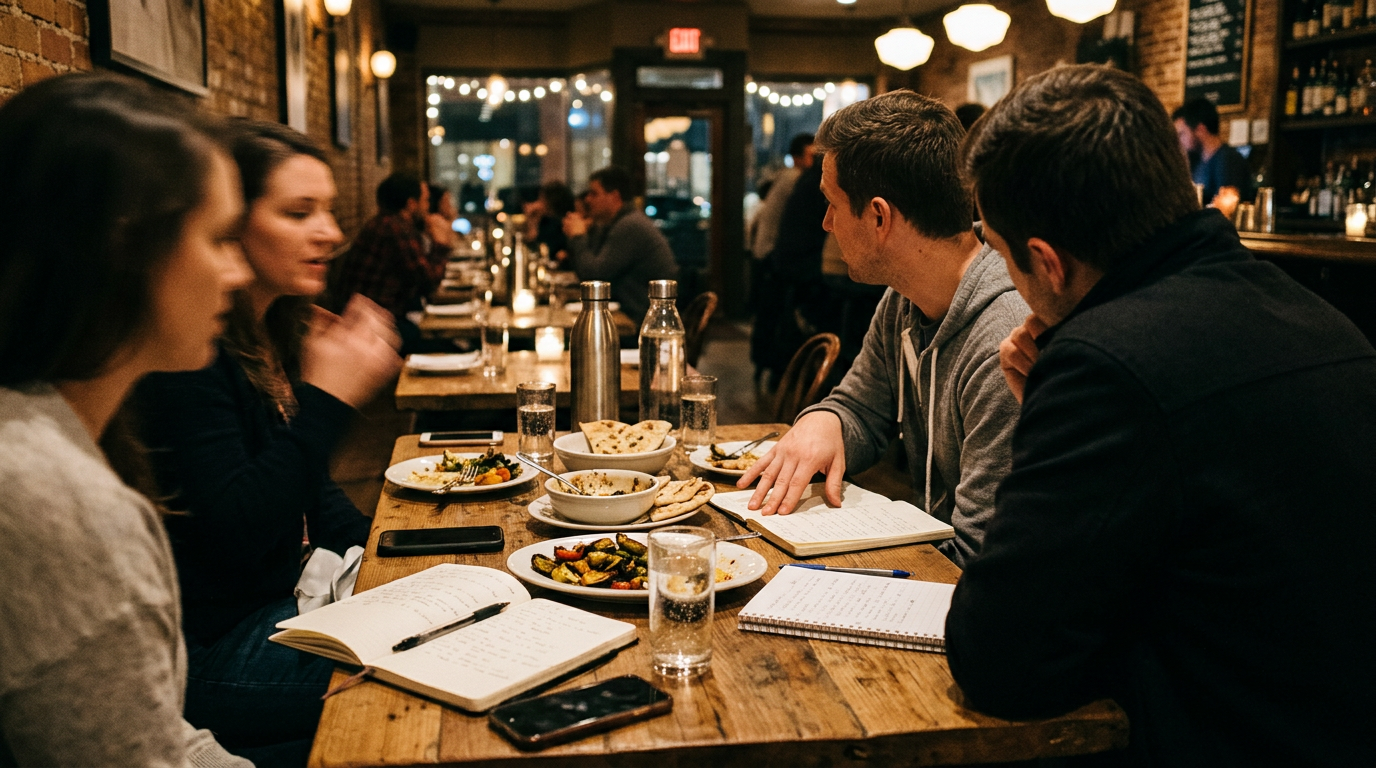
The strongest founder dinner slot in Nashville is Tuesday or Wednesday, 6:00 to 8:15 p.m.
Monday can work for a smaller dinner, but many restaurants are closed. Thursday is good if the group already knows each other. Friday and Saturday are usually wrong unless the dinner is purely social. Sunday can be excellent in East Nashville if you are doing a quieter operator table, but confirm hours carefully.
Early reservations beat late ones. A 6:00 p.m. table gives you calmer service, lower room noise, and a clean exit. It also lets people with kids, early workouts, hospital schedules, or actual operating jobs say yes.
The post-pandemic coworking shift matters here. The hot desk crowd is not reliably in one office five days a week anymore. In-person networking has returned, but it is more intentional. A dinner that starts on time and ends before everyone is exhausted will outperform a loose 8:30 p.m. reservation that pretends nobody has a morning.
If you want a pre-dinner coffee chat, use a reliable café earlier in the day: a third-wave coffee shop with real seating, not a laptop-packed counter where the only available spot is beside the grinder. Nashville has plenty of mature coffee culture now; the trick is choosing a place where a 25-minute conversation does not feel like a hostage situation.
Etiquette and unwritten rules
Nashville is warm, but it is not naive. The city is full of people who have seen every version of the networking tourist.
Follow these rules:
- Do not lead with valuation. Lead with the customer, the problem, or the reason you are in Nashville.
- Do not name-drop artists, investors, or athletes unless the story has a point. This town has heard it.
- Do not treat healthcare founders like a niche. Healthcare is one of the city’s operating backbones.
- Do not make the dinner a pitch event without saying so. People agreed to dinner, not demo day.
- Respect old Nashville and new Nashville at the same table. The city runs on both.
- Tip well and be easy for the restaurant. Your reputation includes how you treat the server.
The most useful hosts send a short note the day before:
- Who is coming.
- Why each person is in the room.
- Start and end time.
- Whether the host is covering the check.
- One optional prompt so the first 20 minutes do not drift.
Example prompt: 'Bring one operating problem you are actively working through, not a polished win.'
That beats the usual round of intros where everyone says they are building at the intersection of three markets and nobody learns anything.
How to actually meet people there
A restaurant is not a networking platform. It is a trust accelerator if you do the work around it.
Start with the guest mix. A strong Nashville founder dinner usually has:
- Two founders at similar stage.
- One operator who has scaled something real.
- One customer or domain expert.
- One capital person, if relevant.
- One connector who is not trying to dominate the room.
- One wildcard from music, healthcare, logistics, hospitality, or media.
That mix creates weak ties, the Granovetter kind: people outside your tight circle who can carry new information, new context, and unexpected introductions. Nashville is especially good at this because the social graph crosses industries more often than outsiders expect.
Use openers that create specifics:
- 'What are you seeing in Nashville that outsiders still misread?'
- 'What is one customer behavior that changed your roadmap this year?'
- 'Who in town is under-consulted on this problem?'
- 'What would make this dinner useful enough that you would come back?'
- 'What introduction would be helpful, and what would make you easy to recommend?'
The last part matters. People cannot introduce a vague founder. Give them a clean sentence.
Follow-up should happen before noon the next day. Not three days later. Send a short email or text:
- One thing you appreciated.
- One specific intro or resource you promised.
- One clear next step, if there is one.
Bad follow-up: 'Great connecting, let’s stay in touch.'
Better follow-up: 'I liked your point about hospital procurement cycles. I’m sending you to Maya, who sold into two regional systems last year. I’ll introduce you both this afternoon unless there’s any reason I shouldn’t.'
That is how a dinner turns into a network instead of a receipt.
Mistakes to avoid
The most common mistake is choosing the restaurant for status instead of acoustics. A packed dining room may look good on a reservation screenshot and still ruin the night.
Other mistakes:
- Inviting twelve people because you are afraid to edit. Edit. A founder dinner is not a Meetup.
- Letting one person pitch for 18 minutes. Interrupt kindly. 'Let’s pause there and get one reaction from the operator side.'
- Choosing Broadway-adjacent restaurants for convenience. Convenient for hotels, bad for conversation.
- Booking omakase for a group that needs to talk. Great meal, wrong format unless everyone already knows each other.
- Going too insider. A supper club format can work, but newcomers need enough context to participate.
- Assuming Soho House or a member’s club dynamic translates cleanly. Nashville relationship-building is less impressed by velvet rope energy than LA or New York.
- Letting the check become theater. Decide the payment plan before anyone sits down.
- Ignoring parking and rideshare reality. If half the table is stressed on arrival, the first course is already compromised.
Also: do not stack the table with only founders. Founders talking only to founders can become a mirror room. Add operators, customers, and someone with scar tissue from the local market.
A clean Nashville founder dinner template
Here is the simple version that works.
Pick a Tuesday. Book six seats at a neighborhood restaurant in East Nashville, Germantown, Wedgewood-Houston, or West Nashville. Choose shared plates. Send a tight pre-note. Start on time. Host the first five minutes, then get out of the way.
Use this structure:
- 6:00 p.m. arrival and drinks.
- 6:15 p.m. one-sentence intros with a real current problem.
- 6:35 p.m. food starts, conversation opens.
- 7:15 p.m. one focused round: asks, offers, or market reads.
- 7:50 p.m. host names the useful threads that emerged.
- 8:10 p.m. check handled quietly.
- Next morning: follow-up.
The restaurant does not need to be obscure. It needs to be right. Nashville has plenty of rooms with enough taste, warmth, and operational calm to carry a serious founder dinner. The trick is skipping the obvious flex and building the evening like an operator: clear purpose, good table, useful people, clean follow-through.
That is where the city opens up.
Discussion (0)
Loading comments…