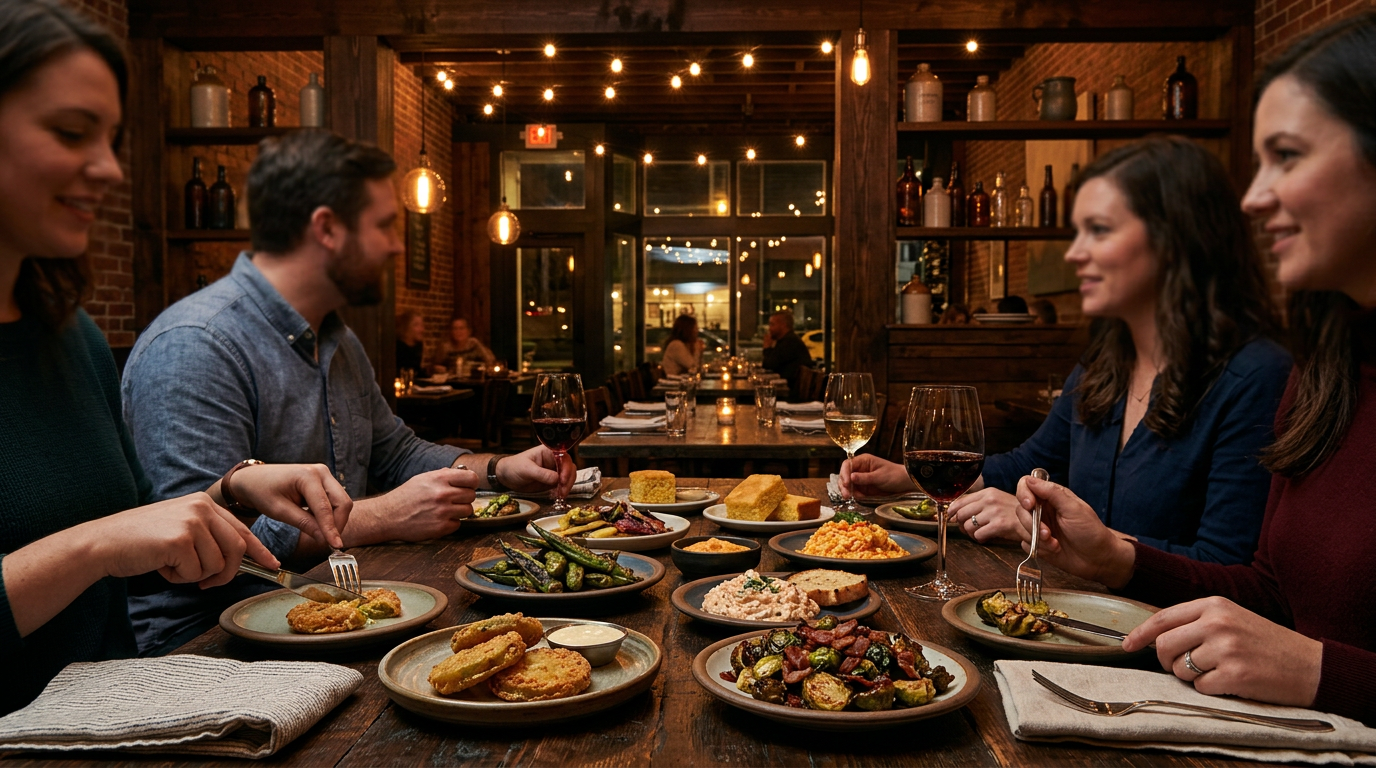
Nashville founder dinners work better off Broadway
The table that matters in Nashville is rarely the loudest one. It is a six-top in Germantown at 7:15, a bar-adjacent booth in East Nashville before the kitchen gets slammed, or a chef counter where two healthcare operators, one creator-business founder, and a former label exec can actually hear each other.
Nashville is not San Francisco with guitars. The money moves differently here. Healthcare is serious. Music is a business, not a backdrop. Real estate, hospitality, logistics, consumer brands, sports, and creator infrastructure all sit close enough to bump shoulders, but people still judge you on whether you can read the room.
A founder dinner here should not feel like a demo day with appetizers. It should feel like someone with taste made a smart reservation and protected the conversation. The goal is not to impress visitors with Broadway neon. The goal is to build enough trust that the second conversation happens.
The Nashville room that actually works
For founder dinners that are not on every list, think less about celebrity-room energy and more about controlled acoustics, unfussy service, and a menu that gives people something to share without turning dinner into a performance.
Good Nashville dinner rooms usually fall into a few categories:
- Chef-driven neighborhood restaurants in Germantown, East Nashville, Wedgewood-Houston, or Lockeland Springs. These rooms usually have the right mix of polish and local regulars.
- Natural wine bars with real food, especially if the staff can steer the table without a lecture. Nashville has caught up to the natural wine bar trend, but the better rooms still feel hospitality-first.
- Modern Southern-adjacent restaurants that are not trying to cosplay old Nashville. Strong vegetables, good fish, thoughtful shared plates, calm lighting.
- Small-format tasting menus only when everyone already knows the vibe. A long tasting menu can kill networking if guests feel trapped.
- Hotel restaurants with good bars for mixed local-and-out-of-town groups, but only if the dining room is not overrun by conference traffic.
Specific places worth studying, depending on the group and reservation reality: Rolf and Daughters for a serious but not stiff Germantown dinner, City House for an older Nashville operator feel, Henrietta Red when seafood and a cleaner room make sense, Folk for East Nashville shared plates, Margot Café & Bar for a more established neighborhood cadence, Lockeland Table for a local-first dinner that does not scream networking, and Lyra when you want bright food and a more social table.
That does not mean every one of these is right for every founder dinner. A six-person fintech dinner, a healthcare angel dinner, and a creator-commerce salon need different rooms. The venue is not the flex. The fit is.
What to order / what to look for
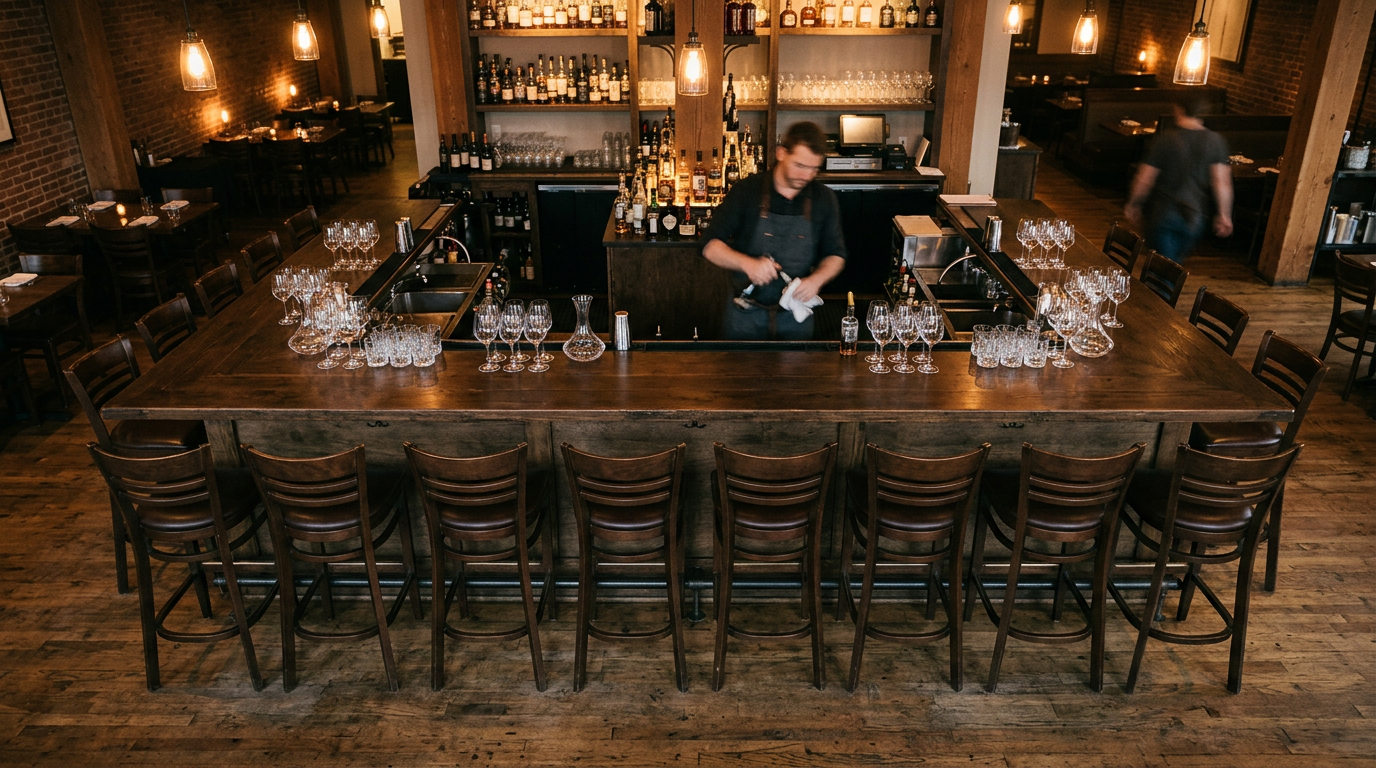
!Quiet Nashville restaurant bar set for early evening service
Order like a host, not like a person trying to win dinner.
The best founder dinner menus in Nashville have shared starters, a few mains that can anchor the table, and enough vegetable dishes that nobody feels boxed in. You want motion without chaos. Passing plates helps conversation. Too many individual decisions slow the night before it starts.
Look for:
- A round or square table when possible. Long rectangles create two separate dinners.
- A six-to-eight-person capacity without shouting. Ten is usually the limit unless you have a private room.
- A wine list that includes approachable bottles, not just trophy picks. One guest will care deeply. Three will pretend to.
- A kitchen that can handle dietary needs without making the gluten-free founder the center of attention.
- A bar nearby but not inside the table noise. Pre-dinner arrivals should have somewhere to land.
For ordering, use a simple host structure:
- Start with two or three shareable plates already chosen before the full group arrives.
- Ask the table for restrictions, not preferences. Preferences create committee behavior.
- Pick one lighter bottle and one deeper bottle if the group drinks. Have nonalcoholic options ready without making a speech.
- Keep dessert optional unless the conversation has real momentum.
At a place like Henrietta Red, you are probably building around oysters or seafood, vegetables, and a clean wine choice. At Rolf and Daughters or Folk, the pasta and shared plates can carry the room. At City House, keep it casual enough that people settle in instead of performing sophistication.
The real move: call ahead. Not to demand special treatment. To ask where a business dinner can actually talk. Nashville hosts and managers know their rooms better than any reservation app.
Best time of day to go
Tuesday and Wednesday are the power nights for founder dinners in Nashville. Monday can work for smaller operator circles, but some restaurants are closed or running a thinner room. Thursday gets socially crowded and harder to control. Friday and Saturday are usually wrong unless the dinner is more personal than strategic.
Aim for:
- 6:00 p.m. if your group includes parents, healthcare executives, or people coming from Green Hills, Brentwood, or Franklin.
- 7:00 to 7:30 p.m. for founders, investors, creators, and visiting operators who want a bar touchpoint before dinner.
- 8:00 p.m. only if the group skews music, hospitality, or late-working creative.
The best version is a soft arrival window. Tell people the reservation is 7:15, but you will be at the bar from 6:45. That gives early people a low-pressure entry and lets late people avoid derailing the first course.
Breakfast meetings are underrated in Nashville for healthcare and real estate. Coffee at a serious third-wave coffee shop can do the first filter. Dinner is where you deepen it. A single-origin pour-over is great for a one-on-one. It is not a six-person relationship builder.
Post-pandemic, people are more selective about leaving the house. That means your dinner needs a reason. Not a vague founder meetup. A real thread: healthcare AI operators, music rights infrastructure, bootstrapped consumer brands, agency owners moving into software, or Nashville founders hiring their first real VP.
Etiquette and unwritten rules
!Small founder dinner table with shared plates in Nashville

Nashville is friendly, but it is not naive. People will smile through a bad pitch and then never respond again.
The first rule: do not make the dinner about fundraising unless the invitation says so. Nashville has capital, angels, family offices, operators with exits, and out-of-town funds passing through. It also has a strong allergy to people treating every local relationship as a wallet.
Second: respect the music business without being weird about it. If someone at the table has label, publishing, touring, or management experience, do not turn them into a walking Rolodex. Ask about business models, not celebrity proximity.
Third: dress with intention but skip the costume. Nashville founder dinners are usually cleaner denim, good shoes, relaxed jackets, not Midtown Manhattan armor. If you are coming from a conference, lose the lanyard before you walk in.
Fourth: let the host host. If someone organized the room, do not hijack the seating, order for the table, or turn every introduction into your own backstory.
Useful ground rules:
- Keep intros under 45 seconds.
- Name what you are building, who it serves, and what you are trying to learn.
- Do not pitch from slides, phones, or screenshots unless asked.
- Avoid name-stacking. Nashville is small enough that people can verify relationships quickly.
- Tip well and be easy on the staff. People notice.
One concept that matters here is weak ties, from Mark Granovetter. The person who helps you most may not be your closest friend. It may be the adjacent operator who knows the right fractional CFO, studio owner, buyer, seed investor, or healthcare compliance person. Founder dinners should create those weak-tie bridges without making the room feel transactional.
How to actually meet people there
The restaurant does not do the work for you. The guest design does.
A strong Nashville founder dinner has one clear center and a few intentional edges. If everyone is the same kind of founder, the conversation gets repetitive. If everyone is random, it turns into a meetup with better lighting.
Build the table like this:
- Two founders in the same stage but different sectors.
- One operator who has already solved the problem most people are facing.
- One capital person, but only if they are socially normal and not there to hold court.
- One local connector from healthcare, music, hospitality, or creator circles.
- One outsider with a useful lens from Austin, New York, Miami, Chicago, or San Francisco.
Good invitation language is specific and low-pressure:
- 'I am putting together six Nashville operators who are past the idea stage and dealing with hiring, distribution, or capital. No panel, no pitch night.'
- 'Small dinner in East Nashville with founders building around healthcare, media, and consumer. Useful room, not a networking event.'
- 'I think you and two people at this table should know each other. Dinner is the excuse.'
At the table, use openers that reveal useful context without sounding like a podcast host:
- 'What are you spending too much time on this quarter?'
- 'What local resource has been more useful than outsiders would guess?'
- 'Where are you seeing Nashville get more serious as a business city?'
- 'What would you stop doing if you had a stronger number two?'
- 'Who in town is under-known but very good?'
The follow-up should happen within 24 hours. Short, specific, and tied to the dinner.
- Send one group note thanking everyone and naming one useful thread from the night.
- Make only the intros you promised. Do not spray contacts around.
- If two people clearly clicked, ask permission both ways before connecting them.
- Add one sentence of context in every intro so nobody has to reconstruct the dinner.
- Invite one person for coffee the next week, not all six.
This is where Nashville rewards consistency. One good dinner every month beats one large event where everyone leaves with a stack of forgotten names.
Rooms that beat the obvious steakhouse circuit
The default corporate Nashville dinner still leans steakhouse, hotel bar, or Broadway-adjacent spectacle. Those can work for closing a deal. They are usually poor for founder trust.
Better alternatives:
Germantown for serious-but-social dinners
Germantown gives you walkable density without the chaos. It works for visiting investors who want Nashville to feel credible without being handed a tourism script. Rolf and Daughters and City House both carry enough local weight that you do not need to explain your choice.
East Nashville for creative operators and builders
East Nashville is better when the room includes creators, agency founders, music-tech people, restaurant folks, or design-minded operators. Folk, Margot, Lockeland Table, and Lyra can all fit different versions of that table. Keep the guest list sharp. East Nashville punishes generic business energy faster than most neighborhoods.
Wedgewood-Houston for the art-and-operator overlap
Wedgewood-Houston works when your group cares about design, hospitality, art, studios, and creative production. Pick a restaurant or bar where the sound level is manageable. Do not assume every cool-looking room can host a serious dinner.
Hotel dining for mixed local and visiting groups
A hotel restaurant can be useful when people are flying in for healthcare, sports, entertainment, or startup events. The upside is logistics. The downside is conference drift. If half the table is staying upstairs, make the guest mix more local so the dinner does not become an extension of the lobby.
Mistakes to avoid
The most common mistake is booking the room that photographs well but sounds terrible. If guests leave hoarse, they will remember the noise more than the people.
Other mistakes:
- Inviting too many investors. One capital person can add value. Four changes the chemistry.
- Calling it exclusive. Nashville hears that as insecure unless the room already proves it.
- Overprogramming. A founder dinner does not need a keynote, prompt cards, or a formal roundtable.
- Letting one person dominate. The host should redirect early, before the table loses patience.
- Ignoring geography. Someone driving in from Franklin on a weekday has a different tolerance than someone already in East Nashville.
- Picking a tasting menu for strangers. It can feel expensive, slow, and socially locked.
- Treating restaurant staff as scenery. Bad guest behavior gets remembered in small markets.
- Making the follow-up too broad. The magic is in two or three precise next steps.
A founder dinner in Nashville should feel earned. Not secretive. Not scene-y. Earned. The city has enough ambitious people now that you do not need to manufacture momentum. You need the right table, a room where people can hear each other, and a host who understands that the real deal may show up three weeks later in a quiet intro.
Skip the neon. Book the room with actual conversation.
Discussion (0)
Loading comments…