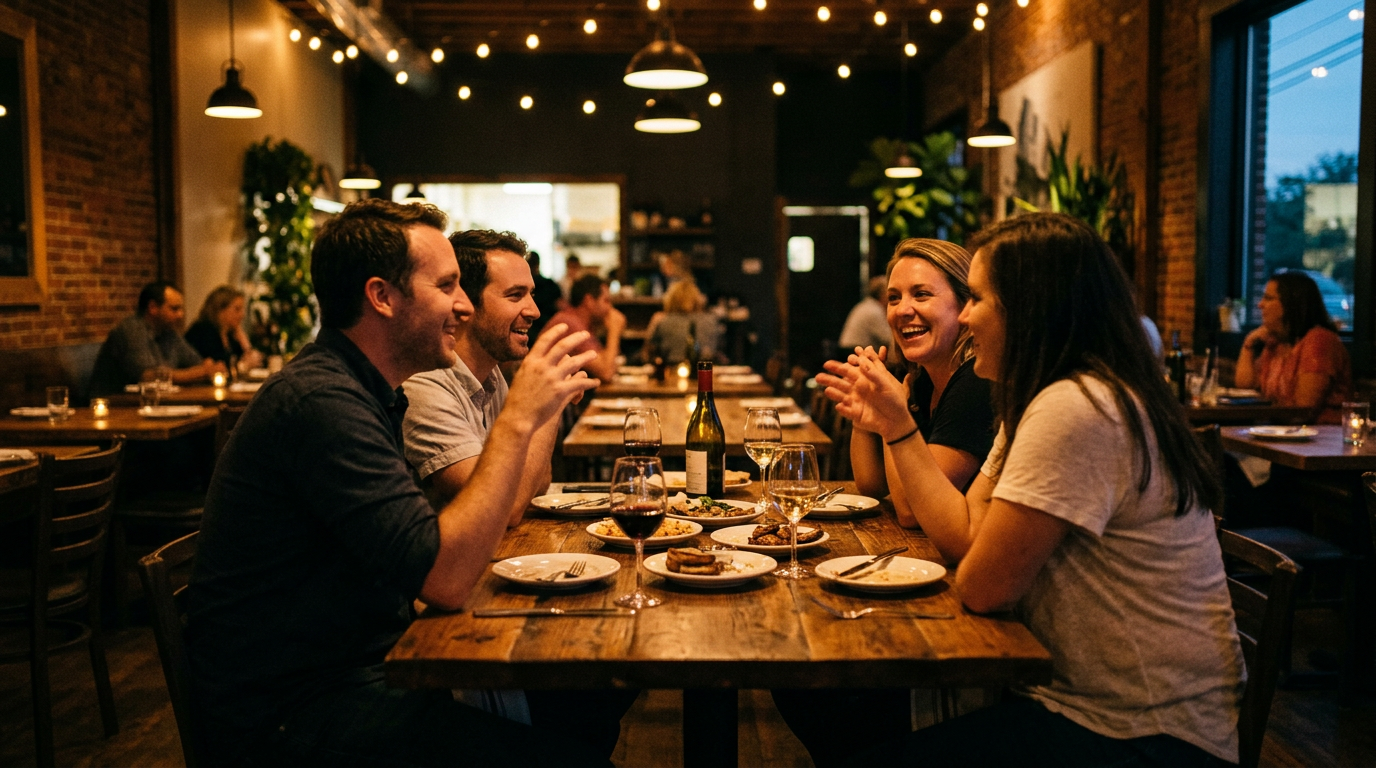
Where Nashville founder dinners still feel private
The wrong Nashville dinner starts with a rideshare crawling past Broadway, a table too loud for names, and eight founders pretending they can hear the person two seats down. That is not networking. That is a group receipt with appetizers.
The better version happens a little off the obvious circuit: Germantown on a Tuesday, East Nashville before the second seating, Wedgewood-Houston when the room is full but not performing. Nashville has real founder density now, but it does not behave like San Francisco or New York. The city still rewards warmth, memory, and restraint. People notice who follows through. They also notice who treats dinner like a fundraising stage.
For founder dinners here, the point is not the trendiest reservation. The point is a table where a healthcare operator, a music-tech founder, a Vanderbilt researcher, a real estate investor, and a creator-economy builder can talk without yelling. The food needs to be serious enough to create trust, but not so precious that the table becomes a tasting-menu hostage situation.
This is a Nashville playbook for restaurant types, neighborhoods, timing, ordering, etiquette, and the actual moves that turn dinner into durable connections.
The Nashville founder dinner rule: avoid the room that wants to be seen
Nashville is social, but not in the same way Miami is social. The best rooms here are not always the loudest rooms. A founder dinner that works in Nashville usually has three traits:
- It is close enough to the core neighborhoods that people will actually come.
- It has food people remember without requiring a speech from the server every four minutes.
- It allows a real conversation at normal volume.
That usually means skipping Broadway, most celebrity-adjacent dining rooms, and anything built mainly for bachelorette traffic. It also means being careful with 12 South on peak nights. Great places exist there, but the sidewalk energy can tilt the wrong way for a serious operator dinner.
The stronger founder dinner map is more practical:
- Germantown for polished but grounded dinners.
- East Nashville for creative operators, product people, music-tech, hospitality founders, and builders who hate stiff rooms.
- Wedgewood-Houston for design-conscious founders, agency owners, and the art-adjacent investor crowd.
- Sylvan Park and The Nations for smaller dinners where nobody wants parking drama.
- Downtown-adjacent hotels only when you need convenience, not when you need intimacy.
If you name specific restaurants, use them as anchors, not trophies. City House, Rolf and Daughters, Henrietta Red, Folk, Butcher & Bee, Lockeland Table, Bastion, The Catbird Seat, Margot Cafe & Bar, and Locust are all real Nashville reference points with serious followings. Some are harder to book than others. Some are too known for the “not on every list” brief. The lesson is not “book the famous place.” The lesson is what these rooms get right: scale, service, taste, and a sense that adults are in charge.
Restaurant types that work better than the obvious reservation
!Nashville restaurant table set for a small founder dinner
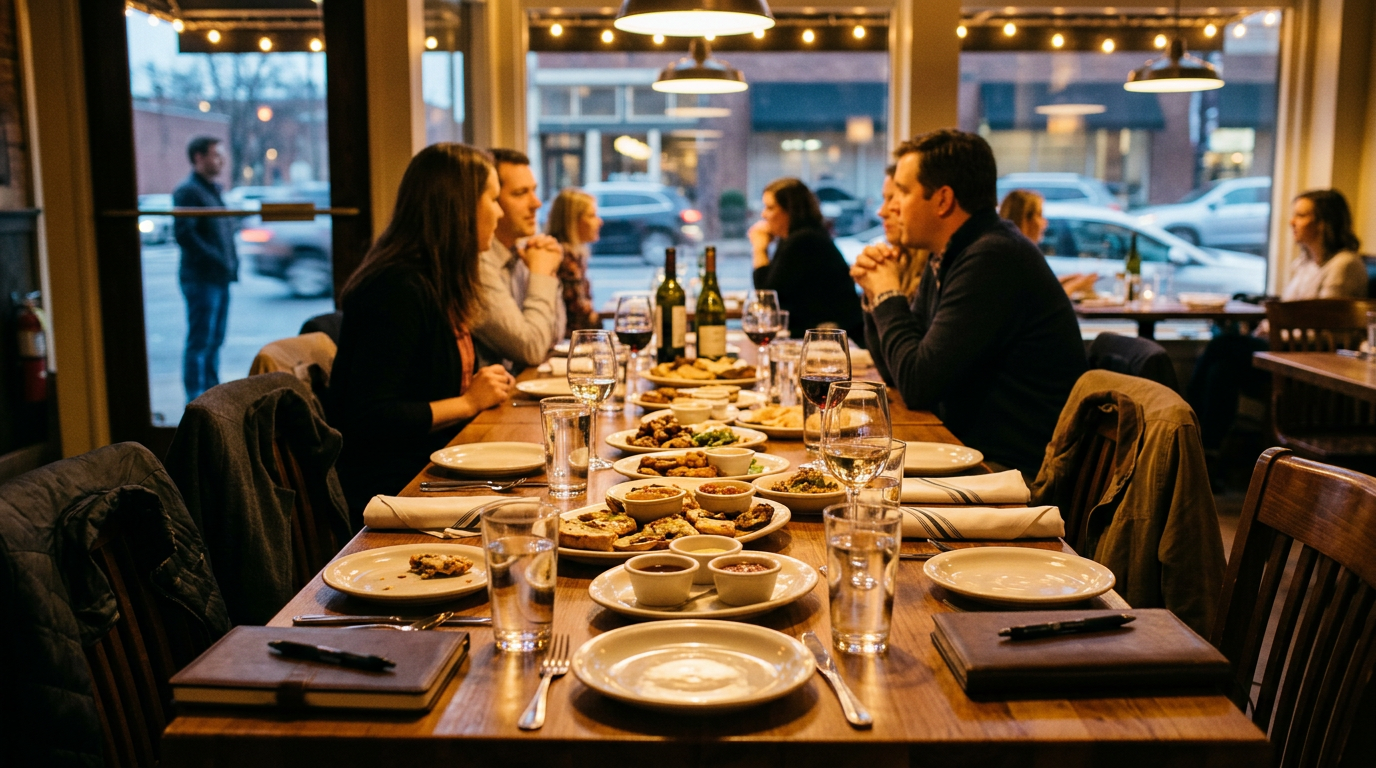
The best founder dinner venue is rarely the one your out-of-town investor already saved on Instagram. Look for a room that fits the size and purpose of the conversation.
The neighborhood restaurant with a real wine list
This is the most reliable Nashville format. Not a white-tablecloth power room. Not a theme restaurant. A neighborhood place with good lighting, professional servers, and a wine list that includes more than Napa cabernet and generic sauvignon blanc.
Book this for six to eight people. It works especially well for first-time founder dinners because the room says, “We care,” without making the host look like they are trying too hard.
Look for:
- Tables that can be reserved away from the bar.
- Shared plates but not chaotic grazing.
- A list with Burgundy, Beaujolais, Loire, Etna, Oregon pinot, or thoughtful domestic producers.
- A staff that can pace the meal without rushing the table.
East Nashville and Germantown are strongest for this format. If the restaurant could handle a regular neighborhood couple on date night and a table of operators discussing term sheets, you are in the right zone.
The small-plates room that forces circulation
Small plates can be annoying when the host is sloppy. Done well, they make the table loosen up. Nashville founder dinners need some movement because locals can be polite to a fault. People will sit next to the friend they came with unless you design against it.
A small-plates room works when you are hosting eight to ten and want cross-pollination: two healthcare founders, one music supervisor, one B2B SaaS operator, one angel, one brand founder, one community builder, one attorney who actually adds value.
The trick is to order in waves and reseat once. Not a huge production. Just say, “After the first round, let’s move two seats so everyone gets at least one new conversation.” Nashville people will accept this if you make it casual.
The chef’s counter for a four-person operator dinner
Not every founder dinner should be a founder dinner. Sometimes the highest-value room is four people at a counter: two founders, one potential strategic partner, one investor or senior operator.
This is where tasting menus, omakase-style counters, and chef-driven formats can work. Nashville has enough culinary ambition to support this, but do not use a counter if the goal is broad networking. Use it for trust-building.
A counter is good for:
- A founder meeting a possible lead investor.
- A healthcare founder meeting a hospital operator and a domain expert.
- A creator founder meeting a manager, platform person, and brand partner.
- Two co-founders repairing or clarifying a relationship with one trusted advisor present.
Do not book a counter for ten and call it networking. That is just expensive silence.
The private or semi-private room that does not feel corporate
Nashville has plenty of private dining rooms. Many are wrong for founders. Too banquet-like. Too wedding-rehearsal. Too much set menu, too little life.
A good semi-private room still has restaurant energy around it. You want enough separation to hear, not so much separation that the dinner feels like a board meeting in a carpeted side chamber.
Ask directly:
- Can we do family-style instead of plated courses?
- Is there a minimum spend?
- Can we start with drinks for 20 minutes before seating?
- Can you keep the music at conversation level for our area?
- Is there a firm out time for the table?
The answer matters more than the decor.
What to order / what to look for
Founder dinners fail when the host makes the table work too hard. Nobody wants to negotiate the menu for 25 minutes while the early-stage founder is trying to explain why their sales cycle is 11 months.
Order like an operator:
- Start with low-risk shared plates. Bread, dips, oysters if the room is right, seasonal vegetables, crudo only if the group is adventurous.
- Choose one recognizable protein. Chicken, fish, pork, steak, or a substantial vegetarian dish. Do not let dinner become seven tiny plates and no center.
- Include one Nashville-aware item without doing parody. If there is a smart Southern vegetable plate, cornbread, country ham, or a local farm ingredient, great. Do not make hot chicken the personality of the dinner.
- Pick wines that keep the table awake. Lower-alcohol reds, bright whites, skin-contact wines only if the group is into natural wine. Founder dinners do not need heavy cabernet at 7:15 p.m.
- Always cover non-drinkers cleanly. Ask the server early for good zero-proof options. Nashville has plenty of sober or sober-curious professionals, and you do not need to make it a thing.
What to look for before booking:
- Noise level you can tolerate for two hours.
- Chairs people can sit in without fidgeting.
- Lighting that does not make everyone look exhausted.
- Tables wide enough for shared plates but not so wide that conversation dies.
- A staff that knows how to handle dietary restrictions without drama.
If you are inviting founders from healthcare, finance, or enterprise software, keep the room a little calmer. If the group is music-tech, brand, creator, or hospitality, you can handle more edge. Nashville has both speeds. Match the room to the people.
Best time of day to go
!Quiet Nashville neighborhood restaurant exterior before dinner
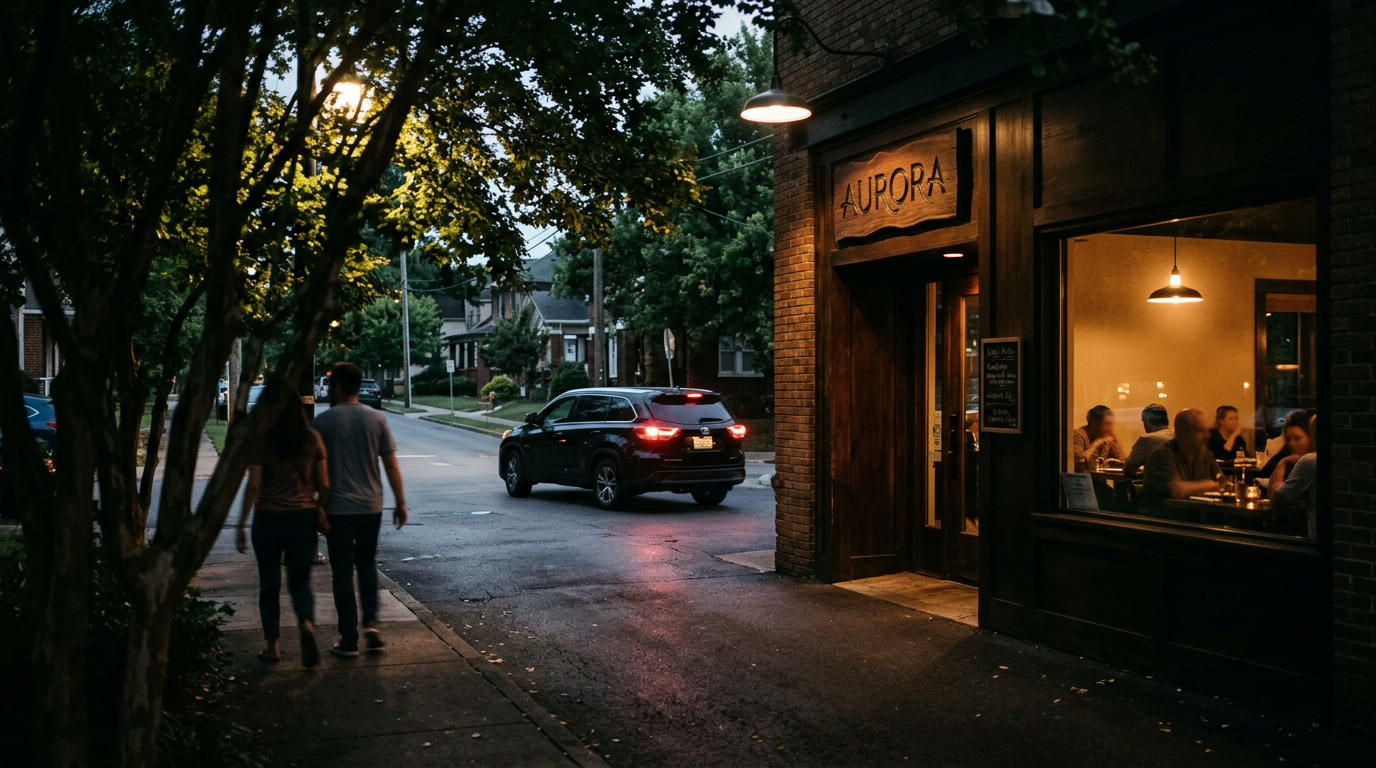
Tuesday and Wednesday are the strongest nights for founder dinners in Nashville. People are in town, restaurants are more flexible, and you avoid the weekend visitor layer. Thursday can work, but the room gets louder and calendars get less reliable.
Best timing:
- 6:00 p.m. drinks, 6:30 p.m. seated for a group with senior operators or parents.
- 6:30 p.m. drinks, 7:00 p.m. seated for founders who run later.
- 8:15 p.m. seating only for a smaller, more social group.
Avoid 7:30 p.m. for larger dinners unless you know the restaurant well. It often puts you in the thick of the room when service is busiest and sound is worst.
Breakfast and lunch can also be strong in Nashville, especially near Vanderbilt, downtown, or Green Hills, but dinner creates a different kind of attention. People stay longer. They reveal more. They remember who was generous.
For out-of-town guests, do not assume everyone wants “the Nashville thing.” A serious founder from Boston or Seattle does not need boots, neon, and a Broadway detour after dinner. If they ask, fine. Otherwise, keep the evening centered.
Etiquette and unwritten rules
Nashville is friendly, but it is not naive. The city has a long memory. You can meet a music lawyer at dinner, realize they also advise a health-tech founder, and see them again two weeks later at a Nashville Entrepreneur Center event. Behave accordingly.
Unwritten rules:
- Do not open with your raise. If someone asks, answer plainly. Do not pitch the whole table.
- Respect music industry people’s discretion. Many have dealt with decades of name-dropping. Do not ask for celebrity stories.
- Do not talk down to the city. Nashville founders are tired of coastal visitors acting surprised that serious companies are built here.
- Tip well and be easy with the staff. People notice. This is hospitality town.
- Do not turn dinner into a panel. One host monologue can kill the night.
- Make introductions carefully. Nashville still runs on trust. Do not spray intros the next morning without consent.
The best hosts set one simple frame at the start: “No speeches tonight. I invited people who should know each other. Let’s do quick context, then actual dinner.”
That line works because it lowers pressure.
How to actually meet people there
A dinner is not valuable because people sat at the same table. It is valuable because the right weak ties form. Mark Granovetter’s weak-ties idea applies cleanly here: the person just outside your usual circle often brings the opportunity your close friends cannot.
Design for that.
Before dinner, send a tight guest note:
- Who is coming, in one line each.
- Why the mix makes sense.
- Arrival time.
- Whether guests may bring one person. Usually no, unless curated.
- Any payment expectation. If you are hosting, say so. If splitting, say so early.
At the table, use openers that do not feel like LinkedIn prompts:
- “What are you seeing in Nashville that people outside the city still miss?”
- “What customer conversation changed your mind this quarter?”
- “Who in town is building quietly but seriously?”
- “What is one intro that would actually help you this month?”
- “What are you trying not to spend time on right now?”
The best founder dinner question in Nashville might be: “Who do you trust here?” It gets to the city’s real operating system.
As host, your job is to move attention around without making people feel managed. If two people are stuck in a niche conversation for 40 minutes, fine. If one person is holding court, interrupt gently: “I want to pull Maya in here because she has the operator version of that problem.”
After dinner, follow up within 24 hours:
- Send a short thank-you to the group.
- Make only the intros that were explicitly welcomed.
- Include one useful artifact: a customer intro, a venue rec, a hiring lead, a relevant Nashville event.
- Do not attach a deck unless requested.
The strongest move is a three-line personal follow-up: “Good meeting you last night. Your point about provider adoption stuck with me. I know one person at a payer-facing company who may be useful; want an intro?” That beats a generic “great to connect.”
Mistakes to avoid
The most common Nashville founder dinner mistakes are predictable.
- Booking too large. Ten is usually the ceiling. Six to eight is better. More than that becomes an event.
- Choosing a loud trophy room. If people cannot hear, they default to small talk.
- Inviting direct competitors without warning. Nashville is collegial, but nobody likes being ambushed.
- Letting one investor dominate. The founder dinner should not become office hours for one check writer.
- Ignoring parking and rideshare friction. It matters here. A great room with annoying access loses half its goodwill.
- Over-programming the meal. No printed agenda. No forced “wins and asks” unless the group already knows each other.
- Being vague about the bill. Decide before the night starts. Hosting is cleanest. Splitting is acceptable if stated early.
- Doing the same dinner every month. Rotate neighborhoods and mixes. Nashville networks get stale when the table never changes.
Also avoid making every invitation about startups. Some of the best people at a Nashville founder dinner will not call themselves founders: producers, physicians, real estate operators, university people, hospitality owners, agency principals, nonprofit leaders, former touring professionals who understand logistics better than most MBAs.
That cross-sector texture is Nashville’s edge. Use it.
A practical booking blueprint
For a first dinner, start with eight people on a Tuesday in Germantown or East Nashville. Choose a neighborhood restaurant with reservations, shared plates, and enough wine range to satisfy both cautious and curious drinkers. Ask for a table away from the loudest speaker. Arrive 15 minutes early. Give the server your card. Tell them you will steer ordering for the table and that dietary needs matter.
Build the guest list like this:
- Two founders in the same broad stage but not direct competitors.
- One operator who has scaled something in Nashville.
- One investor or angel who listens more than they talks.
- One domain expert from healthcare, music, real estate, logistics, or media.
- One community connector from Nashville Entrepreneur Center, Vanderbilt, Belmont, a coworking scene, or a founder group.
- One wildcard who makes the table less predictable.
Do not chase famous. Chase useful, trusted, and curious.
Nashville rewards the host who makes the right room feel easy. Not flashy. Not over-networked. Just intentional enough that people leave saying, “I’m glad I showed up.” That is the dinner worth repeating.
Discussion (0)
Loading comments…