Networking at NYC natural wine bars without the cringe
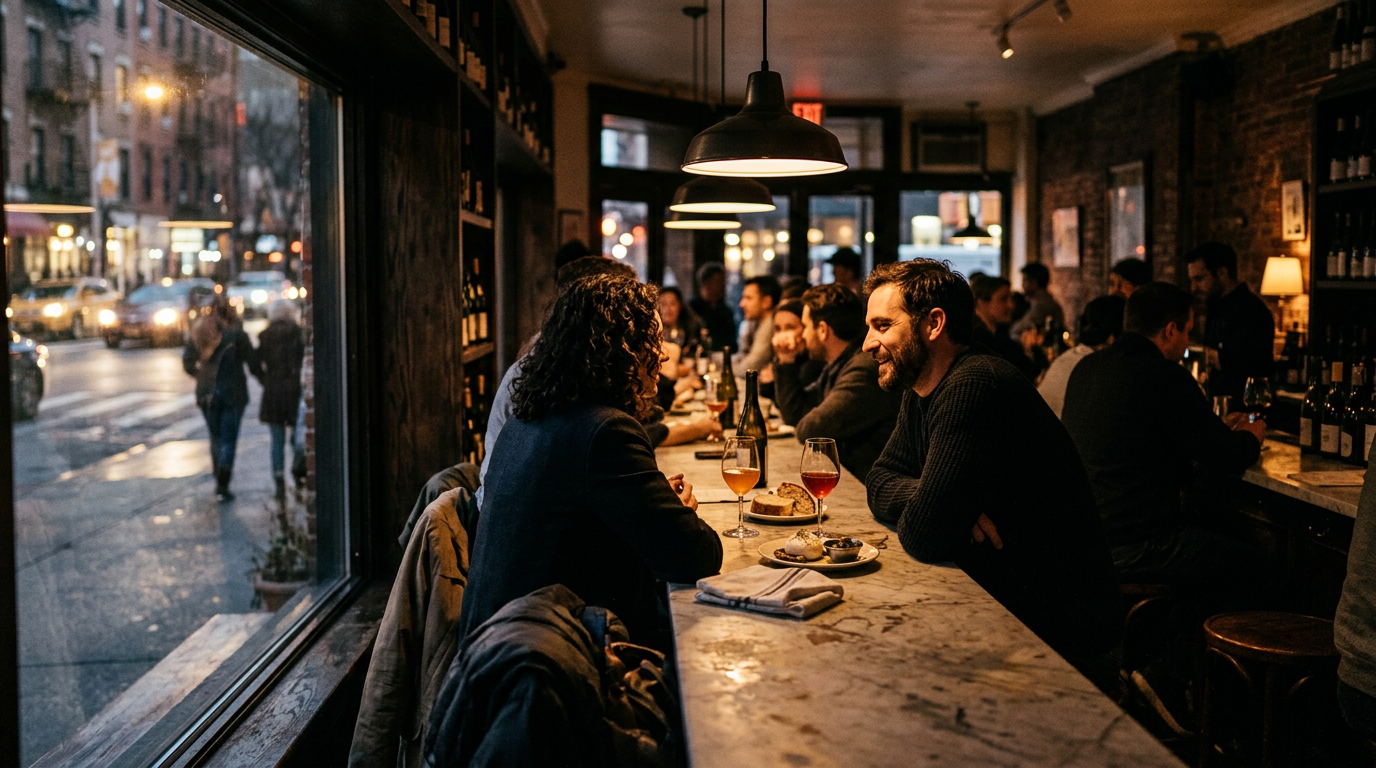
At 6:22 on a Tuesday, the useful seat is usually not the one by the window. It is the single stool at the bar, close enough to hear what the bartender is pouring, far enough from the POS screen that you are not in the way. Someone nearby has a tote bag from a design conference, a half-finished pitch deck on their phone, or the tired look of a person who just left a SoHo office, a Dumbo studio, or a Midtown client meeting.
That is the real New York natural wine networking setup in 2026. Not a badge. Not a panel. Not another forced founder happy hour where everyone says they are “building community” and then scans the room for investors.
Natural wine bars work because they create a softer room. People are standing, waiting, tasting, asking what a weird bottle is. The product gives you a reason to talk without opening with your resume. But it only works if you treat the bar like a bar first. The moment you make it feel like a LinkedIn extraction exercise, the room closes.
The NYC room you actually want
Do not pick the loudest wine bar in the neighborhood and assume density equals opportunity. The right room has movement, but not chaos. You want a place where people can talk at bar volume, where the by-the-glass list changes enough to create conversation, and where the staff is serious without turning the room into a lecture hall.
In Manhattan, think Lower East Side and East Village rooms in the general orbit of The Ten Bells, Ruffian, or Wildair: narrow, food-aware, post-work, not too polished. In Brooklyn, think Williamsburg rooms in the vein of The Four Horsemen, or a Bushwick pizza-and-natural-wine situation like Ops. Use those names as reference points for the kind of room, not as a promise that every night will be full of founders ready to meet you.
The strongest rooms for networking usually share a few traits:
- A real bar with stools, not only tables for reservations
- A short but thoughtful glass list
- Small plates or snacks that keep people from treating the place like a club
- A neighborhood mix: operators, designers, media people, founders, freelancers, chefs, gallery workers
- Enough regulars that the place has a rhythm, but not so many regulars that newcomers feel like intruders
Skip rooms where everyone is on a date, everyone is with a locked-in group of six, or the music is doing too much. You are looking for a social edge, not a networking event with better wine.
What to order / what to look for
!Two people talking over wine and small plates at a New York bar
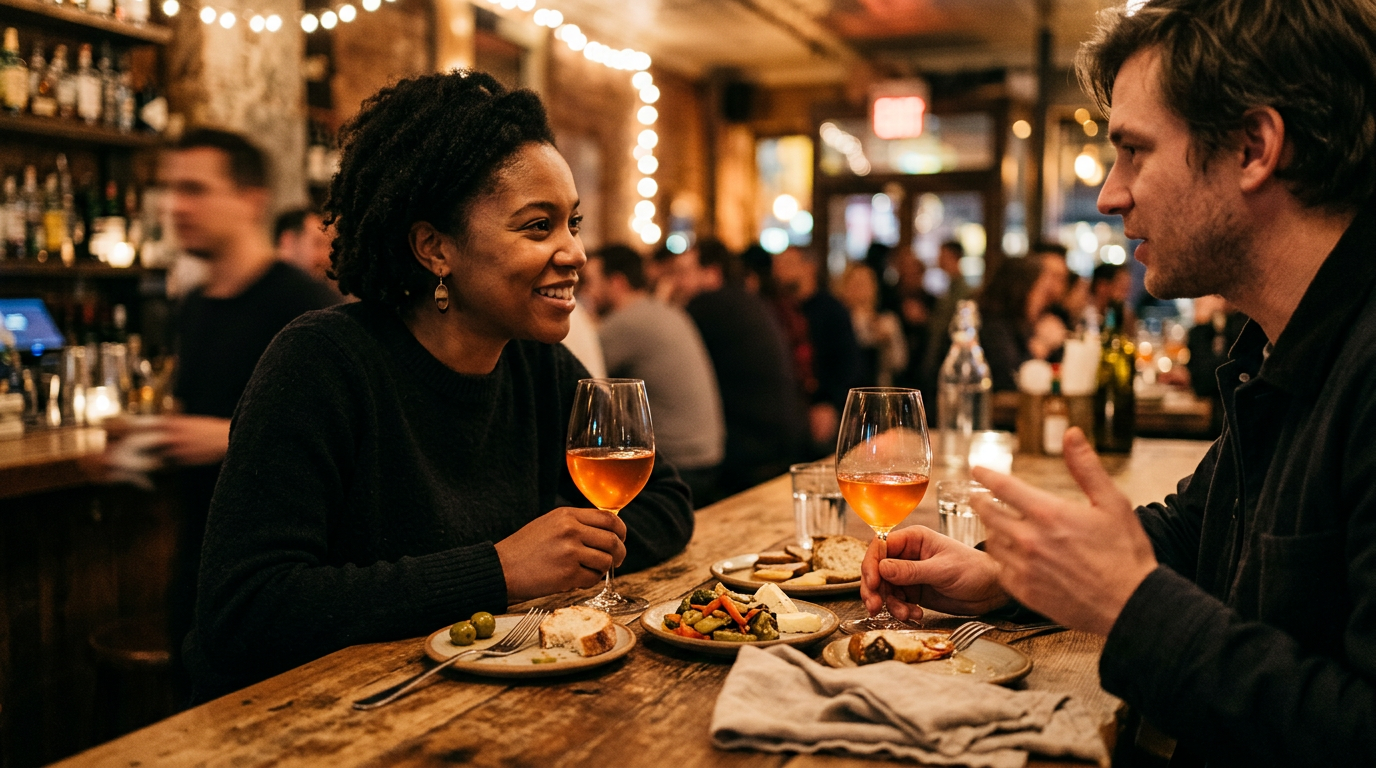
Your order is part of the social signal. You do not need to perform expertise. In fact, trying too hard is one of the fastest ways to sound like you learned natural wine from a comment thread.
A clean opener to the bartender is: “I’m in the mood for something bright, not too funky. What are you excited to pour by the glass?” That gives direction without demanding a seminar. If you actually want the wild skin-contact bottle, ask for it. If you do not know what you want, say that plainly.
Good orders for a networking night:
- One glass first, not a bottle before you know the room
- A snack you can eat without creating a full dinner situation
- Something by the glass that gives you a reason to ask a normal follow-up
- Water, early and visibly
What to look for once you have your glass:
- People waiting near the bar who seem open, not trapped
- Solo regulars who know the staff but are not monopolizing them
- Pairs having a relaxed work-adjacent conversation, not an argument or a date
- Someone asking the bartender a question you can naturally join after the answer
- A person also scanning the room, which often means they are open to light conversation
Do not make the bartender your networking concierge. If they like you over time, they may introduce you to people. Great. But on visit one, they are working. Respect the flow.
Best time of day to go
The best networking window at a New York natural wine bar is usually Tuesday or Wednesday from 5:45 to 7:30 p.m. People are off work but not yet locked into dinner. They still have a little social battery. The room is not sloppy. The staff is not underwater.
Thursday can work, especially in Lower Manhattan and North Brooklyn, but it gets louder and more performative. Friday is mostly a date-and-friends night. Saturday is for people who already have a plan. Sunday early evening can be excellent if you want a calmer room with freelancers, hospitality people, and founders who are avoiding Sunday dread.
Monday is unpredictable. Some places are closed. Some have industry-heavy nights. If you are in restaurants, wine, design, or media, Monday can be useful. If you are a SaaS founder hoping to meet angels, probably not your first move.
The post-pandemic coworking shift matters here. A lot of New Yorkers now split time between home, a hot desk, a dedicated desk, and client meetings. The bar has become the third stop after the office, not the place people go after a 10 p.m. finish. That is why early evening beats late night for business-adjacent connection.
Etiquette and unwritten rules
!After-work crowd outside a Lower Manhattan wine bar at dusk
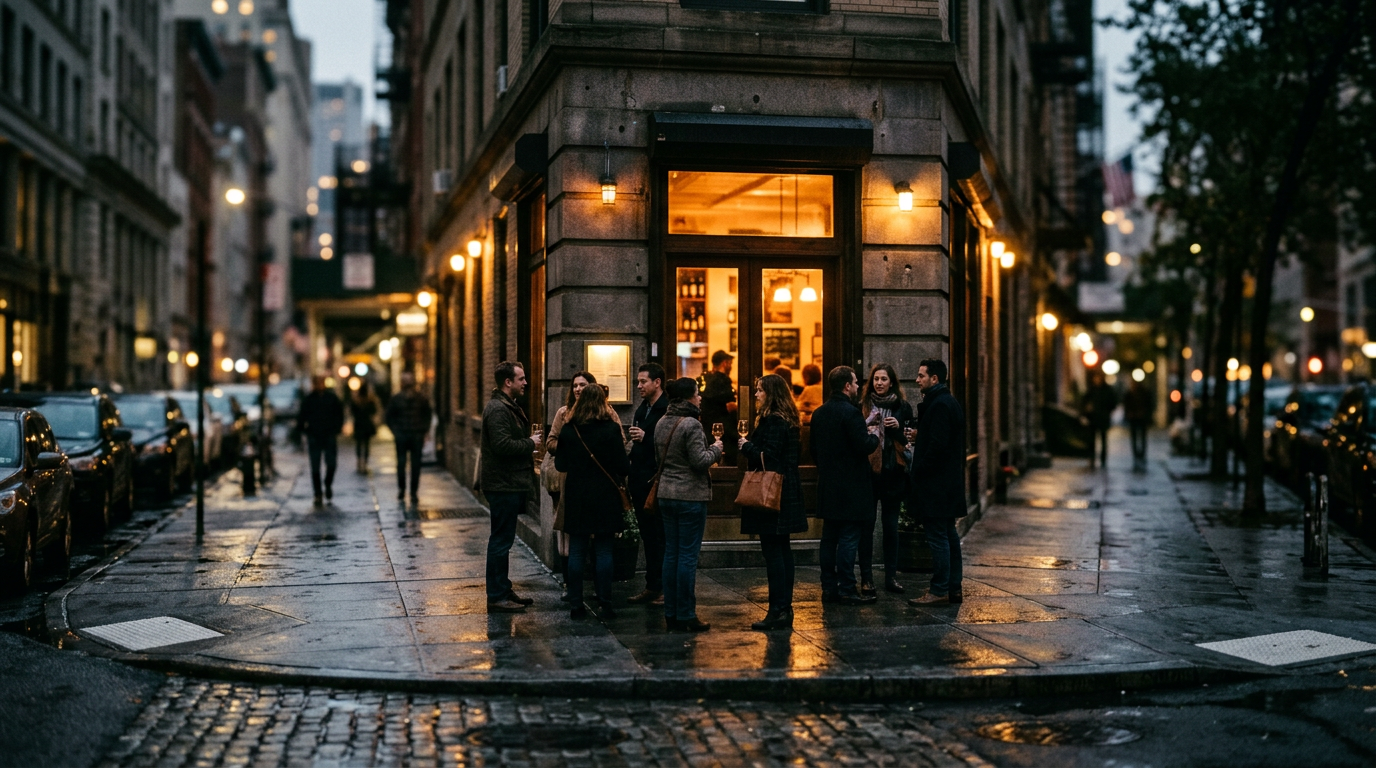
New York is friendly when you do not demand friendliness. That is the rule underneath all the smaller rules.
At a natural wine bar, the etiquette is sharper because the room is intimate. Everyone can hear the person who thinks they are being subtle. Everyone notices the stranger pitching a startup to someone who just wanted a glass of chilled red.
Follow these rules:
- Start with context, not a pitch
- Keep the first exchange under two minutes unless they clearly extend it
- Do not interrupt someone reading, typing, wearing headphones, or leaning away
- Never open with fundraising, hiring, or “what do you do?”
- Do not name-drop your way into relevance
- Tip normally and close your tab cleanly
- If the bar is packed, do not camp in a high-friction spot
- If someone gives short answers twice, release them immediately
The safest first move is a low-stakes comment about the shared environment: the bottle, the snack, the playlist, the fact that every New Yorker somehow has the same black tote. Then pause. If they add energy, continue. If they only smile, you are done.
Natural wine has its own snobbery trap. Do not pretend to know producers you do not know. Do not call every cloudy wine “funky” as if that is a personality. Curiosity reads better than expertise you cannot back up.
How to actually meet people there
Sit at the bar. Not a two-top. Not the darkest corner. The bar is the social instrument.
Bring one friend at most. A group of three or more becomes a wall. Solo is better if you can handle it. One friend is acceptable if both of you understand the assignment: be open, not predatory.
Use openers that give the other person an easy exit:
- “Have you been here enough to know what they pour well?”
- “I’m trying to find post-work spots that are not just coworking happy hours. Is this one in your rotation?”
- “That looks like the more adventurous side of the list. Worth following?”
- “Are you coming from work, or pretending the workday ended like the rest of us?”
- “I’m between a glass and a snack. Any strong opinions?”
If the conversation turns professional, keep it specific and human. “I run ops for a small climate software team” lands better than “I’m changing infrastructure.” “I’m a freelance brand designer trying to get out of referral-only mode” is better than “I help companies tell stories.”
The best New York connections often come from weak ties, the Granovetter idea that loose acquaintances can carry surprisingly useful opportunities. A wine bar is good at creating those weak ties because nobody has to commit to a formal meeting. You share ten minutes, one concrete detail, and maybe a reason to follow up.
When you find common ground, do not linger forever. Say the useful thing, exchange contact info, and let the night breathe.
A good closing line: “I don’t want to hijack your night, but I’d actually like to send you that designer list / event link / intro. What’s the best way?”
Then do it the same night or the next morning. Two sentences. No essay.
The neighborhood read
The Lower East Side is still one of the better zones for loose professional overlap. You get founders coming from SoHo, media people, restaurant people, and design folks who do not want a Midtown lobby bar. The downside: some rooms skew scene-first, especially later.
The East Village works when you want a smaller, stranger, more conversational room. You may meet a chef, a writer, a product designer, or someone who runs a newsletter with more influence than their Instagram suggests. Do not walk in expecting a tidy founder circuit.
Williamsburg is polished but useful. The Four Horsemen type of room has serious wine credibility and a high chance of adjacent conversations: music, restaurants, startups, architecture, venture, fashion, food media. It can also be reservation-heavy, so bar timing matters.
Bushwick and Ridgewood are better for creative operators than pure investor networking. If you build brands, host supper clubs, make content, run a studio, book events, or work across hospitality and tech, these rooms can outperform a formal Meetup.
SoHo, Nolita, and Tribeca skew more expensive and more guarded. The rooms can be productive, but you need a lighter touch. People there have heard every pitch. Do not become another one.
Conversation rhythm that works in New York
Use a three-beat rhythm: observe, invite, exit.
Observation: “That pour has been recommended to three people in a row.”
Invitation: “Have you had it, or is the bartender just on a run?”
Exit: “Nice. I’m going to let you get back to your night.”
That exit is not defeat. It is what makes you safe to talk to. In New York, people open up when they know you will not trap them.
If the person re-engages, then you can go one layer deeper:
- “What kind of workday are you recovering from?”
- “Are you based nearby or just passing through after meetings?”
- “Do you go to actual networking events, or is this your version?”
- “What rooms in the city have been useful lately?”
The last question is especially good. It lets people talk about founder dinners, AngelList-adjacent circles, Lunchclub attempts, Meetup groups, On Deck alumni chats, South Park Commons-style communities, coworking lounges, or private member’s clubs without you interrogating them.
Mistakes to avoid
The obvious mistake is getting drunk. The less obvious mistake is getting too efficient. Networking at a natural wine bar is not about maximizing contacts per hour. It is about leaving with one or two people who would not mind hearing from you again.
Avoid these moves:
- Opening with your startup before anyone asked
- Treating the bar like a conference floor
- Asking for an intro within five minutes
- Cornering someone while they wait for the bathroom or their date
- Debating natural wine as a status sport
- Hovering near groups and waiting for a gap
- Overstaying after the first conversational peak
- Sending a follow-up that says only “great to connect”
Also avoid making every room about founders. New York’s best operators often do not look like startup people. The person who books a supper club, runs events for a member’s club, manages partnerships for a restaurant group, or edits a niche industry newsletter may be more useful than the third seed-stage founder you meet this week.
Leaving with a real connection
The follow-up should prove you listened.
Bad: “Great meeting you. Let’s grab coffee sometime.”
Better: “Good meeting you at the bar last night. Here’s the Fort Greene event series I mentioned. If you go, I’d start with the smaller Tuesday one.”
Best: “Good meeting you last night. I’m sending the operator dinner link and the designer I mentioned. No pressure on either, but both seemed relevant to your hiring search.”
If you promised an intro, ask both sides before making it. If you mentioned a resource, send it without attaching a pitch. If you want a coffee, propose two specific windows and a reason.
And then go back. Not every night. Not as a character. Just enough that the staff recognizes you, you understand the room’s rhythm, and your presence feels normal. New York rewards consistency more than charm. A natural wine bar will not build your network for you, but it can give you the right setting: low pressure, high signal, and just enough friction to keep the weirdness out.
Discussion (0)
Loading comments…