
The NYC club rules founders learn the hard way
At 8:40 on a Tuesday morning in NoMad, the room tells on itself. Two people are clearly taking investor calls in hushed voices. Someone is pretending not to scan the banquette for a familiar GP. A founder with a laptop open has already made one mistake: treating a member's club like a WeWork with better lighting.
NYC in 2026 has no shortage of rooms that promise access. Soho House, Zero Bond, Casa Cipriani, The Ned NoMad, CORE Club, hotel lounges with paid memberships, private dining rooms, natural wine bars that function like founder holding pens, and a layer of invite-only dinners orbiting AngelList, operator groups, alumni networks, and seed funds. The point is not which velvet rope you get past. The point is whether the room matches your stage, your temperament, and the kind of people you need to meet.
Founders come to these clubs for three jobs: find the right room, avoid looking like a social climber, and leave with two or three useful new connections. Not fifty. Two or three. NYC rewards precision.
What NYC member's clubs are actually for now
The post-pandemic club boom settled into something more practical by 2026. Fewer people are joining because they want a fantasy living room. More are joining because the office is fragmented, investor meetings are back in person, and a neutral third place is useful again.
A member's club in NYC is not the same as a coworking space. A hot desk at Industrious, Spaces, or WeWork is for output. A club is for proximity. It gives you a plausible place to take a coffee meeting, host an advisor, sit near operators from adjacent worlds, and build ambient awareness without booking a conference room every time.
The categories matter:
- Social clubs with strong founder density: Useful for relationship building, breakfasts, casual investor meetings, and late-afternoon catchups.
- Hospitality-led clubs: Better for polished meetings, client dinners, and senior introductions. Less forgiving if you are loud or underdressed.
- Hotel membership programs: Good if you travel, host out-of-town investors, or need reliable lounges across neighborhoods.
- Coworking-adjacent clubs: Better for actual work blocks and coffee meetings, weaker for high-trust social mixing.
- Private dining circles and supper clubs: Often better than formal clubs for seed-stage founders, because the room is curated around context, not décor.
The trap is buying the room before you understand the use case. If you need five days a week of desk time, get a dedicated desk somewhere serious. If you need investor adjacency twice a week, a club or recurring dinner circuit may be worth more than a bigger coworking plan.
What to order / what to look for
!Founders meeting over coffee in a quiet Manhattan cafe

Order like someone who plans to stay useful for the next six hours. That sounds basic. It is not.
At breakfast, coffee and something simple wins. Espresso, drip, tea, yogurt, eggs, toast. Nobody is impressed by a complicated order during a 9 a.m. operator meeting. If the club has a proper coffee program, ask for a single-origin pour-over only when the pace of the meeting allows it. Otherwise, do not make the room wait for your ritual.
At lunch, order clean and fast. You are not there to perform taste. You are there to keep the conversation moving. At dinner, let the host set the pace. If it is a founder dinner, do not be the person negotiating every shared plate. If it is a natural wine bar after-session, ask one smart question and accept the recommendation.
What to look for is more important than what to order:
- Tables where people can speak without shouting.
- Staff who understand pacing and privacy.
- A bar area that permits short, low-pressure conversations.
- A lobby or lounge where waiting does not feel awkward.
- Enough density that chance overlap happens, but not so much noise that everyone retreats into their phones.
For founders, the best room is rarely the flashiest room. It is the room where a partner can bring a portfolio CEO, a chief of staff can quietly compare notes, and a repeat founder can sit for 35 minutes without being hunted.
Best time of day to go
NYC clubs run on time bands. If you ignore them, you will misread the room.
7:30 to 9:30 a.m. is the serious window. Breakfast meetings, investor catchups, quiet operator conversations. This is the best slot for founders who want signal without scene. Come prepared. Have a reason for the meeting. Leave on time.
10 a.m. to noon is work-adjacent. Good for solo planning, light introductions, and coffee with advisors. It is also when you can observe who uses the club as a base instead of a backdrop.
Noon to 2 p.m. is transactional. Lunch meetings, client conversations, later-stage founder updates. Do not cold-approach tables during lunch. Ever.
3 to 5 p.m. is underrated. People are between meetings, less guarded, and open to a short hello if there is context. This is a good window for turning a warm intro into an in-person handshake.
6 to 9 p.m. is social and status-sensitive. Better for members who already have a foothold. If you are new, arrive with a host, attend a programmed event, or keep your expectations low. The evening room is where founders most often confuse proximity with permission.
After 9 p.m. is rarely where meaningful founder networking begins. It can deepen an existing relationship. It can also waste a weeknight and blur your judgment.
Etiquette and unwritten rules
!Small founder dinner in a private New York dining room
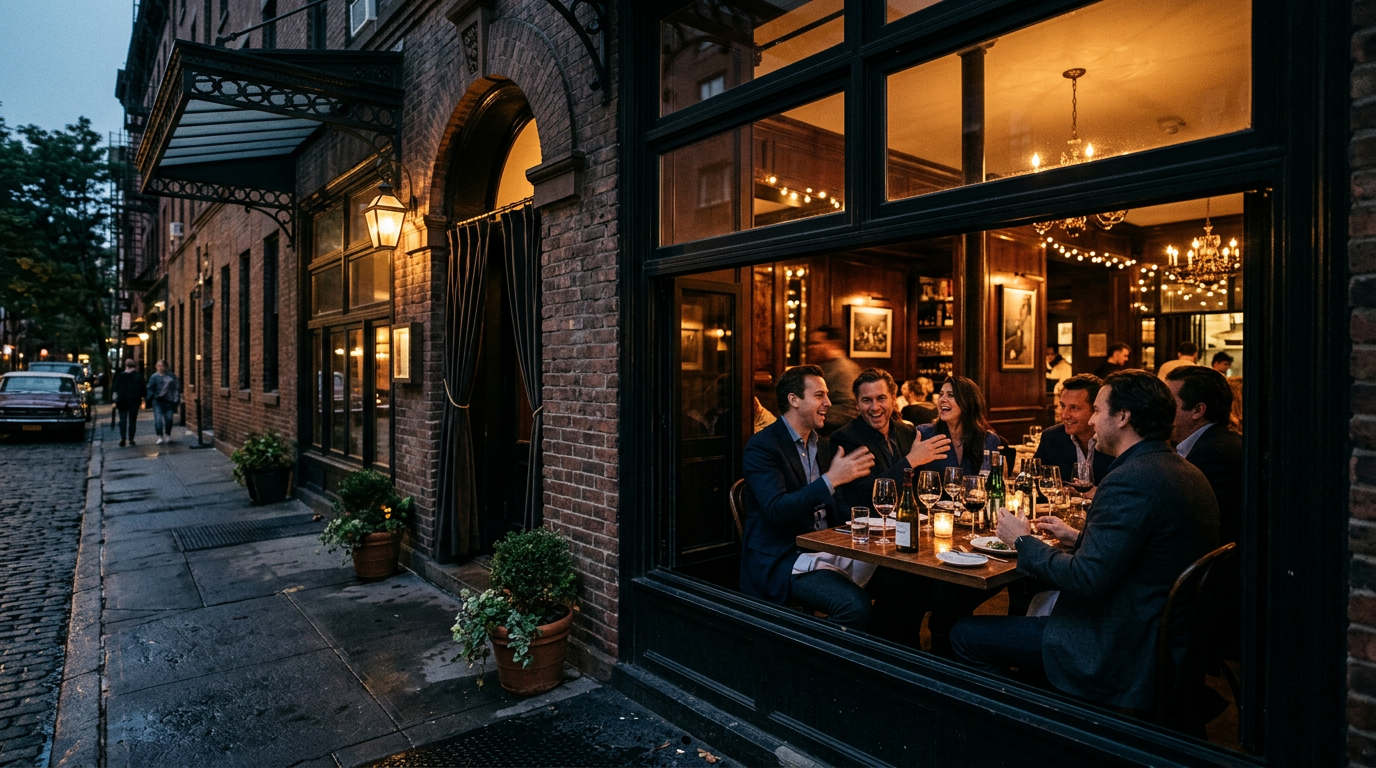
NYC club etiquette is not about being stiff. It is about reading incentives. Everyone in the room is managing reputation, privacy, and time.
The unwritten rules:
- Do not pitch at first contact. A founder who opens with fundraising sounds desperate, even if the company is strong.
- Do not name-drop as proof of belonging. If you actually know the person, the context will show up naturally.
- Do not treat staff as part of your personal brand theater. Members notice how you speak to hosts, servers, and security.
- Do not take loud calls in common areas. A quiet investor update is one thing. A speakerphone pipeline review is amateur hour.
- Do not photograph the room. Many clubs have explicit rules. Even when they do not, assume privacy.
- Do not overstay a hosted visit. If someone brings you in, you are borrowing their reputation.
- Do not ask for a membership sponsor after one drink. Build a reason first.
Dress codes have loosened, but not as much as founders think. Clean sneakers can work. A hoodie can work if the rest of you looks intentional. Gym clothes do not. Anything that reads as I came from a pitch event and want to be seen will cost you.
The most useful posture is calm specificity. You are not there to impress the room. You are there because one or two conversations may matter.
How to actually meet people there
Cold approaching is possible, but weak. NYC runs on context. The better move is to create small Schelling points: obvious, low-friction reasons for people to gather around a time, topic, or person.
Do this before you join anything expensive:
- Ask three trusted operators where they take meetings twice a month.
- Note which rooms come up repeatedly.
- Attend one public or member-hosted event as a guest if possible.
- Track who is actually present, not who is on the marketing page.
- Decide whether the room helps you meet investors, customers, hires, or peers. Pick one primary job.
Conversation openers that work in NYC clubs are specific and non-invasive:
- I saw you were on the climate panel last month. Are you still focused on industrial customers?
- I am comparing notes with founders hiring first sales leaders. Have you seen anyone do that well recently?
- We both know Maya from the Flatiron angel group. She said you had a sharp take on pricing.
- I am hosting four seed founders for breakfast next week, no pitches. Want the context?
- Quick question, then I will let you get back to it: are you still spending time with fintech infrastructure teams?
Notice the pattern. Context first. Permission second. Exit built in.
Follow-up is where most founders fail. Send the note the same day, but keep it tight:
- Great meeting you at breakfast. Your point about enterprise pilots taking too long was useful.
- I am sending the procurement template I mentioned.
- No need to reply quickly. If useful, I can introduce you to one founder selling into regional banks.
Useful beats flattering. Specific beats warm. One follow-up item beats a vague coffee request.
If you want to host, start small. Four to six people. Breakfast or early dinner. One narrow topic. No panels. No forced introductions. No one wants to attend another event where the actual agenda is one person building a list.
Which room fits which founder
A pre-seed founder looking for first customers should not optimize for the same room as a Series B founder hiring a CFO.
Pre-seed and seed founders should prioritize repeated proximity to other builders, angel investors, and operators who can make customer introductions. A member's club may help, but recurring founder breakfasts, Meetup groups with real attendance, university alumni rooms, and small AngelList-adjacent dinners often work harder.
Series A founders need rooms where investors, recruiters, executives, and strategic partners overlap. A polished club can help if you use it as a hosting base. This is where NoMad, Flatiron, SoHo, Tribeca, and parts of Williamsburg matter because people can get there without turning the meeting into a commute drama.
Later-stage founders need privacy, hospitality, and seniority. That points toward more formal clubs, hotel-based rooms, and private dining. The quality of the door matters less than the staff's ability to protect a sensitive conversation.
Solo founders and technical founders should be careful. If you are using the club to avoid selling, it becomes an expensive procrastination machine. Pair it with a fixed weekly target: two customer meetings, one advisor conversation, one peer check-in. Otherwise, go back to the product.
Out-of-town founders visiting NYC should not try to speedrun the club circuit. Stack two days around warm intros, pick one neighborhood base, and leave space between meetings. NYC punishes calendar fantasy.
Member's club versus coworking versus coffee shop
This is the practical decision.
A third-wave coffee shop is best for loose meetings and neighborhood rhythm. Joe Coffee, Devoción, Stumptown, Blue Bottle, La Colombe, Birch, Cafe Grumpy, and other established coffee bars can still serve founders well, especially for first meetings where a club would feel too loaded. The downside is noise, seating uncertainty, and limited privacy.
Coworking is best for output. If you need reliable Wi-Fi, a phone booth, printer access, a day pass, hot desk, or dedicated desk, use a real coworking operator. Industrious, Spaces, and WeWork still exist in the city because the need is real, even after the market reset. Do not pretend a club lounge is your ops HQ.
A member's club is best for relationship density. It works when you can convert repeated overlap into trust. It fails when you expect the membership card to do the social work.
The smart founder often uses all three:
- Coffee shop for first-touch neighborhood meetings.
- Coworking space for heads-down execution.
- Member's club for warm introductions, hosting, and relationship maintenance.
That stack is less glamorous than announcing you joined a club. It is also more effective.
Mistakes to avoid
The biggest mistake is joining too early. If you do not yet know who you need to meet, every room will look promising. That is how founders burn money on status instead of access.
Other common misses:
- Mistaking exclusivity for relevance. A hard door does not mean the room contains your buyers, investors, or hires.
- Using the same pitch everywhere. A casual bar introduction needs a different cadence than a scheduled investor breakfast.
- Bringing the wrong guest. Your guest's behavior reflects on you. Choose accordingly.
- Working in public like privacy does not exist. Screens, decks, pipeline notes, and cap table chatter are visible.
- Collecting weak contacts. Ten shallow chats are worse than two specific follow-ups.
- Ignoring women-led and sector-specific rooms. Some of the strongest NYC networks are not the loudest ones.
- Showing up only when you need something. Relationship rooms punish extraction.
The fix is simple but not easy: become useful before you become visible. Share a relevant candidate. Make a customer intro. Offer a venue for a small breakfast. Send a memo that saves someone time. The room remembers utility.
A practical NYC playbook for the next 30 days
Week one: map your real need. Investors, customers, hires, press, peers, or advisors. Pick two. Ask five people where they would meet those people in person right now.
Week two: test the rooms. Take three meetings in three different settings: a serious coffee bar, a coworking day pass, and a club or club-like hotel lounge through a member host. Pay attention to who seems relaxed, who seems performative, and whether the staff can support the meeting.
Week three: host something small. Four founders, one narrow topic, 75 minutes, breakfast if possible. No deck. No sponsor. No forced intimacy. End on time.
Week four: decide whether membership is justified. If you can name ten people you would comfortably invite there in the next quarter, consider it. If you are hoping membership will create the list, wait.
NYC is not short on rooms. It is short on people who know why they are in one. The founder who wins the club game in 2026 is not the loudest person at the bar. It is the one who understands timing, protects context, follows up with precision, and knows when a coffee shop is the better room.
Discussion (0)
Loading comments…