NYC coffee shops where work actually happens
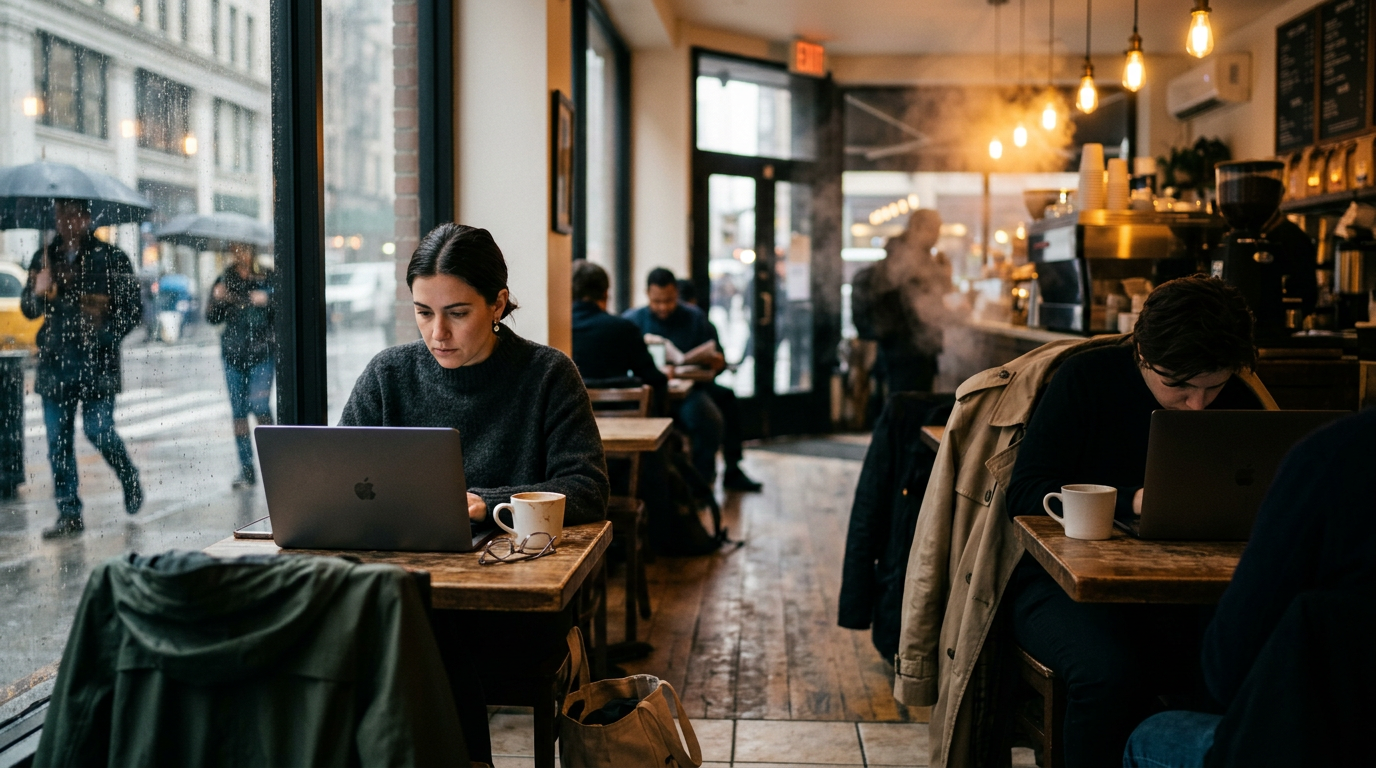
At 9:17 on a rainy Tuesday in Flatiron, the difference between a good café and a workable café is obvious. One room has six laptops, two quiet founders editing decks, a consultant on mute, and someone guarding a wall outlet like it is rent-stabilized. The other has great espresso, tiny marble tables, tourists photographing croissants, and nowhere to put a charger.
NYC has plenty of excellent coffee. That is not the same as having coffee shops where you can actually get work done. In 2026, the city’s café culture is more guarded than it was before the pandemic. Owners learned the hard way that a $5 drip does not cover a four-hour laptop residency. Workers learned that their apartments are too small, coworking is useful but pricey, and WeWork, Industrious, Spaces, and hotel lobbies are not always worth a full day pass for a two-hour writing block.
So the real move is not finding the prettiest coffee shop. It is matching the room to the job: heads-down work, light admin, a quick founder catch-up, or a casual weak-tie conversation that might turn into something useful later.
The NYC café shortlist by work style
Think in categories first, names second. Policies change, outlets disappear, Wi-Fi gets weird, and the same café can feel totally different at 9 a.m. versus 2 p.m.
For focused laptop work
Look for larger rooms, back tables, steady ambient noise, and a staff that is used to remote workers. In Manhattan, Black Fox Coffee Co. is one of the better bets for a polished work session, especially around office-heavy areas like FiDi and Midtown. It feels more operator than lounge. People are there between meetings, not staging a lifestyle shoot.
Joe Coffee is the reliable neighborhood option across the city. Not every location is equally laptop-friendly, but the brand is consistent enough that you can usually get 60 to 120 minutes of email, writing, or light spreadsheet work without drama if you buy properly and read the room.
Variety Coffee Roasters works well when you want a serious coffee bar that still has enough everyday neighborhood traffic to keep the energy up. Brooklyn locations tend to be easier for longer work blocks than high-traffic Manhattan counters.
For serious coffee plus a shorter work block
Devoción is one of the strongest NYC names for coffee quality, especially if you care about single-origin pour-over and fresh Colombian sourcing. The Williamsburg room is beautiful and can be productive off-peak, but do not confuse beautiful with limitless. If it is crowded, do your 45 minutes, finish your cup, and move.
Cafe Grumpy is a good local working café when you want less performance and more routine. The Greenpoint original has neighborhood credibility, and the broader operation has always felt more useful than glossy.
Stumptown Coffee Roasters at the Ace Hotel New York is still a classic NoMad crossover for people who want coffee plus lobby energy. It is not a private office. It is good for writing, inbox triage, or meeting someone before they head to Penn Station or a nearby office.
For quick admin between meetings
Use Blue Bottle, La Colombe, and similar high-traffic cafés for short tasks: invoices, calendar cleanup, investor email replies, posting a memo to Slack. They are often too tight or too popular for deep work, but they are dependable for coffee and a 30-minute reset.
Birch Coffee can be useful if you like a more social room, but check the current laptop policy at the specific location before you settle in. Some NYC cafés have become more explicit about laptop limits, especially during peak hours.
What to order / what to look for
!Brooklyn coffee shop with laptops and pour-over gear during a quiet work session
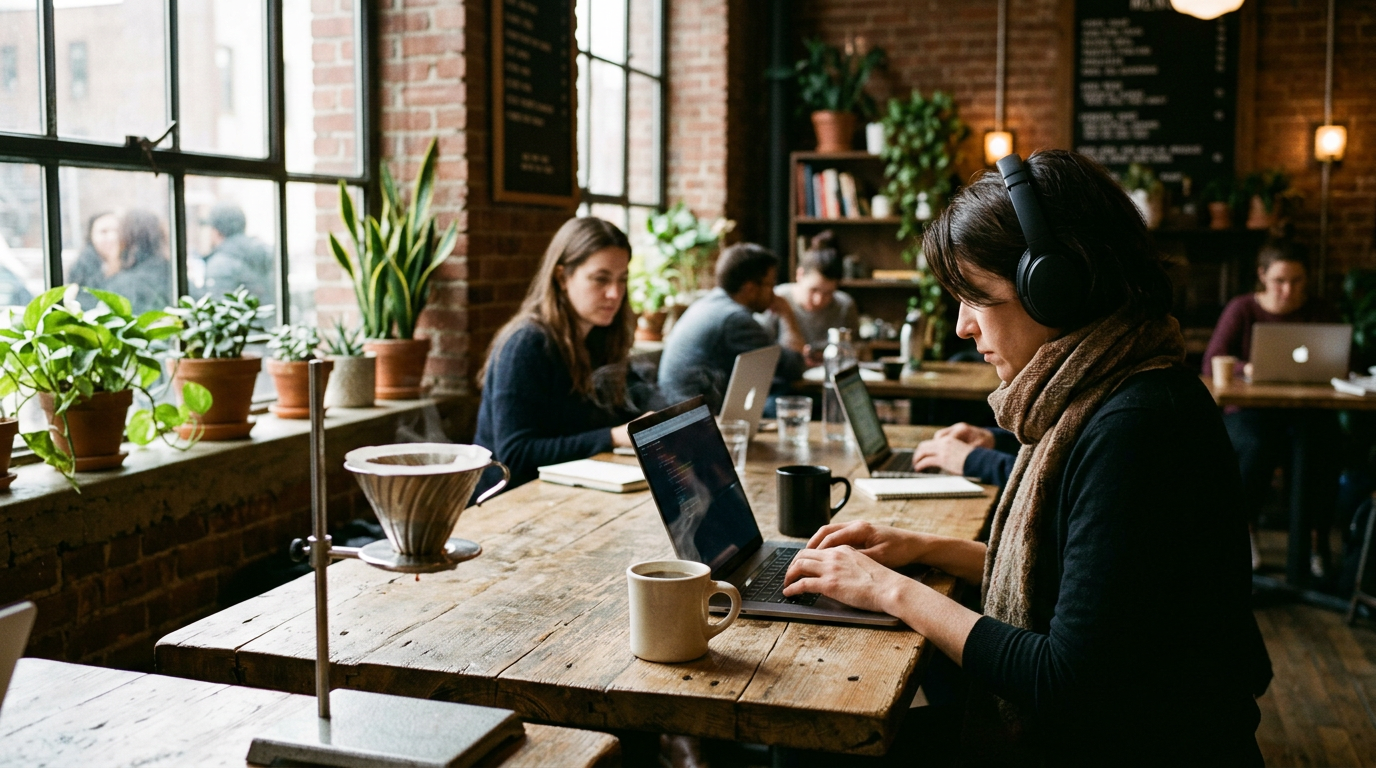
Your order is part of the deal. NYC café staff can spot the one-drink camper immediately.
If you plan to stay under an hour, a drip coffee or espresso drink is fine. If you plan to stay 90 minutes or more, order a second round or add food. If you take a prime table and nurse one iced coffee through two calendar blocks, you are the reason laptop rules get stricter.
Good work-café orders:
- Drip coffee plus pastry for a morning writing block
- Americano or cold brew if you need something that lasts without getting sad fast
- Single-origin pour-over when the café is not slammed and you want to support the bar properly
- Tea plus food for a late afternoon session when you do not need more caffeine
- Sparkling water or a second small item if you are staying past the first hour
What to look for before opening the laptop:
- Tables where your screen will not block the whole walkway
- A mix of laptops and regular café customers
- Outlets that are available without stretching cords across traffic
- Music loud enough to mask conversation, not loud enough to wreck focus
- Staff who do not look annoyed every time someone opens a MacBook
- A bathroom situation that will not require you to pack up every 20 minutes
The best coffee shops in NYC to work from are rarely the most photogenic ones. They are the rooms where the operational details line up.
Best time of day to go
Timing matters more in New York than almost anywhere else. The same café can be perfect at 8:40 a.m. and useless by 11:15.
For Manhattan, the strongest work windows are usually 8 a.m. to 10:30 a.m. and 2:30 p.m. to 5 p.m. The morning office rush can be intense, but it moves quickly. Late morning often fills with meetings, tourists, and people who decided their studio apartment was impossible today.
In Brooklyn, especially Williamsburg, Greenpoint, Fort Greene, Clinton Hill, and Park Slope, the best laptop window is often 9 a.m. to noon on weekdays. After lunch, cafés split into two camps: quiet neighborhood workrooms or stroller-and-meetup traffic. Both are fine. Only one is good for work.
Avoid long laptop sessions during:
- Weekend brunch hours
- Lunch rush near office towers
- Any café with a line to the door
- Rainy afternoons when everyone gives up on commuting
- The first two weeks after a new location opens and the room is still being tested by TikTok
If you need four straight hours, stop pretending a café is the right tool. Book a coworking day pass, use a dedicated desk, or choose a public library branch. Coffee shops are best for one to two hours of momentum.
Etiquette and unwritten rules
!New York café window with remote workers inside on a late afternoon
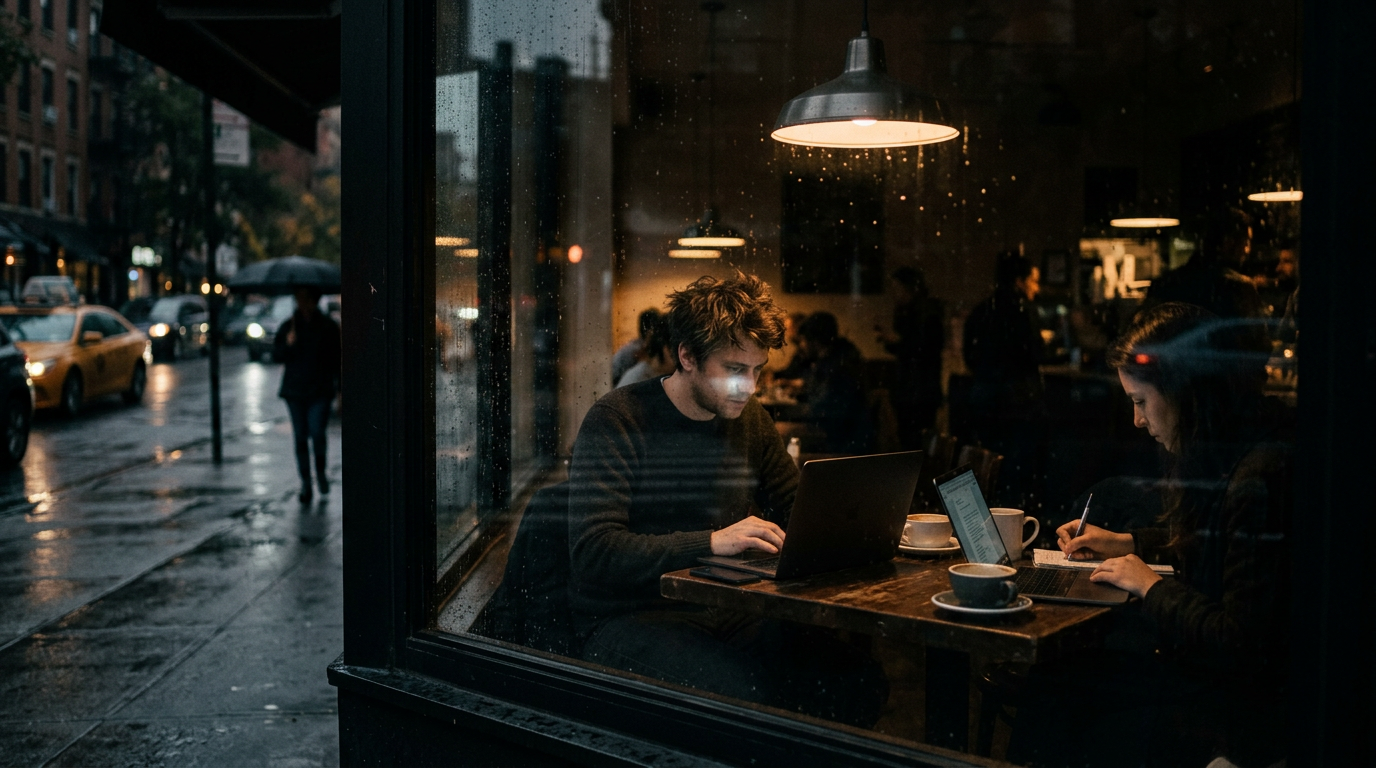
NYC is direct, but not lawless. The rules are easy if you care about the room.
- Buy something before you sit down.
- Do not take a four-top alone unless the room is empty.
- Do not run a Zoom call without headphones.
- Do not run a Zoom call at all if your voice carries.
- Never use a café as a phone booth for sales calls.
- Keep your bag under your chair, not on a seat someone else could use.
- If the café fills up, either order again or leave.
- Ask before unplugging someone else’s charger.
- Tip like you understand rent.
The real local rule: watch the staff, not the customers. If the barista is clearing around you, scanning the room, or gently asking people if they need anything else, the café is at capacity. Wrap up.
Laptop stickers and founder hoodies do not buy you immunity. Neither does a seed round.
How to actually meet people there
Most useful NYC café connections are weak ties, not instant best friends. Granovetter’s point still holds: loose connections often carry new information because they move through different rooms than you do. A café is good for that if you become a familiar, low-friction presence.
Do not walk in trying to network. Work there on the same day and time for a few weeks. Sit near the same zone. Be normal with the staff. Eventually you will recognize the designer, the recruiter, the solo lawyer, the early-stage founder, the writer, the person who seems to know every operator in downtown Manhattan.
Good openers that do not feel forced:
- Are you here most Tuesdays, or just escaping office calls today?
- Quick question: is the Wi-Fi usually steady here in the afternoon?
- I saw you working in Figma. Are you product-side or design-side?
- That looks like a pitch deck. Founder or investor?
- I am building from cafés this month. Any rooms nearby that are better after lunch?
Keep it short. If they answer warmly, continue. If they give a closed answer, let them work.
The follow-up move matters more than the opener. Try:
- Good meeting you. Want to swap LinkedIn? I am usually around here Tuesday mornings.
- I mentioned that operator dinner in Brooklyn. I will send the link.
- If you ever want a 20-minute coffee on customer acquisition, I am nearby most weeks.
- No pressure, but I can intro you to a freelance PM who knows that space.
Do not pitch on the first conversation. NYC has enough people selling. Be useful once. Then see what happens.
Neighborhood tactics that actually work
Flatiron, NoMad, and Chelsea
This is the practical zone for founders, consultants, agency leads, and people bouncing between investor meetings. Use Black Fox, Joe Coffee, Stumptown at Ace, or a serious nearby café for short work sprints. If you need calls, pair the café with a coworking day pass nearby. The café is for prep and decompression, not your board meeting.
Williamsburg and Greenpoint
Great coffee, lots of independent workers, more creative operators, and more people who look available but are on deadline. Devoción and Cafe Grumpy are useful anchors, with Variety also fitting the rhythm depending on location. Go weekday mornings. Weekends are not for work unless you enjoy defending a laptop beside six oat lattes and a dog under the bench.
FiDi and Tribeca
This is where coffee shops behave like office infrastructure. Good for early mornings, finance-adjacent meetings, and quick admin. Black Fox and La Colombe-style rooms make sense here. The energy is transactional, which can be a feature. You will not linger dreamily. You will send the deck.
Upper West Side and Upper East Side
More neighborhood regulars, more students, more quiet solo workers. Joe Coffee, Blue Bottle, Birch, and similar cafés can work well if you choose the right hour. Be extra aware of seating. A small neighborhood café does not owe you a half-day desk.
Downtown Brooklyn and Fort Greene
Good if you want Brooklyn energy without Williamsburg’s scene density. Devoción’s Downtown Brooklyn presence helps, and the surrounding area gives you fallback options if one room is full. This is a strong zone for freelancers, nonprofit operators, and people splitting time between Brooklyn and lower Manhattan.
Mistakes to avoid
The biggest mistake is treating every good coffee shop as a laptop-friendly coffee shop. Some of NYC’s best espresso bars are designed for turnover, conversation, and craft. Respect that.
Other mistakes:
- Showing up with 12 percent battery and expecting the room to solve it
- Taking investor calls from a café table where everyone can hear your metrics
- Camping at a tiny two-top during peak hours with no second order
- Assuming Brooklyn means relaxed policies when many shops are stricter than Manhattan
- Choosing a café for aesthetics instead of acoustics
- Leaving your laptop unattended because the person next to you seems nice
- Forgetting a backup plan when Wi-Fi fails or seating disappears
The pro move is a three-part rotation: one café for focused mornings, one for quick meetings, and one coworking option for call-heavy days. Add a library branch if you need silence. Add a hotel lobby if you need neutral ground. Add founder dinners, Meetup groups, AngelList intros, Lunchclub, On Deck circles, South Park Commons events, or Soho House and NeueHouse-style member rooms when your goal is networking rather than production.
Coffee shops are not a substitute for a full professional system. They are the connective tissue.
A working NYC café plan for 2026
If you are new to the city or rebuilding your routine, start simple.
Pick one neighborhood where you already spend time. Choose two cafés: one practical, one social. Go on the same weekday for three weeks. Buy well. Learn the staff rhythm. Notice who else works there. Keep calls out of the room. Leave before you become furniture.
For a Manhattan operator, that might mean Black Fox or Joe Coffee for morning work, then Stumptown at Ace for a short afternoon meeting. For a Williamsburg freelancer, it might mean Devoción off-peak for writing and Cafe Grumpy for a regular neighborhood cadence. For someone between client sites, Blue Bottle or La Colombe can cover the gaps, but not the whole day.
The coffee matters. The room matters more. In NYC, the best work cafés are not places where you disappear for six hours. They are places where you get 90 clean minutes, behave like an adult, and leave with either the task done or one useful new thread to follow.
Discussion (0)
Loading comments…