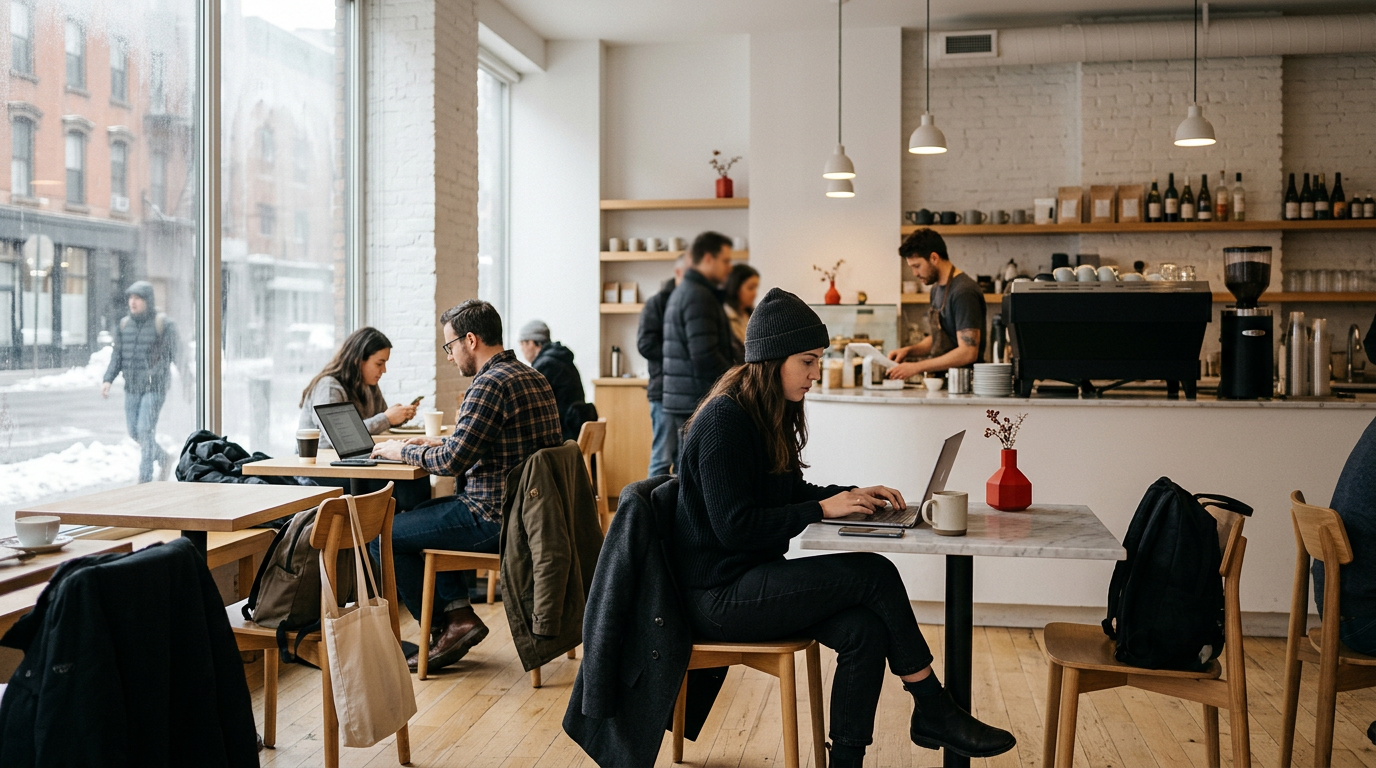
Where NYC laptop workers still get real coffee work done
At 9:07 on a Tuesday in Flatiron, the café already has three founders on calls they should have taken elsewhere, two designers guarding outlet-adjacent seats, and one person trying to nurse an iced coffee through a four-hour sprint. That is the NYC coffee-work scene in 2026: useful, crowded, expensive, and still better than staying home when your apartment feels like a storage unit with Wi-Fi.
The mistake is treating every good coffee shop like a coworking space. New York does not work that way. The rooms are small, the rent is brutal, and many cafés have quietly tightened laptop policies since the remote-work surge. The smart move is to match the room to the job: deep work, light admin, one-on-one meeting, founder serendipity, or a coffee reset between a WeWork day pass and a dinner in NoHo.
This is not a tourist coffee crawl. It is the working map I would give someone who needs to leave the apartment, finish real work, and maybe meet one useful person without acting like they are speed-networking at a Meetup.
The NYC café reality in 2026
New York’s third-wave coffee scene is mature now. Single-origin pour-over is normal. Natural wine bars host laptop people by day and turn into date rooms by night. Boutique hotels blur into member’s clubs. Coworking has shifted from full-time desks to selective day passes, hot desk bundles, and teams using Industrious, WeWork, Spaces, and smaller operator-run floors when they need calls and whiteboards.
Coffee shops sit in the middle. They are no longer the default office, but they remain valuable as Schelling points: obvious places where people in similar work loops naturally show up. In NYC, that matters. The right café in Flatiron, SoHo, Williamsburg, Dumbo, or the West Village can put you near founders, product people, investors, editors, creators, and freelancers without making the room feel like a networking event.
Use this rule:
- Deep work: choose bigger rooms, off-peak hours, and seats away from the espresso bar.
- Meetings: choose hotel-adjacent cafés or polished coffee bars with stable seating, not tiny espresso counters.
- Networking: choose repeatable weekday patterns, not viral weekend cafés.
- Calls: do not assume any café is acceptable. If the call matters, book a coworking day pass or take it outside.
The rooms I trust for different kinds of work
!Laptop, coffee, notebook, and pastry on a compact NYC café table

I would not say one NYC café is the best for everyone. The city punishes lazy recommendations. Instead, think by room type.
The serious roaster café for a focused block
Devoción is one of the better-known NYC names for people who care about coffee and design. The Williamsburg and Flatiron locations have the kind of room that makes you sit up straighter and get through the document you have been avoiding. It is not a private office, and it can get crowded, but for a clean two-hour work block with good coffee, it belongs on the shortlist.
Stumptown at the Ace Hotel in NoMad remains useful because the coffee is reliable and the surrounding lobby culture understands laptop work. Treat it as a work-and-meeting zone, not a place to disappear all day with one drip coffee.
Sightglass, Blue Bottle, La Colombe, Joe Coffee, Cafe Grumpy, Birch Coffee, Variety Coffee, Partners Coffee, and Think Coffee all have NYC footprints or long-standing local recognition, but the exact laptop experience varies by location. In 2026, that variance matters more than the brand. One branch might have enough seating for a draft session; another is basically a beautiful espresso stop with nowhere to land.
The neighborhood workhorse
The most productive coffee shop is often not the prettiest one. It is the neighborhood café with decent Wi-Fi, a few two-tops, staff who recognize regulars, and a crowd that rotates instead of camping forever. In Brooklyn, Queens, and Upper Manhattan, these are often better for real work than the Manhattan rooms everyone posts online.
Look for:
- A mix of solo workers and quick coffee traffic
- Tables that are not all communal
- A few visible outlets, but not a room built entirely around them
- Staff who do not look exhausted by laptops
- Music low enough that you can read, not perform productivity
If you find one near your apartment, protect it. Buy food. Tip. Do not blast calls. Do not post it as your personal discovery on every social platform.
The hotel-lobby coffee setup
For meetings, I prefer hotel-adjacent coffee over most small cafés. The room is usually built for conversation, the seating is less fragile, and nobody panics when two people linger for an hour. Ace Hotel’s Stumptown setup is the classic example in NoMad. The Marlton in Greenwich Village has long been used by media and startup people for casual meetings, though you should check current access and seating norms before treating any hotel lobby like a free office.
This category is best for investor coffees, creator collaborations, advisor chats, and first meetings where you want energy without shouting over a grinder.
The coffee shop plus coworking stack
The strongest 2026 workday is often split: coffee shop for writing, coworking for calls, coffee shop again for one meeting. Use WeWork, Industrious, Spaces, or a smaller local coworking space for the hours that need privacy. Use the café for the parts that benefit from human friction.
If you are near Flatiron, NoMad, SoHo, Dumbo, Williamsburg, or Midtown South, this stack works especially well. Coffee first, calls in a phone booth, lunch meeting, then a late-afternoon reset at a different café before a founder dinner, AngelList intro, Lunchclub coffee, On Deck alumni meetup, or a South Park Commons-style small group if you are in those circles.
What to order / what to look for
Order like someone who understands the room has to make money.
For a real work block, start with one of these:
- Batch brew or drip if you need speed and consistency
- Americano if the espresso program is strong and you plan to stay alert
- Single-origin pour-over if the café is not slammed and you are not blocking the bar flow
- Tea or sparkling water as a second round if caffeine will wreck your afternoon
- A pastry, toast, yogurt, or sandwich if you are staying beyond the first hour
What to look for before opening the laptop:
- Laptop policy signage near the register or tables
- Whether outlets are intentionally available or clearly scarce
- Table height that will not punish your wrists
- Noise level at the espresso machine
- Whether people are taking calls or only typing
- Staff body language toward laptop customers
Do not make the barista explain the rules during the rush. Scan the room. If every laptop is closed at noon, that is information.
Best time of day to go
!People entering a New York coffee shop during a weekday work afternoon
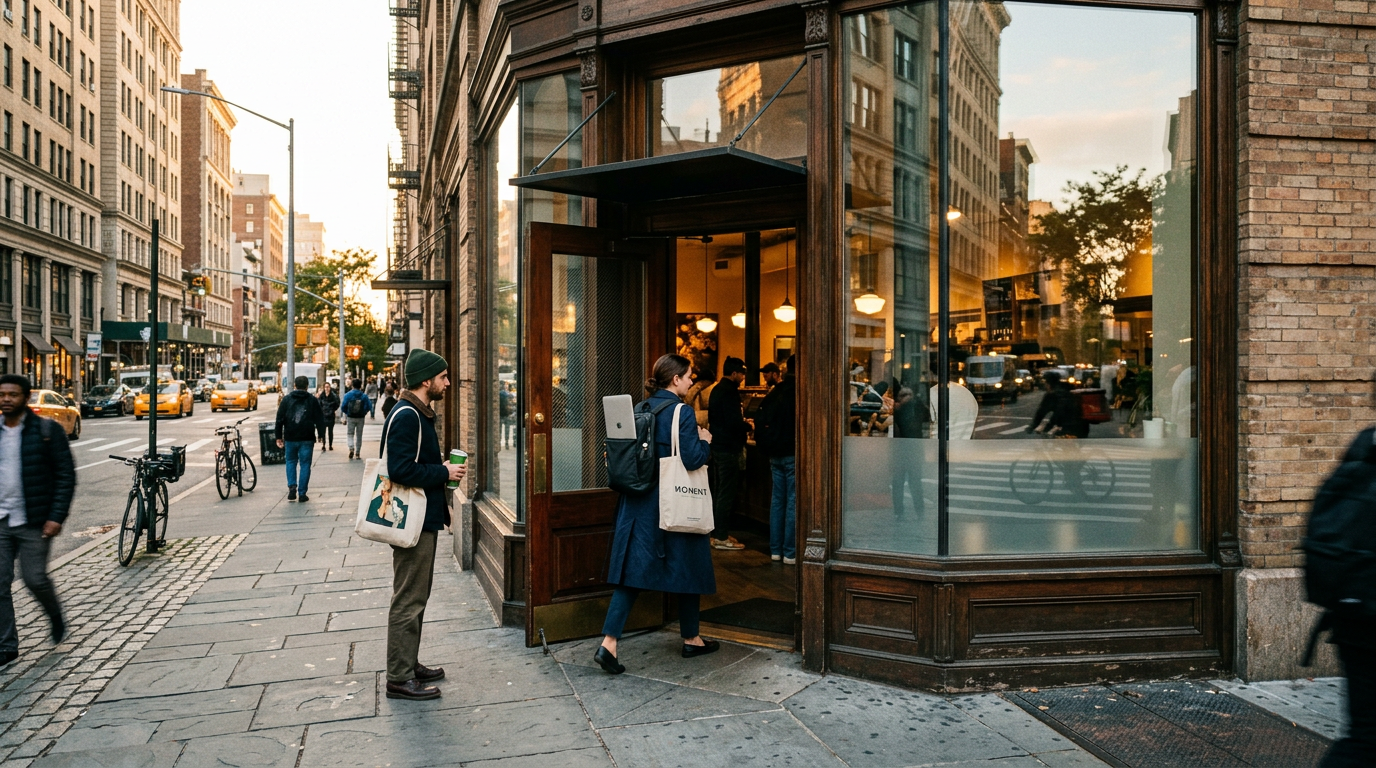
The most useful café hours in NYC are not the romantic ones. They are the awkward gaps.
8:00 to 9:30 a.m. is good for a fast planning session, inbox triage, and a strong coffee before the room fills. It is not great for long stays because the morning rush belongs to commuters.
10:00 a.m. to noon is the prime deep-work window. People have left for offices, the lunch wave has not arrived, and staff are usually less compressed. If you need to write, model, edit, or code, this is the block.
2:00 to 4:30 p.m. is the second good window. It is strong for admin, one-on-one meetings, and follow-ups. You will also see more freelancers and founders surface here because traditional office people are trapped in meetings.
After 5:00 p.m. changes by neighborhood. In SoHo, Williamsburg, and the West Village, cafés can flip into social rooms fast. Natural wine bars and restaurants start pulling attention. If you are still on a laptop at 6:30 in a small café, read the room carefully.
Weekends are not ideal for serious work in popular NYC cafés. Many places restrict laptops or simply become too crowded. If you need weekend deep work, use a library, a coworking day pass, or a less-trafficked neighborhood café that clearly allows it.
Etiquette and unwritten rules
New York café etiquette is not complicated. It is just enforced socially.
- Buy something when you arrive, not after you have claimed the best table.
- If you stay past 90 minutes, order again.
- Do not take a four-top alone unless the room is empty.
- Keep calls under five minutes, and take anything sensitive outside.
- Use headphones, but do not perform a podcast studio from your seat.
- Do not spread a laptop, iPad, notebook, charger, water bottle, and coat across shared space.
- Tip like you understand rent and labor costs in New York.
- If staff ask you to move, close the laptop, or clear a table, do it cleanly.
The harsh truth: cafés owe you coffee and hospitality, not office infrastructure. If you need a guaranteed outlet, ergonomic chair, private call booth, and eight hours of occupancy, you need a dedicated desk or day pass, not a cortado.
How to actually meet people there
The best café networking in NYC is low-friction. You are not pitching the room. You are becoming a familiar, useful presence.
Pick two or three rooms and return on the same days at the same times for a month. That is how weak ties form. A designer you see every Tuesday. A founder who always takes the corner seat. A writer who knows the barista. These people are often more useful than the polished contacts you collect at formal events because the interaction starts in normal life.
Conversation openers that work:
- “Do you know if this location gets impossible after lunch?”
- “I’m trying to find a reliable two-hour work spot around here. Is this your usual?”
- “That laptop stand is the most serious setup I’ve seen in a café. Worth carrying?”
- “Are you coming from a coworking space nearby, or is this the office today?”
- “I’m new to working in this neighborhood during the week. Any rooms you avoid?”
Keep it brief. If they give short answers, let it die. If they engage, exchange context before contact info. “I’m building a small ops consultancy for creative teams” beats “I’m in startups.” Specificity gives the other person a hook.
Follow-up moves:
- Send a same-day note with one concrete reference from the conversation.
- Suggest a 20-minute coffee the following week, not a vague “let’s connect.”
- If they mention a problem, send one useful link or intro, then stop.
- Add them on LinkedIn only if the conversation had substance.
- Invite them to a relevant Meetup, founder dinner, coworking event, or small breakfast if there is a real fit.
The goal is not to harvest contacts. It is to build a local work loop.
Mistakes to avoid
The first mistake is chasing famous coffee instead of functional rooms. Some of NYC’s strongest coffee bars are terrible places to work, and that is fine. A tiny café serving excellent espresso does not need to become your Notion bunker.
The second mistake is assuming every location of a known brand works the same way. A Joe Coffee near offices, a Blue Bottle in a retail-heavy area, and a Cafe Grumpy in a residential pocket can feel like completely different work environments. Check the current vibe before planning your day around it.
The third mistake is taking Zoom calls from café tables. Everyone hears more than you think. Investor updates, client issues, hiring discussions, medical details, relationship drama. New York rooms are close. Act accordingly.
The fourth mistake is camping during peak revenue hours. If the lunch rush hits and people are circling, either order food, downshift to a smaller footprint, or leave.
The fifth mistake is confusing being around workers with doing work. A polished room can make you feel productive while you answer Slack for three hours. Arrive with one outcome: finish a deck, edit a proposal, clear invoices, write the memo, review the model. Then leave.
A practical NYC workday that actually holds up
If I had to build a reliable café-based workday in New York, I would do it like this:
- 8:30 a.m.: neighborhood café for planning and inbox cleanup
- 10:00 a.m.: larger third-wave café or hotel-adjacent coffee room for deep work
- 12:30 p.m.: leave before the lunch crowd turns the room
- 1:00 p.m.: coworking day pass for calls and anything confidential
- 3:30 p.m.: coffee meeting in Flatiron, NoMad, SoHo, Dumbo, or Williamsburg
- 4:15 p.m.: send follow-ups before the person becomes another loose contact
- 6:00 p.m.: founder dinner, Meetup, member’s club event, or home
That rhythm respects the city. It also respects your own attention.
NYC is still one of the best cities in America for doing laptop work around ambitious people, but the 2026 version requires more tact. Find the room that fits the task. Order properly. Learn the house rules. Become a regular before you become a networker. The best coffee shops in NYC to get work done are not always the loudest names. They are the rooms where your work improves, your calendar gets sharper, and the person at the next table might become a real weak tie instead of another face in the feed.
Discussion (0)
Loading comments…