Portland coffee rooms that work for solo builders
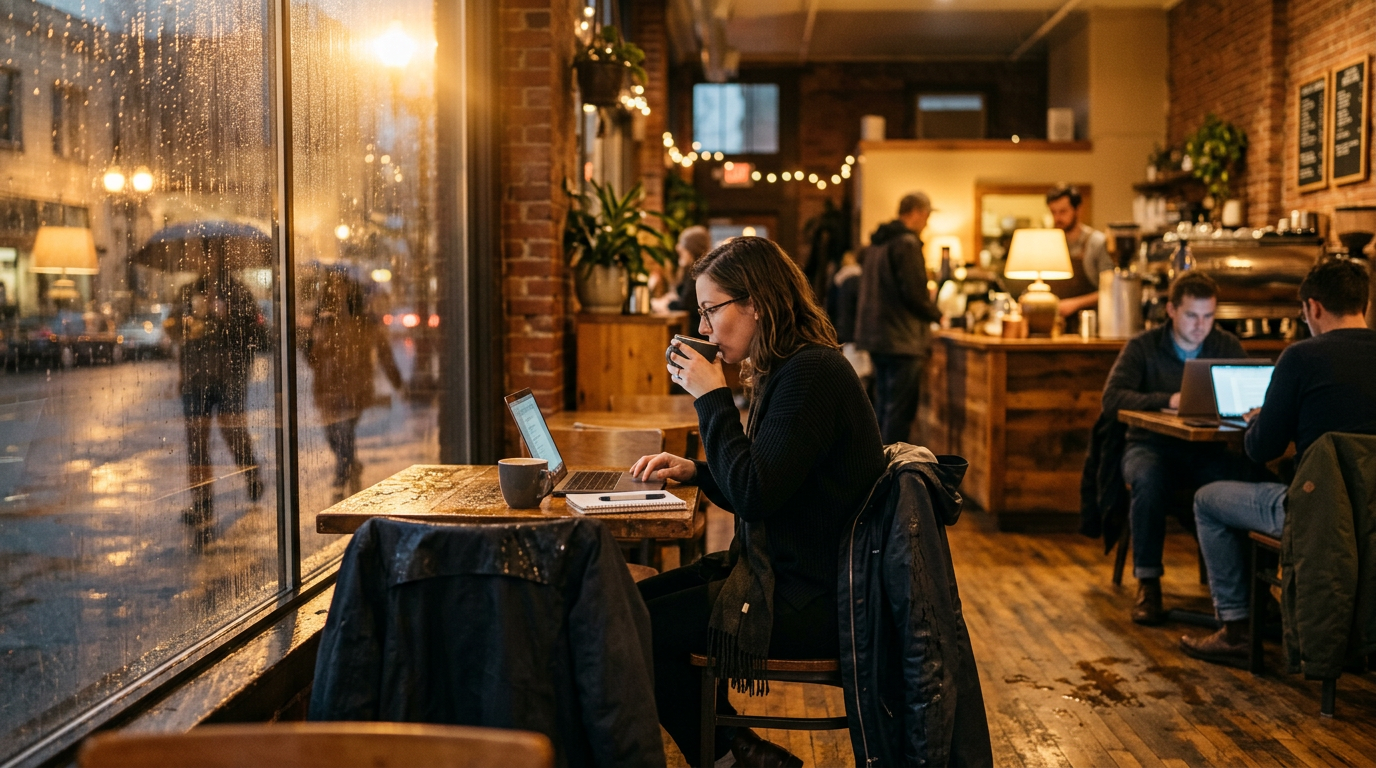
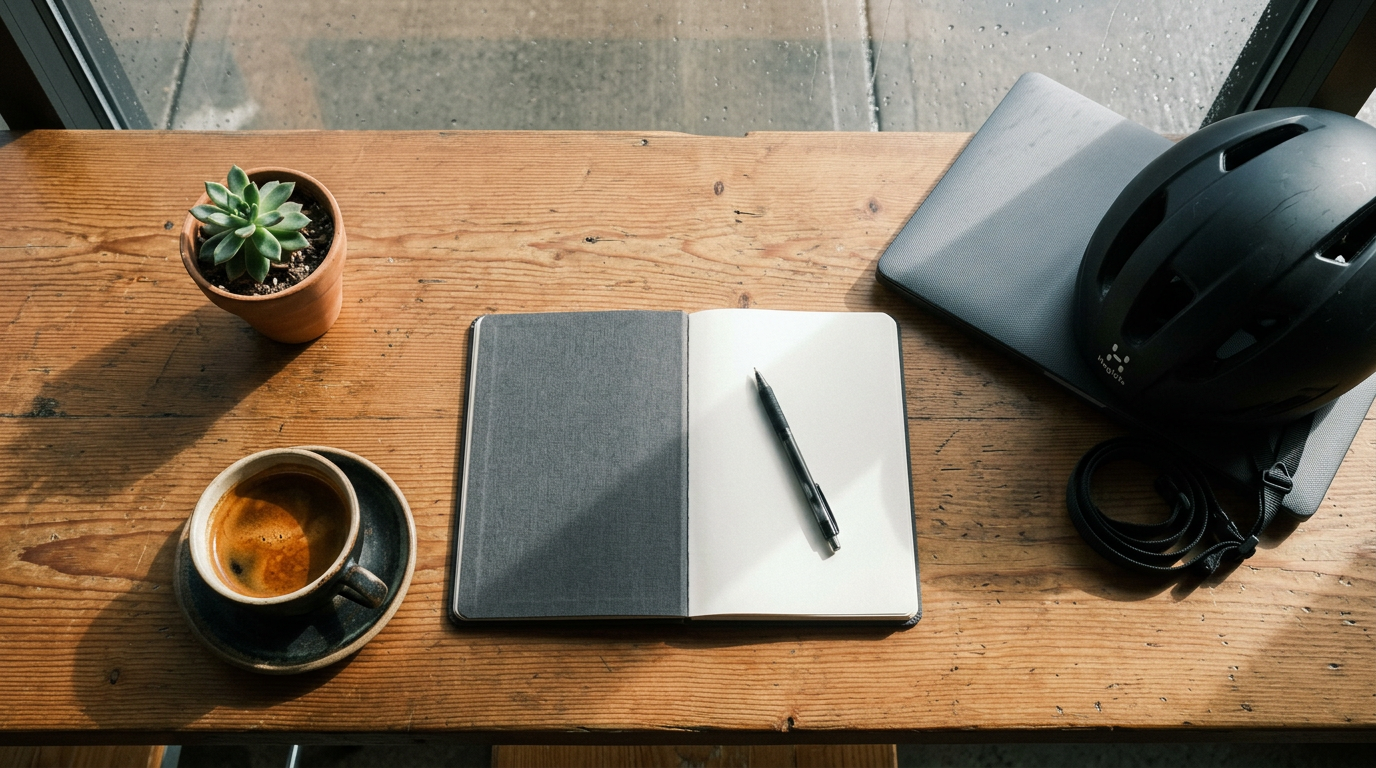
A wet bike helmet on the chair, a half-finished single-origin pour-over, three open tabs on Stripe docs, and someone quietly shipping a bug fix before noon. That is the useful version of Portland coffee for indie hackers.
The bad version is also common: a founder camping at a four-top for five hours, nursing one drip, taking a sales call at full volume, then wondering why the room feels cold. Portland is polite, but it notices.
This city has mature third-wave coffee, strong design taste, and a work culture that respects independence more than performance. You will not find the same visible founder signaling you get in San Francisco, Austin, or Miami. Less Patagonia vest, less fundraising theater. More solo operators, designers, devs, copywriters, Shopify builders, climate people, open-source maintainers, and freelancers who prefer a good room over a loud coworking floor.
The move is not to find one perfect cafe and colonize it. The move is to build a small rotation: one room for focused heads-down work, one for light meetings, one for accidental conversations, and one backup when the Wi-Fi or seating situation turns against you.
The Portland rule: buy well, take less space
Portland coffee shops are not free coworking spaces with espresso attached. They are hospitality businesses with thin margins, skilled baristas, and regulars who care about the room. If you treat them like a hot desk you did not pay for, you will stand out in the wrong way.
The local rule is simple: order like you understand the craft, sit like you understand the economics.
That means you do not need to perform coffee nerdery. You do need to respect it. Stumptown, Coava, Heart, Proud Mary, Nossa Familia, Albina Press, Coffeehouse Northwest, and other established Portland rooms helped define what serious American coffee feels like after the novelty phase wore off. The baseline is high. A basic espresso can be excellent. A batch brew can be better than the single-origin pour-over you ordered in another city because the menu made you feel underdressed.
For solo builders, the coffee shop is a Schelling point: an obvious shared place where independent people can be around each other without scheduling a meeting. That is the value. You are buying a drink, but you are also buying proximity to other working adults who are not trapped in the same office culture.
Use that proximity carefully.
What to order / what to look for
!Laptop, notebook, coffee cup, and bike helmet on a rainy Portland cafe table
Order based on your work mode, not your Instagram instincts.
For deep work:
- Batch brew if the shop is serious about coffee. It is fast, consistent, and does not create a production pause for the bar.
- Americano or espresso when you want a clean hour and an easy exit.
- Tea or sparkling water for a second round if caffeine is already making your code worse.
- Food if you are staying through a meal window. A pastry is fine for 45 minutes. Lunch-hour seating deserves a larger order.
For a short meeting:
- Cappuccino or drip because it arrives quickly and does not hijack the conversation.
- Something non-messy if you are opening a laptop together.
- A second drink before the meeting ends if the room is busy and you have occupied seats for more than an hour.
For a room worth working in, look for:
- A mix of two-tops and bar seats, not only communal tables.
- Visible outlets, but not a room where every seat depends on one overloaded power strip.
- Music at conversation level, not brunch-volume chaos.
- Staff who move calmly during rushes. That usually means the room can absorb laptop workers without becoming tense.
- Other solo workers, but not a full wall of people on Zoom. Too many calls kill the room.
What not to optimize for: the biggest table, the most outlets, the softest chair. Those are traps. A slightly less comfortable seat keeps your session honest. Portland rewards the two-hour block.
Best time of day to go
The best Portland cafe hours for indie hackers are not the same as the best coffee hours for everyone else.
8:00 to 10:00 a.m. is good for reading, planning, and a clean first sprint. It is not the time to set up a monitor stand, spread notebooks across a table, or ask someone what they are building. People are commuting, caffeinating, and trying to start their day without being pitched.
10:00 a.m. to noon is the prime solo-builder window. The morning rush softens, seats turn over, and the room still has energy. This is when you can finish a landing page, write a product spec, clean up a Zapier mess, or answer support tickets without feeling like you are stealing space.
1:30 to 3:30 p.m. is underrated. Lunch traffic drops, the afternoon crowd has not fully arrived, and baristas are less buried. If you are going to have one friendly exchange with a regular, this is the window.
Weekends are different. Do not plan a laptop session at a brunch-heavy room on Saturday morning, especially somewhere like Proud Mary where food and social traffic are part of the draw. If you want weekend work, go early, stay compact, and leave before the room becomes a social meal.
Rain changes behavior. Portlanders still go out, but long wet afternoons make cozy cafes fill with people who planned to work from home and lost the argument with their apartment. Have a second location in mind.
Etiquette and unwritten rules
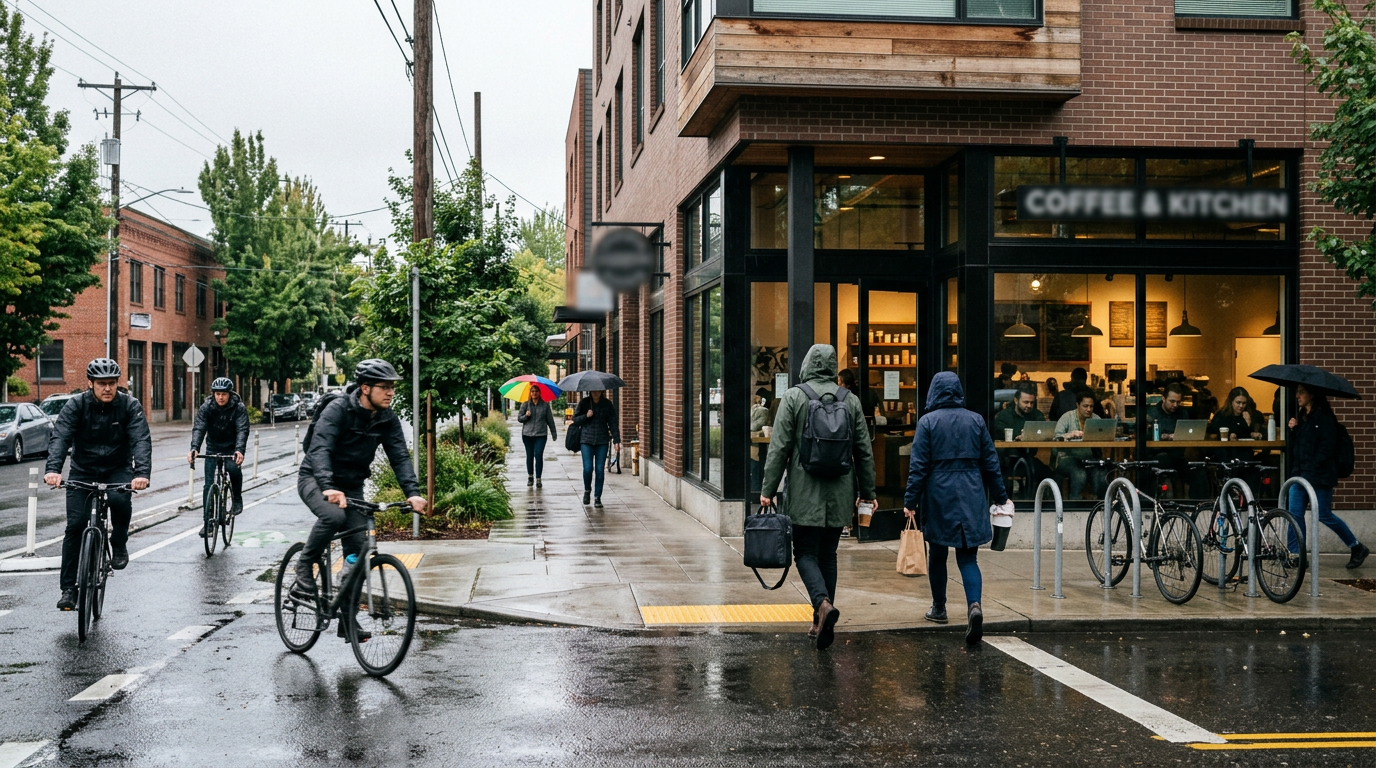
!People with laptops and raincoats outside a Portland coffee shop on a gray afternoon
Portland cafe etiquette is not complicated, but it is enforced through silence. You may not get corrected. You may simply become the person nobody wants near them.
Follow these rules:
- One person, one small footprint. Use a two-top or counter seat. If you take a four-top during a slow hour, move when the room fills.
- No speakerphone. Ever. Headphones do not make your voice less public. If you have a call, step outside or save it for a coworking day pass.
- Do not ask for outlet access like it is a right. Charge before you arrive. Outlets are a bonus, not infrastructure.
- Order again every 90 minutes or so if you stay. Especially if the room is busy.
- Tip normally. You are using space, heat, Wi-Fi, and staff attention.
- Keep founder language low-volume. Portland is allergic to performative hustle. Terms like runway, exits, and scaling land better in a private room than beside someone eating a scone.
- Do not turn a communal table into your office. A notebook and laptop are fine. A mic, tripod, external keyboard, and product samples are not.
The biggest unwritten rule: read the staff. If they are slammed, become easier to serve. If they are relaxed, you can ask a simple question about beans or the neighborhood. Never make them your concierge.
Where to set up by work mode
This is less about ranking cafes and more about matching room to task. Portland has enough good coffee that the wrong choice is usually a context problem, not a quality problem.
For serious heads-down work
Look for clean, modern third-wave rooms with a focused weekday crowd. Coava and Heart are the kind of names people associate with precise coffee and a minimal room. They can work well for a 90-minute build sprint if you come prepared and keep your setup tight.
Choose these rooms when you need to:
- Ship a small feature.
- Rewrite a pricing page.
- Review analytics without distraction.
- Do product thinking that benefits from calm background noise.
Do not choose them for a loud founder catch-up or a rambling customer discovery call.
For casual meetings with taste
Stumptown remains a reliable Portland reference point because it is known, easy to suggest, and culturally legible. Coffeehouse Northwest and Nossa Familia can also make sense depending on neighborhood and timing. These are the rooms for a designer intro, a freelance collaboration conversation, or a low-pressure catch-up with another builder.
Keep meetings to one hour. Arrive early. Claim a reasonable table only after ordering. If the other person is late, do not punish the cafe by occupying extra space unpaid.
For being around other independent workers
Albina Press has long had the kind of coffeehouse feel that supports reading, laptop work, and low-key regularity. This is the category you want when you are trying to become familiar without forcing networking.
The tactic is boring and effective: go at the same time twice a week for a month. Same general seat if available. Same courteous energy. Portland warms up through pattern recognition.
For food plus work
Proud Mary is better treated as a coffee-and-food room than a laptop cave. Use it for a working breakfast with one other person, not a solo five-hour build session. The food program and the social pace change the etiquette. Bring a clear agenda, order properly, and leave when the meal arc is done.
How to actually meet people there
The point is not to bother strangers. The point is to create enough weak ties, to borrow Granovetter's phrase, that your local surface area grows. Weak ties are how solo builders hear about small founder dinners, a useful Meetup, a fractional design lead, a beta customer, or the person who knows which coworking space is worth the day pass this month.
Start with light signals.
Good conversation openers:
- Opener: I have seen you working here a few times. Are you usually doing design work or code?
- Opener: Quick local question. Is this room usually calmer in the afternoon?
- Opener: I am testing a tiny SaaS for independent operators. If you ever have two minutes, I would trade feedback for coffee.
- Opener: Do you know any good founder dinners or indie builder Meetups in Portland that are not pitch-heavy?
- Opener: I am trying to find the right balance between cafes and a hot desk. Have you used any local coworking day passes lately?
Keep the first exchange under five minutes unless the other person clearly extends it. The goal is not to close. It is to make the next conversation easier.
Follow-up moves that work:
- Ask for a LinkedIn, personal site, GitHub, or AngelList profile only after a real exchange.
- Send one short note the same day with context: good talking at coffee, here is the tool I mentioned.
- Offer a specific give before asking for one: I can send you the Notion template I use for customer calls.
- If there is fit, suggest a 30-minute coffee the following week, not a vague someday.
- If they mention Lunchclub, Meetup, On Deck alumni circles, South Park Commons friends, or a local Slack, ask what is actually active in Portland right now. Communities change fast.
Portland people do not hate ambition. They hate being treated as a funnel stage.
Mistakes to avoid
The common mistakes are predictable.
- Choosing the prettiest room for the wrong task. Some gorgeous cafes are terrible work rooms. Hard surfaces, tourist traffic, and a line out the door will wreck your focus.
- Taking calls from your table. This is the fastest way to become the person everyone silently resents.
- Over-networking. If you talk to three strangers in one room on one afternoon, you are not building community. You are canvassing.
- Under-ordering. A single drip over an entire morning is not a badge of discipline.
- Ignoring turnover. When every seat is full and people are hovering, wrap up.
- Bringing coworking expectations into a cafe. If you need reliable power, phone booths, printing, and a dedicated desk, pay for coworking.
- Trying to sound like a Miami growth guy in a Portland room. Talk plainly. Say what you are building. Say what is hard. That lands better here.
Also avoid the fake stealth routine. If someone asks what you do, answer like a human. I build small software tools for independent accountants is better than I am in the future-of-work infrastructure space.
When a coffee shop stops being the right tool
A coffee shop is great for momentum, light serendipity, and a change of scene. It is bad for recurring calls, private financial conversations, sensitive customer data, and full-day execution.
If your day includes two Zoom calls, a demo, and a payment issue, use a coworking option. Portland has local and national coworking inventory that shifts with the post-pandemic market, so check current availability before assuming anything. A day pass, hot desk, or dedicated desk at a coworking space can be cheaper than burning goodwill across three cafes and still not having privacy.
The strongest solo-builder routine in Portland looks like this:
- Two cafe mornings per week for writing, product thinking, and light local presence.
- One coworking day for calls, demos, and meetings.
- One intentional coffee meeting with another founder, freelancer, or operator.
- One low-key community touchpoint through Meetup, a founder dinner, or a niche professional group.
That rhythm keeps you visible without making you needy.
Portland's advantage is not density on the level of New York or San Francisco. It is signal quality. The rooms are smaller, the coffee is better than it needs to be, and people remember consistent behavior. Show up, order well, keep your footprint small, and have something real to say when conversation opens.
That is how a cafe becomes more than a place to use Wi-Fi. It becomes part of your operating system.
Discussion (0)
Loading comments…