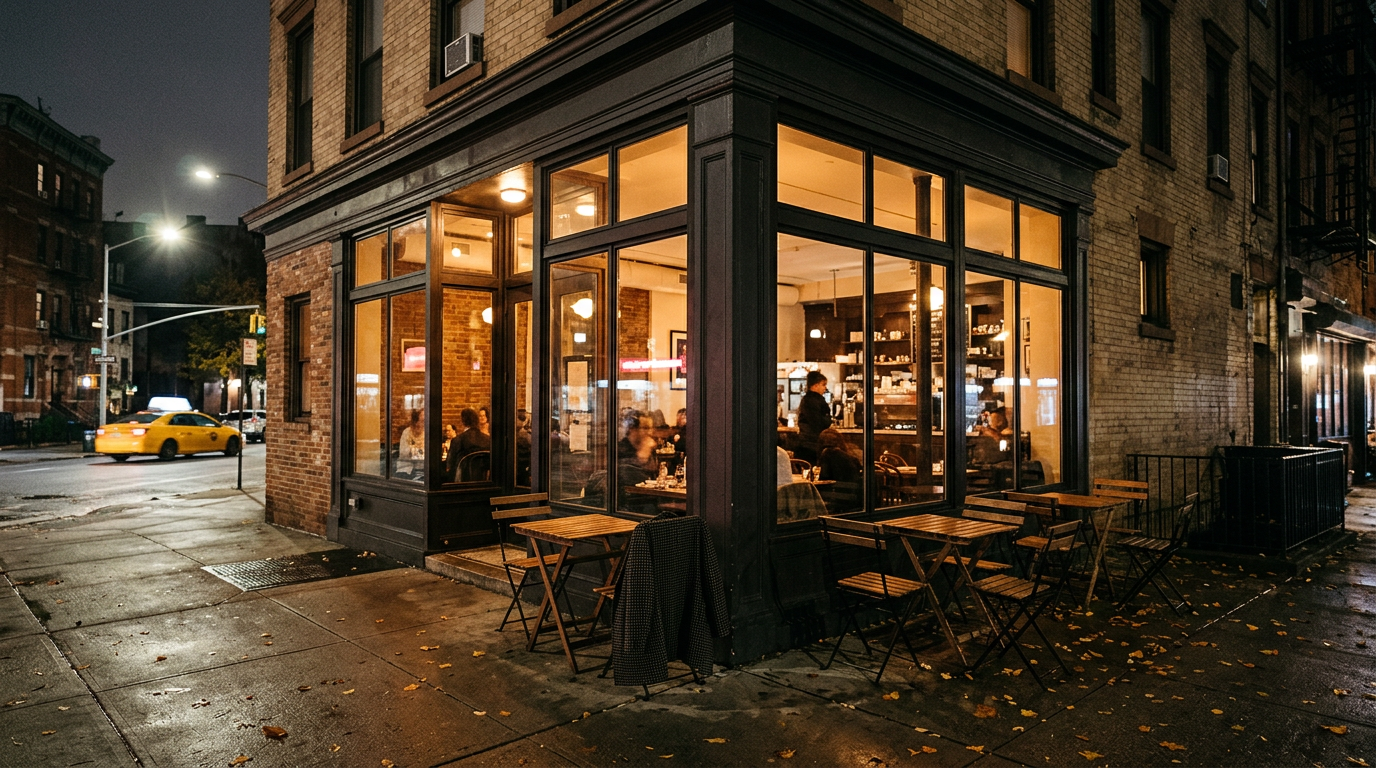
Seattle coffee shops where your laptop won’t start a fight
At 9:17 on a wet Tuesday, half of Capitol Hill is deciding whether to take the product call from a café table, a coworking phone booth, or the front seat of a parked Subaru. Seattle has always had coffee shops that function like unofficial offices. The difference in 2026 is that everyone got better at reading the room.
Seattle is not anti-laptop. It is anti-clueless laptop behavior. The city has a mature third-wave coffee culture, a serious remote-work population, and a social style that rewards quiet competence over performative networking. You can absolutely work from coffee shops here without getting side-eyed. You just need to pick the right room, pay for your footprint, and understand when a café is selling hospitality versus when it is selling high-turnover espresso service.
This is not a venue checklist. Policies change. Outlets disappear. Wi-Fi gets flaky. A shop that feels perfect at 10:30 a.m. can become a no-laptop zone in spirit by lunch. Think in types of rooms, then use the specific names here as orientation points: Caffe Vita, Espresso Vivace, Victrola Coffee Roasters, Elm Coffee Roasters, Zeitgeist Coffee, Anchorhead Coffee, Cafe Allegro, and the Starbucks Reserve Roastery are all real Seattle coffee landmarks with different rhythms. None of that exempts you from etiquette.
The Seattle laptop-café map is really a time map
Seattle coffee shops split less by neighborhood than by time of day. A laptop that is totally acceptable at 8:45 a.m. can be rude at 12:15 p.m. The room tells you.
In Capitol Hill, you get a mix of tech workers, artists, students, service-industry people, and founders killing time between meetings. Coffee bars there often have high demand and limited seating, so the unwritten rule is simple: if the room is full and you are alone at a four-top, you are the problem. Places with strong espresso reputations, like Espresso Vivace or Caffe Vita, are often better for focused blocks when seating allows, not for camping through two meal periods.
Pioneer Square and downtown-adjacent cafés have a different workday rhythm. Zeitgeist Coffee and Elm Coffee Roasters sit in areas where people genuinely use cafés as third places between offices, galleries, agencies, and transit. Mid-morning can be productive. Late afternoon can be better for conversations.
Ballard, Fremont, Wallingford, and the U District skew more neighborhood-based. You will see graduate students, design freelancers, nonprofit staff, and engineers working quietly. Cafe Allegro near the University of Washington has long been tied to the student and academic rhythm. That matters: if you are there during peak study or class-transition hours, behave like you are borrowing space from a local institution, not claiming a desk.
South Lake Union is the most explicit about the tension. Plenty of people around there have badges, Slack open, and nowhere they want to be. Some cafés feel like waiting rooms for Amazon, biotech, and startup meetings. They can be useful, but they are rarely the warmest rooms for meeting people.
What to order / what to look for
!Seattle café table with laptop, coffee, notebook, and rainy window light
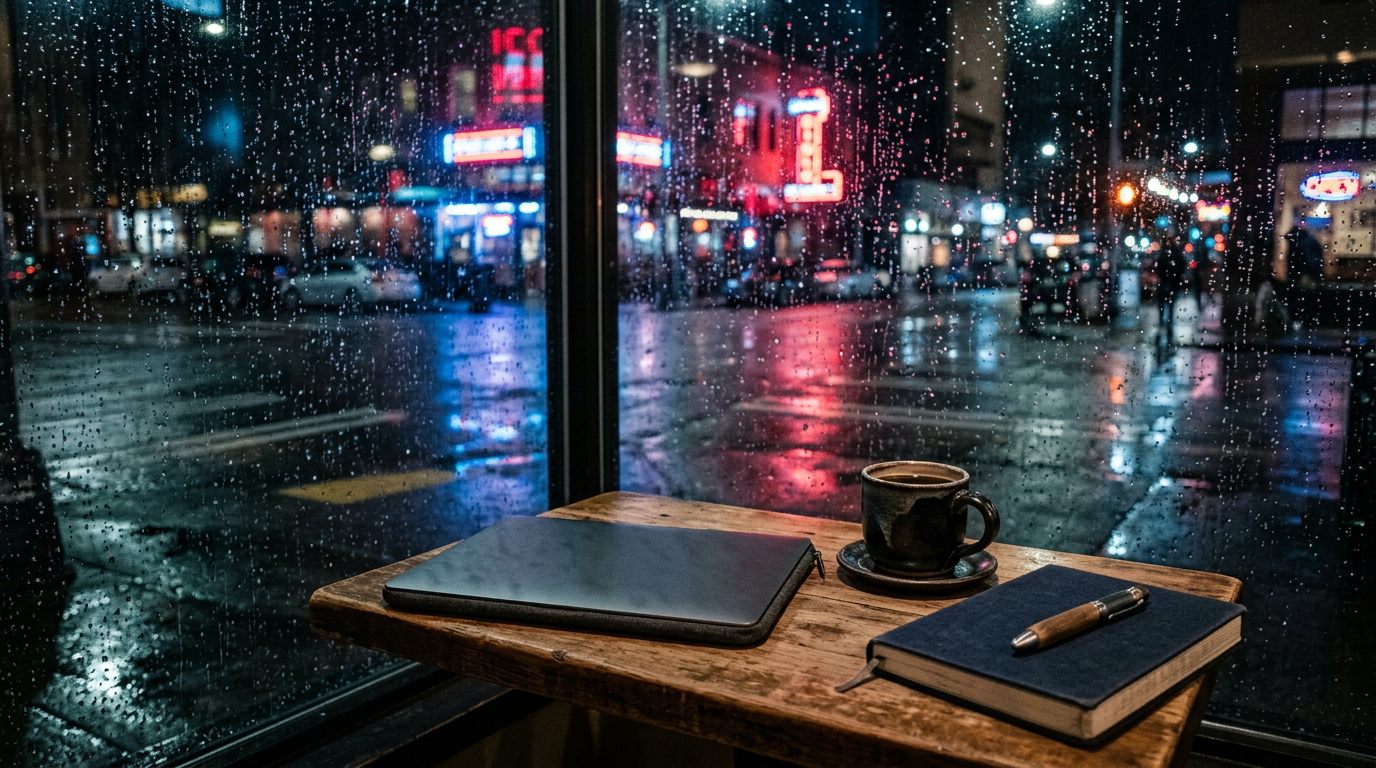
The safest laptop setup in Seattle is not the café with the biggest table. It is the café where your order, your seating choice, and your duration match the room.
Look for:
- A visible laptop pattern: at least a few people already working, but not every seat occupied by screens.
- Two-person tables along a wall instead of communal tables needed by groups.
- Bar seating that does not block pickup, trash, condiments, or the path to the bathroom.
- Outlets near the perimeter, not in the middle of traffic.
- Staff who do not look surprised when someone opens a laptop.
- A menu with enough non-espresso items to justify a second order.
Order like an adult. If you want a single-origin pour-over, great, but do not treat the five-minute brew time as a service inconvenience. If the bar is slammed, order a batch brew or espresso drink and move. If you are staying past 90 minutes, buy again. Coffee first, then food if available, then another drink. Seattle baristas are not expecting you to perform gratitude theater. They are expecting you to understand rent.
Good laptop orders:
- Batch brew plus pastry for a first 90-minute block.
- Espresso drink plus sparkling water or tea for a shorter call-free session.
- Pour-over when the bar is calm and you are not in a rush.
- Lunch item or substantial snack if you cross noon.
What to avoid:
- One drip coffee over four hours.
- Outside food unless the shop clearly allows it.
- A messy laptop setup with chargers crossing walkways.
- Asking staff to watch your gear while you take a call outside.
Coffee quality does not equal laptop permission. A serious third-wave bar may care deeply about sourcing, roast profiles, and hospitality while still needing tables to turn. Respect both things.
Best time of day to go
For actual work, the sweet spot is usually weekday mid-morning: after the commuter rush, before lunch. In Seattle terms, that often means 9:30 to 11:30 a.m. You can get coffee, settle in, send the hard emails, and leave before the room gets tight.
For lighter admin, 2:00 to 4:00 p.m. is underrated. The lunch wave is gone, baristas have more oxygen, and people are more likely to chat casually. This is the better window if you want to make a new connection without forcing it.
Early morning is for regulars, commuters, and people with places to be. Do not open a laptop across a prime table at 7:45 a.m. unless the room is clearly empty and designed for lingering.
Lunch is the danger zone. If a café serves food and the tables fill, your laptop becomes a visible tax on the business. Either order food and eat, move to a smaller seat, or leave.
Weekends are not your remote office unless the café has obvious space for it. Seattle neighborhoods treat weekend coffee as social infrastructure: parents with kids, runners after Green Lake, couples, friends, book people. If you need four hours of laptop time on Saturday, use a coworking day pass at Industrious, Spaces, WeWork, or a local coworking space instead. That is what those rooms are for.
Etiquette and unwritten rules
!Calm Seattle café counter with remote workers seated along the wall
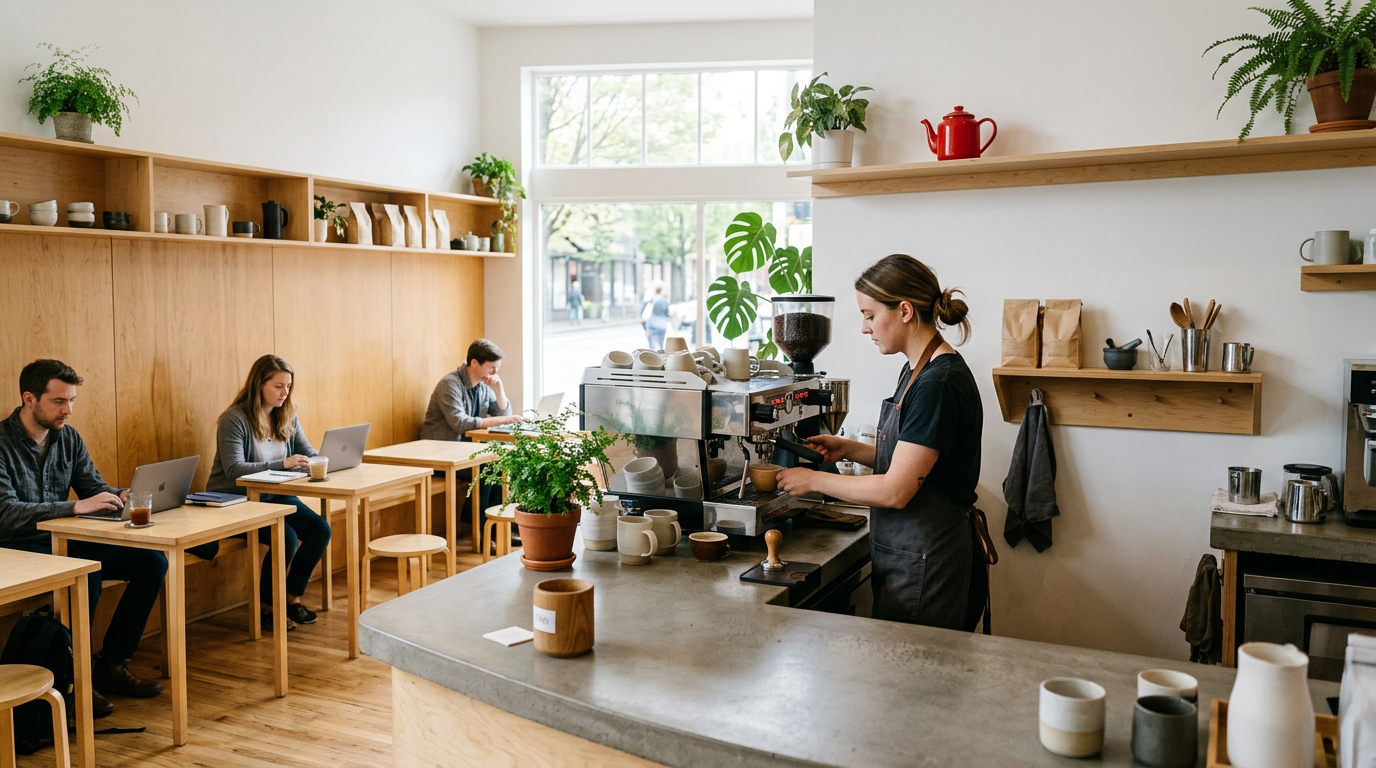
Seattle etiquette is polite, indirect, and very observant. People may not confront you. They will just remember you as the person who made the room worse.
Follow these rules:
- Buy something before sitting down. Not after your first email. Before.
- Use the smallest reasonable table. One person, one small table.
- Keep calls short, quiet, and rare. Video calls are almost never café behavior.
- Use headphones, not laptop speakers. This should not need saying, but it does.
- Do not camp near the only outlet if you are fully charged.
- Pack up when the room fills and people are circling.
- Tip consistently if you are a regular.
- Learn staff names only if they offer them naturally. Do not make forced familiarity part of your rent.
Seattle’s passive style can fool newcomers. A barista may say, “You’re fine,” because they are kind, not because your three-hour stay on a two-dollar order makes sense. Watch what the room needs.
The strongest move is the reset. After 90 minutes, stand up, stretch, look around, and decide whether you have earned another block. If yes, buy again. If no, leave. This small ritual keeps you from sliding into café squatting.
Where the laptop-friendly rooms tend to be
Instead of chasing a perfect list, search by room type.
The neighborhood third-place café
These are the shops with regulars, dogs outside, local flyers, and a staff that can tell the difference between a respectful worker and a table hostage. They are good for writing, invoicing, light strategy, and quiet research. You may find this type in Wallingford, Ballard, West Seattle, Columbia City, and Ravenna.
Behavior: become a low-friction regular. Same general time, reasonable orders, no calls, no drama. After a few visits, people will recognize you.
The downtown work-between-meetings café
Pioneer Square and downtown cafés can be great between meetings, especially if you need 45 to 75 minutes. Zeitgeist and Elm are useful reference points for this style of room: serious coffee, urban rhythm, people coming and going.
Behavior: travel light. Laptop, notebook, one bag. Do not unpack like you are at a dedicated desk.
The campus-adjacent study café
Near the U District, the norm is quiet concentration. Cafe Allegro is a Seattle institution, and the broader area has a study culture shaped by UW. Good for reading, technical work, and long-form writing when seats are available.
Behavior: match the academic mood. Keep your voice down. Do not turn a study room into your sales floor.
The big-format coffee room
The Starbucks Reserve Roastery on Capitol Hill is not a quiet local café, but it is large, central, and useful for casual meetings or a reset between neighborhoods. It is also full of visitors, so it is not ideal for confidential work or deep focus.
Behavior: use it for public conversations, not sensitive founder updates or investor calls.
The espresso-first bar
Places known for espresso craft can be excellent, but do not assume they want all-day laptop use. Espresso Vivace is a Seattle name with real coffee lineage. Treat rooms like that with respect: order well, stay aware, and do not make the bar accommodate your calendar.
Behavior: shorter sessions, higher attention, better manners.
How to actually meet people there
Seattle is not a city where strangers usually want a pitch before their cortado cools. The right approach is light, specific, and easy to exit.
Use weak ties to your advantage. Sociologist Mark Granovetter’s idea is that looser acquaintances often carry more new information than your close circle. Coffee shops are good weak-tie rooms if you do not force them to become networking events.
Good openers:
- “Do you know if this table gets slammed around lunch, or is it usually okay for a short work block?”
- “I’m trying to find a decent afternoon work spot in this neighborhood. Is this your usual?”
- “That notebook setup looks efficient. Are you using it for design work or writing?”
- “I’ve seen a few people working here midweek. Is it usually this calm?”
Bad openers:
- “What do you do?” as the first sentence.
- “Are you a founder?”
- “Can I pick your brain?”
- Any pitch that starts while they are wearing headphones.
The follow-up move matters more than the opener. If the conversation has energy, say: “I’m usually around here Tuesday mornings. Want me to send you the coworking and coffee spots I’ve found that are actually usable?” Then exchange LinkedIn, email, or a phone number. Keep the first follow-up useful and short.
Example follow-up:
“Good meeting you at the café earlier. Here are the two places I mentioned for quiet laptop time and one event list I actually check. If you ever want to compare notes on Seattle work spots, I’m around Capitol Hill most Tuesdays.”
Do not convert every pleasant exchange into a coffee meeting. Seattle people protect their calendars. Offer usefulness first.
When to choose coworking instead
A coffee shop is not a replacement for a hot desk when your work requires calls, confidentiality, or emotional intensity. If you are fundraising, interviewing candidates, handling client conflict, or running a team meeting, buy the right room.
Seattle has the same post-pandemic coworking shift as other major cities: fewer people want full-time offices, more people want specific-day access, better phone booths, cleaner meeting rooms, and less forced community programming. A day pass at Industrious, Spaces, WeWork, or a local coworking operator can be cheaper than burning social capital at a café.
Use cafés for:
- Writing and admin.
- Reading and research.
- Low-stakes one-on-ones.
- Between-meeting gaps.
- Casual weak-tie discovery.
Use coworking for:
- Video calls.
- Investor updates.
- Client presentations.
- Team standups.
- Anything involving private numbers, layoffs, contracts, or health information.
There is no shame in paying for the room you need. Operators notice the difference.
Mistakes to avoid
The fastest way to become unwelcome in a Seattle café is to act like your calendar outranks the room.
Avoid these moves:
- Taking a Zoom call at full volume because “it’s only 15 minutes.”
- Sitting at a large communal table during peak hours with your bag, coat, laptop stand, and water bottle spread out.
- Asking for the Wi-Fi password before ordering.
- Treating baristas like front-desk staff for your remote job.
- Staying through breakfast and lunch on one coffee.
- Leaving your laptop unattended and making everyone else responsible for it.
- Complaining about slow pour-over service when you ordered a slow drink.
- Using a café as your sales prospecting room.
Also avoid over-optimizing for outlets. Bring a charged laptop and a battery pack. In 2026, outlet dependence reads as amateur. The best café workers in Seattle arrive prepared, work clean, and leave before they become a burden.
A practical Seattle café-work playbook
If you are new to Seattle or just tired of guessing, run this pattern for two weeks.
Pick three neighborhoods you actually use: one near home, one near meetings, one near where you want to meet people. For each, identify one neighborhood café, one downtown-style stop, and one backup coworking option.
On your first visit, do not stay long. Order, sit for 45 minutes, observe the room, leave. Note the noise level, seating, outlet reality, staff mood, bathroom access, and whether people are talking or heads-down. On the second visit, stay 90 minutes and buy twice if appropriate. On the third, become recognizable in a good way.
Your default script:
- Arrive outside peak rush.
- Order first.
- Take the smallest workable seat.
- Work without calls.
- Buy again after 90 minutes.
- Start one low-pressure conversation if the room allows it.
- Leave before lunch or when the room fills.
That is the Seattle way: useful, quiet, aware. Not antisocial. Just calibrated.
The reward is bigger than a productive morning. Once you learn the rooms, coffee shops become part of your local operating system. You know where to write. Where to reset. Where a founder might be open to a two-minute exchange. Where a designer is always sketching at the same corner table. Where a barista will tell you the afternoon is about to get loud because a meetup group uses the back room.
Seattle will give you space if you respect the space back. Bring a charged laptop. Order properly. Read the room. Leave with your work done and, occasionally, one new person worth knowing.
Discussion (0)
Loading comments…