The SF founder dinner rules that still matter
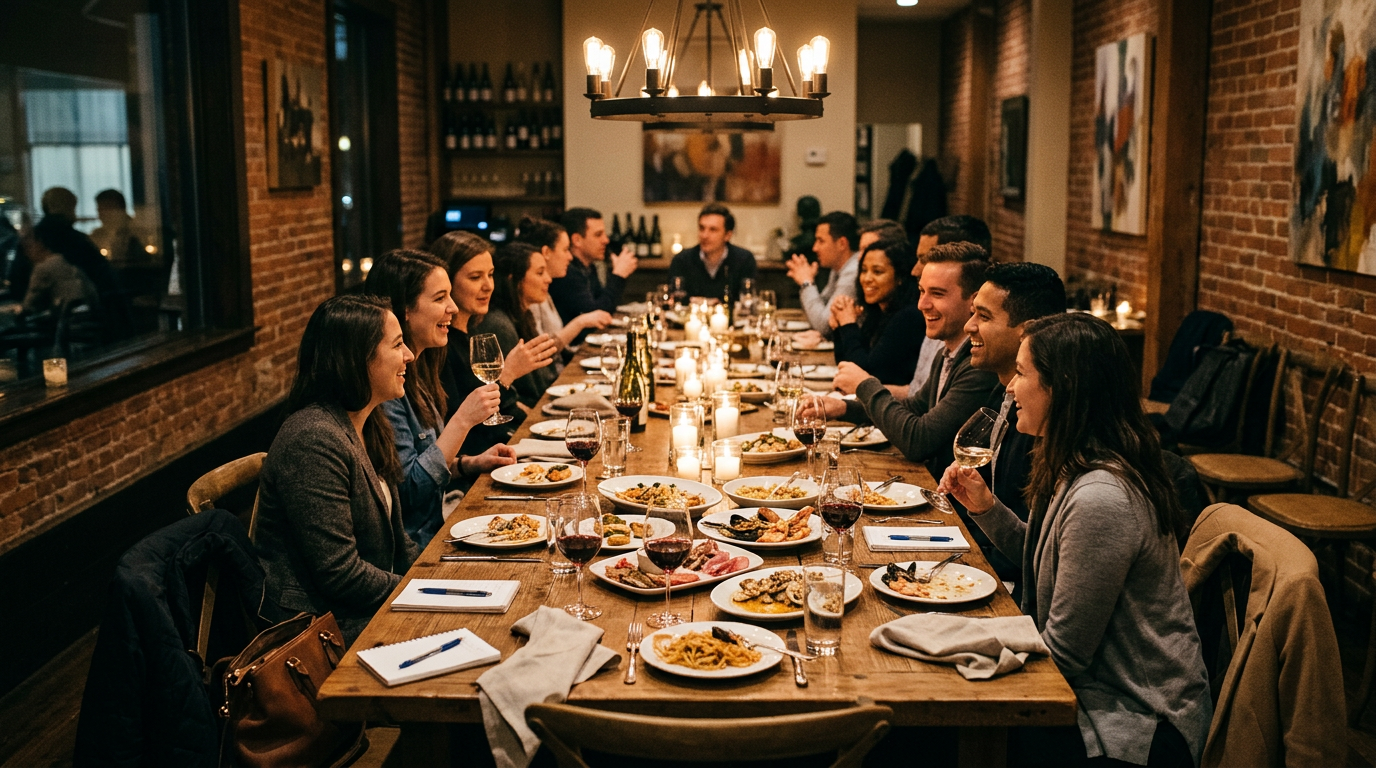
At 7:12 p.m. in Hayes Valley, the table is already doing the thing San Francisco does better than almost anywhere: turning dinner into deal flow without admitting that is what is happening. Someone just left South Park Commons. Someone is building an AI agent for compliance teams. Someone else has three angel checks in the last two months and still takes the 22 bus.
SF founder dinners in 2026 are not startup theater in the old sense. The city has fewer casual hangers-on than it did during the zero-rate boom, more technical founders, more AI infrastructure people, more serious angels, and a sharper filter for bullshit. The best rooms are smaller. The worst ones are louder.
The job is not to collect business cards. Nobody carries them. The job is to find the right room, behave like a useful adult, and leave with two or three people who would actually take your call next week.
The current SF dinner scene
San Francisco founder dinners sit somewhere between a salon, a hiring market, and a soft diligence meeting. They happen in private rooms, back patios, natural wine bars, izakayas, chef-driven neighborhood restaurants, and occasionally someone’s apartment in the Mission, Noe Valley, or Lower Haight. The better ones are rarely advertised broadly.
The city has a few real Schelling points for this crowd: Hayes Valley, South Park, the Mission, Jackson Square, the Ferry Building area, and the strip of SoMa that still pulls founders from offices, coworking spaces, and demo-day spillover. You will hear South Park Commons, AngelList, On Deck alumni circles, AI founder meetups, and investor-hosted dinners mentioned casually. You may also see dinners form after events at Shack15, around South Park, or after a talk hosted by a venture firm.
The room usually falls into one of four categories:
- Peer founder dinner: six to ten founders at a similar stage, usually pre-seed through Series A.
- Investor-hosted dinner: one or two partners, several founders, maybe an operator with strong domain credibility.
- Community dinner: a curated group from a coworking space, accelerator-adjacent network, Meetup group, or alumni circle.
- Operator dinner: product, growth, AI, infra, climate, fintech, or healthcare people trading notes without an obvious fundraising frame.
SF is not LA. Flash does not help much. It is not Miami, where the room may reward social gloss. It is not New York, where polish can carry a weaker idea for an hour. In SF, the room wants density: what are you building, why now, what do you know that most people do not, and can you help without making it weird?
Who pays, really
!Founders arriving for a dinner in Hayes Valley at dusk
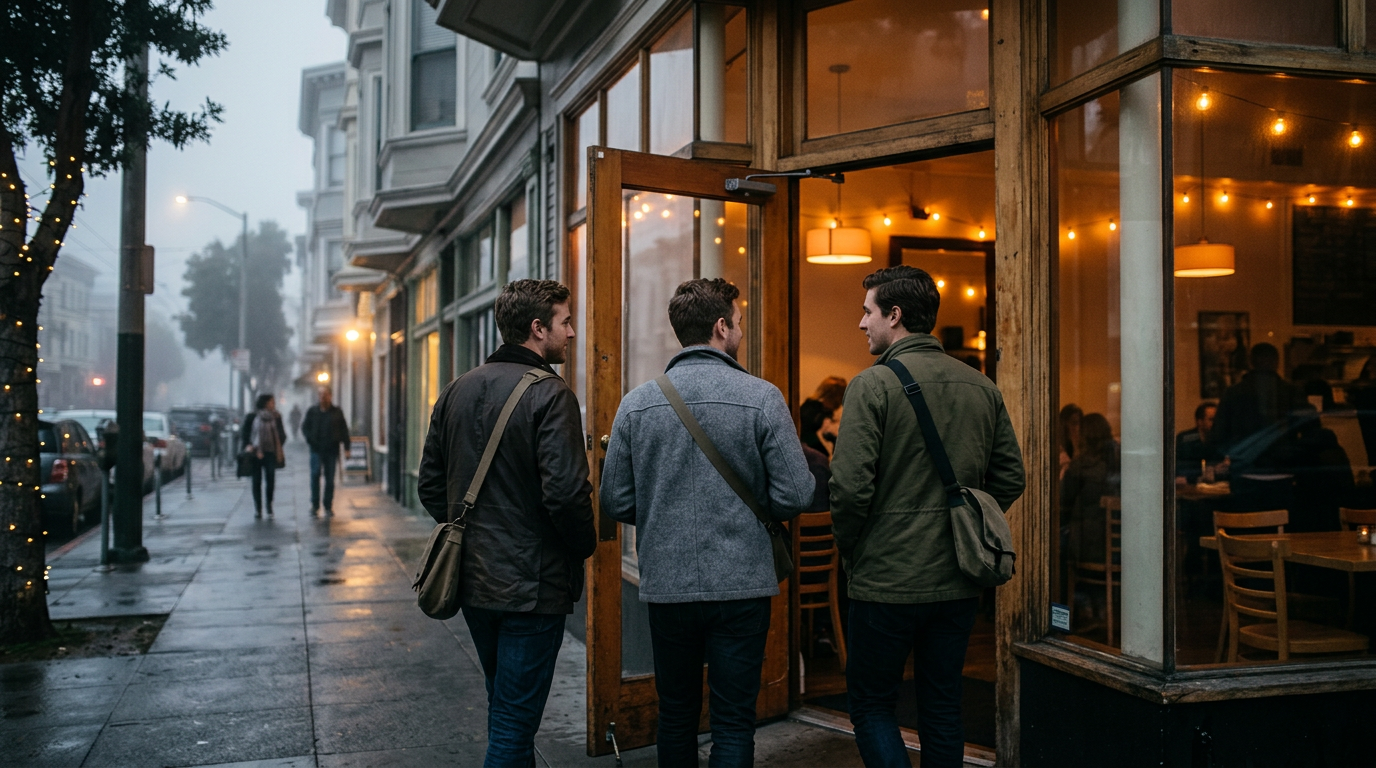
Payment is the first quiet status test. Not because money is the point, but because expectations reveal the room.
If a VC invited you to an explicitly hosted dinner, the firm usually pays. Do not grab the check to prove something. Say thank you to the host, mention one specific person you were glad to meet, and follow up with something useful. That is the return.
If a founder invited a peer group, expect to split unless told otherwise. In SF, this often means one person pays to keep the night clean, then sends a Venmo, Splitwise, or card link later. Pay fast. Same night or next morning. Dragging on a $92 dinner tab is a bad look if you are telling people you can run a company.
If there is a sponsor, the sponsor pays, but you still owe attention. Do not treat it like free sushi. A sponsored dinner can be useful, but everyone knows why it exists. The winning move is to engage with the sponsor honestly if relevant and avoid fake enthusiasm if it is not.
If you are the organizer, decide before the first guest arrives:
- Hosted by you or your company
- Sponsored by a named backer or partner
- Split evenly
- Individual tabs, if the venue supports it
Say it in the invite. Not at the table. The Bay Area is full of people with money, but it is also full of bootstrapped founders, laid-off operators rebuilding, and international founders watching cash closely. Ambiguity makes the room worse.
The cleanest line in an invite is simple: Dinner is hosted or We will split the bill evenly. No cute wording.
What to order / what to look for
The best founder dinner venue is not the hottest reservation in town. It is a room that lets people hear each other, move one seat at dessert, and leave without a 28-minute payment ritual.
Look for:
- A private or semi-private table for eight to twelve
- A shareable menu that does not require everyone to negotiate their own meal
- Reasonable noise levels before 9 p.m.
- Staff comfortable with a group table
- Wine, nonalcoholic options, and enough real food for people who came from back-to-back meetings
- A location reachable from Mission, Hayes Valley, SoMa, and the Marina without punishing anyone too much
Venue types that work well in SF:
- Modern California restaurants with shared plates and a strong private dining setup
- Izakayas where ordering can be communal and informal
- Natural wine bars with real food, not just olives and vibes
- Chinese banquet-style tables for larger groups that need energy and pace
- Neighborhood restaurants in NoPa, Hayes Valley, the Mission, and Jackson Square with a back room or patio
Specific well-known SF restaurants that often come up in founder circles include Nopa, Zuni Cafe, State Bird Provisions, The Progress, Foreign Cinema, Kokkari Estiatorio, and Mister Jiu’s. Availability, private dining policies, and pricing change, so treat names as starting points, not guarantees.
Omakase is usually wrong for networking unless the whole point is a high-trust, very small dinner. You sit in a line, the food controls the timing, and half the conversation becomes performative appreciation. Great meal. Weak room mechanics.
What to order if you are hosting:
- Family-style starters on the table within ten minutes
- A balanced mix of vegetarian, protein, and lighter dishes
- One or two bottles of wine at a time, not a parade
- Sparkling water without making it a personality test
- Dessert only if the conversation is still alive
The person who wins is not the one ordering the most expensive bottle. It is the one who keeps the table moving.
Best time of day to go
!Shared plates and phones face down after a founder dinner
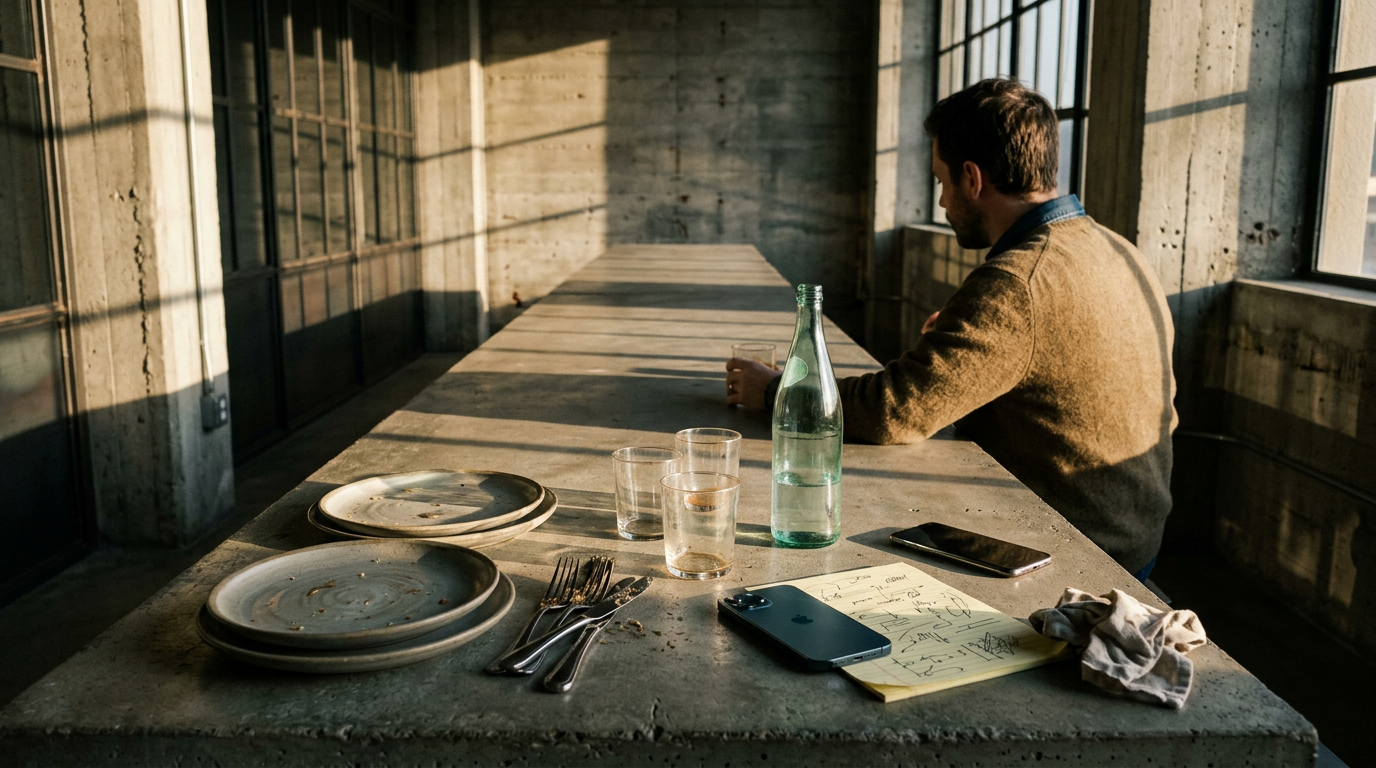
Tuesday and Wednesday nights are strongest. Monday can work for operator-heavy groups because people are in town and less socially booked. Thursday has more energy but more flakes. Friday is usually wrong unless it is a close circle or a post-conference thing.
Start at 6:30 or 7:00 p.m. SF people eat earlier than New Yorkers and many have a 9 a.m. investor call with someone on East Coast time. A serious dinner should end around 9:15, with optional drift after. If the table is still going at 10:30, that is a second event.
Breakfast founder meetings are underrated, but they are not the same thing. Coffee at Sightglass, Ritual, Blue Bottle, or a strong independent third-wave coffee shop can be useful for one-on-one follow-up. A dinner creates group context. A coffee confirms whether the connection is real.
If you are trying to get into a dinner, the best window is not the day of. Ask five to seven days out. SF organizers often build tables like cap tables: role, stage, domain, personality, and trust all matter.
Etiquette and unwritten rules
The table is doing quiet diligence on everyone. Not just founders pitching investors. Everyone.
Show up on time. SF has become more punctual as the scene has become more intentional. Ten minutes late is fine if you text. Twenty minutes late without a note says you are either disorganized or over-signaling demand.
Do not pitch for ten straight minutes. The best version is:
- What you are building
- Who it is for
- What changed that makes it possible now
- The one hard thing you are trying to solve this month
Then stop.
Do not ask an investor for money at the table unless they open that door. Ask for their read on the market. Ask what they are seeing in adjacent companies. If there is fit, the fundraising conversation can happen later.
Do not turn every operator into a recruiting lead. If someone runs growth at a late-stage company, they know you might want intros. Earn the right.
Good table behavior in SF looks like this:
- You give one specific useful intro, not five vague offers.
- You name what you do not know.
- You avoid dunking on people who are not present.
- You include the quieter technical founder without making it charity.
- You keep your phone face down unless you are exchanging contact info.
Alcohol is optional. Plenty of strong founders do not drink, especially in AI and health circles. Do not make the non-drinker explain themselves.
How to actually meet people there
The first move is not the pitch. It is calibration.
Use openers that let the other person place you without forcing a performance:
- What pulled you into this dinner?
- What are you spending most of your week on right now?
- Are you in build mode, hiring mode, or fundraising mode?
- Who here did you already know before tonight?
- What is one thing in your market people keep getting wrong?
The best SF networking runs on weak ties, the Granovetter idea that many valuable opportunities come through people just outside your tight circle. Founder dinners are built for that. You are not looking for a new best friend. You are looking for the person who knows the infrastructure buyer, the angel who understands your category, or the ex-Stripe operator who has seen your exact problem before.
At a table of ten, aim for three real conversations, not nine shallow ones. If you are seated next to someone irrelevant to your work, still be generous. The most useful person in the room is often not the loudest or most obviously powerful.
Strong conversational moves:
- Ask a founder what customer conversation changed their roadmap.
- Ask an investor what they are tired of hearing in pitches.
- Ask an operator what metric their team no longer trusts.
- Ask a technical founder what part of the stack is uglier than outsiders realize.
If you host, use light structure. One sentence intros at the start. Then a mid-dinner prompt: What is one ask you would actually want help with this month? Keep it concrete. Hiring a founding designer. Finding three design partners in logistics. Understanding SOC 2 for enterprise sales. Not more visibility.
Follow-up that does not feel needy
Follow-up is where most people lose the dinner.
Send it within 24 hours. Not immediately from the Uber unless there is a promised intro. Next morning is ideal. Keep it short and specific.
A good follow-up:
Great meeting you at dinner last night. I liked your point about compliance teams buying AI only when there is auditability. I know one founder selling into that motion at mid-market banks. Want an intro?
Another:
Good to meet you at Nopa. You mentioned looking for design partners in construction. I know two operators who may be relevant. If helpful, send me a tight one-liner and I will forward it.
Bad follow-up:
Let us stay connected and explore synergies.
Worse:
Can I pick your brain?
If someone offered an intro, make it easy:
- Send a three-line blurb
- Include the exact ask
- Explain why the recipient should care
- Give permission to forward
- Do not attach a deck unless requested
If you promised something, do it before asking for anything. This is the part people remember. SF is smaller than it looks, especially in AI, fintech, climate, and developer tools. Reputation compounds quickly.
Mistakes to avoid
The biggest mistake is attending the wrong dinner because the guest list looks prestigious. A room full of later-stage SaaS investors may be useless if you are a pre-seed hardware founder. A crypto-heavy table may waste your night if you sell healthcare workflow software. Fit beats status.
Other common mistakes:
- Over-explaining your company. If people need a whiteboard before appetizers, tighten the story.
- Confusing intensity with trust. A great 20-minute conversation does not mean you should send a data room.
- Ignoring peers. Founders at your stage may be more useful than the partner across the table.
- Staying glued to the host. Hosts notice when guests only chase status.
- Failing to pay quickly. It is basic, and basic matters.
- Asking for too much too soon. One specific ask beats a grab bag.
- Skipping the follow-up because you are busy. Then you did dinner as entertainment.
Do not bring an uninvited plus-one unless the host explicitly says it is fine. SF dinner tables are curated. An extra person changes the chemistry and sometimes the bill.
Do not treat a private dinner like content. No table photos without asking. No posting guest names to signal access. The people worth knowing are often allergic to being used as social proof.
Who wins the room
The winner is rarely the loudest founder, the richest angel, or the person who knows every partner on Sand Hill Road.
The winner is the person who makes the room smarter and easier to trust.
They arrive prepared but not scripted. They explain their work in plain English. They ask better questions than they answer. They pay fast. They follow up with precision. They introduce two people who should know each other and do not need credit for it at the table.
That is very San Francisco when the city is working: technical ambition, low tolerance for fluff, and a strange amount of generosity once someone decides you are serious.
If you want more founder dinners, become the person hosts are comfortable adding to a table. Be useful. Be discreet. Bring one real insight. Make one clean intro. Leave before the room curdles.
The dinner is not the network. The dinner is the test. What you do the next morning is the network.
Discussion (0)
Loading comments…