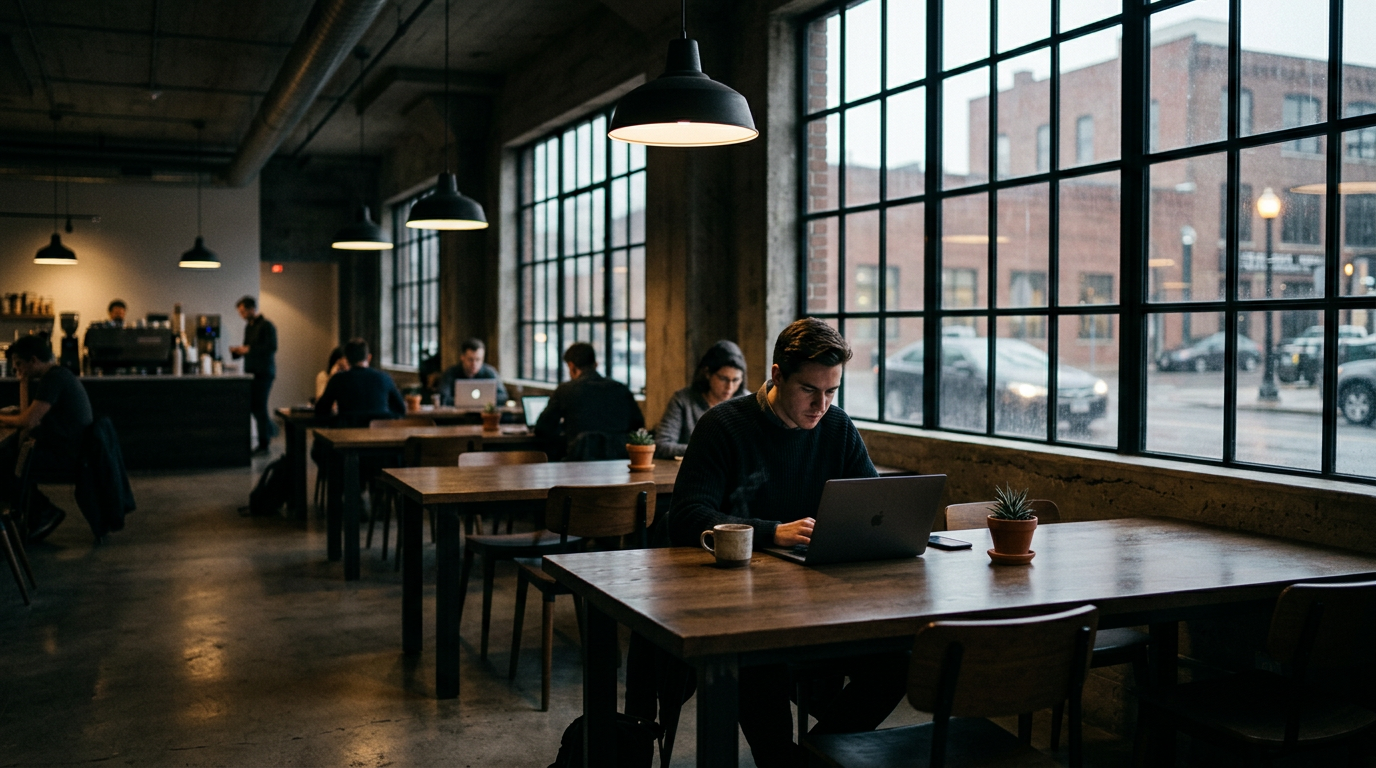
Where digital nomads should base in America right now
The tell is the 9:12 a.m. laptop line. In New York it forms near the few tables with outlets. In Austin it starts after a breakfast taco. In San Francisco it is quieter, more expensive, and full of people pretending they are not fundraising. Digital nomad life in the US is less about beaches and more about finding the right room three days in a row.
The 2026 reality: coffee shops are pickier about laptops, coworking operators have tightened day-pass rules, and the useful networking has moved back offline. Founder dinners, niche Meetup groups, AngelList-adjacent happy hours, Lunchclub follow-ups, alumni Slack meetups, South Park Commons circles, On Deck remnants, and member’s club side rooms matter again.
This ranking is for people who need to work, meet operators, keep costs sane, and avoid wasting a month in the wrong scene.
The honest ranking
1. New York City
NYC is still the strongest US base if your work depends on weak ties: investors, media people, agency owners, product leads, creators, chefs, designers, and operators who can introduce you to the next room. Granovetter’s weak ties concept is not academic fluff here. New York runs on loose acquaintances who remember you were competent at a coffee bar, panel, dinner, or shared table.
The tradeoff is friction. Housing is brutal. Good coffee seats are scarce. Restaurants move fast. But if you can afford a month and behave like you have somewhere to be, New York pays back.
Base neighborhoods: Williamsburg, Greenpoint, Lower East Side, East Village, NoMad, Chelsea, Fort Greene, and Long Island City if you want easier logistics. Coffee types to trust: Joe Coffee, Devoción, Cafe Grumpy, La Colombe, Birch, and Blue Bottle where the seating works. Coworking: Industrious, WeWork, Spaces, and higher-end hotel lobbies or member’s clubs when you have access.
2. Austin
Austin is the most practical founder base outside the coasts. It is social without being as status-locked as Miami or as expensive as SF. The Tuesday-through-Thursday calendar is strong: founder dinners, product meetups, climate and AI circles, outdoor coffee walks, and events tied to SXSW energy even when the festival is months away.
The weakness is sameness. A lot of people are “building” without much urgency. You need to separate real operators from professional networkers quickly.
Base neighborhoods: East Austin, Bouldin, South Congress, Zilker, and downtown if you want event access. Look for specialty coffee with actual seating, coworking day passes, and natural wine bars that host small industry nights.
3. San Francisco
SF is not dead, tired, or optional if you are in AI, dev tools, infrastructure, climate tech, robotics, or frontier software. It is just narrower now. If your work is adjacent to tech, San Francisco compresses six months of context into two weeks.
The city punishes vague pitches. Nobody wants a rambling “I’m exploring” monologue. Bring a specific problem, a prototype, a customer insight, or a useful intro.
Base neighborhoods: Hayes Valley, Mission, Noe Valley, Lower Haight, SoMa if you need office access, and Oakland or Berkeley if your budget needs air. Coffee: Sightglass, Blue Bottle, Verve, and serious independent third-wave shops with single-origin pour-over programs. Coworking and community: South Park Commons circles if relevant, WeWork, Industrious, Spaces, and office sublets around startup nodes.
4. Los Angeles
LA is excellent for creators, brand builders, entertainment-adjacent founders, design-led companies, wellness operators, and consumer startups. It is weaker for people who expect density to do the work for them. LA makes you choose a lane and a neighborhood.
Do not base in Santa Monica while taking meetings in Silver Lake every day unless you enjoy losing your life to traffic. Pick west side or east side. Commit.
Base neighborhoods: Venice, Santa Monica, Culver City, Silver Lake, Los Feliz, Arts District, and West Hollywood depending on your scene. Venue types that work: serious espresso bars in the morning, hotel lobbies with laptop tolerance, NeueHouse-style creative workspaces, member’s clubs, production-adjacent lounges, and small dinners.
5. Miami
Miami is polarizing because people treat it like a shortcut. It is not. The city works if you are in fintech, crypto that survived the washout, real estate, hospitality, Latin America-facing businesses, luxury services, or founder-investor social circles. It is bad if you need quiet, cheap, and earnest.
The scene runs late and relationship-first. A coffee meeting may matter less than who invited you to dinner. That is not fake; it is the operating system.
Base neighborhoods: Brickell, Edgewater, Wynwood, Miami Beach if you know what you are doing, and Coconut Grove for a calmer month. Look for polished hotel workspaces, WeWork or Spaces day access, espresso bars with limited laptop windows, and supper club-style rooms.
6. Chicago
Chicago is the underrated grown-up base. Better rent value, strong food culture, serious operators, and less performance theater. It is strong for B2B, logistics, marketplaces, finance, healthcare, agencies, and Midwest expansion.
The downside: fewer random collisions than NYC or SF. You need to schedule your week on purpose.
Base neighborhoods: West Loop, River North, Logan Square, Wicker Park, Lincoln Park, and Fulton Market. Coffee: Intelligentsia is the obvious anchor, with plenty of independent third-wave rooms around it. Coworking: Industrious, WeWork, Spaces, and local office clubs. Food meeting types: izakaya counters, steakhouse bars, neighborhood wine bars, and lunch spots near offices.
7. Seattle
Seattle is strong if you are technical, enterprise-adjacent, cloud-adjacent, gaming-adjacent, or outdoorsy enough to use the weekends properly. It is not naturally extroverted. You will not accidentally meet half the city by sitting at one table.
Still, the talent density is real. People are competent, and the coffee baseline is high thanks to the city’s long coffee culture.
Base neighborhoods: Capitol Hill, Ballard, Fremont, South Lake Union, and Belltown. Look for laptop-friendly coffee before noon, coworking near transit, and technical meetups that are specific rather than broad “startup networking” nights.
8. Denver
Denver works for nomads who want health, mountains, tech-adjacent work, and a lighter social scene. It is good for SaaS, outdoor brands, climate, remote teams, and independent consultants. The room clears early. Plan accordingly.
Base neighborhoods: RiNo, LoDo, Highlands, Capitol Hill, and Wash Park. Use coworking for focus, coffee for light meetings, and fitness-adjacent groups for repeated contact. Denver rewards consistency more than flash.
9. Boston
Boston is high-signal and hard to enter cold. If you are in biotech, health tech, robotics, education, university-adjacent work, or deep tech, it is a serious base. If you are a generalist creator trying to float around, it can feel closed.
Base around Cambridge, Somerville, Back Bay, South End, or Seaport depending on your budget and meeting map. Expect earlier days, sharper credentials, and less tolerance for vague networking.
10. Portland and Nashville
Portland is still useful for food, design, outdoor brands, craft products, independent creatives, and remote workers who value quality of life over deal flow. Stumptown remains part of the coffee language, but the real advantage is the slower pace and strong neighborhood routine.
Nashville is strong for music, creator businesses, hospitality, healthcare, and live-event operators. It is less ideal for broad tech density. The social scene is easy to enter, but you need to avoid tourist gravity.
What to order / what to look for
!Laptop and espresso on a third-wave coffee shop table
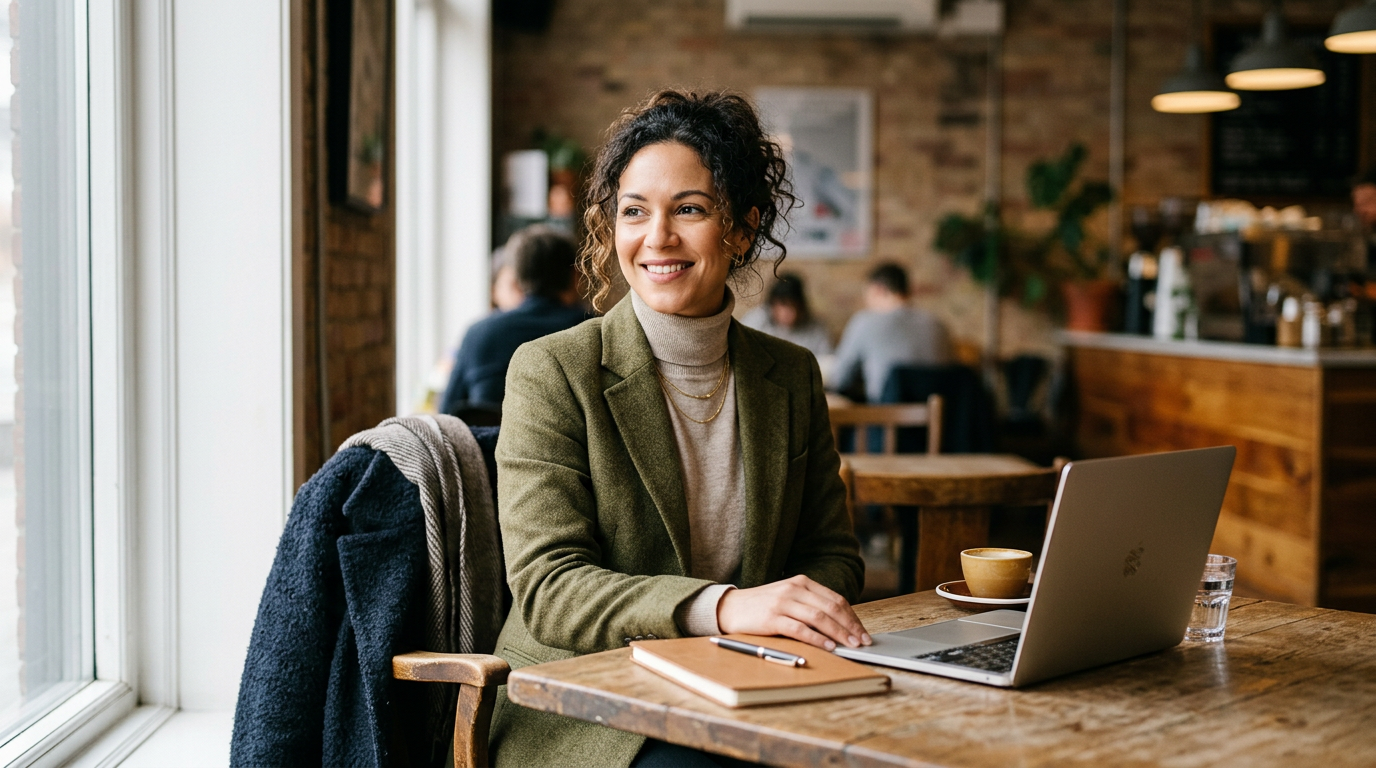
For coffee work sessions, stop ordering like a camper. Buy properly and reset the table if you stay.
- Morning focus: drip coffee, espresso, or a single-origin pour-over if the bar is built for it. Do not order a complicated drink during the rush and then ask for the Wi-Fi password twice.
- Meeting coffee: cappuccino or iced coffee, something you can finish in 25 minutes without turning the table into an office.
- Food meeting: sit at the bar when possible. Omakase, izakaya counters, natural wine bars, and neighborhood restaurants with early seatings are better for one-on-one trust than loud group dinners.
- Coworking: ask about day pass rules, phone booth access, guest policy, dedicated desk availability, printing, after-hours access, and whether events are included.
- Member’s club: Soho House, NeueHouse, and similar rooms can be useful, but only if you already have a reason to be there. The room is not the strategy.
The real thing to look for is repeatability. A base city works when you can build a three-place loop: one coffee shop, one work room, one evening room.
Best time of day to go
Coffee shops are not all-day offices anymore. The better ones have learned to protect turnover.
- 7:30 to 9:30 a.m.: best for solo work and spotting serious locals before calls start.
- 10:00 a.m. to noon: best for short coffee meetings. Keep them tight.
- Noon to 2:00 p.m.: bad for laptop camping unless the room is clearly built for it.
- 2:30 to 5:00 p.m.: good for coworking trial days, phone calls, and catching people between meetings.
- 5:30 to 8:00 p.m.: best for happy hours, founder dinners, panels, gallery openings, and low-pressure networking.
- After 8:30 p.m.: city-dependent. Miami and LA still have oxygen. Boston and Denver often do not.
In NYC and SF, Tuesday and Wednesday are strongest. In Austin, Tuesday through Thursday wins. In LA, schedule around geography. In Miami, dinner may be the meeting. In Chicago, lunch can be more productive than another panel.
Etiquette and unwritten rules
!Small founder dinner at a dim natural wine bar
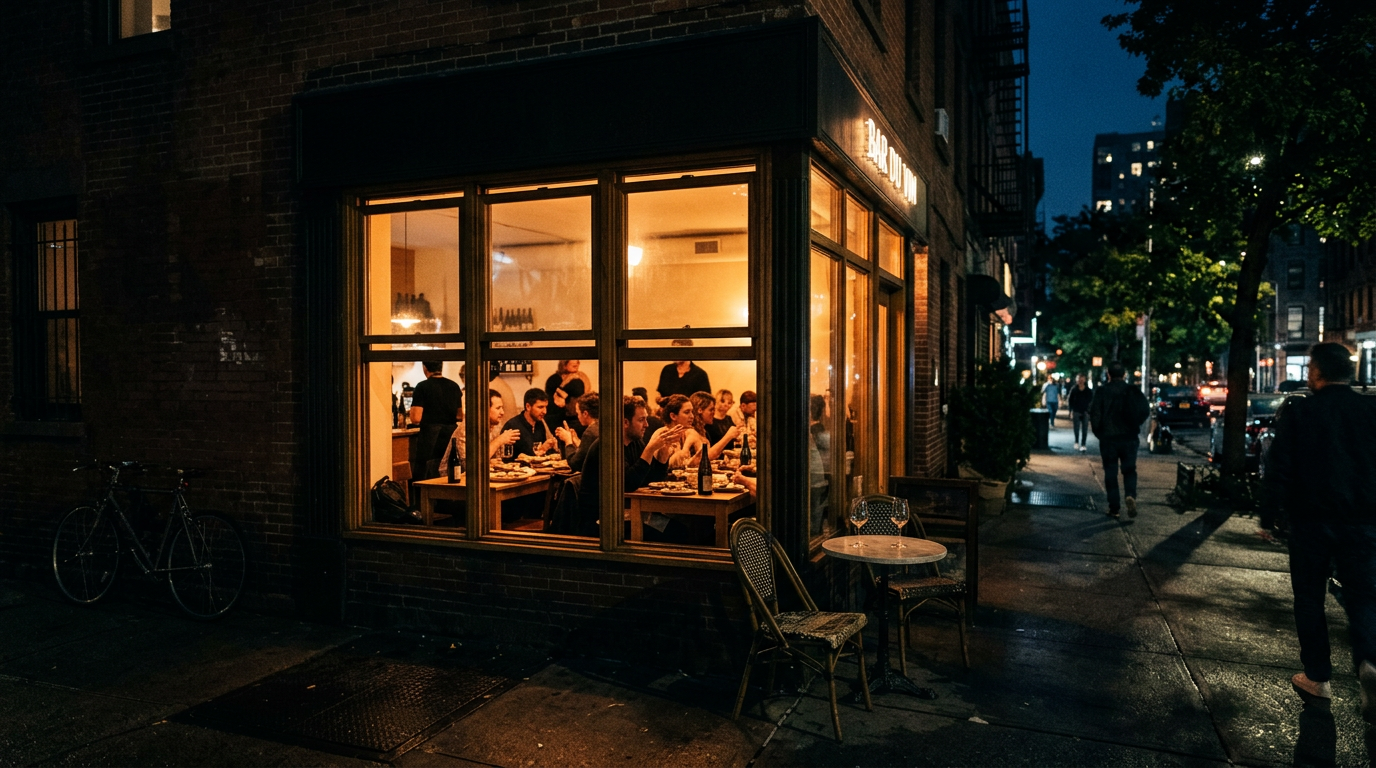
The nomads who get invited back understand the room.
- In coffee shops, one purchase does not buy four hours. Buy again, tip, and leave during lunch if seats are scarce.
- Never take calls on speaker. Use headphones, step outside, or book a booth.
- Do not treat baristas as concierge staff. Ask one clear question if you need a recommendation.
- In coworking spaces, clean the hot desk, do not squat in phone booths, and do not pitch strangers while they are eating.
- At founder events, lead with what you are building or who you help. Not your travel itinerary.
- In member’s clubs, do not photograph the room, name-drop the room, or act impressed by the room.
- At dinners, ask the host who they want you to meet before you start working the table.
City-specific rule: New York respects pace. Austin respects warmth. SF respects specificity. LA respects context. Miami respects access. Chicago respects substance. Seattle respects competence. Boston respects proof.
How to actually meet people there
Do not wait for “networking” to begin. Most useful conversations happen before the panel, at the coffee bar, or while people are deciding where to stand.
Use openers that give the other person an easy way in:
- “Are you here for the speaker or the room?”
- “What kind of work brings you to this one?”
- “I’m new to the city for a month and trying to find the serious operator rooms. Is this one of them?”
- “What’s been worth showing up to lately?”
- “I’m working on X for Y customers. Are you close to that world?”
Then stop talking. The fastest way to lose the room is to turn a question into a pitch deck.
Follow up within 24 hours, not with “great meeting you.” Send something usable:
- One sentence reminding them where you met.
- One specific thread from the conversation.
- One useful link, intro offer, or next step.
- A low-pressure ask: “Coffee next Wednesday near NoMad?” or “Want me to send the hiring lead I mentioned?”
If you meet someone twice in the same week, that is your cue. Invite them to a small coffee loop or three-person dinner. Digital nomad networking works when you turn random contact into repeated contact.
Mistakes to avoid
The biggest mistake is choosing a city for aesthetics instead of operating needs.
- Do not choose Miami because your feed looks rich. Choose it if your business has a reason to be in Miami.
- Do not choose LA without choosing a neighborhood lane.
- Do not choose SF unless you can explain why the tech density matters to your work.
- Do not choose NYC if you need calm, cheap rent, and guaranteed desk space.
- Do not choose Austin expecting every meetup to be high-signal. Curate hard.
- Do not choose Boston cold unless your sector gives you a door.
- Do not mistake coworking access for community. A day pass is a chair. Community starts when people recognize you.
- Do not overbook. Three good conversations beat eight forgettable ones.
Also: stop leading with “I’m a digital nomad.” It is a lifestyle descriptor, not a professional identity. Say what you do.
The final call
If you can afford it and need maximum opportunity density, base in New York. If you are building in tech and need signal fast, use San Francisco. If you want a founder-friendly month with easier social access, Austin is the cleanest bet. If your work touches media, brand, entertainment, or consumer culture, choose LA. If your business runs on relationships, capital, hospitality, or Latin America connections, Miami can work.
For value and seriousness, Chicago deserves more attention than it gets. Seattle and Boston are specialist plays. Denver, Portland, and Nashville are quality-of-life bases with sector-specific upside.
The right US city for digital nomads in 2026 is not the one with the prettiest skyline or the most coworking logos. It is the place where your calendar gets better by Thursday, where people understand your work without a 10-minute setup, and where you can become a familiar face before your month is over.
Discussion (0)
Loading comments…