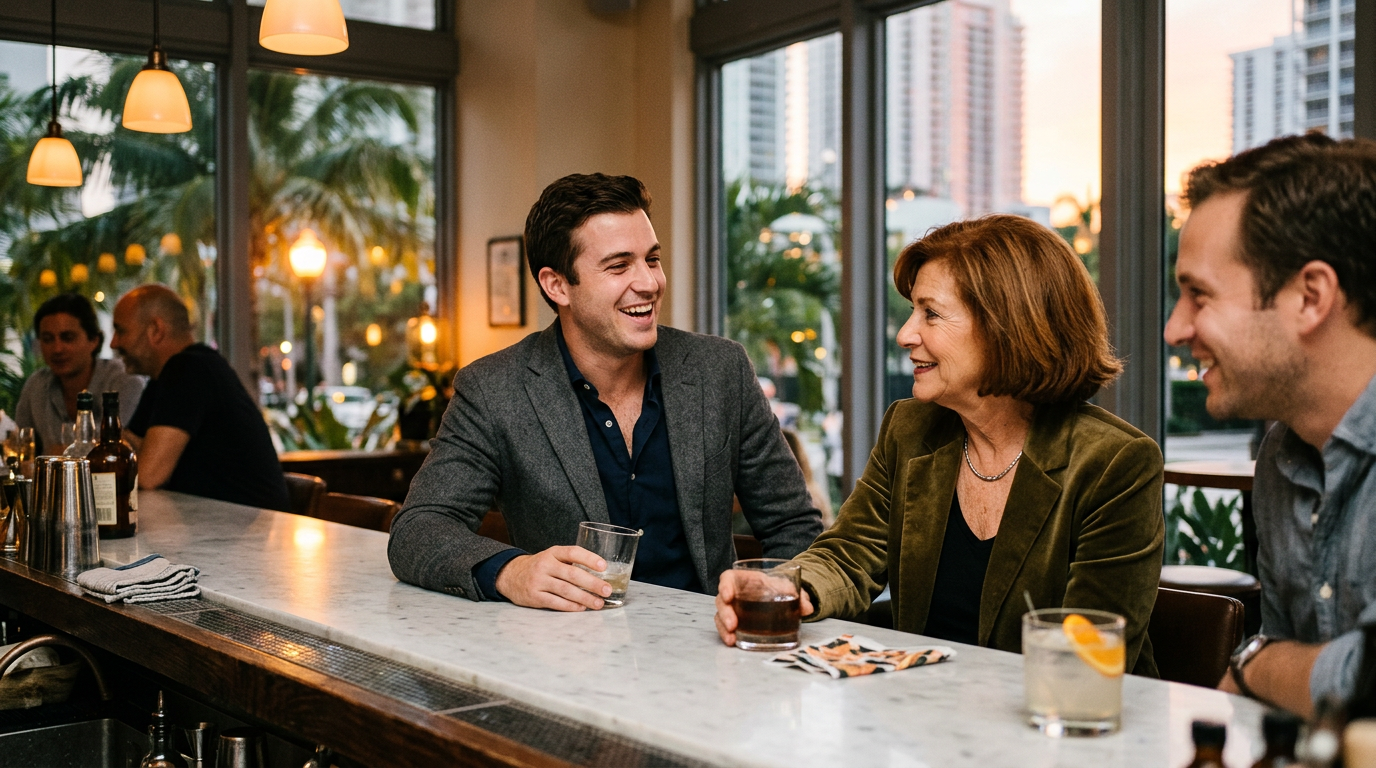
Where Miami founders actually run into investors
The table that matters in Miami is often not the table you booked. It is the two seats at the bar after a panel in Brickell, the four-top that grows to eight in Wynwood, or the hotel lobby couch where a fund partner is killing 40 minutes before a dinner in Surfside.
Miami in 2026 is not pretending to be Silicon Valley anymore. The serious money here moves through a mix of fintech, crypto, real estate, family offices, hospitality, health, logistics, creator businesses, and Latin America-linked operators. The social pattern is different from New York or San Francisco. People are warmer on the surface, faster to invite you somewhere, and also very good at disappearing if you lead with a pitch deck instead of a reason to stay in the room.
Restaurants matter because Miami investors use them as filtering rooms. Not every room with a $28 cocktail is useful. Not every useful room is fancy. The play is knowing which kind of room you are in, what time to show up, and how to turn a short exchange into a second conversation.
The Miami investor map is built around dinner, not coffee
Coffee meetings exist here, especially around Brickell, Wynwood, Coconut Grove, and Miami Beach hotel lobbies. But the real investor density shows up later. Miami is a dinner city, a bar city, and a post-event city. The founder who only books 9 a.m. coffees misses the room.
Think in zones:
- Brickell for fintech, operators, bankers, venture people passing through, and founders who want efficient meetings before or after the workday.
- Wynwood for crypto, consumer startups, creator-adjacent businesses, brand founders, and the spillover from Miami Tech Week-style programming.
- Design District and Midtown for fashion-tech, consumer, hospitality, art-world money, and founders who know that taste is part of the pitch.
- Miami Beach and Surfside for family offices, out-of-town capital, members club dinners, conference weeks, and investors staying at serious hotels.
- Coconut Grove for quieter founder dinners, older Miami money, and operators who prefer a real conversation over a scene.
The point is not to chase celebrity rooms. It is to find Schelling points: places where different tribes independently decide to gather because the location solves friction. Easy valet. Recognizable name. Good bar. Late kitchen. Enough noise for privacy, not so much that you are shouting.
Restaurant types that actually put you near capital
!Small Miami founder dinner table with shared plates and phones face down

The Brickell power lunch and bar-seat dinner
Brickell works when you need proximity to money without pretending it is a party. The useful rooms are polished hotel restaurants, high-end Japanese spots, and bars attached to restaurants where finance people are comfortable being seen. Zuma Miami has long been one of the city’s obvious business-dinner rooms. Novikov Miami and Komodo also pull the kind of cross-section where founders, investors, developers, and visiting executives overlap.
Do not treat these places as networking mixers. They are not. The better move is to book early bar seating or a two-person table, arrive before the dinner rush, and be visibly in motion: one meeting, then a second drink, then a short hello to someone you already know.
The Design District taste filter
Design District is where consumer founders and capital with taste tend to intersect. Michael’s Genuine is still a real Miami anchor. Mandolin Aegean Bistro nearby is more relaxed but still pulls operators, brand people, and money that does not need to announce itself.
This zone is useful because it lets you talk about a company without sounding like you escaped a pitch competition. If your startup touches hospitality, commerce, fashion, wellness, food, art, real estate, or Latin America, Design District conversations feel natural.
Wynwood after the panel
Wynwood is not where every investor wants a formal dinner, but it is where many useful introductions get made after events. KYU Miami has been a durable founder-and-operator room. The broader Wynwood pattern is clear: a conference panel ends, people do not want to go home, and the most valuable conversations happen in the second location.
Your goal in Wynwood is not to collect cards. It is to be the person who calmly suggests a nearby table for four when everyone is standing outside deciding what next.
Miami Beach hotel restaurants and member-adjacent rooms
If you want out-of-town investors, follow the hotels. Soho Beach House remains a relevant members-club node. The Surf Club Restaurant in Surfside and the restaurants around Faena Miami Beach attract a different tier of capital: family offices, real estate people, fashion and entertainment money, and investors who are in Miami for a week but do not want to commute across town.
These rooms reward restraint. You are not there to pounce. You are there because someone invited you, because you are hosting a tight dinner, or because you have a reason to be in the hotel orbit during a conference week.
Old-school Miami rooms
Joe’s Stone Crab is not a startup venue in the obvious sense, and that is exactly why it matters. Some of Miami’s most useful money is not hanging around demo days. It sits in legacy restaurants, country clubs, private dinners, and family office circles. You will not brute-force your way in. You get there through trust, repeated introductions, and not acting like every wealthy person is a potential check.
What to order / what to look for
Order like someone who plans to have a conversation, not someone documenting a lifestyle.
- At the bar, get something simple: sparkling water, a martini, a glass of wine, or one clean cocktail. Two-drink clarity beats three-drink charisma.
- At dinner, order shareable plates early so the table does not get trapped in menu negotiations.
- In Japanese or omakase-adjacent rooms, respect the pace. Do not turn the counter into your investor update.
- In natural wine bar settings, ask the staff for something specific by style, not just the most expensive bottle.
- If you are hosting, pre-decide the first round and a few dishes. Miami tables lose momentum when eight people perform indecision.
What to look for matters more than the menu:
- A bar with real seating, not a nightclub holding pen.
- Tables close enough for casual recognition but not so close that everyone hears your revenue numbers.
- A restaurant where a six-person reservation can expand without drama.
- Staff that handles late arrivals gracefully.
- A location that lets people leave for another dinner, hotel, or event without a 35-minute rideshare problem.
The investor-friendly restaurant is not always the hottest opening. It is the room where a principal, a founder, a family office operator, and a visiting New York partner can all say yes without overthinking it.
Best time of day to go
!Evening arrivals outside a modern Brickell restaurant near glass towers
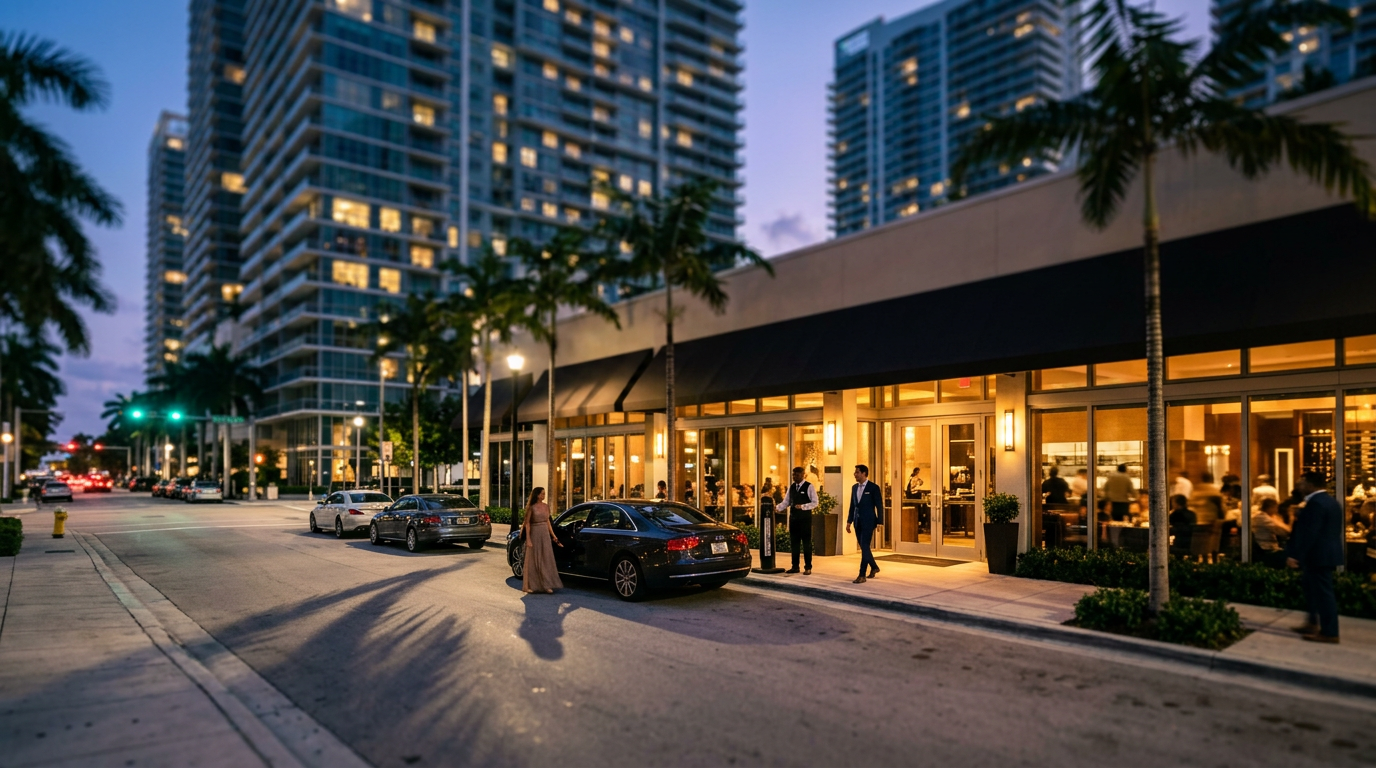
Miami’s useful windows are specific.
7:45 to 9:15 a.m.
Good for hotel lobby coffees and serious one-on-ones. Brickell and Miami Beach are strongest here. Keep it short. Thirty minutes. No breakfast sprawl unless the other person suggests it.
11:45 a.m. to 1:15 p.m.
Power lunch still works in Brickell and Design District. It is best for warm intros, not cold approaches. If the person has a real calendar, lunch is a commitment.
5:15 to 6:45 p.m.
This is the best bar window in Miami. You can catch people before their main dinner. You can have a real conversation without competing with the full room. You can also exit cleanly.
8:45 to 10:30 p.m.
Founder dinners, conference spillover, and second-location conversations happen here. The table is looser. The guard drops. This is where you can build trust, but it is also where founders talk too much.
Conference weeks
During eMerge Americas, Art Basel week, major crypto gatherings, F1 week, and boat show periods, assume the normal map bends toward hotels, member clubs, and private dinners. Reservations get harder. The better move is not a large public dinner. It is a tight table of five with one person who can credibly convene.
Etiquette and unwritten rules
Miami is socially open and status-aware at the same time. That combination confuses newcomers.
The rules:
- Do not walk up to a recognizable investor mid-meal with a pitch. If you have no bridge, wait for the bar, the lobby, or the event after-party.
- Lead with context, not credentials. Miami hears plenty of résumé flexing.
- Dress like you understand the room. Brickell sharp is different from Wynwood clean-casual and Surfside quiet luxury.
- Be warm to staff. People notice. Especially hosts and bartenders.
- Never make the table about fundraising unless the host frames it that way.
- Do not ask for an intro in front of a group. Ask privately after you have earned it.
- Respect Spanish-language side conversations and Latin America business context. Do not treat Miami as a domestic-only market.
- If someone says, ‘Let’s connect,’ that is not a commitment. Your follow-up determines whether it becomes one.
The strongest founders in Miami make people feel included without being needy. They remember spouses, funds, portfolio companies, and recent moves. They do not corner people. They give them a reason to continue the thread.
How to actually meet people there
Cold restaurant networking is weak. Warm, lightly structured presence works.
Start before you arrive. Use AngelList, LinkedIn, Meetup, Lunchclub-style matching, founder WhatsApp groups, and event attendee lists to identify who is already likely to be in the same zone. Then create a simple reason to meet.
Useful openers:
- ‘I saw you are spending more time in Miami. I am comparing notes with founders building here beyond the conference circuit.’
- ‘We are hosting three operators after the panel near Wynwood. No pitches, just what is working in market right now.’
- ‘I noticed your portfolio has a few LatAm-facing companies. I would value ten minutes on what you are seeing this quarter.’
- ‘I am putting together a small dinner for fintech and hospitality operators in Brickell. Would you want the list?’
At the restaurant, your best move is to work through the host of the room. If a founder dinner is happening, know who convened it. If a fund partner is there, know who introduced them. Miami rewards social proof, but not loud social proof.
If you do meet someone spontaneously, keep it under three minutes:
- One sentence on who you are.
- One sentence on why the topic is relevant to them.
- One question that lets them talk.
- One clean exit.
Try: ‘I run a payments workflow company for hospitality groups. I know you have looked at restaurant tech, so I wanted to ask what you think founders usually misunderstand about this market.’ Then stop talking.
Follow-up within 18 hours. Not a novel. Send one useful note:
- ‘Good meeting you at the bar at Michael’s. Your point about family office pacing was helpful. Here is the one-page overview I mentioned, and I would welcome a 20-minute call next week if it is relevant.’
If they do not respond, do not send three bumps. Add value later with a specific update, intro, or event invite.
Founder dinners beat random table-hopping
The highest-yield Miami move is not hanging around expensive rooms hoping capital appears. It is hosting a tight dinner with the right mix.
Ideal format:
- Six to eight people.
- Two founders at similar stages.
- One operator with distribution knowledge.
- One investor or family office person.
- One connector who is trusted locally.
- No panels. No speeches. No forced demo round.
Pick the neighborhood based on the guest list. Brickell for efficient finance. Design District for consumer and taste-driven sectors. Coconut Grove for quieter, longer conversations. Miami Beach or Surfside for visiting capital.
Send a short framing note before dinner: who is coming, why they fit, and what the table is not. ‘This is not a pitch dinner’ is one of the most attractive sentences in Miami fundraising.
During dinner, seed one good question early: ‘What is one Miami advantage people overstate, and one they underrate?’ That gets better answers than ‘What are you investing in?’
After dinner, follow up with individual notes, not a group thread full of vague gratitude. Offer one intro. Send one resource. Move one relationship forward.
Mistakes to avoid
- Chasing only the flashiest restaurants. Many rooms are expensive and socially useless.
- Assuming crypto money equals easy money. The serious Miami crypto crowd is more selective in 2026 than tourists think.
- Pitching across a dinner table before trust exists.
- Bringing too many founders and not enough operators or customers.
- Confusing friendliness with investor intent.
- Over-indexing on South Beach when your buyer, investor, or partner is really in Brickell, Grove, or Design District.
- Asking vague questions like ‘Do you know any investors?’ Ask for one specific kind of person.
- Posting every dinner. Some of the best Miami rooms punish performative behavior.
- Treating family offices like venture funds. Their timelines, risk filters, and relationship expectations are different.
- Staying out too late before a serious morning meeting. Miami will test your discipline.
The short list of rooms to understand
Do not read this as a reservation checklist. Read it as a map of signals.
- Zuma Miami: Brickell business energy, polished, useful for established operators and finance-adjacent meetings.
- Michael’s Genuine: Design District credibility, better for taste-driven founders and local relationship building.
- Mandolin Aegean Bistro: relaxed but high-signal Design District orbit; good for warm small-group meals.
- KYU Miami: Wynwood operator room, useful after events and for founder dinners with energy.
- Komodo: high-volume Brickell scene, works when the guest list matters more than intimacy.
- Joe’s Stone Crab: legacy Miami power, not a cold-networking play.
- Soho Beach House: member-network gravity on the Beach, useful only if you are invited into the right context.
- The Surf Club Restaurant: Surfside capital and visiting-money orbit; restraint required.
The real answer is not that investors are hiding in one restaurant. They are moving through patterns. Pre-event bar. Small dinner. Hotel lobby. Second location. Follow-up coffee. If you can read that rhythm, Miami becomes much easier.
Show up prepared, keep the pitch in your pocket, and make the next conversation obvious. That is how restaurant proximity turns into investor access here.
Discussion (0)
Loading comments…