Where Miami investors still take the dinner meeting
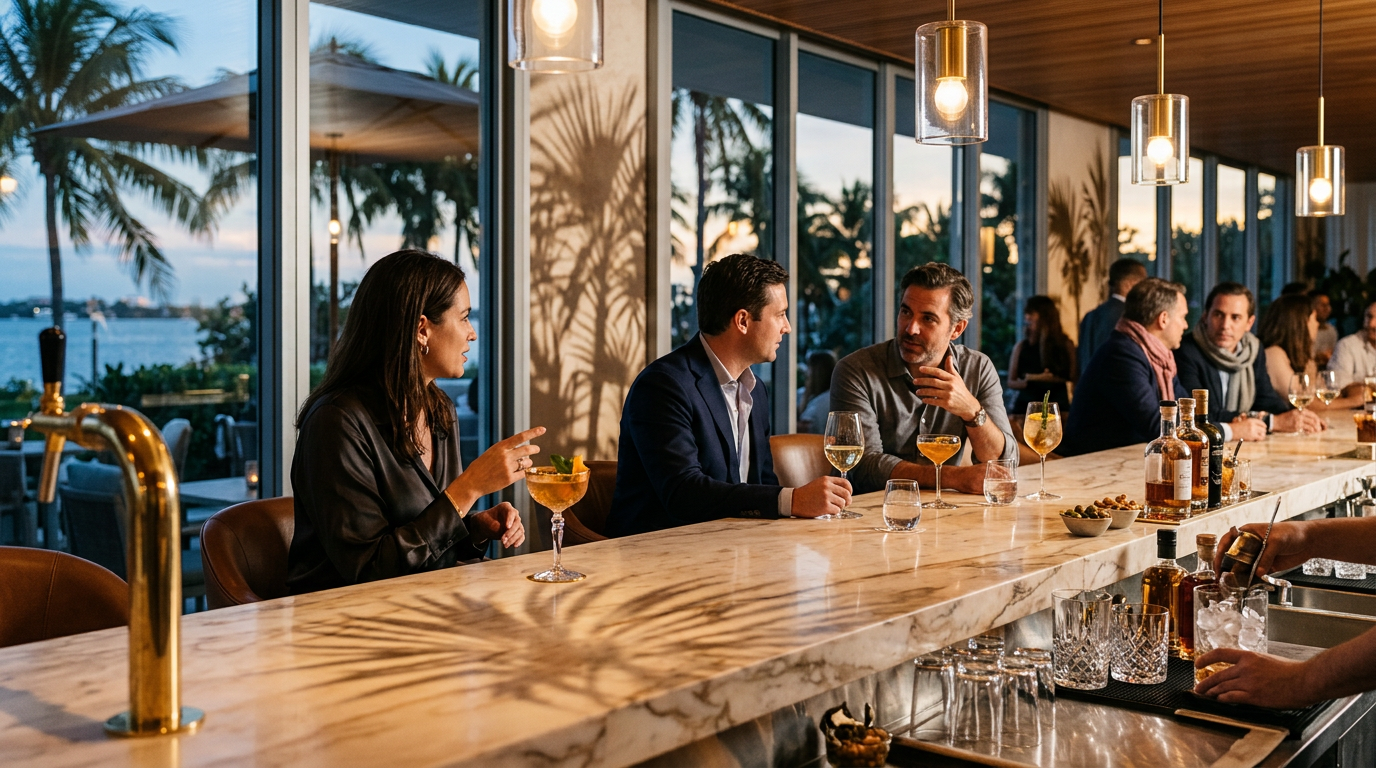
At 7:45 on a Thursday in Brickell, the bar is already doing two jobs. One side is deal flow: two fintech founders comparing notes after a customer call, a family-office guy in a linen shirt, a visiting New York operator pretending he is “just in town for a few days.” The other side is Miami theater: late reservations, big watches, louder tables, someone ordering for the room.
That is the Miami investor scene in 2026. It is not one room. It is a circuit.
The useful part is smaller than it looks. Miami has plenty of bottle-service money, crypto tourists, real estate talk, and people who call every lunch a “capital raise.” The actual investor rooms are more disciplined. They cluster around Brickell, the Design District, Coconut Grove, Miami Beach, Surfside, and, when the meeting is more serious, Coral Gables. The pattern is simple: lunch for diligence, early dinner for warm intros, late bar seats for social proof.
If you are a founder, freelancer with a high-end client base, creator building a media business, or operator trying to get into the room, the goal is not to ambush investors over crudo. The goal is to be seen as someone who belongs in the city’s working conversation.
The Miami investor restaurant map in 2026
Miami is not San Francisco with palm trees. The restaurant scene has its own hierarchy, and it rewards people who understand context.
Brickell and Downtown are for transactional energy. Think hotel restaurants, polished Japanese dining, steakhouses, and bar seating where finance, private equity, Latin American family offices, and corporate operators overlap. Zuma Miami and Komodo are the kind of names people know, but the move is not to chase the loudest table. The move is to know which weekday and which seat gives you a normal conversation.
Design District and Buena Vista are better for founders who want taste without trying too hard. Michael’s Genuine still works because it feels like a place where adults talk. Mandolin Aegean Bistro is useful for relaxed lunches and second meetings. COTE Miami is sharper: more expense-account energy, more visiting capital, more chance that the table next to you has a fund partner in from New York.
Miami Beach is split. South Beach can be pure performance, but the right rooms still matter. Carbone Miami is not where you cold-pitch; it is where people confirm status. Casa Tua has long been a relationship room. Soho House Miami remains relevant because member’s club dynamics create repeat contact, not just one-off meals.
Surfside and Bal Harbour lean older-money, family-office, global-capital. The Surf Club Restaurant is not for casual networking. It is for a meeting someone has already decided is worth protecting.
Coconut Grove and Coral Gables are underrated for actual work. Investors who live in Miami full-time often prefer quieter rooms for lunch. If the conversation involves a fundraise, partnership, acquisition, or family-office allocation, noise is not your friend.
Restaurants act as Schelling points: places where people with overlapping business interests naturally coordinate without needing to announce it. In Miami, the room often tells you what kind of capital is nearby.
What to order / what to look for
!Outdoor Miami restaurant table set for a low-key business lunch
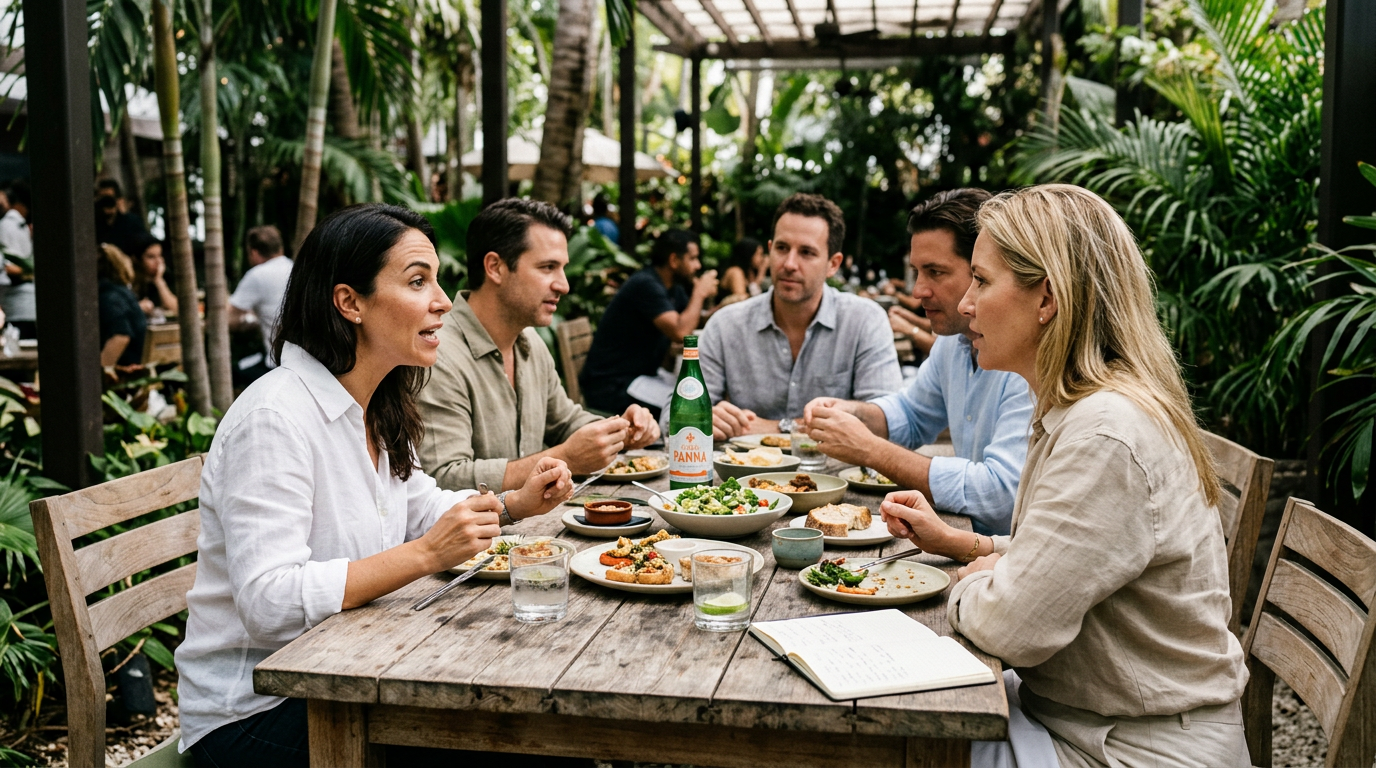
You are not there to perform wealth. You are there to make the table easy.
At investor-heavy restaurants, order like someone who has business to do after the meal:
- At lunch: sparkling water, iced tea, a simple protein, salads, shared appetizers if the other person suggests it. No complicated ordering ritual.
- At early dinner: one drink is fine. A martini, a glass of wine, a zero-proof cocktail. Miami respects polish; it also notices control.
- At a bar seat: order something fast and clean. Do not camp with an empty glass if the bar is packed.
- At a natural wine bar or smaller chef-driven spot: ask one intelligent question, then let the staff steer. Do not turn wine into a personality test.
- At omakase or izakaya-style rooms: do not pitch during the first course. Let the cadence breathe. These formats reward patience.
What to look for matters more than the menu:
- A room where people can hear each other without leaning across the table.
- A bar with a real regulars pattern, not only visitors.
- Tables that turn after work, not only after 10 p.m.
- Hosts who recognize repeat guests.
- A mixed crowd of operators, attorneys, fund people, real estate principals, and media founders.
- A place where people come back every month, not just once for social media.
Miami has matured past the post-pandemic relocation rush. The serious people are no longer impressed that you moved from New York, Los Angeles, Chicago, or San Francisco. They want to know if you can build here, sell here, hire here, and keep showing up after Art Basel week.
Best time of day to go
Timing is the difference between “random expensive dinner” and “useful room.”
Breakfast is mostly private. In Miami, serious breakfast meetings happen at hotels, member’s clubs, and neighborhood staples, but investors are less open to casual interruption before 10 a.m. If you do not already have the meeting, breakfast is not your entry point.
Lunch is the diligence window. Tuesday through Thursday lunch is strong in Brickell, Design District, Coral Gables, and Coconut Grove. This is where you take an investor who has already seen your deck, or an operator who can make a warm intro. Keep it under 75 minutes unless they extend.
Early dinner is the warm-intro slot. 6:00 to 8:00 p.m. is where Miami gets useful. The room has energy, but people are still coherent. If someone says, “Come by, I’m having dinner with a few friends,” this is usually the window.
Late dinner is social proof, not fundraising. After 9:30 p.m., the signal gets messier. You may meet capital, but you are more likely to meet capital-adjacent people. Fine for relationship building. Bad for asking for a check.
Sunday can work if you already belong. Brunch is dangerous for cold networking, but good for casual continuity. If you met someone at a founder dinner, Meetup, On Deck-style alumni event, AngelList intro, or Lunchclub match earlier in the week, a Sunday coffee or light meal can turn weak contact into real familiarity.
Etiquette and unwritten rules
!Brickell hotel restaurant scene with a quiet business introduction
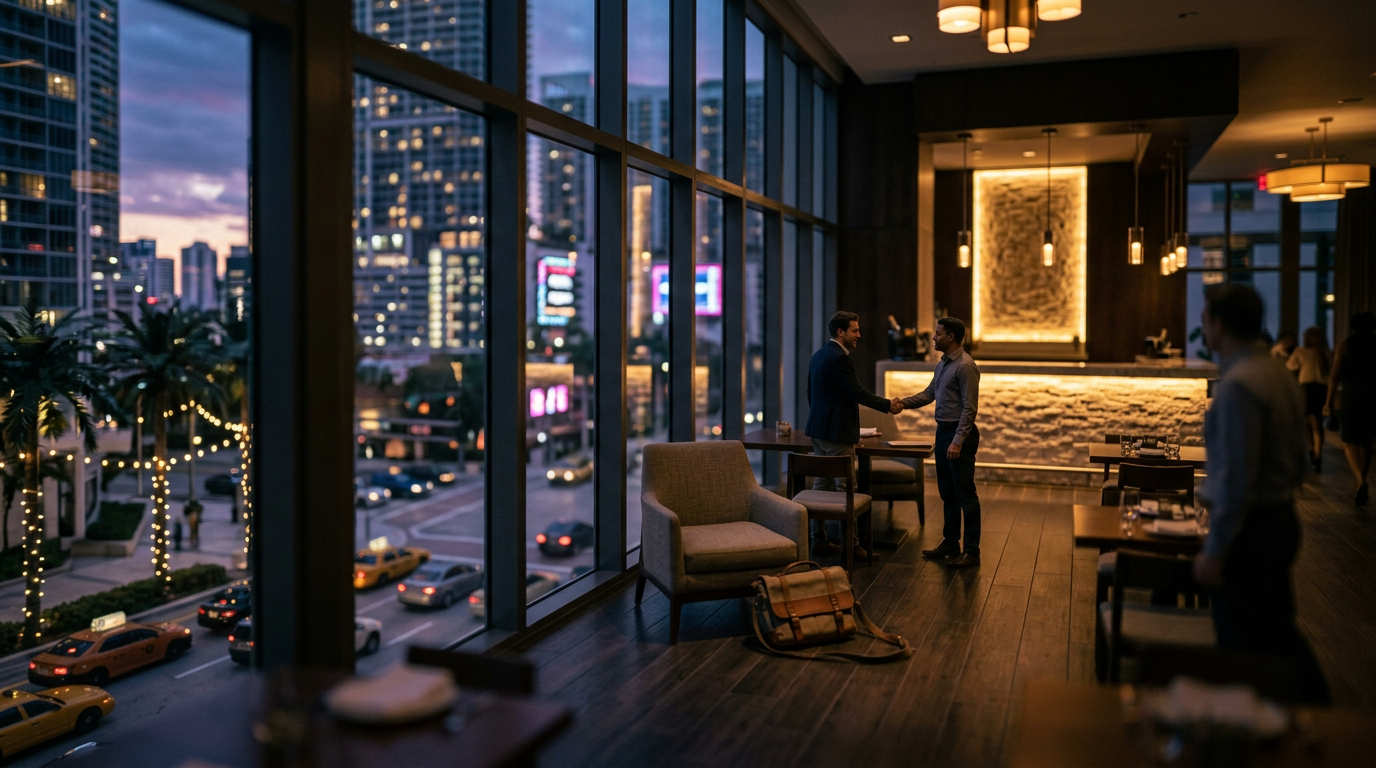
Miami is friendly, but it is not loose. People talk. Hosts remember. Tables notice.
The first rule: do not pitch strangers at dinner. If you recognize a VC, angel, or family-office principal, a brief hello is acceptable only if you have a real connective thread. “I saw you backed X” is not enough. “We both know Maya from the fintech dinner last month; she suggested I say hello if I ran into you” is better.
The second rule: respect the table. If someone is eating with a spouse, children, or an obviously private group, leave it alone. Miami has a smaller serious business circle than outsiders expect, and bad manners travel fast.
The third rule: do not over-explain your company. Your first line should be short enough to survive a noisy room:
- “We help boutique hotels automate group sales without adding headcount.”
- “We’re building compliance tooling for cross-border payments in Latin America.”
- “I run growth for a logistics marketplace expanding through South Florida.”
Then stop. Let them ask the next question.
The fourth rule: dress for the room, not the fantasy. Brickell finance rooms still skew polished. Design District allows taste. Miami Beach allows personality. Surfside rewards restraint. Loud does not equal confident.
The fifth rule: tip and treat staff well. This is not moral decoration. In relationship cities, staff are part of the room’s memory. If you are rude to a server, you have already lost.
How to actually meet people there
The restaurant is the second move, not the first.
Start with structured rooms: founder dinners, operator breakfasts, angel syndicate gatherings, South Florida tech meetups, alumni events, and coworking communities. Industrious, Spaces, and WeWork still serve some founders, but the stronger post-pandemic pattern is mixed: people use a hot desk or day pass when needed, then build relationships in smaller dinners, member’s club lounges, and industry-specific groups.
Your best restaurant access usually comes from weak ties. Mark Granovetter’s idea still holds: the person most likely to introduce you to a new investor is often not your closest friend, but a credible acquaintance who moves in a different circle.
Work it like this:
- Ask an operator, not an investor, for the first dinner invite.
- Be specific: “I’m trying to meet pre-seed investors who understand hospitality software. Is there one dinner or room in Miami where that conversation actually happens?”
- Offer value before asking for capital: a customer intro, a market note, a hiring lead, a space recommendation, a founder they should meet.
- Attend the same type of room three times before judging it.
- Follow up within 18 hours, not five days later.
Good openers in Miami are practical, not needy:
- “Are you based here full-time now, or splitting time?”
- “Which Miami rooms have been worth your time this year?”
- “Are you seeing more serious deals coming out of South Florida, or still mostly relocation noise?”
- “Who in town actually understands Latin America distribution?”
- “I’m trying to get smarter about family-office capital here. Anyone you think is thoughtful?”
If the conversation goes well, do not ask for a meeting immediately. Use a soft close:
- “This was useful. If it makes sense, I’ll send a short note tomorrow with what we’re building and one specific ask.”
- “I’d value your read on whether this is a Miami conversation or more of a New York fund conversation.”
- “If you think of one operator I should meet, I’d be grateful for the pointer.”
Then send a follow-up that is short enough to read on a phone:
- One sentence reminding them where you met.
- One sentence on your company.
- One clear ask.
- One proof point.
- No attachment unless requested.
Restaurant types that work better than chasing names
Specific venues matter, but type matters more. Miami’s scene changes quickly, and the useful room is often a category before it is a logo.
The quiet power lunch room. Coral Gables, Coconut Grove, and Design District do this well. Use it for serious conversation, especially if the investor is older, local, or tied to real estate, healthcare, hospitality, finance, or Latin America.
The polished Brickell bar. Good for first contact after an event. Keep it short. Thirty minutes at the bar can do more than a two-hour dinner if the ask is clear.
The Design District dinner. Strong for founders who need to look credible without looking like they are auditioning. Michael’s Genuine and Mandolin work because they do not require everyone to perform. COTE works when the meeting is already warm.
The Miami Beach status room. Carbone, Casa Tua, Soho House, and similar rooms are useful only when you understand the hierarchy. You are there by invitation, or you are hosting someone who already wants to be there.
The hotel restaurant with a lobby ecosystem. Miami hotels create repeat collisions: coffee in the morning, meetings in the lobby, dinner downstairs, a drink after. This works well for visiting investors during conferences, Art Basel-adjacent weeks, crypto events, fintech gatherings, and private family-office programming.
Mistakes to avoid
The biggest mistake is confusing proximity with access. Sitting two tables away from an investor does not mean you are in their network.
Avoid these moves:
- Cold-pitching during dinner. It feels desperate and puts the other person in a defensive posture.
- Over-indexing on South Beach. Some rooms matter. Many are theater.
- Talking only about fundraising. Investors want to hear about customers, margins, hiring, distribution, and timing.
- Name-dropping without context. Miami hears a lot of borrowed status. Specific work beats vague affiliation.
- Showing up only during major weeks. Art Basel, Miami Tech Week-style programming, and big finance events bring density, but locals know who disappears afterward.
- Booking the wrong room for the wrong ask. A noisy late dinner is bad for diligence. A formal lunch is bad for casual friend-of-a-friend chemistry.
- Ignoring Latin America. A lot of Miami capital thinks across borders. If your market touches payments, logistics, hospitality, real estate, media, or consumer brands, be ready to speak regionally.
- Being vague about your traction. “We’re early but growing fast” is not enough. Give numbers, even if small.
A practical Miami playbook for the next 30 days
Week one: pick your lane. Are you looking for angel checks, a seed lead, strategic capital, family-office money, operator introductions, or customers who can later introduce investors? Each path has different rooms.
Week two: attend two structured events and one smaller dinner. Use Meetup, AngelList connections, founder Slack groups, alumni networks, coworking communities, and trusted operators. Avoid any event where the attendee list is mostly people selling services to founders.
Week three: host a four-person dinner. Not twelve. Four. Invite one founder, one operator, one capital-adjacent person, and one person with real customer insight. Choose a restaurant where ordering is easy and the table can talk.
Week four: convert the room into follow-up. Send thoughtful notes. Offer one intro. Ask for one intro. Book one lunch. Keep the loop warm.
Miami rewards consistency. The city has room for serious builders, but it punishes people who treat the restaurant scene like a shortcut. The investors are out there. So are the pretenders. Your job is to know the difference, behave like you have a reason to be in the room, and leave with one next step instead of ten business cards.
Discussion (0)
Loading comments…