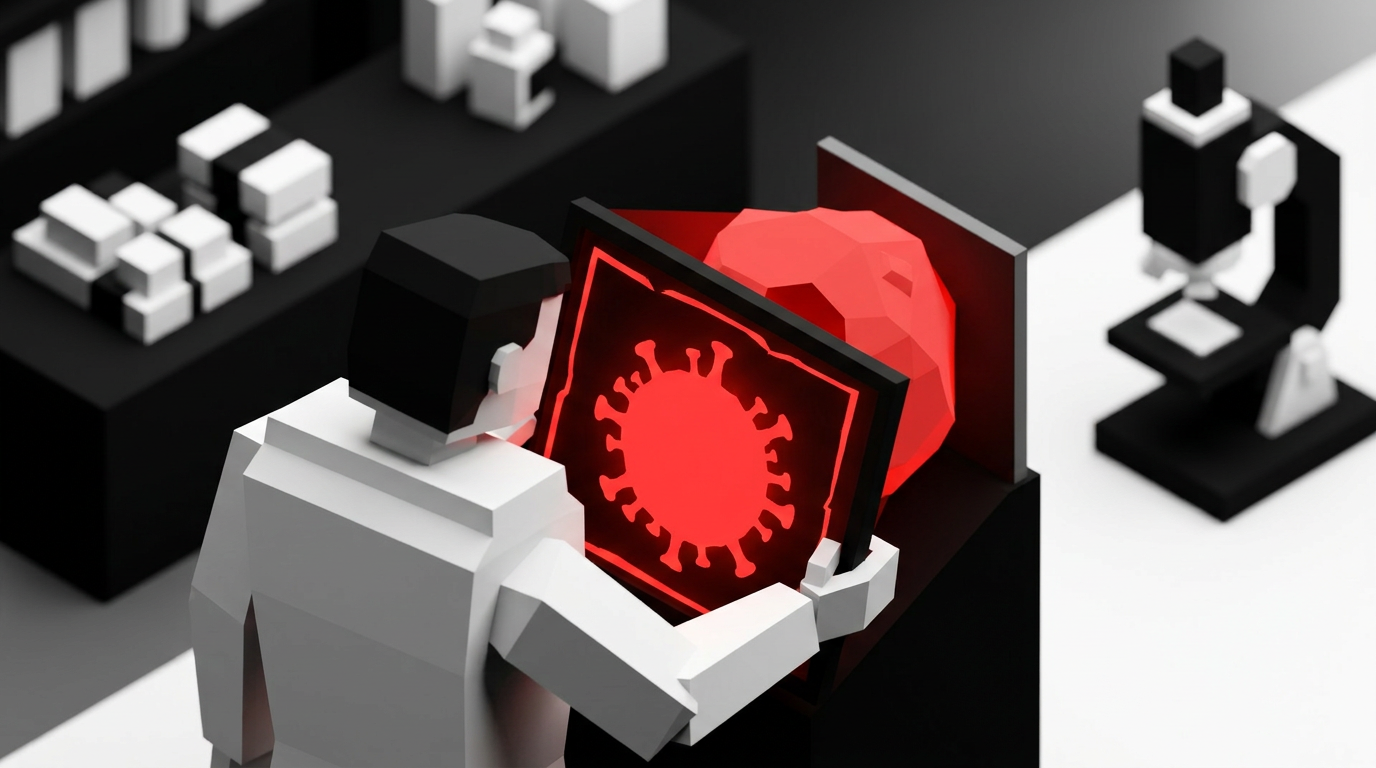
Your immune system needs a wanted poster
A scene at the pharmacy counter
The pharmacist asks which arm you want. You roll up a sleeve, feel a quick pinch, get a small bandage, and walk out with a receipt long enough to wallpaper a kitchen drawer.
Nothing dramatic happens. No glowing shield. No instant sense that your body has been upgraded. Maybe your arm gets sore that night. Maybe you feel tired the next day. Then life goes on.
That ordinary little moment hides one of biology’s best tricks: teaching the immune system before the emergency.
By 2026, most Americans have heard about flu shots, childhood vaccines, updated COVID shots, travel vaccines, and shingles vaccines. They also hear confusing claims about immunity, side effects, variants, boosters, and mRNA. The core idea is simpler than the arguments around it.
A vaccine gives your immune system a safe preview of a threat, so it can respond faster and better if the real thing shows up.
Not perfect protection. Not magic. Training.
What it actually is
A vaccine is a medical preparation that shows your immune system a recognizable piece, weakened version, inactivated version, or genetic instruction related to a germ. The germ might be a virus, such as measles or influenza, or a bacterium, such as the one that causes tetanus.
The key word is antigen. An antigen is any piece of something that your immune system can recognize as suspicious. Think of it as a face, fingerprint, or uniform patch. Your immune cells do not need to see the whole criminal to learn the mugshot.
Different vaccines present antigens in different ways:
- Live attenuated vaccines use a weakened germ that can still copy itself a little, but usually cannot cause serious illness in people with healthy immune systems.
- Inactivated vaccines use germs that have been killed, so they cannot reproduce.
- Subunit vaccines use selected pieces of a germ, often proteins.
- Toxoid vaccines train the body against a toxin made by a bacterium, not the bacterium itself.
- Viral vector vaccines use a harmless carrier virus to deliver instructions for an antigen.
- mRNA vaccines give cells temporary instructions to make an antigen, after which the mRNA breaks down.
That last one needs a plain-English pause. mRNA, or messenger RNA, is a short-lived instruction copy used by cells to make proteins. Your cells use mRNA all day. In an mRNA vaccine, the instruction tells some of your cells to make a harmless piece of a virus, such as a surface protein. Your immune system sees that protein, practices on it, and remembers it.
The mRNA does not need to enter the cell nucleus, where your DNA is stored. It is more like a sticky note handed to the cell’s protein-making machinery, not a change to the building’s blueprints.
The idea of vaccination is old. In 1796, English physician Edward Jenner tested whether exposure to cowpox could protect against smallpox. His methods would not pass modern ethics review, but the observation mattered: the immune system can learn from a related, less dangerous exposure. In 1885, Louis Pasteur used a rabies vaccine in a famous case involving Joseph Meister, a boy bitten by a rabid dog. Modern vaccines are vastly more controlled, tested, and monitored, but the central trick remains recognizable.
Show the immune system enough to learn. Avoid making the person suffer the full disease.
Why it matters
Your immune system has two broad modes.
The first is the fast, rough response. This is called innate immunity. It reacts quickly to trouble: inflammation, fever, chemical alarms, and cells that attack broadly. It is like building security hearing glass break.
The second is slower but more precise. This is adaptive immunity. It uses specialized cells, especially B cells and T cells, to recognize specific threats. B cells can become factories for antibodies, which are proteins that stick to targets such as viruses. Some T cells help coordinate the response. Others can kill infected cells.
Adaptive immunity is powerful, but the first meeting with a new germ takes time. Your body has to find the right B cells and T cells, multiply them, refine the attack, and build enough force to matter. Meanwhile, the germ may be multiplying.
Vaccines buy time before the clock starts.
After vaccination, your immune system creates memory cells. These are long-lived B cells and T cells that remain after the initial training session. If the real germ appears later, memory cells can respond much faster than the naive immune system could.
Australian immunologist Frank Macfarlane Burnet proposed the clonal selection theory in 1957. In plain terms, the immune system contains many cells with different recognition patterns. When one fits a target, that cell gets selected and copied. It is a biological version of finding the one key that fits a lock, then making a bunch of copies before the burglar returns.
This is why vaccination can reduce severe disease even when it does not block every infection. If a virus gets past the front door, a trained immune system may still prevent it from burning down the house.
That matters beyond the individual. Some people cannot mount strong immune responses: newborns, people receiving chemotherapy, transplant patients taking immune-suppressing drugs, and others with certain medical conditions. When enough people around them are immune, a germ has fewer chances to spread. That community protection is often called herd immunity.
Herd immunity is not a moral halo. It is math and biology. A contagious germ needs susceptible hosts. Reduce the number of easy hosts, and transmission gets harder.
The simplest analogy that works
A good vaccine is a wanted poster plus a fire drill.
The wanted poster part shows the immune system what to look for. The fire drill part teaches the body how to respond without waiting for smoke in the hall.
Picture a school principal who has never run an evacuation drill. The alarm goes off for a real fire. Teachers argue over exits. Students grab backpacks. Someone checks the wrong hallway. Precious minutes vanish.
Now picture the same school after several drills. Nobody loves the drill. It interrupts the day. A few kids complain. But when the alarm is real, the body knows the path.
A vaccine is the drill. The pathogen is the fire.
This analogy also explains side effects. After vaccination, your immune system may release chemical signals that cause soreness, fatigue, chills, or a mild fever. Those symptoms are not the same as having the disease. They are signs that the alarm system noticed the drill.
A sore arm often comes from local inflammation. Blood vessels widen. Immune cells move into the area. The injection site becomes a little crowded and irritated. Annoying, yes. Mysterious, no.
The analogy has limits. The immune system is not a single principal making rational plans. It is a distributed network of cells and chemical messages. Still, the drill idea gets the main point right: practice reduces panic.
What your body does after the shot
The sequence is messy in real life, but here is the clean version.
First, antigen appears. Depending on the vaccine type, the antigen is injected directly, made briefly by your cells, or displayed by a harmless carrier.
Next, immune sentries notice it. Cells called dendritic cells are especially important. They pick up antigens and show them to T cells, almost like bringing evidence to a command center.
Then selection begins. Rare B cells and T cells that recognize the antigen receive signals to multiply. This part matters because the useful immune cells may be extremely uncommon before training.
After that, B cells can produce antibodies. Some antibodies neutralize a virus, meaning they block it from entering cells. Others tag invaders so immune cells can clear them.
At the same time, T cells help shape the response. Some T cells support antibody production. Others identify and destroy infected cells. People often talk about antibodies because they are easier to measure, but T cells are a major reason protection against severe disease can persist even when antibody levels decline.
Finally, the immune response contracts. Your body does not keep every alarm at full volume forever. That would be exhausting and dangerous. Most short-term fighter cells die off. Memory cells remain.
This is also why boosters exist. Immune memory can fade. Germs can change. A booster can remind the immune system and increase the number or quality of memory cells and antibodies.
Influenza is a familiar example because flu viruses change often. Scientists update flu vaccines to better match the strains expected to circulate. COVID vaccines have also been updated as the virus has changed. That does not mean the original idea failed. It means the wanted poster needed a newer photo.
What researchers watch
Scientists do not judge vaccines by vibes. They look at several layers of evidence.
One layer is immune response. Researchers may measure antibody levels, neutralizing antibodies, or T-cell responses. These are clues that the body learned something, but they are not always perfect predictors of real-world protection.
Another layer is clinical outcomes. Did vaccinated people get the disease less often? If they got infected, were they less likely to be hospitalized or die? Did protection differ by age, immune status, or variant?
Safety monitoring is its own layer. Before authorization or approval, vaccines are studied in trials. After use begins, health systems continue looking for rare adverse events that may not appear in smaller trials. That ongoing surveillance is one reason recommendations can become more specific over time.
For mRNA vaccines, a key scientific step came in 2005, when Katalin Karikó and Drew Weissman published work showing that modified nucleosides could reduce unwanted immune reactions to RNA. That research helped make later mRNA vaccine platforms more practical. The public saw the result during the COVID pandemic, but the science did not appear out of nowhere.
Good science usually looks sudden only from far away.
Common misconceptions
A vaccine is not a force field. You can still get infected after vaccination. The better question is often whether your immune system responds quickly enough to reduce severe illness, complications, or transmission.
Natural infection is not automatically better training. An infection may train the immune system, but it charges tuition in pain, risk, missed work, long-term complications, and possible spread to others. Vaccines aim to teach the lesson without the full bill.
Vaccines do not overload the immune system. Your immune system handles huge numbers of signals every day from food, air, skin, pets, surfaces, and ordinary microbes. Modern vaccines present a tiny slice of that daily immune workload.
mRNA vaccines do not rewrite your DNA. The mRNA is temporary. It provides instructions for making an antigen, then breaks down. DNA stays in the nucleus; vaccine mRNA works mainly in the cell’s protein-making space outside it.
Side effects are not the disease itself. Fever, soreness, and fatigue can happen because immune signaling is active. That is different from a vaccine giving you the full illness. Some vaccine types can cause problems in people with severely weakened immune systems, which is why medical guidance differs by person and product.
Herd immunity is not a personal exemption coupon. Community protection works best when enough people participate. If too many people assume everyone else will carry the load, the shield gets holes.
Barry Schwartz’s 2004 book, The Paradox of Choice, was about decision-making, not vaccines. But the idea fits the modern vaccine conversation: more options, more headlines, and more partial information can make people feel less certain, not more. The answer is not to memorize immunology. It is to ask better questions: What disease is this preventing? Who is at highest risk? What does the evidence show about severe outcomes? What does my clinician recommend for my situation?
Key takeaways
- A vaccine trains immune memory before a real infection arrives.
- Antigens are the recognizable clues your immune system learns to spot.
- B cells, T cells, antibodies, and memory cells all play different roles in protection.
- Side effects usually come from immune activation, not from getting the full disease.
- Boosters can refresh memory or update the target when germs change.
- Vaccination protects individuals and can reduce spread through community immunity.
The short version: your immune system is not born knowing every enemy. Vaccines hand it a safer lesson plan. When the real threat shows up, the body is not starting from zero.
Discussion (0)
Loading comments…