A24 taught sci-fi to whisper louder
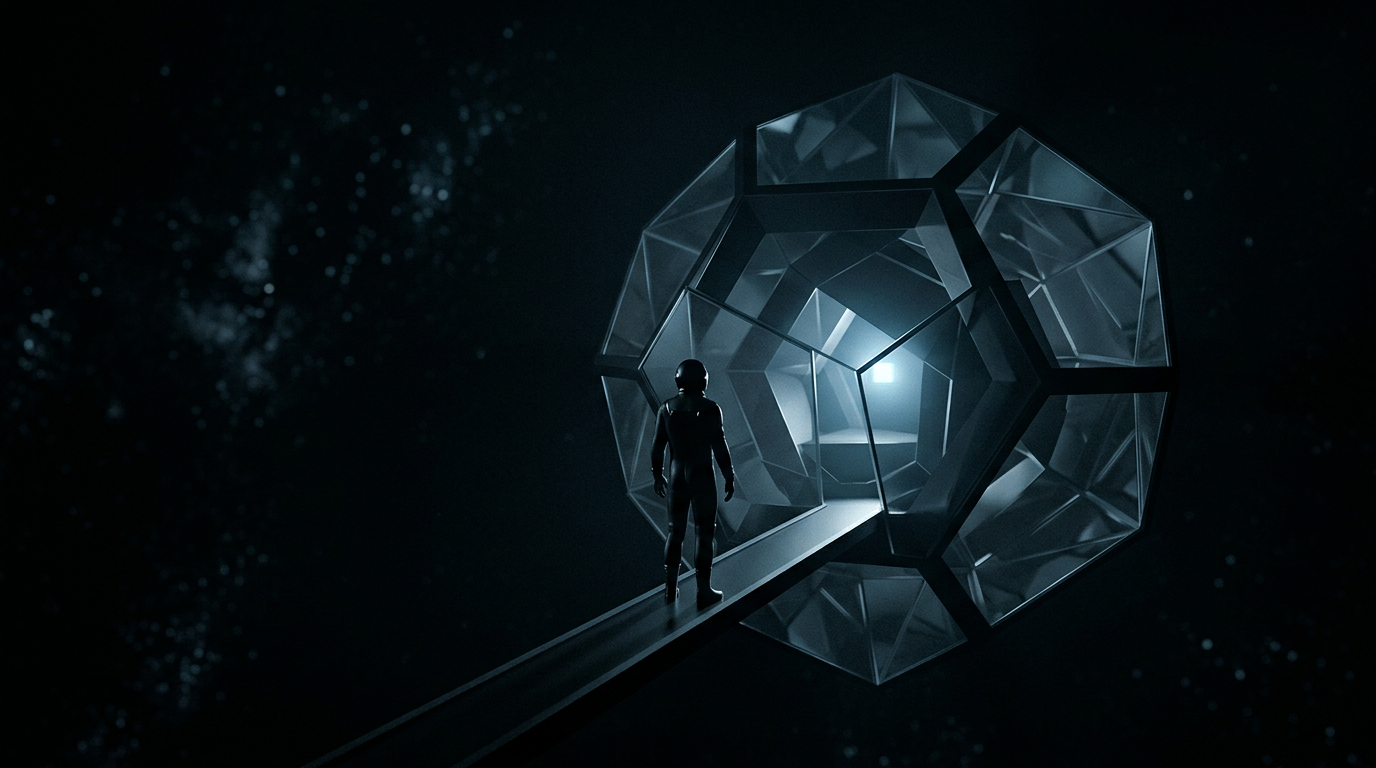
The most important A24 spaceship may be a glass hallway.
Not a star destroyer, not a wormhole, not a planet-sized weapon with a name like a software update. A hallway. In Ex Machina, Alex Garland’s sleek little house of mirrors, technology does not announce itself with spectacle. It waits behind transparent walls, lit like a wellness retreat and blocked like a prison interview. Alicia Vikander’s Ava is less a robot than a question with cheekbones: who is performing humanity, and who is merely better at hiding the script?
That has been the A24 sci-fi move at its sharpest. Take the genre’s usual machinery — artificial intelligence, alien contact, alternate realities, post-human grief — and strip away the franchise armor until the idea is exposed and shivering. A24 did not invent intelligent science fiction, and it did not produce or originate every film it released. The company has often functioned as distributor, curator, brand amplifier, and taste engine. But in the marketplace, curation can become its own kind of authorship. By repeatedly putting weird, intimate, idea-driven genre films in front of audiences who had been trained to expect either Marvel-size noise or festival-circuit starvation rations, A24 helped redraw what studios thought sci-fi could sell.
The blueprint was not “small is beautiful.” That is too cute. The blueprint was: small can be threatening, stylish, exportable, award-friendly, meme-able, and intellectually sticky. Hollywood noticed.
Why it matters now
By 2026, the old streaming logic has curdled. Netflix, Apple TV+, Max, Prime Video, Paramount+, and the rest spent years promising infinite shelves and frictionless discovery, only to discover that abundance can make everything feel disposable. Theatrical, meanwhile, has been clawing back prestige through event formats: IMAX 70mm, Dolby Cinema, repertory revivals, and the communal thrill of movies that feel physically larger than a pause button.
Sci-fi sits at the center of that tension. It is expensive when treated as infrastructure — worlds, ships, creatures, armies, franchise lore. It is risky when treated as philosophy. Studios love the first because they can merchandise it. They fear the second because nobody wants a board meeting about ontology.
A24’s science fiction found a third lane. Under the Skin, Ex Machina, The Lobster, High Life, After Yang, Everything Everywhere All at Once, and even the fantastical borderlands of A Ghost Story and I Saw the TV Glow showed that speculative cinema could use genre as pressure rather than upholstery. These films are not all alike. Some are cold, some goofy, some bruised, some ecstatic. What binds them is an approach to world-building that refuses the Wikipedia model. They do not explain the universe. They make you feel the cost of living in it.
That shift now echoes across prestige TV and streamer sci-fi. Apple TV+ has leaned hard into polished, adult speculative storytelling with Severance, Silo, and Foundation. Netflix keeps returning to the social experiment structure of Black Mirror and the cosmic dread of 3 Body Problem. Prime Video’s Fallout proved that even a video-game adaptation can work when its mise-en-scène has bite and its tone is not terrified of ugliness. A24 did not cause all of that. But it helped normalize the assumption that the genre audience is not allergic to ambiguity.
The indie blueprint
!A quiet living room with a shadowed robot form near a tea table
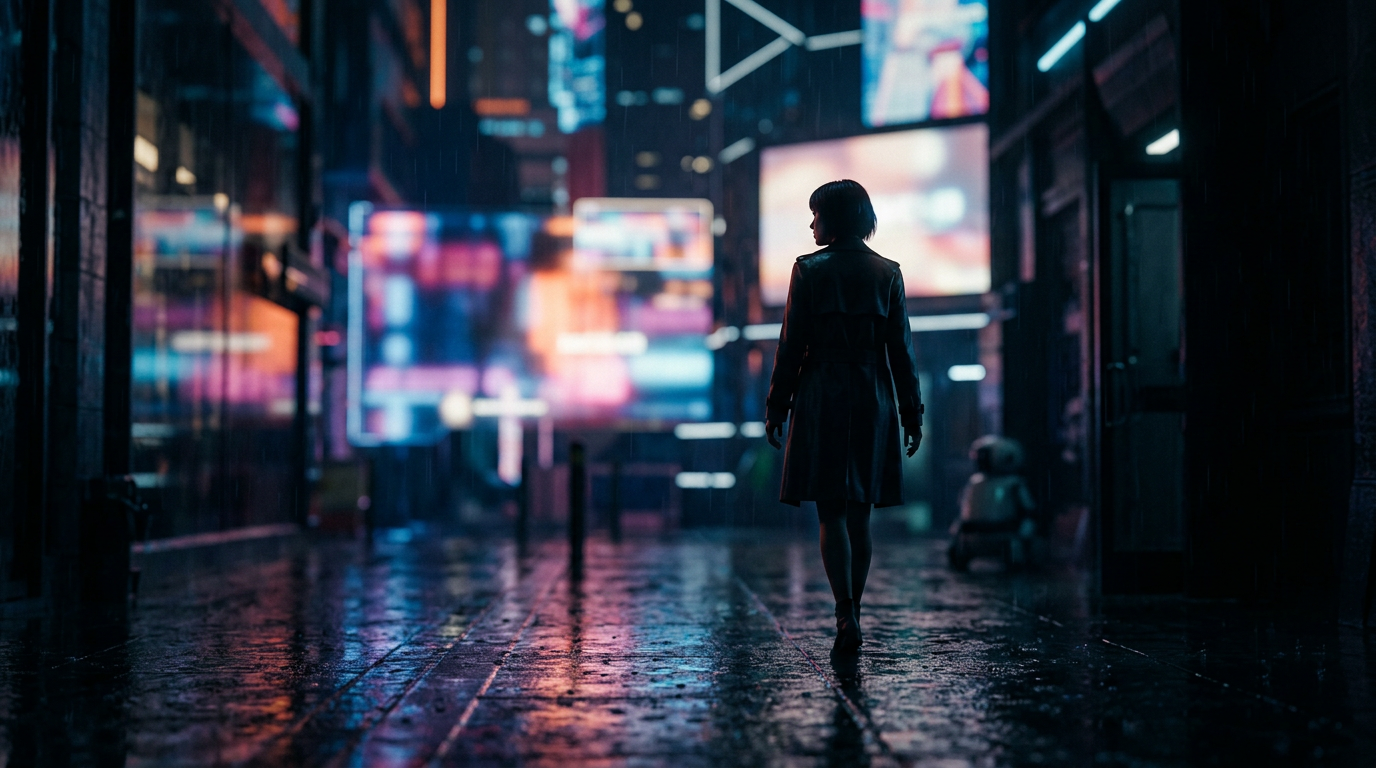
The A24 model begins with scale discipline. The films often isolate their premise inside a house, a van, a family apartment, a prison-like spaceship, a suburban body, a tax office, a memory archive. That is not merely budget management. It is dramatic architecture.
In Ex Machina, the location is a billionaire’s compound, but Garland shoots it like a lab rat’s dream of modernism. The glass, stone, and surveillance interfaces make the house a panopticon with better furniture. Oscar Isaac’s Nathan does not need a world-conquering army of androids; he needs key cards, liquor, and plausible deniability. The future arrives as workplace abuse with better lighting.
In Jonathan Glazer’s Under the Skin, Scarlett Johansson drives through Glasgow in a van, and alien visitation becomes urban drift. The film’s black void sequences are terrifying partly because they are so spare: bodies suspended in non-space, desire rendered as industrial process. Mica Levi’s score does not accompany the image so much as contaminate it. The alien is not explained. The alien is staged.
Kogonada’s After Yang goes softer but cuts just as deep. Its near-future world is built from quiet surfaces: tea rituals, family rooms, memory fragments, the gentle presence of a techno-sapien who has become emotionally indispensable. The film turns the Ship of Theseus problem into domestic ache. If a being is assembled from purchased parts, programmed gestures, and accumulated memory, when does the family stop treating him as a device and start grieving him as a person?
Then there is Everything Everywhere All at Once, the A24 sci-fi title that blew the doors off the model. The Daniels’ film is maximalist where others are austere, but its economics are still indie: the multiverse staged through performance, editing, costume, martial-arts choreography, and aggressively inventive props rather than blockbuster gigantism. Michelle Yeoh, Ke Huy Quan, Stephanie Hsu, and Jamie Lee Curtis sell cosmic scale by playing emotional specificity. The bagel gag works because the family pain is real. The hot-dog fingers work because the longing is real. Absurdity becomes a delivery system for melodrama.
That is the blueprint: concept first, but character as the voltage.
What it gets right
A24’s sci-fi understands that production design is argument. Not decoration. Argument.
The mise-en-scène in these films tells you what kind of future you are trapped in before anyone starts delivering exposition. Ex Machina makes AI capitalism feel sterile, private, and erotically coercive. High Life, Claire Denis’ abrasive prison-ship nightmare with Robert Pattinson and Juliette Binoche, treats outer space not as awe but as institutional abandonment. Its corridors and fluids and rituals push sci-fi toward biopunk disgust. After Yang imagines technology as tasteful, humane, and still quietly devastating. The Lobster, Yorgos Lanthimos’ deadpan dystopia, barely looks futuristic at all, which is exactly the joke: social engineering does not need lasers when etiquette and fear will do.
The acting style matters too. A24 sci-fi tends to resist the heroic posture. Its characters are not chosen ones; they are workers, spouses, daughters, prisoners, immigrants, creeps, caretakers, and lonely people trying not to become obsolete. The blocking often keeps them hemmed in: framed by doorways, screens, reflective surfaces, institutional geometry. Even when the premise is cosmic, the body remains trapped.
Sound is another advantage. A24’s best genre films use sound design and score as diegetic infection. Levi’s strings in Under the Skin scrape against the human nervous system. Ben Salisbury and Geoff Barrow’s music for Ex Machina hums with corporate dread. Son Lux’s score for Everything Everywhere All at Once understands that maximalism needs rhythm, not just clutter.
Most importantly, these films trust negative space. The audience is asked to infer. That was once ordinary in adult cinema; franchise storytelling trained many viewers to expect lore delivery as customer service. A24’s sci-fi helped make withholding fashionable again.
What it gets wrong and where it stumbles
!A rain-slick street reflected in a dark van window at dusk
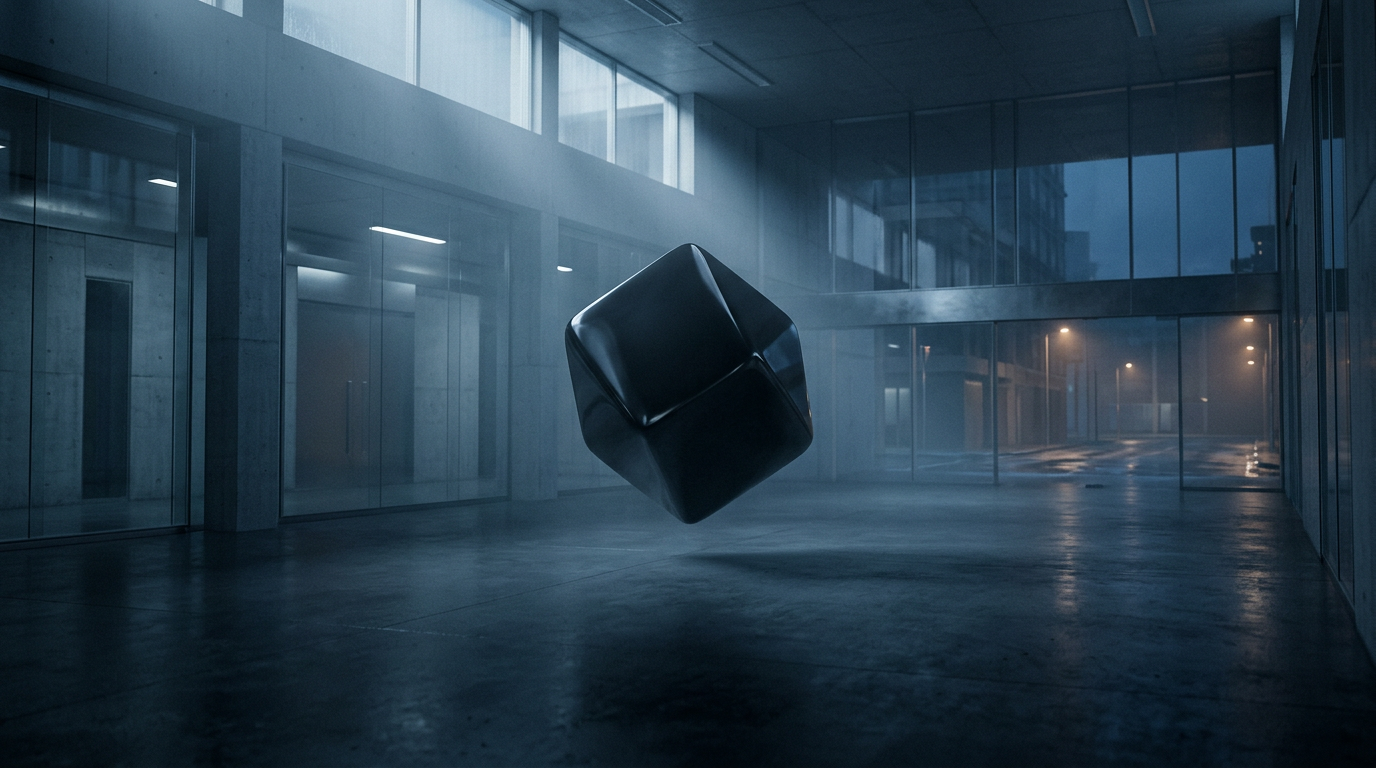
The house style has its own trap: austerity can become a luxury finish on thin thinking.
Not every ambiguous image is profound. Not every slow pan is a moral position. The A24 brand, at its laziest reception level, can encourage viewers and marketers to confuse mood with meaning. A film can be quiet because it is disciplined; it can also be quiet because it has not solved its own second act. Prestige sci-fi is especially vulnerable to this because big questions create an aura of importance even when the drama is undercooked.
There is also a class problem embedded in some of the imagery. A certain kind of indie future looks like it was designed by people who believe minimalism is inherently ethical: pale wood, soft light, tasteful clothes, silent devices, trauma processed through impeccable interiors. After Yang earns that restraint because its emotional architecture is precise. Lesser imitators can make the future look like a boutique hotel where grief has a subscription tier.
A24’s success has also created an odd brand overhang. The company’s logo can prime an audience to expect seriousness, strangeness, or spiritual injury before the film has done anything. That is useful marketing. It is also a cage. The healthiest version of A24 sci-fi is not “elevated genre,” a phrase that should be sealed in concrete. It is genre allowed to behave like cinema: tactile, contradictory, sometimes vulgar, sometimes opaque, sometimes funny on purpose.
The bigger idea
A24’s most durable contribution is not that it made sci-fi smaller. It made sci-fi legible to an industry obsessed with risk management.
For decades, studio science fiction tended to split into two lanes: expensive spectacle or niche brain-teaser. A24 blurred the border by making the niche feel culturally central. Its films arrived with festival credibility, sharp posters, careful trailers, and a brand identity that told younger audiences, “This will not insult you.” That promise became a market position.
There is a whiff of capitalist realism in the whole arrangement, of course. Even anti-franchise cinema becomes a brand; even strangeness gets packaged; even ambiguity can be optimized. A24’s genius has been understanding that the contemporary audience does not only buy stories. It buys taste, alignment, conversational currency. Watching Under the Skin or After Yang is not the same social act as watching Dune: Part Two in IMAX, though both can be serious sci-fi. One is a monument. The other is a disturbance.
The best outcome is not a world where every studio makes faux-A24 science fiction, all murmurs and concrete floors. The best outcome is a broader permission structure. Denis Villeneuve can pursue monumental, architectural grandeur in Dune and Blade Runner 2049. Christopher Nolan can keep treating time as both subject and weapon. Apple TV+ can finance glossy long-form puzzles. Neon and Mubi can keep feeding the international art-house circuit. And A24 can keep proving that a movie about a grieving family, a malfunctioning companion, a hostile body, or a tax audit in the multiverse can compete in the same cultural conversation as the giant machines.
What to watch next if you liked this
Start with the core A24 sci-fi and speculative run, but pair it deliberately. The double bills reveal the blueprint better than any brand montage.
- Ex Machina with Blade Runner 2049: two visions of artificial personhood, one chamber-sized and predatory, the other operatic and melancholy.
- Under the Skin with Annihilation: alien encounter as bodily and ecological destabilization, with soundtracks that feel like invasive species.
- After Yang with A.I. Artificial Intelligence: synthetic life seen through family longing, one restrained and tea-warm, the other fairy-tale cruel.
- High Life with Solaris: outer space as psychological punishment rather than adventure.
- Everything Everywhere All at Once with The Matrix: reality as a system you can fight, bend, misunderstand, and emotionally misuse.
- The Lobster with Severance: social control through absurd bureaucracy, deadpan performance, and institutional design.
- I Saw the TV Glow with Donnie Darko: adolescent unreality, media hauntology, and the terror of realizing your life may have been miscast.
For TV, follow the A24-adjacent appetite rather than the logo. Try Sunny on Apple TV+ for robot grief and corporate unease; Severance for workplace sci-fi with a surgical production design; Silo for buried-world mystery; Devs for deterministic tech dread; and Tales from the Loop if you want slow cinema smuggled into episodic science fiction.
For reading, go to Ted Chiang’s Exhalation for humane speculative precision, Kazuo Ishiguro’s Klara and the Sun for artificial consciousness as emotional labor, and Stanisław Lem’s Solaris for the great humbling lesson of contact: the universe is not obligated to become understandable just because humans arrived with questions.
The verdict
A24 changed studio expectations by proving that science fiction does not need to shout to look profitable, prestigious, or alive. It can whisper. It can stare. It can make a hallway feel like a spaceship and a family argument feel like a multiverse collapse.
The danger is imitation without rigor: empty ambiguity, designer melancholy, the future as tasteful wallpaper. But the achievement remains. A24 helped restore a valuable idea to American screen culture: sci-fi is not a budget category. It is a way of thinking under pressure.
That should matter to anyone deciding what to watch next, and to every studio still pretending audiences only want bigger explosions with cleaner brand management. Sometimes the new world begins in a room, with a locked door, a humming light, and someone asking whether the machine is alive — or whether we are just easier to fool.
Discussion (0)
Loading comments…