Mr. Robot knew the password was always us
Elliot Alderson does not hack like a movie genius. He squints, waits, guesses badly, tries again, and lets other people expose themselves.
That is the first reason Mr. Robot still plays like a rebuke to nearly every keyboard thriller before and after it. Sam Esmail’s USA Network series, which ran from 2015 to 2019, did not become the most accurate hacker show ever made because it knew where to place a terminal window. It became that because it understood that hacking is not primarily about neon code cascading across a monitor. It is about behavior. Access. Boredom. Compromise. The weak hinge in the door. The intern who clicks. The executive who reuses a password because rich people are also lazy.
A 2026 rewatch is stranger than the first run. The show once seemed ripped from a post-Occupy, pre-Trump fever chart: student debt, corporate impunity, anonymous online collectives, crypto-anarchist fantasy, social media dread, loneliness with a fiber connection. Now it feels less like a period piece than an autopsy report we refused to read. We live with breach fatigue, platform decay, AI-generated phishing, data broker omnipresence, and a surveillance economy so normalized that the panopticon no longer needs a tower. We carry it voluntarily.
Why it matters now
Mr. Robot arrived on basic cable when prestige TV was still pretending that anti-heroes mostly wore tailored suits, sold meth, or brooded in police departments. Elliot, played by Rami Malek with a face like an unplugged device, was something else: a cybersecurity worker whose power came from attention, not swagger. He was not cool in the usual cyberpunk sense. He was brittle. Sleep-deprived. Morally vain. Correct often enough to be dangerous.
That distinction matters more in 2026 because most screen technology still looks ridiculous. Film and TV remain addicted to fake interfaces: transparent screens, rotating skull graphics, instant decryption, the magical progress bar. Even smart shows often use computers as narrative vending machines. Need a secret? Type faster.
Mr. Robot treated technology as mise-en-scène, not decoration. The machines were ordinary. The danger came from systems: banks, conglomerates, authentication protocols, therapy records, phone metadata, employee badges, HVAC access, supply chains, the legal architecture around all of it. The series had technical guidance from people who knew the field, including writer-producer Kor Adana, and it shows. Commands matter. So do posture, timing, jargon, and the irritating pauses where nothing happens because real intrusion is often waiting for a system, a person, or a mistake.
But accuracy is not the whole achievement. Plenty of shows can hire consultants. Few build an entire dramatic language around the idea that modern life is already compromised. Esmail’s frames push characters to the edges, leaving dead space above them like corporate architecture has swallowed the human subject. The blocking is often anti-comfort: faces cornered, rooms too wide, silence too loud. It is paranoia rendered as composition.
The accuracy is in the process, not the props
!A lone figure sits before glowing monitors in a dark apartment
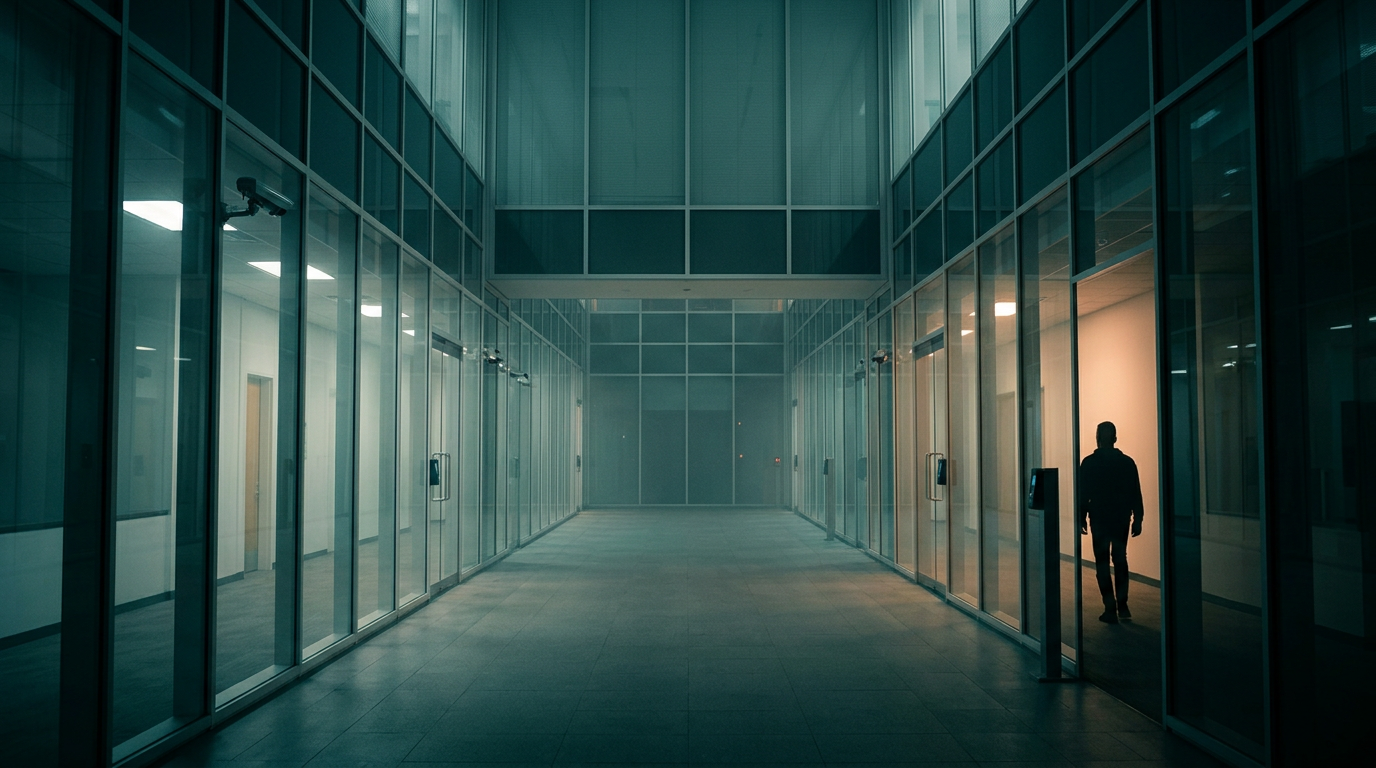
The best thing Mr. Robot does for hacker fiction is kill the myth of the lone wizard without discarding the seduction of skill. Elliot is gifted, yes, but the show keeps returning to the unglamorous mechanics of intrusion: reconnaissance, social engineering, phishing, credential harvesting, physical access, privilege escalation, operational security, and cleanup.
The series knows that a coffee shop can be an attack surface. So can a receptionist desk. So can grief. It understands that the most powerful exploit in the room is usually trust.
That is why the hacking scenes still have tension even when viewers do not understand every tool on screen. The suspense is legible because the objective is legible: get in, stay hidden, move laterally, do not panic. When a character needs someone’s phone, the show does not cut to digital sorcery. It watches a person manipulate another person. The keyboard is only part of the performance.
This is where Mr. Robot separates itself from Blackhat, Michael Mann’s gorgeous but uneven 2015 cyber-thriller, and from the more operatic techno-fables of The Matrix. Mann caught the sensuality of infrastructure: cables, shipping ports, global flows. The Wachowskis made code theological. Esmail splits the difference. His world is practical enough to pass a cybersecurity sniff test and stylized enough to feel like a nervous breakdown with root access.
The show also avoids the common sin of making expertise look frictionless. Elliot makes assumptions. Fsociety argues. Plans buckle. People are sloppy because people are people. Even the most competent characters, including Darlene, played with live-wire intelligence by Carly Chaikin, survive by improvising inside systems they cannot fully control.
What it gets right
First, the show understands cybersecurity as labor. Elliot is not a superhero; he is a worker in a managed security firm, performing defensive tasks for institutions he distrusts. That contradiction gives the series its ethical charge. He is both immune response and infection.
Second, Mr. Robot grasps that privacy is emotional before it is legal. Elliot hacks people because he wants certainty. He wants the hidden file that will explain why someone hurt him, why someone lied, why the world feels rigged. The act is invasive, but the desire is painfully recognizable. Most hacker stories ask whether information wants to be free. Mr. Robot asks whether people can survive being known.
Third, the series makes corporate evil boring in exactly the right way. E Corp, nicknamed Evil Corp through Elliot’s perception, is not a lair filled with cackling villains. It is branding, legal insulation, philanthropy, crisis management, debt instruments, sterile offices, executive self-pity. The monster wears a quarter-zip.
Fourth, the sound design deserves more credit than it gets. Mac Quayle’s score does not merely pulse; it corrodes. It turns server rooms, subway platforms, and apartments into zones of low-grade threat. The music is electronic without becoming wallpaper, anxious without begging for attention.
Finally, Malek’s performance is better on rewatch because its limitations become the point. Elliot’s monotone and fixed gaze can look mannered in isolated clips. In context, they are a survival strategy. He is narrating himself into coherence, and the camera becomes his accomplice.
[SPOILERS AHEAD]
What it gets wrong, and where it stumbles
!Hands hover near a laptop and everyday objects on a tense worktable
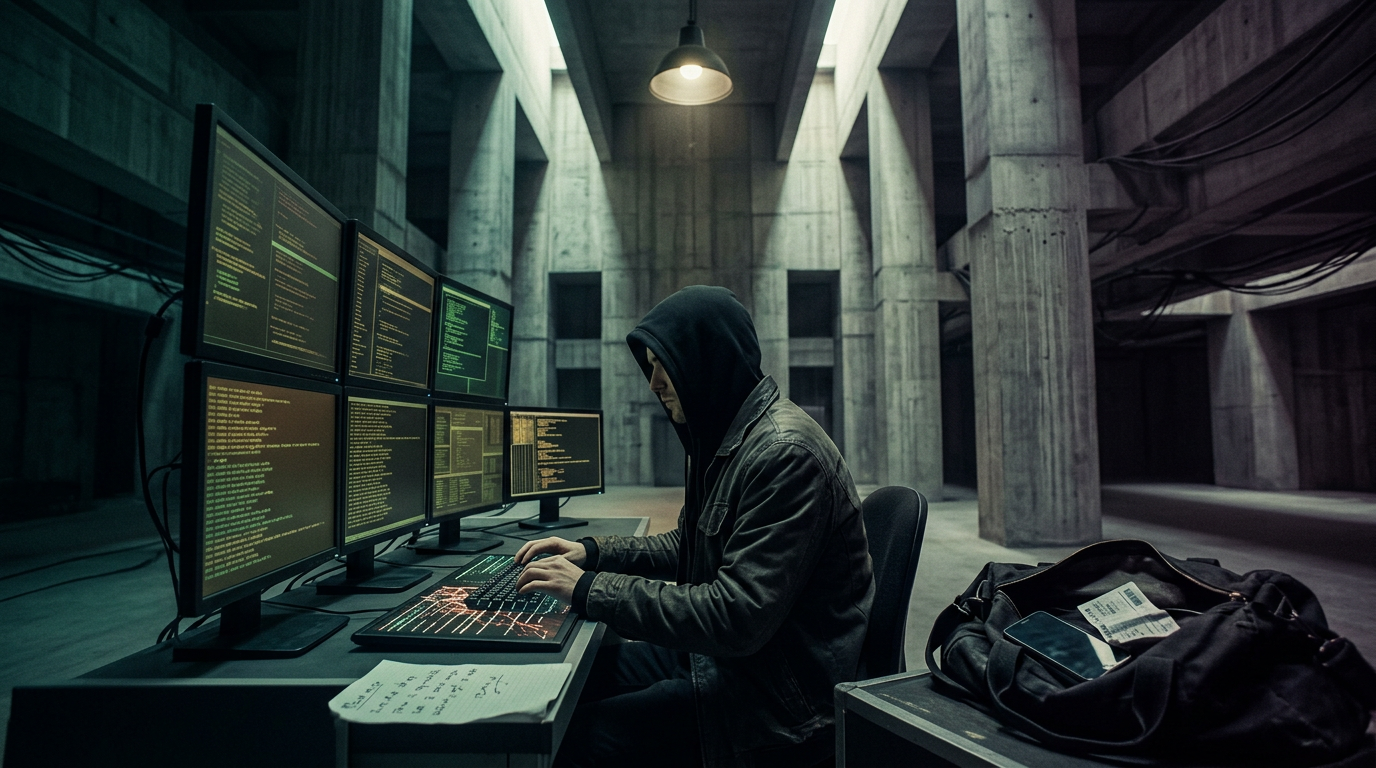
The most honest criticism of Mr. Robot is that it sometimes mistakes withholding for depth. Season two remains the fault line. Its slow cinema instincts are admirable: long pauses, disorientation, narrative drift, an almost hostile refusal to satisfy the plot appetite season one created. Much of it improves on rewatch, especially once you know what the show is concealing. Still, there are stretches where the series luxuriates in opacity because it can.
That is not the same as being profound.
The show also has an occasional problem with orbit. Angela, played by Portia Doubleday, begins as one of the series’ most compelling figures: ambitious, wounded, compromised by class aspiration and corporate trauma. Her arc is bold, but the writing sometimes bends her too forcefully around Elliot’s mythology and Whiterose’s grand design. Tyrell Wellick, played by Martin Wallström, is another fascinating figure who periodically becomes more symbol than person: capitalist masculinity in an expensive suit, all hunger and no center.
Then there is the finale’s big psychological architecture. The reveal that the Elliot we have followed is one constructed identity within a larger fractured self is emotionally powerful and formally elegant. It also risks making the series feel tidier than its own politics. Trauma becomes the master key. That key opens many doors, but not every door. The world of Mr. Robot is damaged by abuse, yes, but also by debt, surveillance, profit, and institutional design. The show knows this. The final stretch occasionally narrows its aperture anyway.
Still, the ending works because Esmail treats the twist less as a puzzle solution than a handoff. The question is not who is the real Elliot in a cheap gotcha sense. The question is whether a person built out of defenses can choose surrender without vanishing.
The bigger idea
The series’ central intellectual move is simple and devastating: hacking is a metaphor, but the metaphor is not fake.
Mr. Robot uses the language of intrusion to describe mental illness, capitalism, family systems, and political revolt. That could have become glib. Instead, the show keeps the metaphor material. Passwords exist. Rootkits exist. Backdoors exist. So do dissociation, coercion, class resentment, and the need to be loved by someone who has seen your worst file.
The show is often described as paranoid, but its worldview is closer to Mark Fisher’s idea of capitalist realism: the sense that the current system is not good, not just, not even stable, but still somehow impossible to exit. Fsociety’s great fantasy is deletion. Wipe the debt. Break the ledgers. Reset the board. It is a beautiful fantasy because it is childish and correct at the same time. The numbers are imaginary. The consequences are not.
That tension is why Mr. Robot has aged better than many prestige series from its decade. It does not simply say corporations are bad or technology is scary. It asks why systems survive exposure. Why knowing the truth rarely frees anyone. Why a breach can topple a company’s reputation for a week and still leave the underlying arrangement intact.
By the time BD Wong’s Whiterose pushes the story toward grander science-fictional obsession, the show has earned the expansion. The machine, whatever one believes about its literal promise, functions as the ultimate tech-utopian fantasy: somewhere, through sufficient engineering, pain can be routed around. The series is wise enough to distrust that dream.
A rewatch changes the shape of the show
The first time through, Mr. Robot is a conspiracy thriller with an unreliable narrator. The second time, it is a study of performance. Watch who is acting for whom. Elliot performs control for the viewer. Mr. Robot, Christian Slater’s swaggering phantom of rebellion and damage, performs certainty for Elliot. Whiterose performs inevitability. E Corp performs benevolence. The whole society is theater with compliance paperwork.
Esmail’s direction becomes more impressive when you stop chasing answers. The famous long-take episode in season three is not just a stunt; it turns corporate crisis into a spatial problem. Movement replaces exposition. Doors, elevators, cubicles, stairwells, and security checkpoints become the grammar of power. Later, the nearly dialogue-free episode proves the show’s confidence in pure visual storytelling. Not silence as gimmick. Silence as pressure.
This is also a better Darlene show on rewatch. Chaikin gives the series its messy human voltage. Darlene is abrasive, funny, reckless, loyal, and much smarter than people assume. She is the character who most clearly understands that revolution is not an aesthetic. It is logistics, risk, guilt, and cleanup.
What to watch next if you liked this
Do not chase mere hacker content. Chase the mix: systems, paranoia, identity, and craft.
- Devs on Hulu: Alex Garland’s chilly limited series trades cybersecurity for determinism, quantum computing, and Silicon Valley mysticism. Pair it with Mr. Robot season four for two shows about tech men trying to turn metaphysics into product strategy.
- Severance on Apple TV+: the cleanest modern companion piece. It shares Mr. Robot’s obsession with partitioned selves, corporate architecture, and the horror of workplace language.
- Andor on Disney+: not cyberpunk, but spiritually adjacent. It understands rebellion as labor, networks, sacrifice, and bureaucracy. A strong double-bill with Mr. Robot season three.
- Black Mirror, especially its sharper early episodes: uneven by design, but useful as contrast. Mr. Robot is less anthology warning label, more sustained psychological infrastructure.
- Michael Clayton: Tony Gilroy’s corporate thriller has no hacking fixation, but it sees institutions with similar moral clarity. The villainy is in memos, settlements, and polished rooms.
- The Conversation: Francis Ford Coppola’s surveillance classic remains essential. Watch it before revisiting Elliot’s loneliest episodes.
- Sneakers: lighter, warmer, and older, but still one of the great screen treatments of access, trust, and systems.
For reading, start with Kevin Mitnick’s The Art of Deception for social engineering, Joseph Menn’s Cult of the Dead Cow for hacker culture and politics, and Shoshana Zuboff’s The Age of Surveillance Capitalism if you want the larger economic machinery behind the dread.
The verdict
Calling Mr. Robot the most accurate hacker show ever made is true, but it undersells the achievement. Accuracy is the floor. The show’s real brilliance is that it makes technical realism serve character, politics, and form.
It knew that the scariest breaches are not always the ones that steal files. Some steal agency. Some steal memory. Some steal the belief that another arrangement is possible.
In 2026, that makes Mr. Robot less a nostalgia rewatch than a diagnostic tool. The terminals still look right. The commands still sound right. The real chill is that the world around them caught up without needing much of a rewrite.
Discussion (0)
Loading comments…