Your newsletter needs a revenue stack, not a paywall
A creator with 18,000 subscribers can still make less than a creator with 4,000. That sounds unfair until you look past the list size and into the revenue mix.
The smaller list may have sharper positioning, cleaner sponsor inventory, affiliate offers that match buying intent, and a paid tier for the readers who want more access. The bigger list may have a soft open rate, no segmentation, and one lonely sponsor slot sold whenever the creator remembers to pitch.
That gap matters more in 2026 because newsletter monetization is no longer just a Substack button and a prayer. Open rates are noisier because Apple Mail Privacy Protection still inflates some opens. Gmail and Yahoo sender requirements made authentication table stakes. AI summaries and crowded inboxes make casual clicks harder to win. Brands are also asking better questions: Who reads this? What do they buy? Can you prove the ad worked?
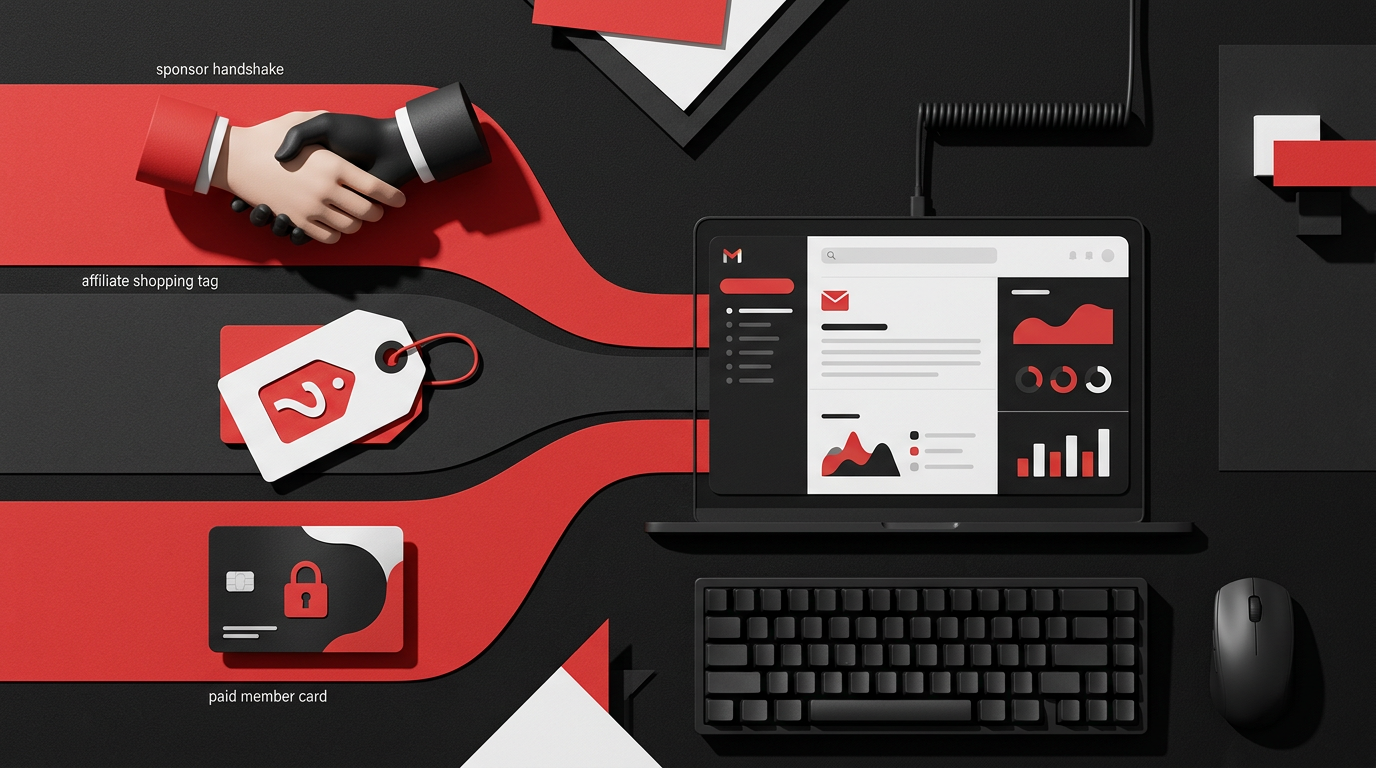
The answer is not to slap a paywall on everything. Most creators need a revenue stack: sponsors for reach, affiliates for buyer intent, and paid tiers for the most committed readers.
Pick the right money model for the reader you actually have
Newsletter revenue works when the monetization method matches the reader’s reason for subscribing.
A B2B operator newsletter can sell high-CPM sponsorships because a single qualified lead may be worth thousands of dollars to a software company. A deal-finding shopping newsletter may do better with affiliate commissions because readers are already clicking with purchase intent. A niche analyst, educator, or community builder may earn more from paid tiers because the value is depth, access, or saved time.
Use this decision framework before you sell anything:
- Sponsors fit when you have a clear audience category, consistent publishing, and brands that want attention from that category.
- Affiliates fit when readers ask for recommendations, comparisons, tools, templates, products, or discounts.
- Paid tiers fit when a small part of the list would pay for analysis, resources, community, workshops, private feeds, or direct access.
- A mixed model fits most mature newsletters because each revenue stream behaves differently.
Do not choose based on what another creator posts on X. Choose based on behavior you can observe: replies, clicks, saves, purchases, paid questions, survey answers, and repeat engagement.
Seth Godin’s Permission Marketing still applies here. A newsletter is valuable because readers invited you into the inbox. Every monetization choice either respects that permission or spends it down.
Sponsorships are not just ad slots
Most creators underprice sponsorships because they sell space instead of outcomes. A sponsor does not care that you have a newsletter. They care whether you reach a specific buyer at the right moment with enough credibility to change behavior.
Start with three sponsorship products:
- Primary placement near the top of the newsletter with 75 to 125 words, one link, and a clear call to action.
- Native recommendation written in your voice, labeled clearly as sponsored, best for tools or products you can honestly contextualize.
- Dedicated send reserved for rare partners with strong audience fit, priced much higher because it uses more trust.
Avoid selling five random tiny placements. Barry Schwartz’s Paradox of Choice is useful here: too many options slow decisions. A sponsor menu with three clean packages will close faster than a messy PDF with 12 ad units.
What to put in a sponsor package
Your media kit should be short. No founder manifesto. Include:
- Subscriber count and growth trend
- Average unique opens, with a note that opens are directional
- Average clicks per issue and click-through rate
- Audience role, industry, location, and company size if relevant
- Example sponsors or comparable audience fit
- Available placements and pricing
- Make-good policy for delivery problems
- FTC-compliant disclosure language
In 2026, sponsors are more skeptical of open rate screenshots. Give them click data, audience survey results, and example reader replies. If you can show a sponsor that 42% of your readers manage paid media budgets, that is more useful than bragging about a 50% open rate that may be padded by privacy features.
Price with CPM as a starting point, not a religion. Newsletter CPMs vary widely by niche, trust, and buying power. A small cybersecurity newsletter can command more than a large general productivity list. If you are new, price a test package, document results, and raise rates when sponsors renew without drama.
Affiliates work when trust and timing line up
Affiliate revenue is not passive. It is earned by matching a reader’s active problem with a product you can defend.
The cleanest affiliate categories for newsletters are:
- Software tools you already use
- Courses, books, templates, and research products
- Ecommerce products with strong category fit
- Events and paid communities
- Financial or business products, with extra care around compliance
The key metric is not commission rate. It is EPC, or earnings per click. A 50% commission on a weak product can lose to a 10% commission on something readers actually buy.
Use affiliate links in three places:
- Evergreen resource pages linked from your welcome sequence
- Contextual mentions inside issues where the product solves the topic at hand
- Comparison content for readers near a buying decision
Do not hide the relationship. The FTC expects clear affiliate disclosures when you may earn money from a recommendation. Put the disclosure near the link or before the section. Plain English works: This section contains affiliate links, which means we may earn a commission if you buy through them.
Cialdini’s principle of social proof explains why affiliate recommendations can outperform display ads. Readers do not just see a product. They see that a trusted creator has used it, compared it, or watched peers get results from it. That trust is the asset. Treat it like inventory you cannot replace quickly.
Paid tiers need a reason beyond support me
A paid tier is not charity. Some readers will pay because they like you, but that usually fades. The durable reason is a clear promise: pay and get something useful enough to justify the recurring charge.
Paid newsletters tend to work when they offer one or more of these:
- Faster access to analysis or opportunities
- Deeper tutorials, teardown posts, or templates
- Private community or office hours
- Curated data, job leads, deal flow, or market research
- Access to the creator for feedback or questions
B.J. Fogg’s behavior model says behavior happens when motivation, ability, and prompt meet. Paid conversion works the same way. The reader must want the paid value, the signup must be easy, and the prompt must arrive when the free content has created enough confidence.
That means your paid pitch should not live only on a pricing page. Put it after your strongest free issues, in the welcome sequence, and after content that naturally raises the need for deeper help.
A simple paid tier structure is usually best:
- Free: regular newsletter, public archive, occasional sponsor messages
- Paid: premium issues, templates, private Q&A, or community access
- Annual: same benefits with a discount and one or two bonuses
Be careful with member-only community promises. Communities are expensive to moderate and easy to neglect. A quiet community makes the paid tier feel dead even when the newsletter itself is valuable.
The 5-step monetization playbook
Use this sequence if your newsletter has at least a few hundred engaged subscribers. If the list is smaller, you can still run the same process, but your first goal is proof, not maximum revenue.
1. Segment by intent, not vanity demographics
Ask three questions in your welcome email or a quarterly survey:
- What are you trying to get better at this quarter?
- What tools or products are you considering?
- Would you pay for deeper help, templates, or access?
Tag readers based on answers. A creator writing about Shopify growth might segment by founders, marketers, agencies, and service providers. That makes sponsor targeting cleaner, affiliate content sharper, and paid tier positioning less vague.
2. Build one sponsor offer before pitching
Create a one-page sponsor sheet with audience, placement, price, dates, and reporting. Then pitch brands already spending to reach your audience.
Good sponsor prospects include:
- Tools mentioned by readers
- Companies advertising in similar newsletters or podcasts
- Affiliate partners that already convert
- Brands sponsoring creators in your niche
Send short pitches. Name the audience, explain the fit, propose one test, and include available dates. Busy marketers do not need your life story.
3. Add affiliate links where the buying moment exists
Do not scatter affiliate links across every issue. Build around intent.
For example, if you write for ecommerce owners, a newsletter on reducing chargebacks can include a short tool recommendation and an affiliate disclosure. A random link to a landing page builder in that same issue will feel like clutter.
Track affiliate links with UTMs where allowed. Use separate links for welcome sequence, resource page, and editorial mentions so you know where the money comes from.
4. Test paid value with a small paid product
Before launching a recurring paid tier, sell a small paid asset:
- $29 template pack
- $49 teardown
- $99 workshop
- $199 cohort session
This tells you whether readers will pull out a card for the problem you solve. If nobody buys a low-priced product after months of free value, a paid tier may not fix the issue. The offer may be wrong, the audience may lack budget, or your free content may not create enough trust yet.
5. Create a monthly revenue review
Once a month, review revenue by stream:
- Sponsor booked revenue
- Sponsor renewal rate
- Affiliate clicks, conversion rate, and EPC
- Paid subscriber conversion rate
- Paid churn
- Revenue per subscriber
Keep the review boring. Boring is good. The goal is to spot which stream deserves more attention, not to rebuild the business every Friday.
Mistakes to avoid
The fastest way to damage a newsletter is to monetize faster than the audience can understand.
Avoid these traps:
- Selling sponsors with weak fit because the invoice looks nice. Readers remember bad ads.
- Treating open rate as truth when privacy features and bots can distort it.
- Adding a paywall too early and starving the free list that feeds growth.
- Promoting affiliates you have not vetted just because the commission is high.
- Running too many calls to action in one issue. Sponsors, affiliates, paid upgrades, surveys, and social follows cannot all be the main event.
- Ignoring deliverability. SPF, DKIM, DMARC, list hygiene, and complaint rates affect whether monetization emails reach the inbox.
- Forgetting disclosure for sponsored and affiliate content. Trust and compliance should not be treated as optional.
Kahneman’s loss aversion is useful when thinking about paid tiers. Readers feel the pain of losing free access more strongly than the pleasure of a new benefit. If you move popular free content behind a paywall without warning or added value, expect anger. Better to add premium depth than to remove the thing that built the audience.
Metrics that matter
Measure the newsletter like a small media business, not a popularity contest.
Track these weekly or monthly:
- Subscriber growth rate: net new subscribers after unsubscribes.
- Engaged subscribers: readers who opened or clicked recently, depending on your email platform.
- Click-through rate: more reliable than opens for monetization decisions.
- Revenue per subscriber: total monthly newsletter revenue divided by active subscribers.
- Sponsor sell-through rate: sold sponsor slots divided by available slots.
- Sponsor renewal rate: a strong signal of real value.
- Affiliate EPC: total affiliate earnings divided by affiliate clicks.
- Paid conversion rate: paid subscribers divided by free subscribers.
- Paid churn: cancellations divided by paid subscribers.
- Complaint and unsubscribe rate: early warnings that monetization is getting too loud.
Use GA4 or your newsletter platform analytics for landing page behavior, but do not pretend attribution is perfect. Privacy controls, email clients, coupon sharing, and cross-device behavior all muddy the data. Directional truth is enough if you keep your tracking consistent.
A sane revenue mix for most creators
If you are starting from zero monetization, do not launch everything at once.
Month one: clean your list, fix deliverability basics, survey readers, and create a sponsor sheet.
Month two: sell one sponsor test and add one or two high-fit affiliate recommendations in evergreen content.
Month three: test a paid workshop, template, or premium issue before committing to a full paid tier.
After that, decide based on proof. If sponsors renew, build a calendar. If affiliate EPC grows, create more buyer-intent content. If paid buyers ask for more, turn the paid product into a recurring offer.
The best newsletter businesses rarely depend on one button. Sponsors can slow during budget freezes. Affiliate programs can change terms. Paid subscribers churn when their needs shift. A revenue stack gives you room to adjust without panicking.
The real job is not monetizing a list. It is matching trust to the right offer at the right moment, then measuring honestly enough to keep the trust intact.
Discussion (0)
Loading comments…