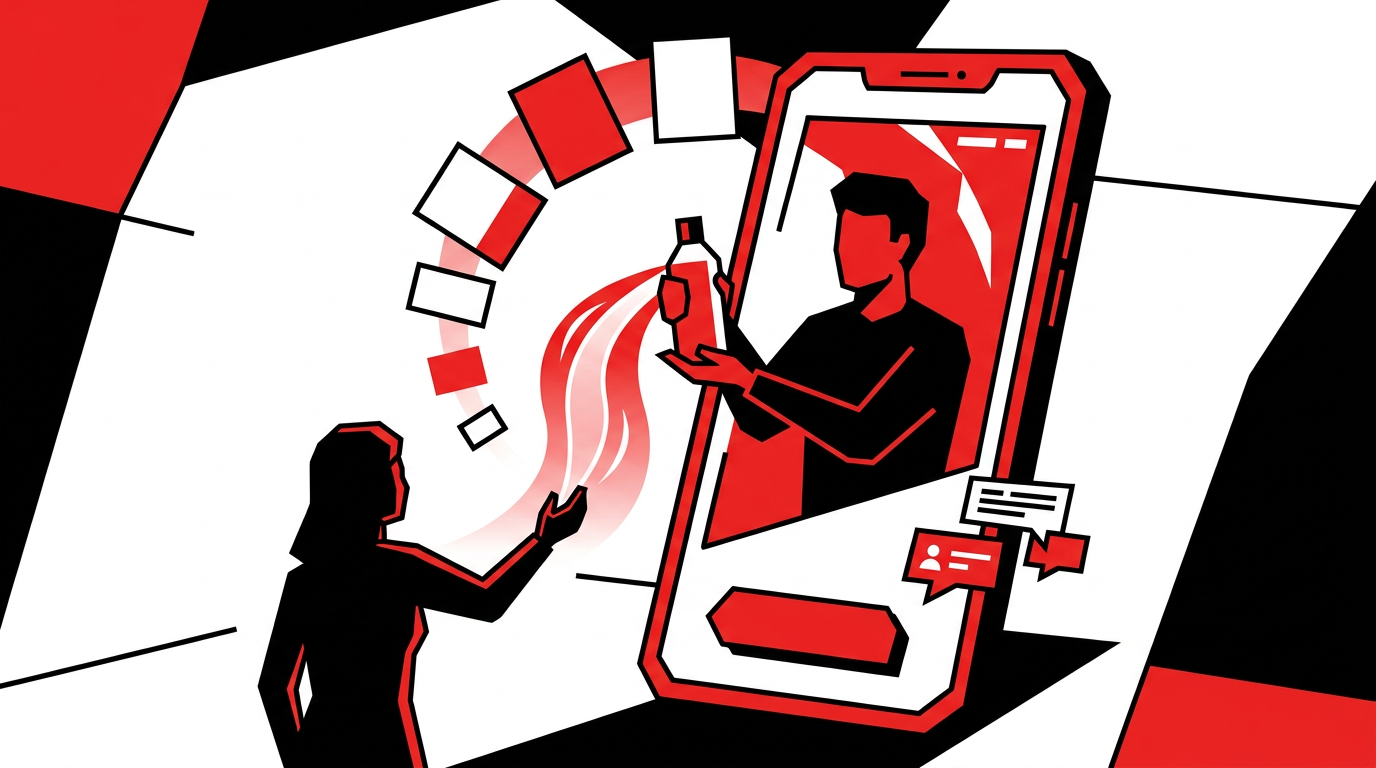
TikTok Shop sells borrowed trust, not products
A shopper sees a $24 serum while half-watching a creator wash her face under bad bathroom lighting. No studio set. No brand founder speech. The product card is right there, the comments are arguing about shipping time, and the creator says, “I bought this again because the first bottle ran out.” That is the sale.
TikTok Shop conversion does not behave like a normal ecommerce funnel. The buyer often did not search for the product, compare ten tabs, or land on a polished Shopify PDP. The desire is created, validated, and acted on inside the same feed session.
That is powerful. It is also easy to abuse.
For 2026 operators, the important shift is not “short video sells.” Everyone knows that. The shift is that TikTok Shop has trained buyers to expect proof before polish, creator context before brand claims, and in-app checkout before patience. If your offer cannot survive comments, stitching, duets, affiliate review, and refund scrutiny, the feed will expose it fast.
The psychology under the buy button
TikTok Shop compresses three moments that used to happen separately:
- Discovery
- Trust formation
- Purchase intent
That compression changes the psychology of conversion.
On a traditional ecommerce site, the product page has to do a lot of work. It explains benefits, shows reviews, handles objections, and asks for the order. On TikTok Shop, much of that labor moves to the creator, the comment section, the demonstration, and the rhythm of the feed.
Cialdini's principle of social proof is the obvious one here, but it matters in a specific way. A five-star review on a website says, “Other people approved this.” A TikTok creator using the product in motion says, “Someone like me is risking their reputation on this.” That feels different to the buyer.
Kahneman's loss aversion also shows up. A limited coupon, a live shopping deal, or a creator saying “this bundle ends tonight” can work because people hate losing a good deal more than they enjoy finding a new product. The danger is overusing fake urgency. TikTok shoppers are not stupid. If every video says the sale ends tonight for six straight weeks, the brand looks desperate.
B.J. Fogg's behavior model is the cleanest lens for operators: behavior happens when motivation, ability, and prompt meet at the same time. TikTok Shop often supplies motivation through entertainment, ability through in-app checkout, and the prompt through the product card. Your job is to remove whatever breaks that moment.
What changed for TikTok Shop sellers in 2026
TikTok Shop is no longer just a channel for impulse gadgets and beauty products. It is a marketplace with its own buying habits, creator economy, fulfillment expectations, ad products, affiliate mechanics, and policy risk.
American sellers now have to think about several practical realities:
- The TikTok Shop affiliate layer is a sales force. Creators can move product before your brand has broad search demand.
- Shop Ads are closer to commerce ads than awareness ads. Video Shopping Ads, Product Shopping Ads, and live shopping placements need product-level economics, not vague engagement goals.
- Comments are part of the conversion path. Questions about sizing, ingredients, shipping, returns, dupes, and authenticity can make or kill the sale.
- Regulatory and platform uncertainty is a real planning issue. US operators should avoid building a business that depends on one feed, one app, or one attribution model.
- Creative fatigue hits faster than on search. A video that prints money for a week may go cold without warning.
The main mistake is treating TikTok Shop like Shopify with vertical video taped to the front. It is not. Shopify is usually intent capture. TikTok Shop is intent creation with a checkout attached.
That means your product has to be demonstrable, your claim has to be believable, and your offer has to be simple enough to understand before the viewer scrolls.
The conversion stack that actually matters
TikTok Shop conversion has four layers. Most brands obsess over only one.
Product-market-feed fit
Some products are naturally easier to sell in the feed. They have a visible before-and-after, a satisfying demo, a relatable pain point, or a strong reaction.
Good TikTok Shop products often have at least one of these traits:
- The benefit can be shown in under 20 seconds
- The problem is already familiar to the viewer
- The price feels low enough for impulse purchase
- The product creates a comment-worthy reaction
- The creator can tell a personal story without sounding scripted
A boring product can still sell, but it needs a sharper angle. A water bottle is not interesting. “The bottle that stopped me from buying three iced coffees a day” is closer.
Creator credibility
The creator is not just media inventory. The creator is the trust bridge.
A polished creator with no real connection to the product may drive views and weak sales. A smaller creator with a painfully specific audience can convert better because the recommendation feels earned. That is especially true for beauty, wellness, parenting, home organization, pet products, food, and hobby categories.
Look for creators who already talk about the problem your product solves. Do not chase follower count first. Chase believable context.
Offer clarity
A confused viewer scrolls. TikTok does not give you the benefit of a long consideration window.
Your offer should answer these quickly:
- What is it?
- Who is it for?
- What changes after I buy it?
- Why should I buy it from this listing now?
- What happens if I do not like it?
Bundles, coupons, creator-exclusive discounts, free shipping thresholds, and samples can work. Just keep the math easy. If the viewer needs a spreadsheet, you lost.
Checkout confidence
The last mile matters. Product title, images, shipping promise, return policy, reviews, and seller rating all affect whether the impulse turns into an order.
This is where many sellers get lazy. They spend weeks recruiting creators, then send shoppers to a weak listing with thin photos, vague specs, and unanswered review complaints. That is like renting a billboard that points to a locked store.
A practical five-step TikTok Shop conversion playbook
Use this before spending serious money on Shop Ads or affiliate commissions.
1. Build the objection map
Before scripting videos, list the reasons someone would not buy.
For a supplement, objections might be safety, taste, routine fatigue, price, and trust. For apparel, it might be sizing, fit on different bodies, fabric feel, returns, and washing. For electronics, it might be durability, setup, warranty, and whether the product is a cheap copy.
Turn each objection into content. Not brand content. Human content.
Examples:
- “I tried the medium and large so you can see the fit difference.”
- “Here is what came in the box and what did not.”
- “This is what it looked like after two weeks of use.”
- “I paid for it first, then joined the affiliate program.”
The best TikTok Shop videos often feel like answers to comments that have not been posted yet.
2. Match creators to purchase anxiety
Do not assign creators only by category. Match them to the anxiety the buyer needs resolved.
If buyers worry about quality, use creators known for honest teardown or comparison content. If buyers worry about style, use creators with strong taste. If buyers worry about whether the product fits real life, use creators who show messy kitchens, kids, pets, budgets, or small apartments.
Brief creators with the outcome, not a stiff script. Give them:
- The product truth
- The target buyer
- The main objection
- The required disclosure language
- The offer details
- Claims they cannot make
Then let them speak like themselves. Over-controlled creator content usually smells like an ad in the first two seconds.
3. Design the first three seconds around recognition
TikTok Shop conversion often starts with recognition, not explanation.
Weak opening: “This product changed my routine.”
Better opening: “If your concealer creases by lunch, watch this side.”
Weak opening: “Parents need this organizer.”
Better opening: “This is where all the school papers were going to die.”
Recognition lowers cognitive load. The viewer thinks, “That is me,” before the brand asks for anything. This is where Donald Miller's StoryBrand idea helps: the customer is the main character. The product is the tool, not the hero.
4. Make the listing finish the creator's sentence
The TikTok Shop listing should match the promise in the video. If the creator says “wide-calf friendly,” the listing needs size details, photos, and reviews that support that claim. If the creator says “ships fast,” the listing needs the shipping expectation to be clear.
Audit the listing for:
- Product title with the real search terms buyers use
- Clear variant names
- Images that show scale, use, and texture
- Short bullets that answer objections
- Return and shipping clarity
- Review responses that sound human
- Compliance-safe claims
Do not bury key information in a graphic that only makes sense to your team. TikTok buyers are moving fast. Make the decision easy.
5. Scale by angle, not by one viral post
One viral TikTok can hide a weak system. A repeatable angle is better.
Group videos by angle:
- Problem-solution demo
- Honest review
- Comparison against a common alternative
- Day-in-the-life use
- Unboxing and first impression
- Comment reply
- Live shopping proof
Track which angle produces orders, not just views. Then recruit more creators who can express that angle in different voices. This protects you from creative fatigue and gives Shop Ads better raw material.
Mistakes to avoid
Paying only for reach. A creator with a huge audience but weak buyer trust can waste product and budget. Conversion needs credibility.
Writing scripts that sound like legal copy. Compliance matters, especially for health, beauty, finance-adjacent, and children’s products. But stiff wording kills believability. Give creators boundaries and let them talk normally.
Ignoring comments. Comment sections are live objection research. If ten people ask about sizing and nobody answers, you are watching revenue leak.
Using fake scarcity. Repeated false urgency teaches buyers to wait. Use real coupons, real bundles, and honest deadlines.
Sending all traffic to TikTok Shop only. TikTok Shop may be the sale point, but you still need owned email, SMS where compliant, Shopify customer data, GA4, and post-purchase flows. Platform dependence is not a growth strategy.
Metrics that matter
Views are useful for diagnosing reach. They are not the scorecard.
Track these weekly:
- Product card click-through rate. Shows whether the content creates enough buying intent.
- Click-to-order conversion rate. Tells you whether the listing and offer are doing their job.
- Gross merchandise value by creator. Useful, but pair it with margin and refund data.
- Commission cost per order. Affiliate growth can get expensive if you ignore contribution margin.
- Refund and return rate. High sales with high returns usually means the content is overselling or the listing is unclear.
- Average order value. Bundles and thresholds should raise AOV without damaging conversion.
- Repeat purchase rate. Especially important for beauty, food, supplements, pet, and consumables.
- Comment sentiment. Track common objections, praise, complaints, and confusion.
- Creative fatigue curve. Watch when a video’s conversion rate decays, not just when views slow.
If you run paid TikTok Shop campaigns, separate creator organic performance from paid amplification. Blended numbers can make weak creative look stronger than it is.
The decision framework for founders
TikTok Shop is not right for every business. Use this quick filter before committing resources.
Say yes when:
- The product benefit is visible or easily dramatized
- The price supports impulse or low-friction buying
- Creators can use the product naturally
- Margins can handle commission, samples, discounts, and returns
- Your team can respond to comments and listing issues quickly
- You have a plan to capture customers beyond the first sale
Be cautious when:
- The product needs heavy consultation
- Claims are tightly regulated
- Fulfillment is slow or inconsistent
- Margins are thin before paid media
- Your brand cannot tolerate public criticism
- The product requires too much explanation for the feed
This is not about being trendy. It is about channel fit. TikTok Shop rewards products that can earn trust in public and close the gap between interest and purchase.
The boring backend wins more than people think
The visible part of TikTok Shop is creator content. The boring part is operations: inventory, shipping, customer service, affiliate management, listing hygiene, compliance, and margin discipline.
That boring part decides whether social commerce becomes a profit channel or a noisy distraction.
A strong operator loop looks like this:
- Mine comments for objections
- Turn objections into creator briefs
- Update listings based on buyer confusion
- Test offers without wrecking margin
- Promote winning videos with Shop Ads
- Move buyers into owned retention channels where permitted
- Review refunds and complaints before scaling spend
Seth Godin's Permission Marketing still applies, even inside a fast feed. The first TikTok sale is borrowed attention. The second sale usually requires permission, trust, and a reason to hear from you again.
That means your post-purchase experience matters. Send clear order updates. Ask for reviews at the right time. Offer replenishment reminders for consumables. Give customers a reason to join your email list that is better than “get updates.”
TikTok Shop can create demand quickly, but it will not fix a weak product, sloppy fulfillment, or a brand that treats creators like rented microphones. The feed is too public for that now.
The sellers who win are not always the loudest. They are the ones who understand what the buyer needs to feel before tapping buy: recognition, proof, safety, and a small push at the right moment.
Discussion (0)
Loading comments…