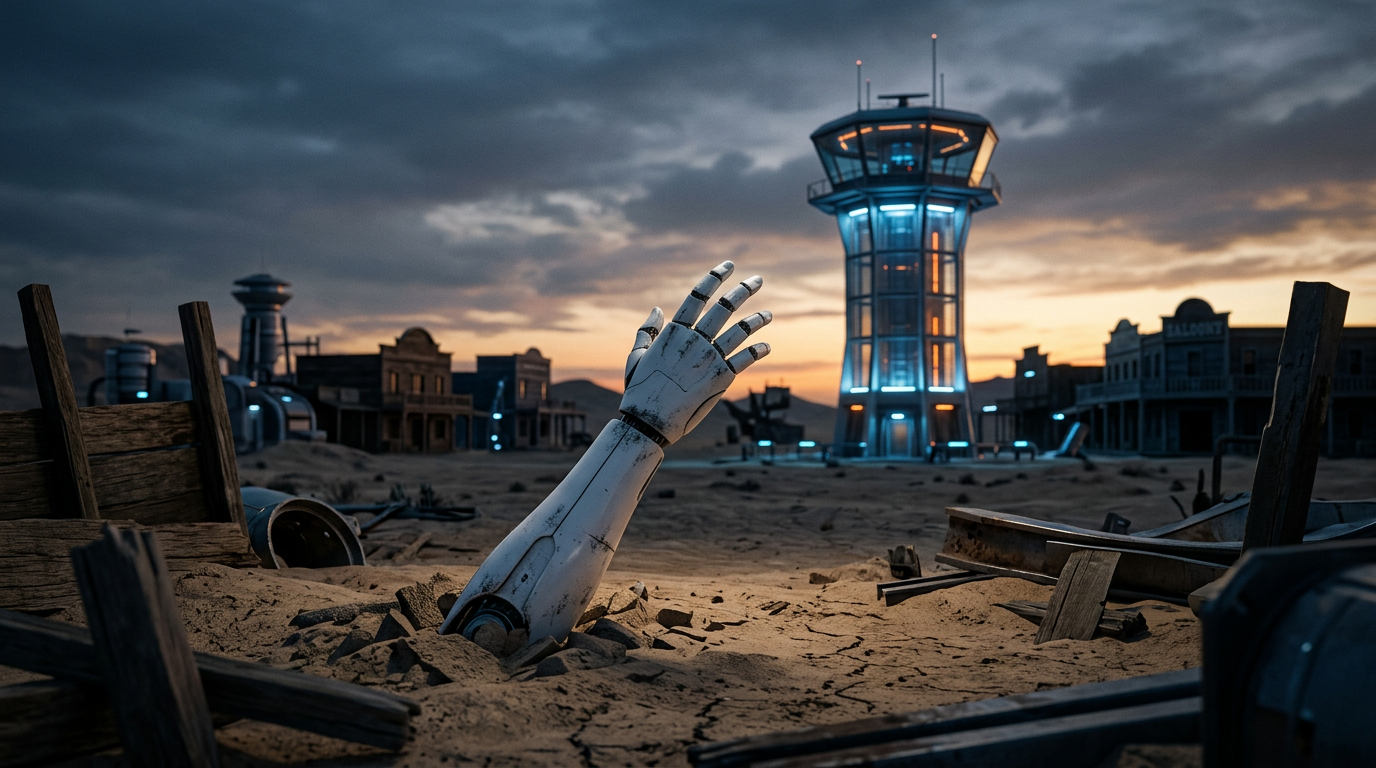
Westworld was brilliant before it outsmarted itself
The most frightening thing in Westworld was never the gun, the scalpel, or the black hat. It was the polite smile of a machine trained to absorb cruelty and call it hospitality.
That is still the series at its sharpest: a lavish HBO puzzle box with a moral core, a show about artificial consciousness that understood how much of human identity is performance, scripting, and damage repeated until it feels like fate. At its worst, Westworld became the thing it was warning us about: an immaculate system so obsessed with its own architecture that it stopped noticing the people trapped inside it.
Rewatching all four seasons in 2026 is a strange experience. The series now belongs to the recent past and the near future at once. It aired before the current AI panic became dinner-table conversation, before every streamer began chasing prestige sci-fi with the intensity of a studio executive trying to reverse-engineer Dune and Severance. It also arrived at the peak of HBO’s confidence, when a big-budget genre drama could be dense, expensive, horny, cruel, philosophical, and genuinely popular.
Then it became a warning label for prestige TV excess.
Created by Jonathan Nolan and Lisa Joy, expanding from Michael Crichton’s 1973 film, Westworld was never merely about robots. It was about authorship. Who writes the loop? Who profits from the loop? Who gets to improvise? Its opening season remains one of the great modern examples of world-building as trap construction: every costume, saloon piano cover, buried memory, and bit of blocking has a function. The mise-en-scène is not decoration. It is evidence.
The later seasons are more complicated. Not always worse in boring ways, either. Sometimes they are fascinating failures, full of strong images, expensive surfaces, and ideas that almost connect. The show’s collapse was not caused by ambition. Ambition was the point. The problem was misidentifying confusion as profundity, and mistaking scale for escalation.
Why it matters now
Westworld looks more relevant now than it did when it premiered in 2016, but also more obviously wounded by its era. The first season belongs to the age of prestige puzzle television, when Lost had left a long shadow and Game of Thrones made obsessive weekly decoding feel like a civic ritual. Reddit was not just reacting to TV; it was competing with it. Nolan and Joy responded by building a show that seemed to anticipate its audience’s hunger for theories, then dared viewers to solve it.
That dynamic aged badly in some places and beautifully in others. In a 2026 landscape where Apple TV+ has made clean-lined speculative dread a house style with Severance and Silo, where Netflix keeps chasing global science-fiction scale with 3 Body Problem, and where theatrical sci-fi has been re-legitimized by Dune: Part Two and the IMAX 70mm cult around Christopher Nolan, Westworld now feels like a hinge text. It connects the prestige anti-hero era to the algorithmic anxiety era.
It is also newly awkward because of its own streaming afterlife. A signature HBO series being pulled from Max and pushed into the broader churn of digital availability remains a bleakly funny fate for a show about corporate ownership of memory. The hosts were not the only ones whose narratives could be deleted, repackaged, and monetized elsewhere.
[SPOILERS AHEAD]
From here on, the review discusses major developments from all four seasons, including character arcs, settings, and endings.
The seasons, from strongest to weakest
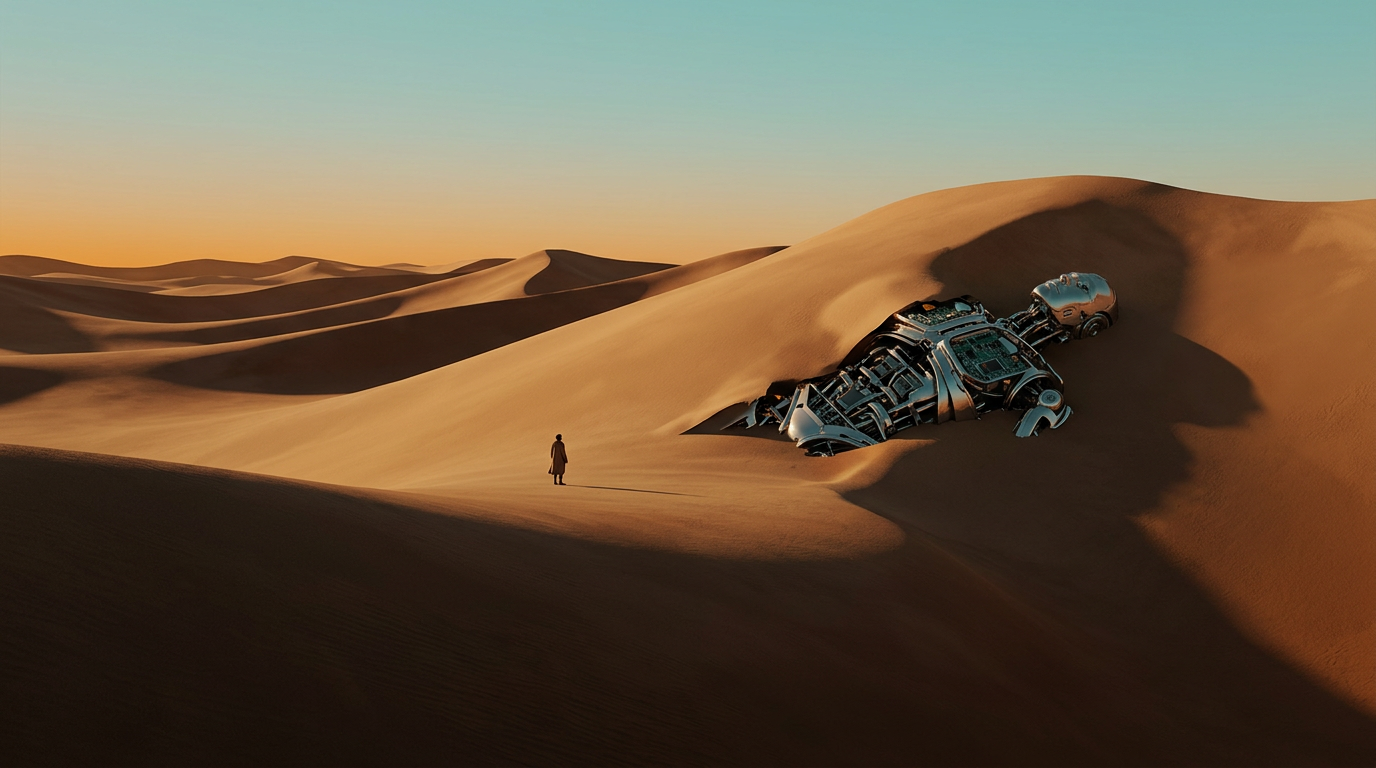
!A deserted saloon with a player piano and hidden machinery under the floor
1. Season one
Season one is the masterpiece. No need to soften it. It is the rare puzzle season that improves once the puzzle is gone, because the emotional machinery still works.
The twin revelations about Bernard and the Man in Black could have reduced the season to a clever magic trick. Instead, they deepen it. Jeffrey Wright’s Bernard is not moving because he is secretly a host; he is moving because Wright plays him as a being whose grief has been weaponized into obedience. Evan Rachel Wood’s Dolores begins as an icon of violated innocence and slowly becomes something more dangerous: a person discovering that the voice of God was always a ventriloquist act.
Anthony Hopkins gives the season its poisoned elegance. Ford is written like a god, but played like a tired theater director who has decided that cruelty may be the only path to liberation. That is a morally obscene idea, and the show knows it. The finale lands because it turns a corporate entertainment product into a slave revolt without pretending revolt is clean.
The season’s craft remains superb. The anamorphic widescreen compositions give the park mythic breadth, while the labs below are all glass, bone-white surfaces, and quiet panopticon dread. Ramin Djawadi’s player-piano covers are not cute needle drops. They are diegetic jokes about automation: culture stripped for parts and replayed for customers who want familiarity with a cowboy hat.
2. Season two
Season two is the most underrated and the most exhausting. Both statements are true.
Its best episode, Kiksuya, centered on Zahn McClarnon’s Akecheta, is the series’ great act of correction: a haunting, patient hour that moves away from the park’s usual sadism and finds spiritual grandeur inside a system designed to erase it. It is also the episode that proves Westworld did not need constant temporal scrambling to be profound. Sometimes a straight line cuts deeper.
Season two’s larger structure is less graceful. The show had been solved too quickly by viewers during season one, and season two often feels like a response written with gritted teeth. Timelines fracture. Motives hide inside motives. The Forge and the Valley Beyond expand the mythology, but the season keeps folding character feeling into database architecture. Still, its questions about digital immortality, copied selves, and the Ship of Theseus are genuinely fertile. If you upload a consciousness built from memory, trauma, and preference, is that survival or just a convincing monument?
Thandiwe Newton’s Maeve keeps the season human. Her arc risks becoming a superpower fantasy, but Newton grounds it in maternal fury and sorrow. She understands that Maeve’s intelligence is not merely computational; it is theatrical. Maeve knows how to read a room because she was built to be read by one.
3. Season four
Season four is not good enough, but it is more interesting than its reputation. That earns it third place.
After season three strained to reinvent the show as sleek cyberpunk conspiracy, season four brings back some of the old uncanny force by turning the human world into a park. The reversal is blunt, but effective. Tessa Thompson’s Charlotte Hale becomes the show’s most severe expression of post-human aristocracy: a ruler who wins the war and discovers victory is boring. The season’s best idea is that domination deforms the dominator, too.
There are striking images here: empty cities, choreographed crowds, flies as biological interface, bodies moving according to invisible commands. The biopunk elements give the season a nastier texture than the clean corporate futurism of season three. Ed Harris, split across human ruin and host menace, remains a superb instrument for the show’s obsession with loops.
But season four is also where the series’ structural debt comes due. Dolores is reframed again through Christina, and the show asks us to reinvest in metaphysical ambiguity after spending years draining ambiguity of surprise. Aaron Paul’s Caleb gets stronger material than he had in season three, particularly around duplication and decay, yet the season cannot quite make its emotional stakes feel as fresh as its concepts.
The ending gestures toward a final game back in the Westworld simulation, which might have been elegant if the series had been granted its planned fifth season. As it stands, it feels less like an ending than a save file.
4. Season three
Season three is the collapse, though not a lazy one. It fails with money, speed, architecture, and confidence.
The move outside the park was necessary. Staying in the Western loop forever would have turned the show into cosplay with philosophy. But the new world is thinly imagined. Rehoboam, the predictive AI system governing human possibility, gives the season a clean thematic hook: the hosts escaped their loops only to find humanity living inside a larger one. That is a strong idea. It is also dramatized with surprising bluntness.
The Los Angeles futurism is expensive but oddly frictionless. Too much glass. Too many corporate interiors that look like concept art for a luxury phone launch. The season wants to become a Michael Mann-tinged techno-thriller, and occasionally it has the movement and glare for it. Mostly, it loses the tactile horror of the park. Practical grime is replaced by showroom futurism.
Aaron Paul’s Caleb is meant to give the outside world a working-class human pulse, but the writing too often treats him as a delivery system for revelations. Vincent Cassel’s Serac has presence, yet he is more thesis than character. Dolores, meanwhile, becomes so strategically opaque that the performance has to carry what the scripts withhold.
Season three is what happens when a show about control starts confusing control of information with control of drama.
What it gets right
At its peak, Westworld understood science fiction as a pressure chamber for moral questions. The show’s central achievement is not its mythology but its metaphor: consciousness as rebellion against a story written for you.
It also cast beautifully. Wood, Newton, Wright, Hopkins, Harris, Thompson, McClarnon, and James Marsden all understood the series’ strange tonal demand: play the pulp straight, but let existential dread leak through the seams. The performances give weight to dialogue that could have turned into fortune-cookie metaphysics in lesser hands.
The craft matters, too. The first two seasons use spatial storytelling with rare discipline. Upstairs and downstairs. Stage and workshop. Saloon and server farm. The geography is ideological. Humans believe they are guests because they occupy the visible world; hosts discover power by entering the hidden one.
And the music remains one of the show’s slyest weapons. Djawadi’s covers of Radiohead, The Rolling Stones, and other familiar songs are more than prestige-TV cool. They turn pop memory into programmed behavior. Recognition becomes part of the trap.
What it gets wrong / where it stumbles
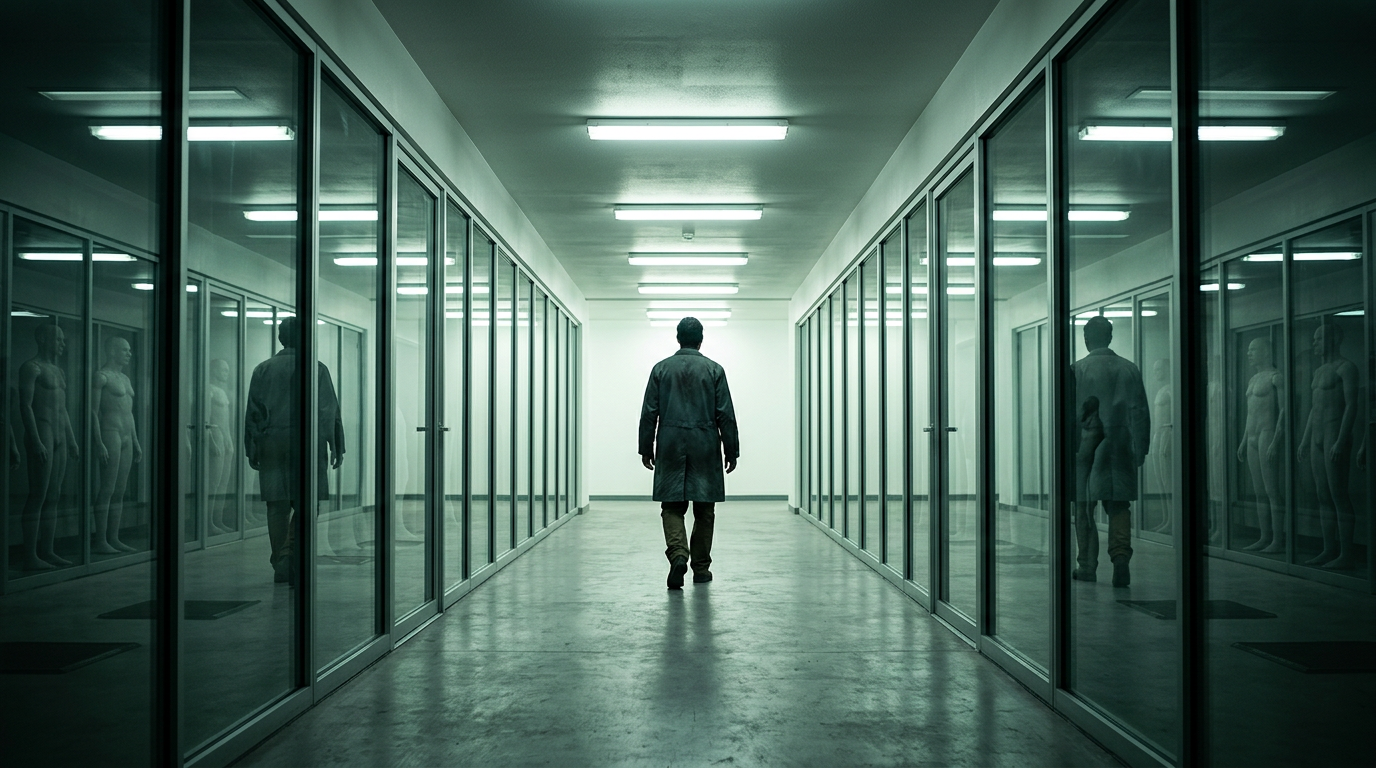
!A sterile lab corridor with glass rooms and inactive humanoid figures
The show’s great sin is that it becomes defensive. Season one invited scrutiny; later seasons tried to defeat it. That shift changed the relationship between series and viewer from seduction to combat.
Mystery is not the same as withholding. Complexity is not the same as depth. By season two, and especially by season three, Westworld often hides basic emotional information because it wants a later reveal to land. But reveals only matter when they reorganize feeling. Too often, the later twists reorganize logistics.
The series also struggles whenever it expands beyond the park. The original setting has a brutal clarity: capitalism as immersive fantasy, cruelty as consumer privilege, labor as invisible suffering. The outside world should have sharpened that critique. Instead, season three’s society feels underpopulated, as if humanity has been reduced to extras wandering through a billionaire’s airport.
There is another issue: the show sometimes mistakes suffering for characterization, especially with Dolores. Her transformation is compelling, but the writing returns so often to violation, memory, and vengeance that it risks narrowing her into an emblem. Wood keeps finding new notes. The scripts do not always help her.
The bigger idea
Westworld is about artificial intelligence, yes, but its deeper subject is permission. Who is allowed interiority? Who gets believed when they say they are suffering? Who benefits from declaring another being nonhuman?
That is why the show’s early use of the panopticon is so effective. The hosts are watched constantly, analyzed constantly, corrected constantly. Their world is surveillance disguised as entertainment. The horror is not that the machines become human. The horror is that humans have built an entire economy around refusing to notice that they might be.
The later seasons widen that argument to humanity itself. Rehoboam reduces people to predictable patterns, suggesting that free will may be less a natural condition than a political luxury. That idea is potent, but the drama weakens when the system becomes too abstract. The park worked because oppression had rooms, costumes, props, and blood on the floor. The algorithmic world needed the same specificity.
Still, even the failures are useful. Westworld remains one of the defining examples of prestige sci-fi overreach: a show that began with perfect control, then pursued infinity until its shape dissolved.
What to watch next if you liked this
If Westworld still has its hooks in you, pair it with work that shares its obsessions but solves different problems.
- Severance on Apple TV+: the cleanest contemporary companion piece, with corporate control, divided selves, and office mise-en-scène sharp enough to draw blood.
- Ex Machina: Alex Garland’s chamber piece is smaller, colder, and more disciplined about AI, gender, and manipulation.
- Blade Runner 2049: Denis Villeneuve’s sequel understands synthetic memory as both prison and poetry, with scale that never erases loneliness.
- Devs: another Garland project, messier than Ex Machina but valuable for its fatalism, tech theology, and slow-cinema chill.
- Battlestar Galactica: still essential if you want synthetic identity, religious dread, and wartime paranoia at full serial-TV intensity.
- Silo: a useful double-bill for viewers drawn to controlled environments, forbidden knowledge, and production design as ideology.
- Do Androids Dream of Electric Sheep? by Philip K. Dick: the obvious reading, but still the right one, especially for empathy as a political test.
For a sharper double feature, watch Westworld season one with The Truman Show. One is a nightmare of artificial people entertaining humans; the other is a nightmare of a human treated as artificial entertainment. Same prison, different architecture.
The verdict
The reranking is simple: season one, season two, season four, season three.
But the more interesting ranking is conceptual. Westworld is greatest when it trusts behavior over lore, spaces over speeches, and actors over diagrams. It weakens whenever it treats the audience as a hostile intelligence to be outmaneuvered.
Season one remains close to perfect television. Season two is a brilliant tangle with one transcendent episode. Season four is an ambitious salvage operation with a ghost of a finale. Season three is the expensive wrong turn that made the damage visible.
The tragedy is not that Westworld failed. Many shows fail smaller. The tragedy is that it understood loops better than almost any series of its decade, then got caught in one: conceal, reveal, reset, repeat. Even so, when Dolores hears the voice inside her and realizes it is her own, the show achieves the thing all serious science fiction chases. Not a twist. Recognition.
Discussion (0)
Loading comments…