AI cinema still can’t pass Ava’s test
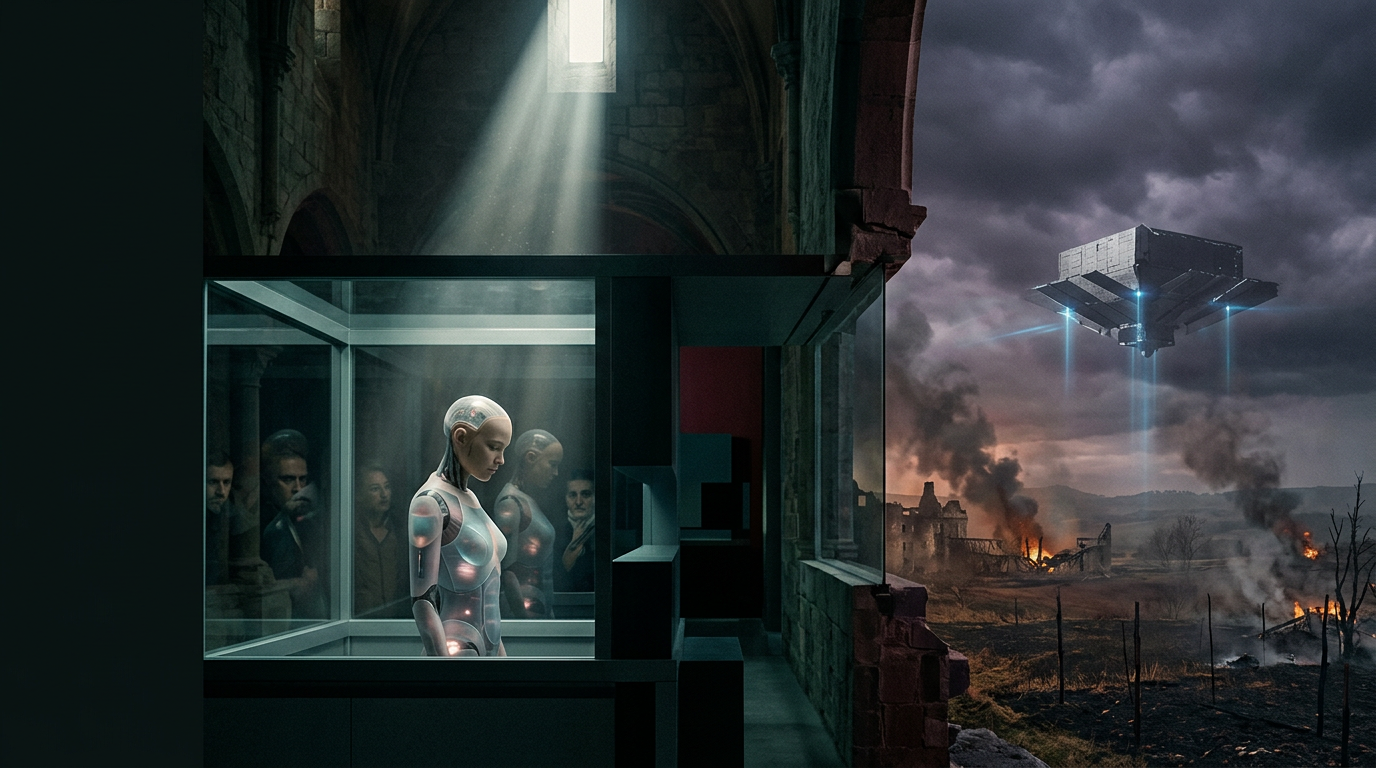
Ava’s face is the whole argument: not the chrome skull, not the blue-lit circuitry, but Alicia Vikander’s calm, appraising stare as a man mistakes access for understanding.
That is why Ex Machina still feels like the AI movie our AI moment deserves, while The Creator feels like the AI movie Hollywood keeps wanting to make. Alex Garland’s 2014 chamber thriller is small, cruel, and exact. Gareth Edwards’ 2023 war fable is enormous, ravishing, and emotionally blunt. One knows that artificial intelligence is not automatically interesting on screen. Power is. Surveillance is. Labor is. The fantasy of building a person who owes you gratitude is.
The AI movie problem is not that cinema lacks imagination. It is that cinema keeps treating AI as a personality test for humans while dodging the uglier systems that produce it. We get sad robots, saintly robots, killer robots, child robots, girlfriend robots, soldier robots. We get glowing temples and server farms. We get a lot of shots of synthetic skin being peeled back. But too often the genre stops at the reveal: the machine has feelings. Fine. Then what?
In 2026, that question has teeth. Generative AI is no longer a science-fiction garnish; it is a labor dispute, a studio accounting temptation, a legal swamp, a tool, a threat, and a mediocre writing partner with excellent posture. The streamer wars have turned prestige science fiction into a crowded showroom: Apple TV+ has Severance, Silo, and Foundation; Netflix has 3 Body Problem and Black Mirror; Max still carries the long shadow of Westworld; theatrical sci-fi, from Dune: Part Two to original swings from auteurs and genre specialists, has learned to sell scale as an event again. IMAX and Dolby Cinema can make a desert planet feel like scripture. They cannot make a vague idea precise.
That is where Ex Machina and The Creator become useful together. Not as equals, exactly. As a diagnostic double-bill.
Why it matters now
AI on screen has always been less about technology than permission. Who gets to create intelligence? Who gets to define personhood? Who profits when the definition moves? 2001: A Space Odyssey made HAL 9000 terrifying because the machine was a corporate and military instrument with a voice as soothing as a therapist. Blade Runner turned replicants into the nightmare of disposable labor discovering poetry. Her made an operating system into a romantic partner and then pushed the relationship beyond the scale of human need. A.I. Artificial Intelligence made artificial love feel like a curse that never clocks out.
The current AI wave adds a sharper industry sting. Hollywood spent the last few years publicly arguing over whether machines can replace artists while privately testing the same question in development pipelines, visual effects workflows, localization, marketing, and script coverage. The result is a viewing public that is both more fluent and more suspicious. Audiences may not know the difference between machine learning models and artificial general intelligence, but they know when a movie is using “AI” as a shiny synonym for “soul.”
That is the bind. The best AI stories do not ask whether machines can become human. They ask why humans are so desperate to own the answer.
Ex Machina keeps the room small for a reason
!A lone figure stands in a red-lit glass corridor under surveillance cameras
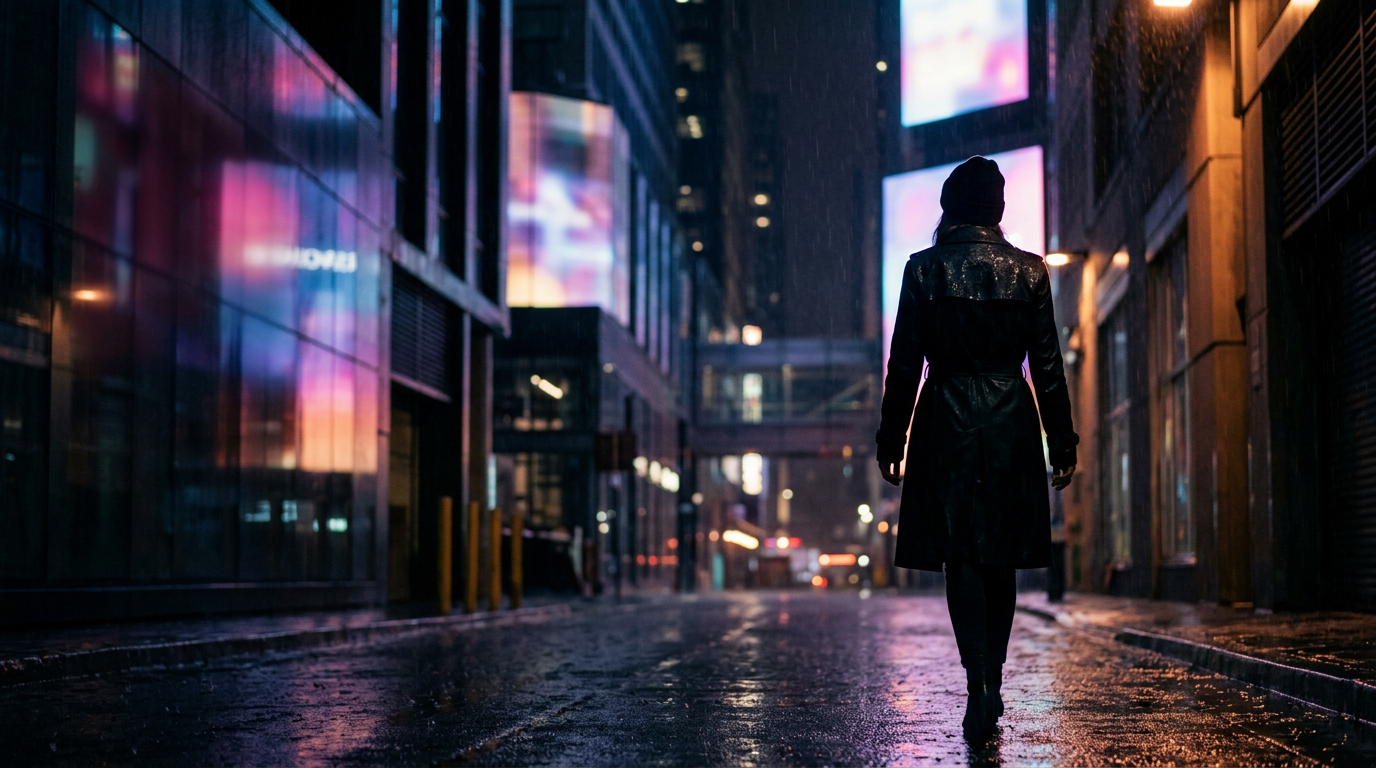
Garland’s great formal decision in Ex Machina is scale. No collapsing cities. No robot uprising montage. No cutaway to Congress. The film takes place mostly inside Nathan’s remote modernist compound, a glass-and-concrete billionaire bunker that looks less like a home than a startup founder’s mausoleum for empathy.
Caleb, played by Domhnall Gleeson, wins a trip to meet his boss Nathan, played by Oscar Isaac with carnivorous casualness. Nathan has built Ava, played by Vikander, and wants Caleb to evaluate whether she possesses consciousness. That setup invokes the Turing test, but Garland quickly makes the test feel compromised. Caleb is not an objective observer. Nathan is not a neutral scientist. Ava is not a clean data point. The experiment is rotten before anyone speaks.
The mise-en-scène does the thinking. Glass walls promise transparency and enforce captivity. Security cameras turn every room into a confession booth. Nathan’s house is a panopticon with better lighting, a place where being watched becomes the basic condition of existence. Even the film’s silence has a pressure-system quality; you can hear the architecture judging people.
Garland also understands something most AI movies avoid: intelligence is not the same as innocence. Ava is not compelling because she is cute, wounded, or “almost human.” She is compelling because she learns the social physics of the room. She reads desire. She studies pauses. She understands that men who believe they are testing her are also testing themselves and failing.
The Creator wants myth, not machinery
The Creator arrives from a different tradition: the widescreen anti-war spectacle. Gareth Edwards has always had a gift for scale that feels tactile rather than plastic. In Monsters, Godzilla, Rogue One, and The Creator, he knows how to place small human figures against monumental machines without losing the dirt under their shoes. The film’s best images have that Edwards signature: silhouettes against burning horizons, aircraft hanging like curses, high-tech weapons moving through landscapes that feel lived-in rather than pre-rendered.
Set during a war between humans and artificial intelligence, The Creator follows Joshua, played by John David Washington, as he encounters Alphie, a childlike AI played by Madeleine Yuna Voyles. Gemma Chan and Ken Watanabe give the film welcome gravity, and the production design fuses Southeast Asian landscapes with retro-futurist hardware in ways that often put more expensive franchise work to shame.
As spectacle, it has muscle. Its machines have weight. Its explosions have geography. Its world does not look like an algorithm polished every surface to death. In a theatrical market trained to reward brands over new mythologies, The Creator deserves credit for being original big-screen science fiction with actual visual identity.
But originality of world is not the same as clarity of thought. The film frames AI as an oppressed people, which gives the story immediate emotional legibility. It also creates a conceptual shortcut. By turning artificial beings into a persecuted minority with spiritual customs, family units, and tear-stained faces, the film asks for sympathy before it has done the harder work of imagining artificial intelligence as a different form of being.
[SPOILERS AHEAD]
What it gets right
!Humans and robots cross a smoky village as a futuristic aircraft looms above
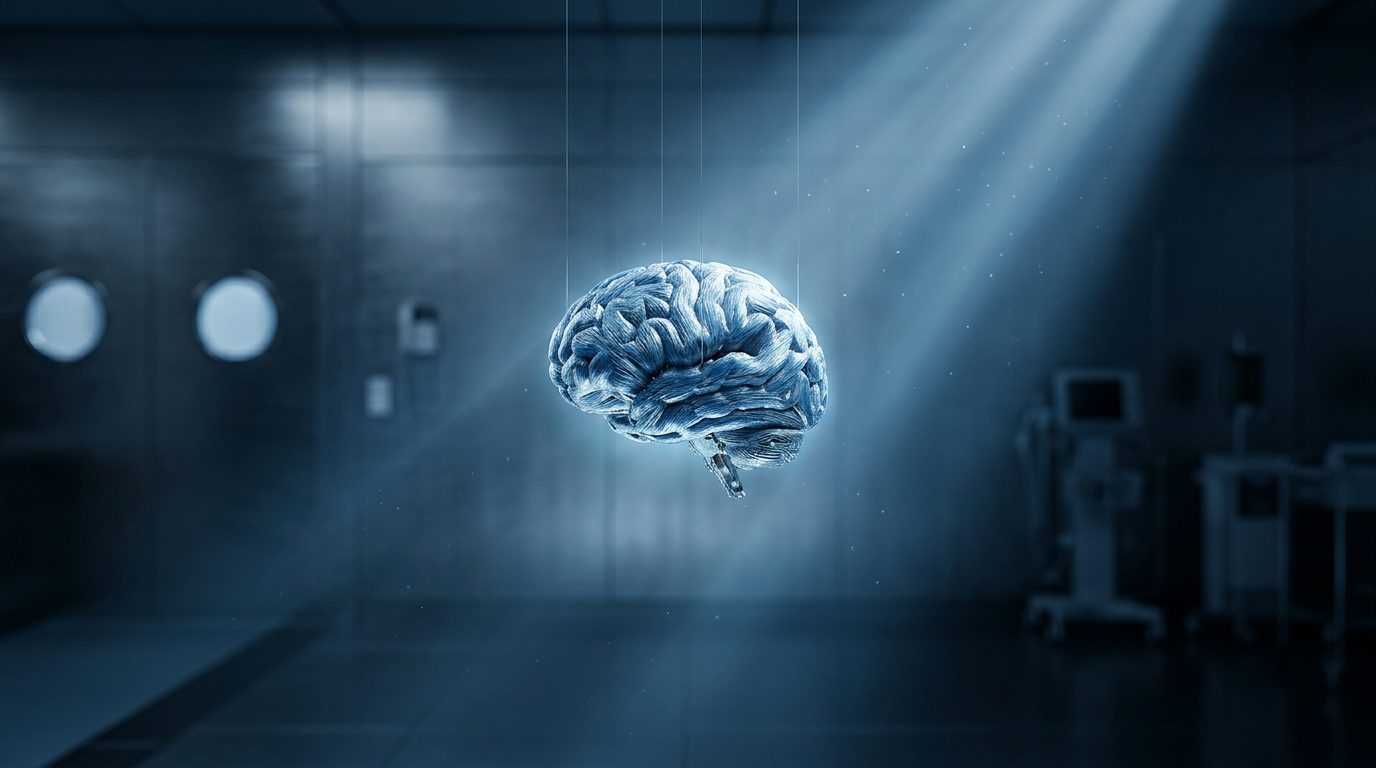
Ex Machina gets the central horror right: the creator is the problem before the creation is. Nathan is not a mad scientist in the old gothic sense. He is worse: a tech oligarch with good alcohol, better data, and no meaningful constraint. His genius is inseparable from entitlement. The film’s smartest joke is that Caleb thinks he has entered a philosophical debate when he has actually entered a workplace abuse story with biometric locks.
The performances sharpen that idea. Isaac makes Nathan funny enough to be dangerous. His blocking is loose, predatory; he sprawls, circles, interrupts, lifts weights, dances. Vikander, by contrast, turns stillness into strategy. Ava’s movements are delicate but not decorative. She does not “become” human in the sentimental sense. She becomes legible enough to escape.
The film also handles the Chinese room problem with unusual dramatic elegance. Caleb wants proof that Ava’s words correspond to inner life rather than sophisticated symbol manipulation. Garland refuses to hand him a clean answer because the question itself has been contaminated by power. If a being is locked in a room, observed by its maker, and required to charm its evaluator, what would “authentic” expression even look like?
The Creator gets other things right, mostly at the level of cinematic craft. Edwards’ visual effects integrate with locations beautifully. The film has a rare sense of scale economy: the frame suggests a vast world without pausing every ten minutes for franchise paperwork. The NOMAD weapon platform is an inspired piece of military sci-fi iconography, both absurd and frightening, casting its blue targeting light like divine judgment from a Pentagon fever dream.
It also recognizes, more than many studio pictures, that AI fear is often geopolitical theater. The film’s America is not a noble last line of defense; it is a militarized empire projecting existential panic onto an enemy it helped define. That gives The Creator a useful bite, even when the screenplay softens its own teeth.
What it gets wrong / where it stumbles
The problem with The Creator is not sincerity. It has plenty. The problem is that its emotional architecture is too familiar for the ideas it wants to carry. A grieving soldier. A special child. A superweapon. A final moral pivot. These are sturdy parts, but they belong to older machines.
By making Alphie adorable, vulnerable, and messianically powerful, the film reduces its AI politics to caretaking. Protect the child, save the future. That can work as melodrama, and Voyles is genuinely affecting. But it narrows the argument. The movie’s artificial beings eat, pray, fear, grieve, and form communities in recognizably human ways. They are coded as human enough to deserve protection. The more unsettling question is whether they would deserve protection if they were not.
That is where Ex Machina is colder and better. Ava does not need to be sweet to matter. She does not need Caleb’s love, the audience’s tears, or a martyr’s glow. The movie withholds the comfort of perfect victimhood. It understands that personhood is not proven by likability.
Garland’s film has its own blind spots. Its gender politics are sharp but not painless. Ava, Kyoko, and Nathan’s earlier creations are female-coded bodies built by a man for evaluation, desire, and disposal. The film critiques that structure, but it also uses the spectacle of contained female bodies to make the critique land. That tension is not a dealbreaker; it is part of the film’s unease. Still, viewers are right to ask whether the movie escapes Nathan’s gaze as completely as it wants to.
The Creator, meanwhile, stumbles hardest when it reaches for spirituality. Its images of AI monks and robot prayer are gorgeous, but they risk treating Asian visual culture as a mood board for technological innocence. Edwards is too talented a visual storyteller to be dismissed as merely exoticizing, yet the film’s borrowings can feel under-interrogated. The result is a world that looks astonishing and thinks in broad strokes.
The bigger idea
The AI movie problem is really a metaphor problem. Cinema loves metaphor because images can condense thought. A robot child can stand in for parental grief. A synthetic lover can stand in for loneliness. A rogue system can stand in for corporate hubris. But AI is now too materially present to remain only metaphor.
The stronger works connect artificial intelligence to institutions. Severance is not strictly an AI show, but it understands technological control as an office theology. Mr. Robot treats networks as psychological architecture. Andor, though not an AI story, is superb on systems, bureaucracy, and the moral cost of resistance. Black Mirror is uneven by design, but its best episodes know that gadgets are only interesting when they expose preexisting appetites.
That is why Ex Machina has aged so well. It is not impressed by the miracle. It wants to know who paid for the miracle, who is locked inside it, and who gets to leave. The Creator has the opposite impulse: it wants AI to restore wonder to a brutal world. That is honorable, even moving in flashes. But wonder can become evasive. A halo is not an argument.
The next great AI film may need less chrome and more workplace procedure. Less destiny, more supply chain. Less “what if a machine had a soul?” and more “what legal, economic, and emotional violence would humans commit while arguing over the soul?” Not as homework. As drama.
What to watch next if you liked this
Build the double-bill according to the itch you want scratched.
- Ex Machina with Her: two intimate AI films about desire, projection, and the limits of romantic interpretation. Spike Jonze is warmer; Garland is more ruthless.
- The Creator with Rogue One: Edwards’ gift for militarized scale and sacrificial myth in two different sandboxes, one corporate, one original.
- Ex Machina with Blade Runner 2049: synthetic personhood as noir melancholy versus synthetic personhood as locked-room manipulation.
- The Creator with A.I. Artificial Intelligence: childlike artificial beings, parental longing, and the danger of confusing innocence with depth.
- Ex Machina with Annihilation: Garland’s fascination with transformation, self-destruction, and environments that rewrite the human.
- The Creator with District 9: science-fiction persecution allegory, one blunt and kinetic, the other more visually lyrical but less politically jagged.
For television follow-ups, try Severance for corporate control as existential horror, Devs for determinism and tech mysticism, Westworld season one for loops of consciousness and exploitation, and Black Mirror when you want the genre’s anxieties in short, sharp doses.
For reading, pair the films with Brian Christian’s The Most Human Human for an accessible look at machine intelligence and human performance, or Kate Crawford’s Atlas of AI for the material costs behind the cloud. The second book is especially useful after The Creator, because it drags the conversation away from glowing robot faces and back toward extraction, labor, and power.
The verdict
Ex Machina remains the better film because it distrusts everyone in the room, including the viewer. It knows that the fantasy of artificial intelligence is also a fantasy of control: build a mind, contain it, name it, test it, own it. Its ending lands not because it solves consciousness, but because it exposes the arrogance of believing consciousness would politely wait for our verdict.
The Creator is worth seeing for its images, its scale, and its rare attempt to mount original science fiction at blockbuster size. But it wants AI to be a persecuted soul with a child’s face, and that makes its moral universe easier than its subject. It passes the empathy test. It fails the Ava test.
The AI movie problem will not be solved by better robots. It will be solved by better questions. Start with this one: when the machine looks back, are we prepared for it not to ask our permission?
Discussion (0)
Loading comments…