Apple has the crown, Amazon has the better show
A warship braking hard in the dark tells you more about power than a thousand imperial murals.
That is the difference between The Expanse and Foundation, and it is also the real fight between Amazon and Apple TV+ for prestige sci-fi. Apple has become the streamer most willing to spend like the future matters. Amazon, thanks largely to the rescued and completed run of The Expanse, still owns one of the great televised arguments about what humanity becomes when it leaves Earth and brings all its worst habits along.
So who is winning? If the question is branding, consistency, and present-day platform identity, Apple TV+ has the crown. If the question is which streamer has the stronger flagship space drama, Amazon still has the better show.
That answer is untidy. Good. Prestige sci-fi should be.
Why it matters now
The streaming wars have cooled from land grab to identity crisis. Netflix still has reach. Max has prestige residue and HBO muscle. Disney+ has brands. Paramount+ has Star Trek. Amazon MGM has scale, shopping-cart money, and occasional moments of startling taste. Apple TV+, meanwhile, has quietly built the most coherent sci-fi shelf in the business: Foundation, Severance, Silo, For All Mankind, Dark Matter, Invasion, and a willingness to let production design do more than decorate a plot.
That matters because science fiction on television has stopped being a niche lane. It is where streamers audition their seriousness. Superheroes have lost their automatic cultural gravity. Fantasy has become expensive and nervous. Adult sci-fi, after years of false starts and canceled curiosities, is again where television can talk about labor, empire, surveillance, climate, AI, religion, bodies, and historical inevitability without sounding like a policy memo.
Foundation and The Expanse are the cleanest comparison because they represent opposite strategies.
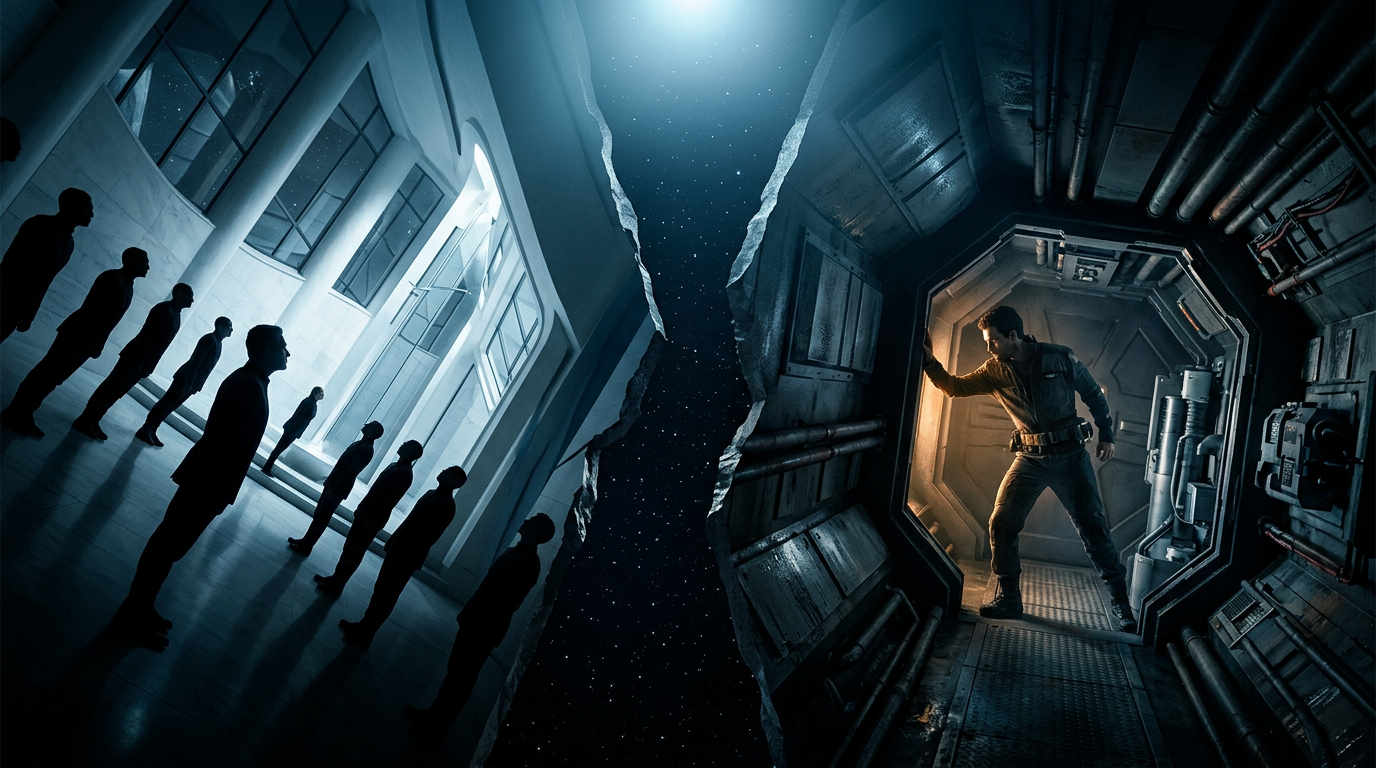
Apple’s Foundation, adapted from Isaac Asimov’s books, is prestige as architecture: luminous halls, dynastic abstraction, mathematical fate, robes, clones, star bridges, and the belief that big ideas deserve big rooms. Amazon’s The Expanse, adapted from James S. A. Corey’s novels, is prestige as systems pressure: air filters, ship thrust, rationing, class resentment, labor exploitation, and people making bad decisions because physics and politics leave them no polite options.
One looks like civilization contemplating itself in polished glass. The other looks like civilization trying to fix a reactor before the oxygen runs out.
The case for Foundation
!A lone figure stands inside a luminous futuristic archive of star maps

Foundation is the more obviously expensive show, and sometimes that matters. Not because money equals artistry, but because this material needs scale. Asimov’s premise is not intimate by nature: psychohistory, imperial collapse, centuries of planning, religion as technology, science as myth, power as inheritance. Apple’s version understands that the mise-en-scène has to carry some of the intellectual weight.
The show’s best images are not merely pretty. They are political. The genetic dynasty of the Cleons turns governance into production design: bodies repeated, rooms symmetrical, power made sterile. Trantor’s vastness is not there to impress your OLED; it is there to make the individual seem almost absurd. Even when the writing strains, the world-building has an elegant visual grammar. Apple knows how to make hierarchy readable in blocking, costume, and negative space.
Lee Pace’s performance as Brother Day is the show’s gravitational field. He plays imperial certainty as theater, appetite, vanity, and fear, often in the same scene. Jared Harris brings exhausted moral intelligence to Hari Seldon, a man whose great plan is both salvation project and control fantasy. Lou Llobell and Leah Harvey give the series its more human pulse as Gaal Dornick and Salvor Hardin, though the show has not always served them with equal sharpness.
Where Foundation improves on the old reputation of “unfilmable” Asimov is in recognizing that televised sci-fi needs bodies, not just concepts. The books are famous for conversations about historical forces. The show adds bloodlines, faith, memory, combat, romance, and mysticism. Purists may object. They are not entirely wrong. But a literal adaptation would have risked becoming a seminar with matte paintings.
Apple also deserves credit for patience. In a market where streamers cancel ambitious shows before they learn how to breathe, Foundation has been allowed to sprawl, recalibrate, and sharpen. Its second season, especially, showed a stronger sense of play and danger than its first, with more confidence in the absurdity and grandeur of its own premise.
This is Apple’s advantage across the board. The company’s sci-fi brand is not one show. It is an ecosystem. Severance gives it corporate dystopia with deadpan menace. Silo gives it bunker paranoia and tactile industrial world-building. For All Mankind gives it alternate-history space ambition. Foundation gives it galactic opera. The shelf has range, but it shares a house style: sleek, serious, immaculate, sometimes chilly, usually expensive in ways you can actually see.
The case for The Expanse
The Expanse does not have Apple’s sheen. Its early seasons, produced for Syfy before Amazon saved the show, can look cramped in the wrong way. Some interiors are functional rather than expressive. The digital effects improve across the run, but the series never sells itself as luxury television. It sells competence, and then makes competence thrilling.
That is rarer than it sounds.
The genius of The Expanse is that it understands space as a labor environment before it treats space as a metaphor. Ships are not magic castles. Acceleration hurts. Gravity is political. Water is wealth. Air is a class issue. The Belters are not exotic background flavor; they are the human consequence of expansion organized around extraction. Earth, Mars, and the Belt are not fantasy houses with sigils. They are economies with navies.
This is why the show still plays so well in 2026. It anticipated a prestige-TV audience tired of destiny and hungry for systems. The Rocinante crew matters, yes, and the chemistry among Steven Strait, Dominique Tipper, Wes Chatham, and Cas Anvar was central to the show’s rise before Cas Anvar’s removal from the series. But the real protagonist is the system itself: militarized scarcity, colonial resentment, bureaucratic cowardice, private interest, and the terrifying speed with which a local conflict becomes species-level risk.
Shohreh Aghdashloo’s Chrisjen Avasarala remains one of modern sci-fi television’s great political creations: profane, strategic, maternal only when useful, and almost always the smartest person in a room full of people mistaking rank for intelligence. Cara Gee’s Camina Drummer gives the series its best anti-authoritarian charge, a performance built from grief, command, and clenched physicality.
The show’s hard-sci-fi tendencies are not ornamental. They shape plot, behavior, and ethics. When a ship turns, when a body is exposed to thrust, when a projectile keeps moving, the series remembers. That discipline creates trust. You believe the politics more because you believe the physics.
Amazon’s role here is complicated but real. The company did not create The Expanse, but by reviving it after Syfy canceled it, Prime Video preserved a major work of 21st-century television sci-fi. In a streaming culture full of unfinished genre architecture, that counts. The six-season run does not adapt all nine novels, and viewers who know the books can feel the missing future pressing against the ending. Still, television is littered with shows that never got anything like this much runway.
What it gets right
!Crew members brace inside a worn spacecraft under emergency lighting
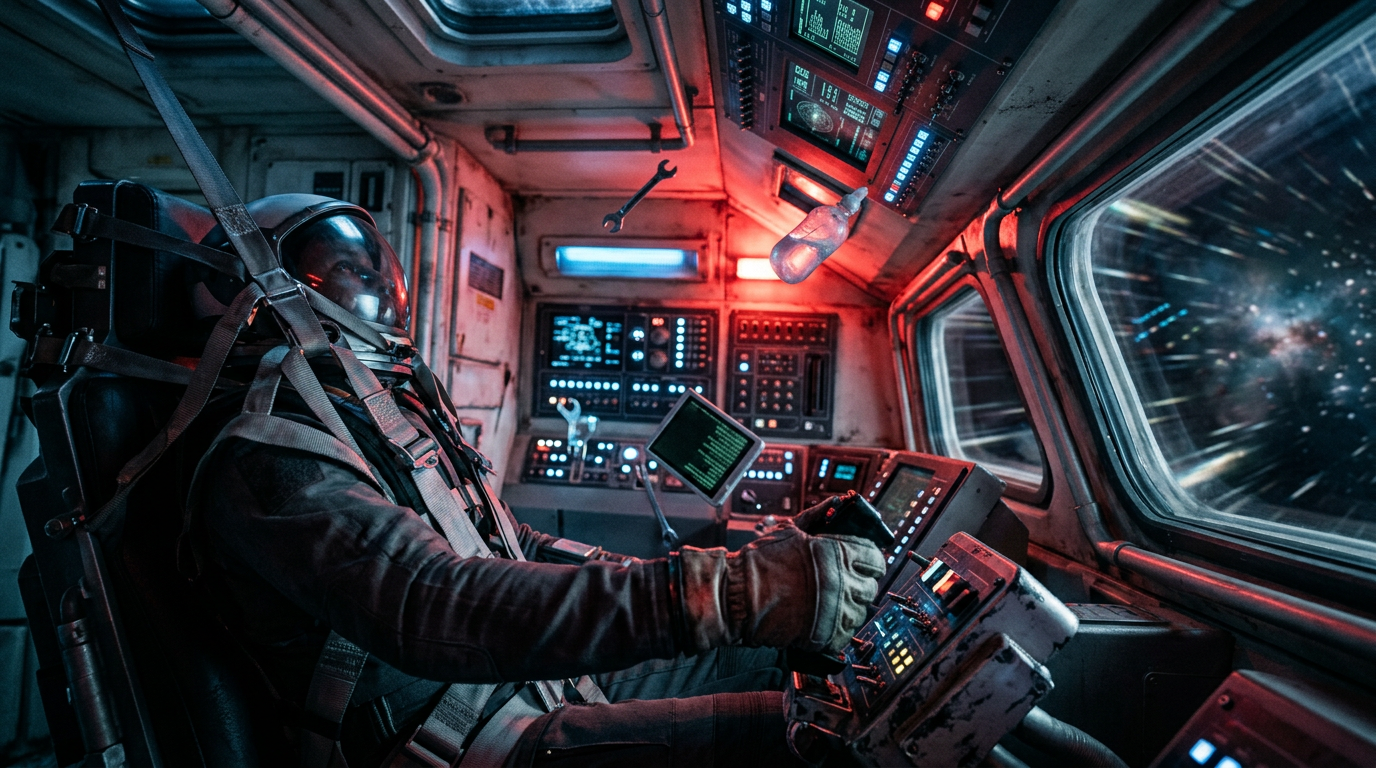
Both shows understand that prestige sci-fi cannot survive on lore alone. Lore is inventory. Drama is pressure.
Foundation gets grandeur right. It knows that empire is not just policy; it is ritual, architecture, repetition, and story. The cloning concept around the Cleons is a terrific television invention because it turns political stagnation into a literal body problem. It is the Ship of Theseus in dynastic drag: if an empire keeps replacing itself with copies, is it stable, dead, or merely terrified of becoming historical?
The series also has a genuine appetite for myth-making. Its religious and mathematical threads do not always fit cleanly, but the friction is interesting. Apple lets the show be strange at a scale most streamers would sand down.
The Expanse gets consequence right. Its world-building is dense because it is causal. Belter bodies look different for a reason. Accents evolve for a reason. Political factions harden for a reason. Even the show’s detective-noir beginnings, with Thomas Jane’s Miller moving through Ceres like a man trapped in recycled air and old guilt, establish a noir grammar that the series later expands into war, diplomacy, and cosmic dread.
The Expanse also avoids one of prestige TV’s laziest habits: mistaking ambiguity for depth. Its characters may be compromised, but the show has moral clarity about exploitation. It understands that “both sides” is often a luxury phrase used by people far from the consequences.
What it gets wrong and where it stumbles
Foundation can be magnificent and dramatically mushy in the same hour. Its ideas are huge, but its emotional engineering is less reliable. The show sometimes tells us a relationship matters before the actors have been given enough lived-in material to make it hurt. Its time jumps and braided timelines can create awe, but they can also interrupt momentum just when a thread begins to gather heat.
There is also the Apple problem: surfaces so pristine they risk sealing out dirt, sweat, and accident. Even rebellion can look art-directed within an inch of its life. For a story about civilizational collapse, Foundation sometimes feels too clean to smell the smoke.
The Expanse, for all its virtues, is not immune to roughness. The first season asks for trust before it has fully earned fluency. Some performances take time to settle. The show’s budgetary limits occasionally show in staging and creature design, especially when compared with Apple’s more lavish sci-fi machine. And the final season, while focused and often strong, is plainly shaped by compression. It ends with thematic confidence but not total narrative fullness.
There is a broader Amazon criticism, too. Prime Video has not built around The Expanse with Apple’s clarity. Fallout proved Amazon can make smart, popular genre television when tone, casting, and production design click. But Amazon’s sci-fi identity remains patchier: big swings, uneven follow-through, and a platform interface that still treats discovery like a warehouse problem. Apple feels curated. Amazon feels stocked.
The bigger idea
The deeper split between these shows is philosophical.
Foundation asks whether history can be predicted, managed, and softened by intellect. It is the fantasy of technocratic foresight, complicated by the fact that foresight often becomes domination with better branding. Hari Seldon wants to reduce suffering. He also wants to control the board. The show is most alive when it admits those impulses are not easily separated.
The Expanse rejects that altitude. It says history is made by infrastructure, appetite, fear, and the people forced to live inside decisions made elsewhere. Its future is not clean because our present is not clean. The Fermi paradox hovers at the edge of much space sci-fi, but The Expanse is more interested in a harsher possibility: maybe the great filter is not cosmic silence but politics. Maybe intelligent life does not need aliens to imperil itself. It has supply chains.
That makes The Expanse the more persuasive drama. Foundation is often the more spectacular object. Prestige sci-fi needs both, but if forced to choose, I trust the show with grease under its fingernails.
Which streamer is winning prestige sci-fi
Apple TV+ is winning the category. Amazon has the champion.
That sounds like a dodge, but it is the cleanest verdict. Apple has made sci-fi central to its brand in a way no other streamer currently has. It gives adult speculative television budgets, time, and visual distinction. It has turned “Apple sci-fi” into a recognizable phrase, for better and worse: elegant, controlled, concept-forward, occasionally airless.
Amazon, on the other hand, has The Expanse, and The Expanse remains the better completed work than Foundation so far. It is more politically literate, more tactile, more disciplined about cause and effect. It has less marble and more oxygen.
If you are deciding where to spend your time, here is the practical answer: watch The Expanse first if you want the richer drama. Watch Foundation first if you want scale, visual architecture, and a grand argument with classic sci-fi history. Keep Apple if you want the strongest current sci-fi bench. Keep Prime Video if The Expanse and Fallout are enough to anchor the subscription for you.
The future, as usual, is not evenly distributed. Neither are the streaming libraries.
What to watch next if you liked this
For viewers using Foundation and The Expanse as gateways rather than endpoints, pair them with purpose.
- Double-bill with Foundation: Dune: Part Two for imperial religion, desert politics, and blockbuster-scale myth; Arrival for cerebral sci-fi that trusts silence and linguistic mystery.
- Double-bill with The Expanse: Andor for insurgency, bureaucracy, and the moral cost of rebellion; Battlestar Galactica for fleet politics, scarcity, and faith under military pressure.
- Apple TV+ follow-up: Silo if you want enclosed-world paranoia with strong production design; Severance if your preferred dystopia wears office shoes.
- Prime Video follow-up: Fallout for tonal confidence and retrofuturist world-building; then return to The Expanse novels if the show’s ending leaves you wanting the larger architecture.
- Reading after Foundation: Isaac Asimov’s original Foundation stories, less for character than for the boldness of the historical thought experiment.
- Reading after The Expanse: James S. A. Corey’s Leviathan Wakes and its sequels, which expand the politics and long-game structure beyond the television endpoint.
The best pairing is still simple: one episode of Foundation when you want to watch an empire dream of controlling history, one episode of The Expanse when you want to see history punch a hole through the hull.
Discussion (0)
Loading comments…