Black Mirror is no longer faster than the future
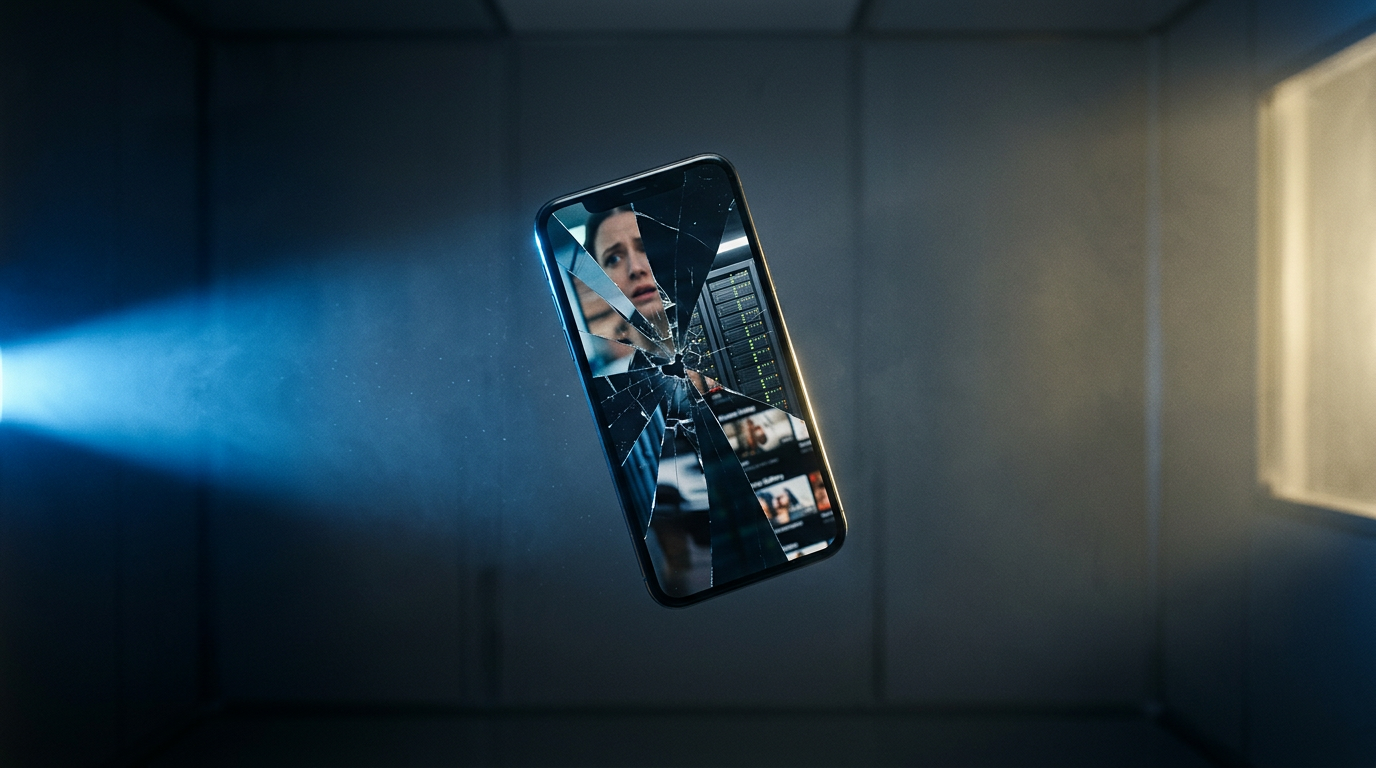
The scariest screen in Black Mirror is no longer the black one.
It is the one you checked before breakfast. The one that knows when you are bored, sick, lonely, distractible, persuadable. The one that has made dystopia feel less like a warning than a subscription tier. That is the peculiar problem facing Charlie Brooker’s anthology in 2026: the technology has, in many cases, caught up with the show’s old nightmares, then made them cheaper, more ambient, and less photogenic.
Black Mirror once thrived on a clean exchange with the viewer. Here is a near-future device; here is the human weakness it exposes; here is the trapdoor beneath modern convenience. It was The Twilight Zone with push notifications, a British sneer polished into Netflix global product. At its best, it gave digital life the shape of moral fable. At its worst, it confused cruelty with insight and treated every app as a guillotine waiting for a neck.
But the question in 2026 is not whether Black Mirror is still relevant. Of course it is. The brand name has become shorthand for any technology that feels invasive, uncanny, or politely sadistic. The more interesting question is whether the show is still ahead of the culture it diagnoses. Increasingly, no. And that may be the best thing that could have happened to it.
Why it matters now
We are no longer watching Black Mirror from outside the machine.
When the series broke through internationally, its speculative premises still had the crispness of escalation. Rating systems, memory implants, virtual punishment, synthetic celebrities, algorithmic romance: the show took recognizable anxieties and nudged them a few inches into nightmare. That nudge mattered. It gave viewers permission to distrust the cheerful interface.
By 2026, the interface has stopped pretending to be cheerful. AI-generated video is ordinary enough to be boring and dangerous enough to destabilize elections, labor, dating, art, and evidence. Streaming platforms cancel finished movies for tax strategy. Social networks reward outrage while insisting they are merely mirrors. Wearables monitor bodies with a tenderness that looks a lot like data extraction. The panopticon is no longer a tower in the middle of the prison yard; it is a ring light, a dashboard, a workplace productivity suite, a baby monitor, a doorbell camera, a health app.
That shift changes Black Mirror’s job. The series can no longer rely on the shock of recognition alone. Recognition is now the floor, not the ceiling. To matter, Black Mirror has to do more than say, Look what technology might do. It has to ask why we keep signing the terms.
This is where the show’s Netflix era remains fascinating. Netflix is not merely the distributor; it is part of the text. Joan Is Awful, from season six, worked because it turned the streamer’s own iconography into a weapon. The episode’s satire of personalized content, likeness rights, and passive spectatorship landed not because the concept was impossible, but because it was plausible in the most depressing way. You could feel the corporate deck presentation lurking behind the joke.
Season seven, released in 2025, sharpened the same tension. The return to USS Callister was not just fan service; it also made visible how intellectual property becomes a kind of synthetic afterlife. In a streaming economy obsessed with extensions, spinoffs, legacy sequels, and brand retention, Black Mirror’s anxieties are now partly industrial. The show is about technology, yes. It is also about platforms deciding which versions of us are profitable enough to preserve.
What it gets right
!A sterile tech office glowing at night with data-like light on glass walls
Black Mirror still understands the violence of convenience.
That has always been its strongest insight. The show is rarely interested in evil machines in the Skynet sense. Its villains are cleaner than that: frictionless services, friendly prompts, glossy devices, systems designed to remove delay, ambiguity, and embarrassment. The horror comes from the bargain. Give up a little agency and receive a little comfort. Repeat until there is nothing left to trade.
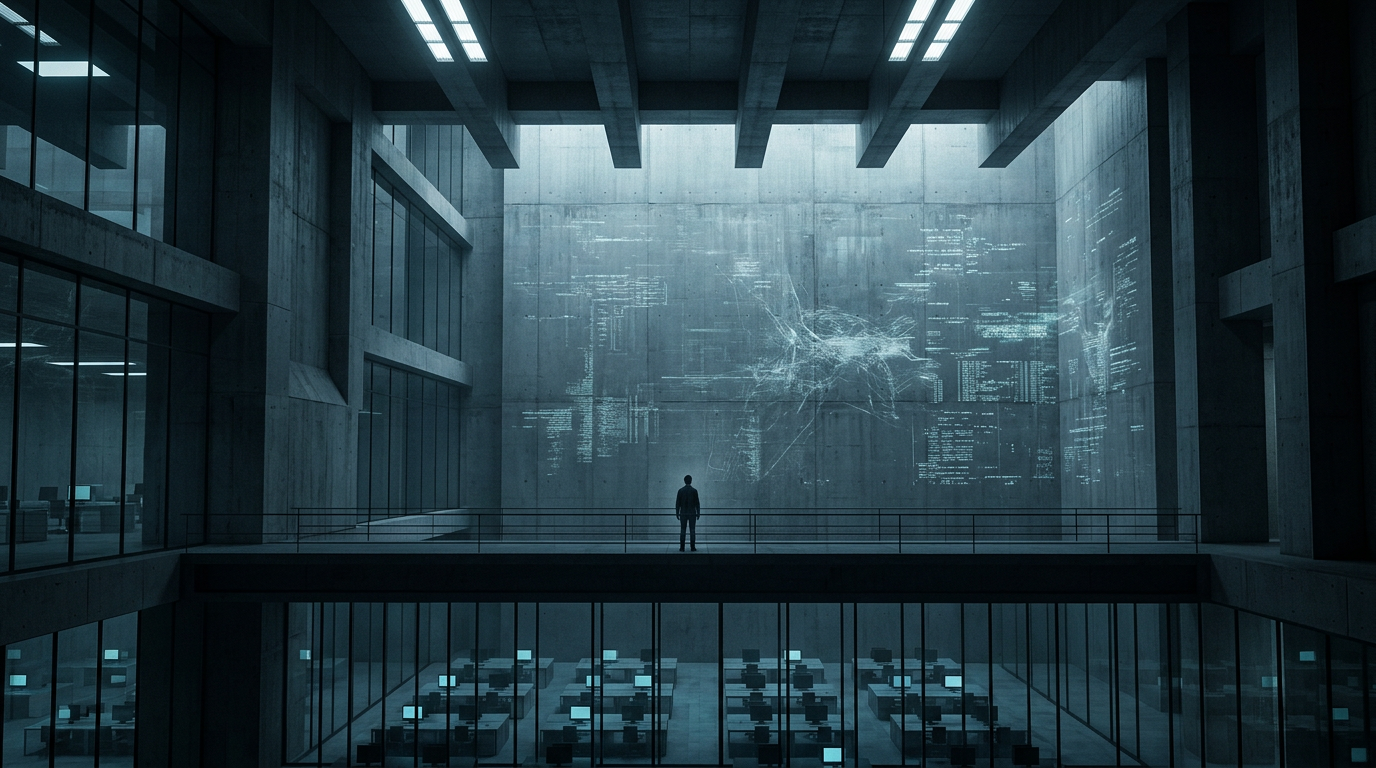
The best episodes use mise-en-scène to make that bargain legible. Black Mirror’s interiors often look like capitalism has developed a skin condition: too smooth, too bright, too hostile to clutter. Apartments are tasteful but airless. Offices glow with antiseptic blues and grays. Interfaces float with that dead-eyed confidence common to tech demos and premium banking apps. The visual grammar is rarely subtle, but it is effective. The blocking often traps characters inside clean lines, glass rooms, perfect rectangles. People seem less photographed than contained.
This is where Brooker’s anthology format still pays off. A lesser prestige TV version would build one mythology and explain itself into exhaustion. Black Mirror resets the board. That allows it to shift from workplace satire to domestic tragedy, from cyberpunk paranoia to media grotesque, from soft sci-fi to bleak comedy. The anthology model is volatile, but volatility is part of the point. Technology does not arrive as one genre. It arrives as customer service, entertainment, logistics, wellness, intimacy.
The show also remains unusually good at dramatizing consent as a design problem. Its characters technically agree to things. They click, sign, upload, opt in, enable, subscribe. But the series knows that consent under platform capitalism is often theater. When refusal means social exclusion, unemployment, medical precarity, or simple invisibility, choice becomes a costume worn by coercion.
That is the show’s most durable theme, and it has aged better than many of its gadgets. Memory implants may or may not define the next decade. Synthetic media and algorithmic governance already do. The details change; the power relation remains.
What it gets wrong / where it stumbles
Black Mirror’s bad habit is still the twist with a smug little bow on it.
The series can mistake the mechanics of revelation for meaning. Too many episodes are structured like a mousetrap: clever, polished, satisfying in the click, and emotionally thin once the mechanism is visible. When the show leans too hard on punishment, it becomes less a critique of technological systems than a carnival dunk tank for flawed people. The viewer is invited to feel superior to characters who make bad choices under pressures the show itself has engineered.
That is not moral complexity. It is diagramming.
The issue is sharper in 2026 because reality has grown stranger in less tidy ways. Actual technological harm is often bureaucratic, distributed, and boring. A content moderation policy. A health insurance algorithm. A facial-recognition false match. A recommendation engine nudging a teenager toward self-loathing. A studio using AI to shave labor costs while calling it innovation. These are not always elegant short-story premises. They lack the clean catharsis of a final reveal. They are systems without a single villain.
Black Mirror sometimes struggles with that messiness. Its satirical blade is sharpest when pointed at media and consumer behavior; it dulls when it tries to make every technological anxiety into poetic justice. The show can also overstate individual culpability. It loves a compromised protagonist, and fair enough: compromised protagonists are drama. But the culture it depicts is not built by bad users alone. It is built by incentives, investors, managers, regulators, and monopolies. A truly modern Black Mirror has to keep widening the frame.
There is also the matter of tone. Brooker’s nastiness used to feel corrective, a necessary acid bath after Silicon Valley optimism. Now, constant contempt can feel redundant. The public is not as naive about tech as it was a decade ago. We know the app is spying. We know the feed is manipulating us. We know the platform is not our friend. The harder artistic task is to show why we stay anyway, and what forms of tenderness survive inside compromised systems.
The bigger idea
!A person sits alone in a screen-lit living room reflected in dark windows
Black Mirror is no longer a prophecy machine. It is becoming a hauntological show.
That word, associated in cultural criticism with Mark Fisher, refers to the persistence of lost futures: the sense that tomorrow has been replaced by recycled versions of yesterday. It fits Black Mirror better now than the old label of tech dystopia. The show is haunted by the future it used to warn us about. Its most resonant recent work is not asking what comes next, but why next feels so exhausted.
Consider the streaming landscape around it. Apple TV+ has built a handsome sci-fi identity through shows like Severance, Silo, and Foundation, emphasizing architecture, institutional mystery, and controlled dread. HBO and Max still carry the prestige afterimage of Westworld, a series that began as a dazzling inquiry into consciousness and labor before collapsing under the weight of its own maze. Amazon MGM has The Expanse in its library, still one of modern television’s best arguments for hard sci-fi world-building. Netflix’s own The Three-Body Problem brings cosmic scale and Dark Forest anxiety to the platform.
Black Mirror operates differently. It is smaller, nastier, closer to the outlet by your bed. Its cosmos is the user agreement. Its alien invasion is personalization.
That modesty is its advantage. The show does not need to compete with Denis Villeneuve’s monumental images in Dune or Christopher Nolan’s IMAX metaphysics in Interstellar. It should not try. Black Mirror’s natural territory is the intimate catastrophe: the marriage altered by an archive, the worker crushed by metrics, the artist turned into content, the grieving person seduced by simulation. Its scale is psychological and procedural. The apocalypse arrives as a product update.
The danger is that the series keeps chasing technological novelty when its richest subject is dependency. The tech is no longer ahead of the show because the future has become less cinematic than the show imagined. It is not chrome and drones. It is subscription fatigue, synthetic images, automated suspicion, digital afterlives, and workplaces that treat human attention as ore.
Is the technology still ahead of the show?
No. But that answer is not an insult.
Black Mirror’s early reputation rested on being disturbingly close to tomorrow. In 2026, tomorrow has moved in, used our Wi-Fi, and started charging rent. The show’s challenge is to stop racing the news cycle. Any attempt to outpace AI discourse, deepfake panic, surveillance capitalism, or platform consolidation will date quickly. A Black Mirror episode built around the newest fear can feel stale by the time Netflix’s autoplay window appears.
The series works best when it treats technology as social weather rather than gadgetry. Not the device, but the climate it creates. Not the killer app, but the habits it trains. Not the shocking invention, but the emotional choreography around it.
That is why the most durable Black Mirror episodes are not necessarily the most futuristic. The Entire History of You remains potent because jealousy does not need a software update. San Junipero endures because its speculative premise is tied to mortality, memory, and chosen identity rather than mere cleverness. Nosedive is broad, almost cartoonish, but its pastel social-credit nightmare still works because it understands performance as exhaustion. Joan Is Awful, for all its bluntness, caught the entertainment industry staring at its own reflection and not liking what stared back.
The technology is not ahead of the show. Human weakness is. That has always been the secret.
What to watch next if you liked this
If Black Mirror is your entry point, do not stop with more dystopian puzzle boxes. Pair it with work that changes the temperature.
- Double-bill Black Mirror’s Joan Is Awful with The Congress, Ari Folman’s strange, uneven, still-bracing 2013 film about the commodification of an actor’s image. Together, they make a sharp program on likeness as property.
- Watch San Junipero alongside After Yang, Kogonada’s delicate 2021 film about memory, family, and artificial personhood. One is brighter; the other is quieter. Both understand technology as grief management.
- Pair USS Callister with Severance. The shared subject is not virtual reality but workplace power, performance, and the divided self.
- Follow Nosedive with Her. Spike Jonze’s film is gentler than Black Mirror, but its production design and emotional intelligence remain a crucial counterweight to tech cynicism.
- Put The Entire History of You next to Eternal Sunshine of the Spotless Mind. One imagines memory as evidence; the other imagines forgetting as mercy.
- For harder sci-fi texture, return to The Expanse. Its politics, labor conflicts, and physical world-building offer a useful antidote to Black Mirror’s compressed parables.
- For follow-up reading, try Mark Fisher’s Capitalist Realism for the mood beneath the machinery, and Shoshana Zuboff’s The Age of Surveillance Capitalism for the economic architecture Black Mirror often turns into fable.
The verdict
Black Mirror in 2026 is not obsolete. It is cornered, which is more interesting.
A show built on near-future shock now lives in a present that keeps stealing its props. That leaves Brooker and company with a choice: chase novelty and risk becoming a dramatized tech column, or accept that the real subject was never the gadget. It was compliance. Desire. Vanity. Grief. Labor. The little humiliations that make people trade privacy for ease and dignity for visibility.
When Black Mirror remembers that, it still cuts. Not as prophecy. As autopsy.
Discussion (0)
Loading comments…