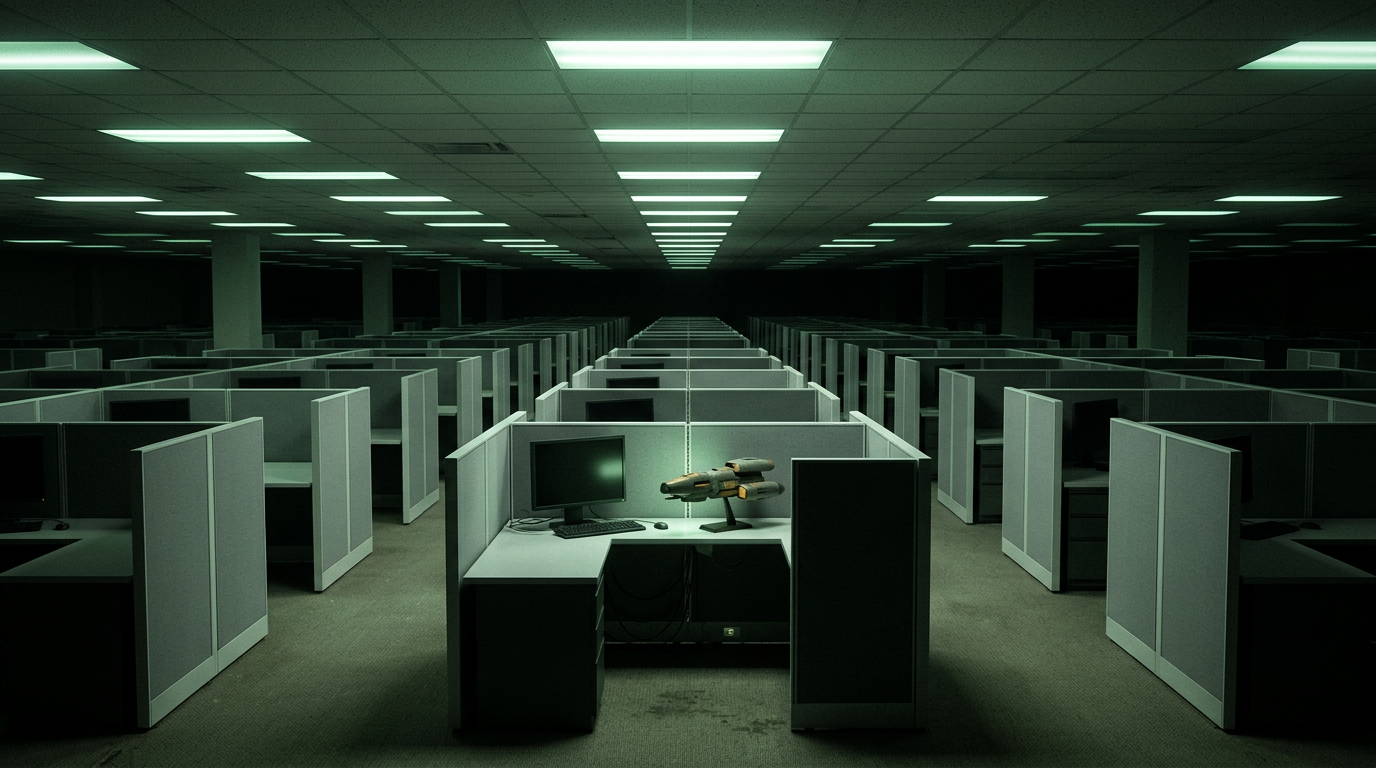
Mid-budget sci-fi is making a bruised comeback
The most interesting spaceship in movies right now may be the one that does not cost a corporation the GDP of a small moon.
For more than a decade, original science fiction has been treated like a bad actuarial bet. Studios loved the genre when it arrived wearing armor already stamped by a comic book, toy line, YA trilogy, video game, or sacred-library novel. They loved it when Christopher Nolan could sell metaphysics in IMAX 70mm, or when Denis Villeneuve could turn Dune into monumental desert opera. But the nervy middle lane — too designed to be cheap, too personal to be four-quadrant product — nearly disappeared from theatrical life.
Now it is back, though not in triumphal parade formation. It is limping, mutating, crossing platforms. It turns up in A24 release patterns, Neon-adjacent genre appetites, Apple TV+ experiments, Netflix one-offs, Amazon MGM oddities, and the occasional studio swing that remembers audiences still like a new idea if it has a shape, a mood, and a reason to exist. The comeback is not simply theatrical. It is not simply streaming. It is a custody battle.
The question is not whether original mid-budget sci-fi can return. It already has, in scattered but meaningful form. The better question is what kind of sci-fi each venue is training it to become.
Why it matters now
The franchise age did not kill original sci-fi. It narrowed its metabolism.
At the very high end, science fiction became architecture: Blade Runner 2049, Interstellar, Avatar, Dune. Huge frames. Mythic silhouettes. Anamorphic grandeur. Theatrical scale as moral argument. At the low end, it became a laboratory for dread: Primer, Coherence, The Vast of Night, Beyond the Infinite Two Minutes. Smart, compressed, often brilliant, and sometimes so budget-conscious that the premise does more acting than the cast.
The missing tier is the one that gave us films like Gattaca, Dark City, The Truman Show, Children of Men, Moon, District 9, Ex Machina, Arrival, and Annihilation. Not all of those were the same size, and not all were commercial slam dunks. But they shared a crucial grammar: enough money for atmosphere, design, and a convincing social order; enough restraint to keep the premise from being smothered by spectacle.
That middle range matters because science fiction is at its best when an idea becomes a lived environment. Not a lecture. Not wallpaper. A workplace, a bedroom, a mall, a military checkpoint, a dating service, a medical clinic, a spaceship with fluorescent lighting and bad coffee. Mid-budget sci-fi can afford mise-en-scène without needing to pave every scene with climax.
The 2026 viewing landscape has made this tension sharper. Theaters are clawing back cultural attention with premium formats, repertory programming, and the old promise that a movie can be an event rather than a thumbnail. Streamers, meanwhile, have learned that expensive sci-fi series can be subscriber monuments, even when the cultural footprint is oddly soft. Apple TV+ has built a prestige identity around sleek speculative TV like Severance, Silo, and Foundation. Netflix still has Black Mirror and has spent heavily on The Three-Body Problem. Max inherited the prestige reflexes that made Westworld possible, for better and worse.
But the mid-budget original film remains the exposed nerve. It cannot hide behind IP. It has to sell tone, theme, image, actor, director, and premise. In other words, it has to behave like cinema.
What the new wave gets right
!A quiet futuristic kitchen with a machine reflected in the window
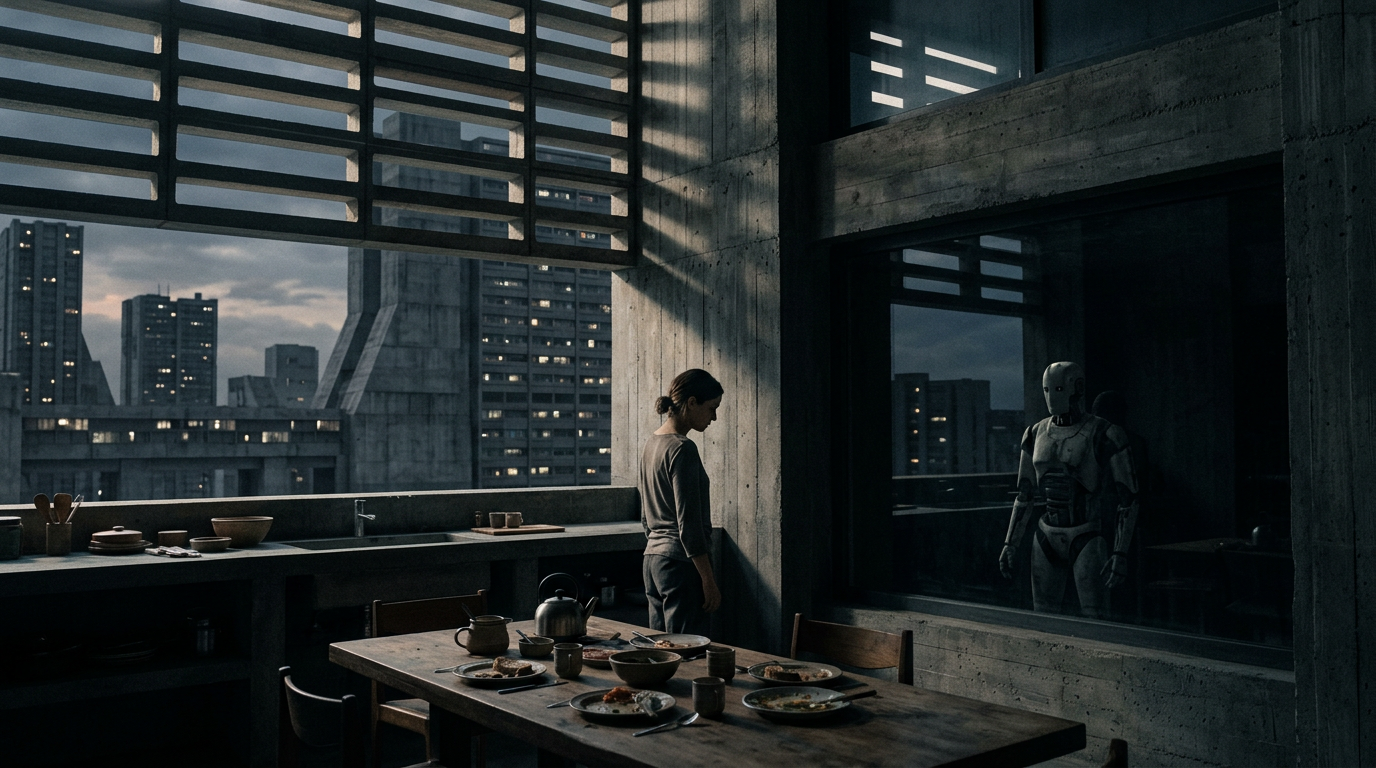
The healthier recent examples understand that science fiction does not need to explain the future. It needs to stage pressure.
Alex Garland’s Ex Machina remains the cleanest modern template: a handful of locations, immaculate blocking, tech wealth as Gothic imprisonment, and Alicia Vikander turning the uncanny valley into a performance of terrifying politeness. It is not hard sci-fi in the engineering-manual sense. It is chamber sci-fi, built around power, desire, and the fantasy that intelligence will remain obedient once created.
Kogonada’s After Yang goes the other way. It treats artificial life not as threat but as family memory, grief, and domestic texture. Its world-building is quiet enough to miss if you are watching lazily: interiors, rituals, clothes, tea, the soft pressure of multicultural futurity. The film understands that the future will not always announce itself with chrome. Sometimes it will be a child asking what counts as kin.
Jordan Peele’s Nope is a bigger beast, closer to studio spectacle, but it proves another essential point: original sci-fi can still give a theatrical audience a shared nervous system. Peele’s desert spaces, sound design, and skyward blocking make spectators look up with the characters. That is not just scale. That is direction. It is a filmmaker using the room.
Streaming has produced its own valuable strain. They Cloned Tyrone, directed by Juel Taylor, is messy in the productive sense: Blaxploitation texture, conspiracy thriller, social satire, synthetic bodies, community paranoia. It has the Netflix problem of arriving like a file dropped into a warehouse, but the film itself has a pulse. It remembers that genre can smuggle politics better than a prestige sermon.
Fingernails, from Christos Nikou, is more fragile: a melancholy speculative romance about technology trying to certify love. Its premise is almost comically simple, but that is the point. The movie uses a soft sci-fi device to expose the absurdity of outsourcing intimacy to metrics. The future here is not a laser grid. It is a relationship test with institutional lighting.
These films work because they do not confuse lore with world-building. Lore is a binder. World-building is behavior.
What it gets wrong / where it stumbles
The comeback has bad habits, and some of them are encouraged by the platforms that claim to support it.
Streaming often protects original sci-fi from opening-weekend humiliation, but it also deprives it of a public life. A theatrical release can fail loudly; a streamer release can vanish politely. That is not always kinder. Many mid-budget genre films need conversation, not just access. They need critics, trailers attached to the right movies, Q&As, midnight screenings, word-of-mouth friction, a reason to be chosen instead of merely available.
The algorithm is especially bad at selling ambiguity. It can recommend near-neighbors — cerebral sci-fi, dystopian thriller, quirky romance — but original speculative work often lives in the gap between labels. Is I Saw the TV Glow horror, fantasy, trans coming-of-age cinema, media hauntology, or all of the above? A sane answer is yes. A platform menu wants a shelf.
Theaters have their own cowardice. Too many distributors still treat original sci-fi as either awards-season vegetables or genre bait. If a film is quiet, they sell importance. If it is strange, they sell shock. If it is funny, they panic. The mid-budget zone needs a more confident marketing language: not this is homework, not this is content, but this is a new world worth entering for two hours.
There is also a creative stumble. Some recent speculative films are so allergic to exposition that they underbuild their worlds. Mystery can be thrilling; vagueness is cheaper. The best sci-fi lets us infer systems from objects, jobs, architecture, food, security rituals, and social etiquette. The weaker stuff offers one clever premise and then waits for the audience to admire its restraint.
Restraint is not the same as thinness.
The theatrical argument
!An empty multiplex lobby reimagined as a speculative transit terminal
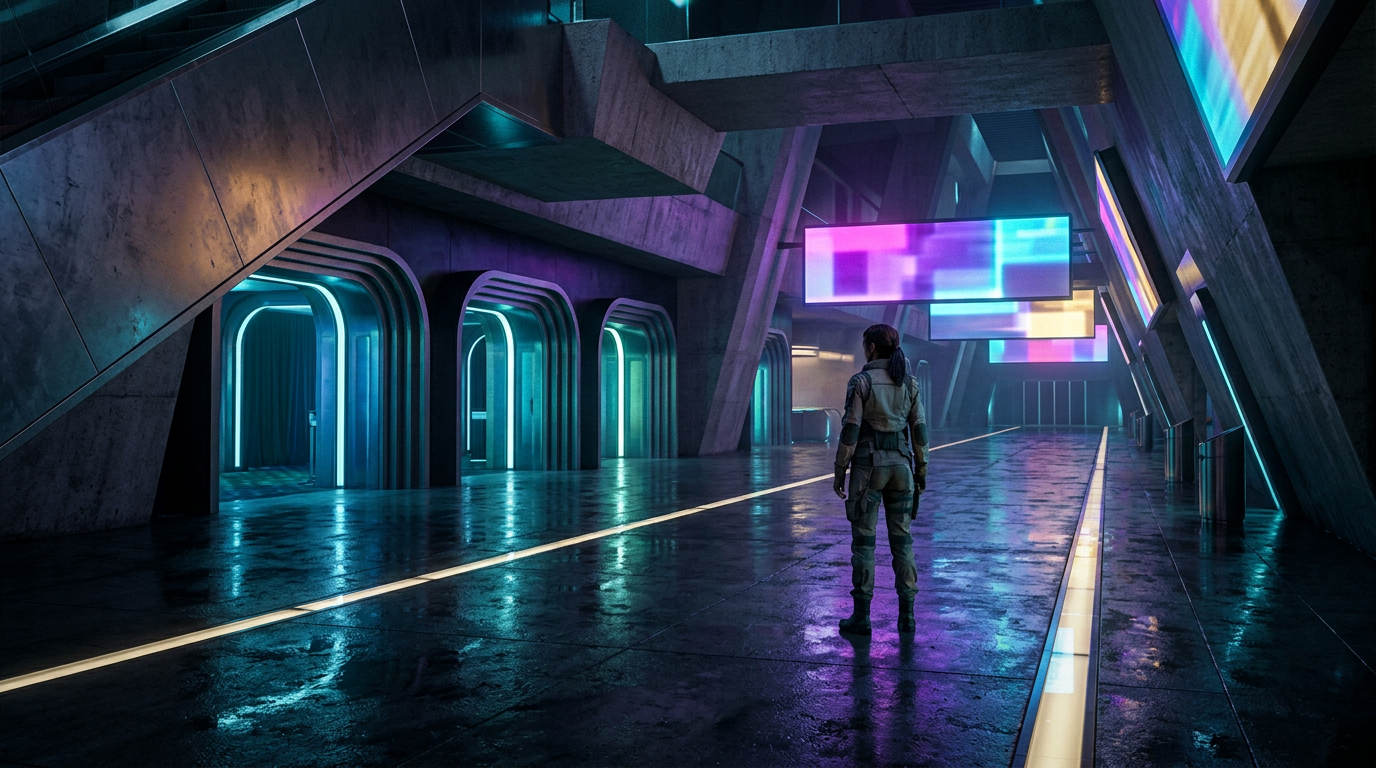
Science fiction has a special relationship to theatrical space because the genre is always asking us to believe in scale: cosmic, social, technological, psychological. A large screen can make that belief physical.
This does not mean every original sci-fi film needs Dolby Cinema or IMAX. After Yang does not become better because the room is bigger. But theatrical viewing supplies something streamers struggle to counterfeit: duration without escape. You cannot check another tab during the silences in Arrival. You cannot reduce Nope to background weather while answering email. The room enforces attention, and attention is the oxygen of speculative cinema.
There is also the matter of sound. So much modern sci-fi lives in the diegetic borderlands: machines breathing, interfaces chiming, ships groaning, fluorescent bulbs turning institutions into insects. The hum of Ex Machina’s sealed house, the alien vocal textures of Arrival, the predatory quiet in Nope — these are not decorative. They are world-building through vibration.
Theatrical revival culture has helped. Premium-format audiences trained by Nolan and Villeneuve may come for scale, but some of them stay for authorship. Repertory screenings of 2001: A Space Odyssey, Alien, Brazil, Akira, and Blade Runner have also done quiet civic work, reminding younger viewers that sci-fi was never just franchise plumbing. It was always design, dread, politics, sex, labor, metaphysics, and bad weather.
The risk is that theaters only make room for original sci-fi when it can cosplay as an event. The genre also needs room for the medium-sized, the intimate, the odd. Not every future has to arrive with a bass drop.
The streamer argument
Streamers have one real advantage: they can fund the premise that a theatrical marketing department would find too slippery.
That is why television has become such a hospitable place for speculative ideas. Severance could have been a brilliant film, but its corporate nightmare gains power from repetition: hallways, desks, rituals, compliance language, the panopticon disguised as wellness culture. Devs used limited-series form to turn determinism into architecture. Tales from the Loop favored mood over plot mechanics, sometimes to a fault, but it understood slowness as a legitimate sci-fi mode.
The streamer model also suits stories about systems. A film can capture rupture. A series can map bureaucracy. Silo, adapted from Hugh Howey’s books, works because its world is vertical, procedural, and secretive; the pleasure is not only what happened, but who is allowed to know what happened, and when.
Still, the streaming version of sci-fi has become dangerously padded. Prestige TV taught the industry to confuse patience with bloat. A speculative premise that would sing at 105 minutes often wheezes across eight episodes. Mystery-box structure remains the laziest narcotic in genre television: promise revelation, delay revelation, call delay depth.
The best streaming sci-fi fights that tendency with formal purpose. Severance uses repetition as an aesthetic. Black Mirror, at its strongest, uses the anthology format to cut cleanly. The problem is not length. The problem is shapelessness.
The bigger idea
Original mid-budget sci-fi is returning because reality has started behaving like production design.
Artificial intelligence, climate volatility, surveillance capitalism, biotech anxiety, labor automation, billionaire space fantasies, and platform-mediated romance have made yesterday’s speculative premises feel like workplace memos. Mark Fisher’s idea of capitalist realism — the sense that it is easier to imagine the end of the world than the end of the current order — hangs over much of the genre now. The best new sci-fi does not merely ask what if technology changes us. It asks why we keep building futures that resemble our present with better glass.
That is why the middle budget is so valuable. Mega-budget sci-fi often has to reassure us with destiny. Microbudget sci-fi often has to trap us in concept. The middle can show a society functioning badly in recognizable detail. It can make the future mundane enough to hurt.
The return will not be clean. Some of it will be theatrical. Some will be streaming. Some will premiere in theaters and find its audience later at home, which may be the most honest path for adult sci-fi now. What matters is not the platform alone. It is whether the work has a cinematic reason for existing.
A good original sci-fi film does not need a sequel hook. It needs an afterimage.
What to watch next if you liked this
- Double-bill Ex Machina with After Yang for two radically different visions of artificial life: one predatory, one elegiac.
- Pair Arrival with Annihilation for language, grief, mutation, and the rare sight of studio-era sci-fi trusting silence.
- Watch Nope with The Vast of Night to see how scale changes the same basic act of looking upward.
- Put They Cloned Tyrone next to Sorry to Bother You for surreal American labor nightmares with satirical teeth.
- Follow Fingernails with Eternal Sunshine of the Spotless Mind, which remains one of the great analog-feeling speculative romances.
- For TV, try Severance after Devs if you want corporate control, metaphysics, and production design that thinks in straight lines.
- Read Ted Chiang’s Stories of Your Life and Others after Arrival; it clarifies why the strongest sci-fi often begins as a philosophical problem and ends as an emotional one.
- Read Jeff VanderMeer’s Annihilation after Garland’s film, not to grade fidelity, but to see how prose and cinema produce different kinds of dread.
The mid-budget sci-fi comeback is not a victory lap. It is a fragile ecosystem. It needs theaters willing to sell new ideas without apology, streamers willing to curate instead of bury, and filmmakers who understand that the future is not a screensaver. It is a room, a rule, a body, a bill, a machine making a sound nobody in the story wants to hear.
Discussion (0)
Loading comments…