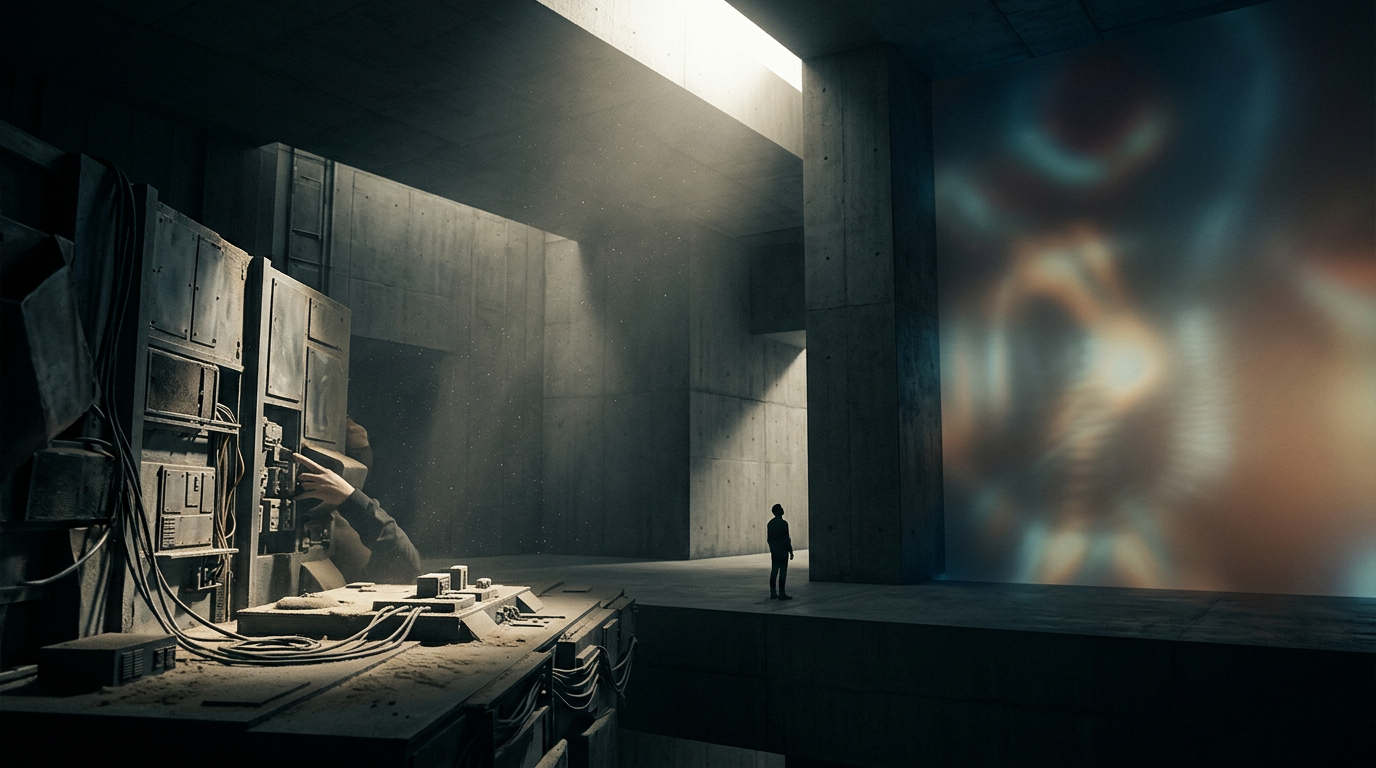
Sci-fi looks better when the machines get dirty
The sandworm works because you can almost cough it up.
That is the blunt truth behind the current practical effects versus CGI argument in modern sci-fi. The question is not whether rubber beats pixels, or whether animatronics have more soul than render farms. That is nostalgia wearing a crew jacket. The real contest is between images with physical authority and images that merely announce expense. Right now, practical effects are winning the argument culturally, even when CGI is doing most of the labor invisibly.
Dune: Part Two is the obvious 2020s exhibit, not because Denis Villeneuve rejected digital effects, but because he made digital effects behave like weather, geology, machinery, and ritual. Alien: Romulus, whatever one thinks of its franchise mechanics, reminded audiences that a monster becomes more persuasive when actors have something damp, ugly, and badly behaved in the room. Andor and Silo have built much of their prestige on sets that make bureaucracy and class architecture feel touchable. Meanwhile, Avatar: The Way of Water proves the counterpoint: full CGI can still be ravishing when it is rooted in performance, physics, and a coherent visual grammar.
So who is winning? The hybrid. But the hybrid only works when the practical side is allowed to bully the digital side into discipline.
Why it matters now
The effects debate has become more than a backstage argument for VFX artists and Blu-ray extras. In 2026, audiences are exhausted by expensive images that feel pre-chewed. Netflix, Apple TV+, Max, Amazon MGM, Paramount+, and Disney have trained viewers to expect scale every week, but scale has been devalued by abundance. A skyline can collapse on Tuesday. A planet can split open before lunch. The problem is no longer possibility. It is credibility.
That is why practical effects have acquired a new cultural charge. They signal resistance to frictionless content. They also photograph differently. A built corridor affects blocking. A puppet changes an actor’s eyeline. A miniature forces light to land somewhere specific. Even a partial set gives the camera something to discover instead of merely record for later completion.
The theatrical revival has sharpened this. IMAX 70mm and Dolby Cinema reward texture: dust, grain, skin, steam, worn metal, scratches on glass. Dune: Part Two did not become a large-format event simply because it had vast digital landscapes. It became one because its mise-en-scène understood mass. Ornithopters have a plausible insect violence. Fremen stillsuits look like survival gear, not superhero tailoring. The film’s world-building feels designed from scarcity outward.
Streaming sci-fi often struggles here. The compression of platform viewing can sand off visual nuance, and prestige TV schedules sometimes turn effects into triage. The best shows compensate with production design. Andor gives the Empire desks, floors, prisons, meeting rooms, and miserable fluorescent light. Silo turns vertical space into social theory. The sets are not decoration. They are ideology with rivets.
What it gets right
!Actor faces a shadowy creature in a worn practical sci-fi corridor
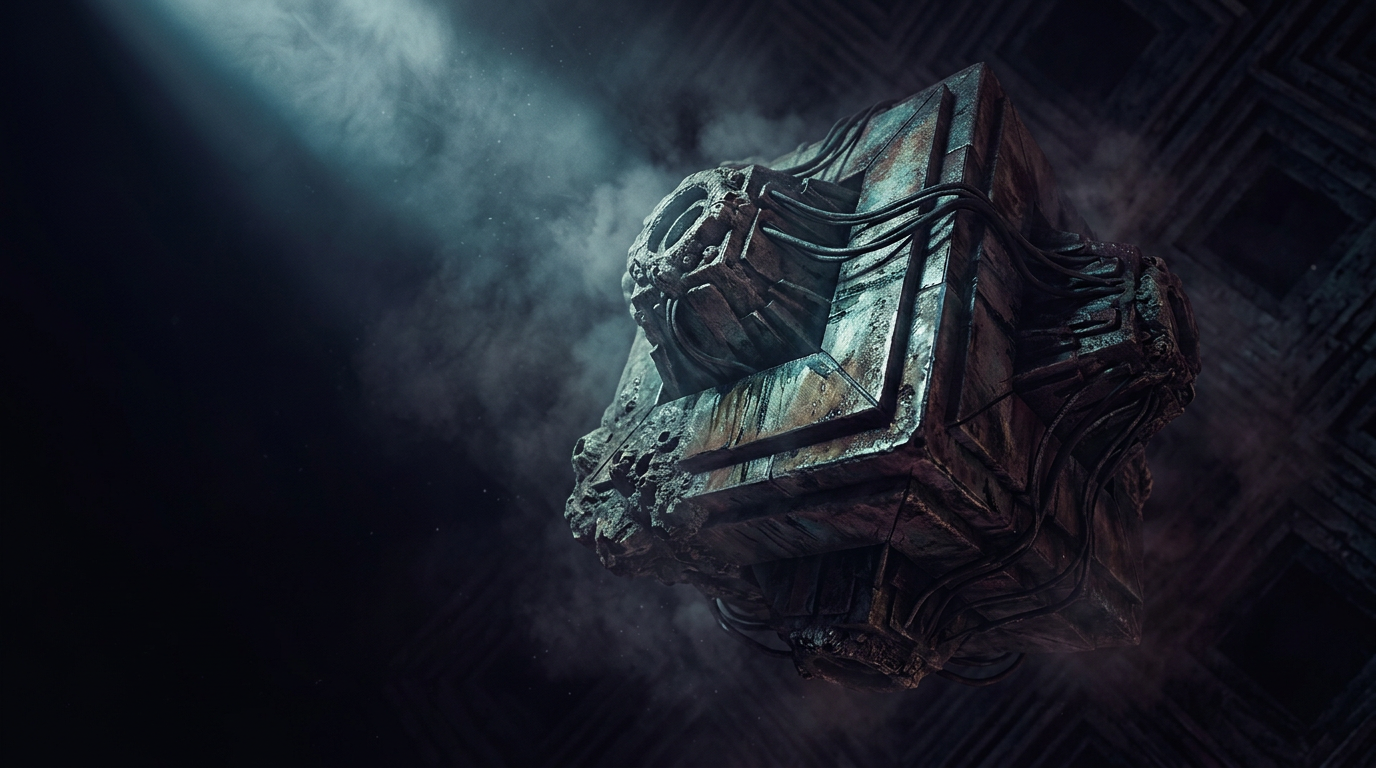
The practical-effects revival gets one major thing right: actors act better against resistance.
That sounds obvious until you watch a performer fight air for the fourth act of a weightless blockbuster. Practical effects create behavioral feedback. Sigourney Weaver did not become believable in Alien because the Xenomorph suit was flawless from every angle. She became believable because Ridley Scott’s film made fear spatial. Corners mattered. Ceilings mattered. Steam mattered. The creature had a where.
Modern sci-fi at its best remembers this. In Alien: Romulus, the use of practical creatures and sets gives the frame a grubby immediacy. You can feel the franchise trying to claw its way back from overexplained mythology into sweat, panic, and texture. The same principle runs through Ex Machina, where Ava’s digital body works because Alicia Vikander’s performance, the clean hard surfaces of the house, and the precise blocking do as much as the visual effects. The illusion is not just the transparent abdomen. It is the room’s emotional pressure.
Practical work also disciplines the camera. When something real occupies space, filmmakers tend to make choices: where to place the lens, how long to hold, when to cut, what the actor can see. This is why the miniatures and practical photography in films like Blade Runner 2049 and Interstellar still matter even when surrounded by sophisticated digital finishing. They introduce constraint, and constraint is often where style begins.
There is a reason so many contemporary filmmakers advertise practical methods in interviews. Audiences may not understand the exact pipeline, but they understand the result. They can sense when an image has been negotiated with gravity.
What full CGI still does better
Full CGI is not the villain. Lazy compositing is. Bad previsualization is. The corporate assumption that every frame can be fixed downstream is. But digital cinema has expanded sci-fi’s expressive range in ways practical effects never could alone.
Avatar: The Way of Water remains the strongest rebuttal to practical purism. James Cameron’s Pandora is almost entirely synthetic, yet it rarely feels casual. The performance capture gives the Na’vi faces readable intention. The underwater scenes have coherent buoyancy. Bodies move through an environment governed by rules. The result is not realism in the documentary sense. It is belief.
Gareth Edwards’ The Creator is another useful case. Its story is more conventional than its images, but the filmmaking model matters: shoot real locations, then integrate futuristic machinery into lived-in environments. The robots feel more persuasive because they are not floating in a generic digital soup. Dust, sunlight, scooters, fields, kitchens, and temples do half the work.
Godzilla Minus One also complicates the lazy binary. It is not a practical-effects throwback in the old Toho sense, but its CGI has purpose and dramatic timing. The creature carries trauma and national memory, not just mass. Scale becomes emotional because the film understands what the humans see, when they see it, and what the image costs them.
Digital effects win when they do something practical effects cannot do without lying badly: impossible anatomy, planetary scale, fluid transformation, nonhuman perception, speculative physics. Arrival’s heptapods need digital abstraction. Annihilation’s mutations need the uncanny valley because the terror is biological and philosophical, not merely tactile. The problem comes when CGI is used to replace decisions rather than extend them.
What it gets wrong / where it stumbles
!Motion-capture performer surrounded by ghostly digital ocean imagery
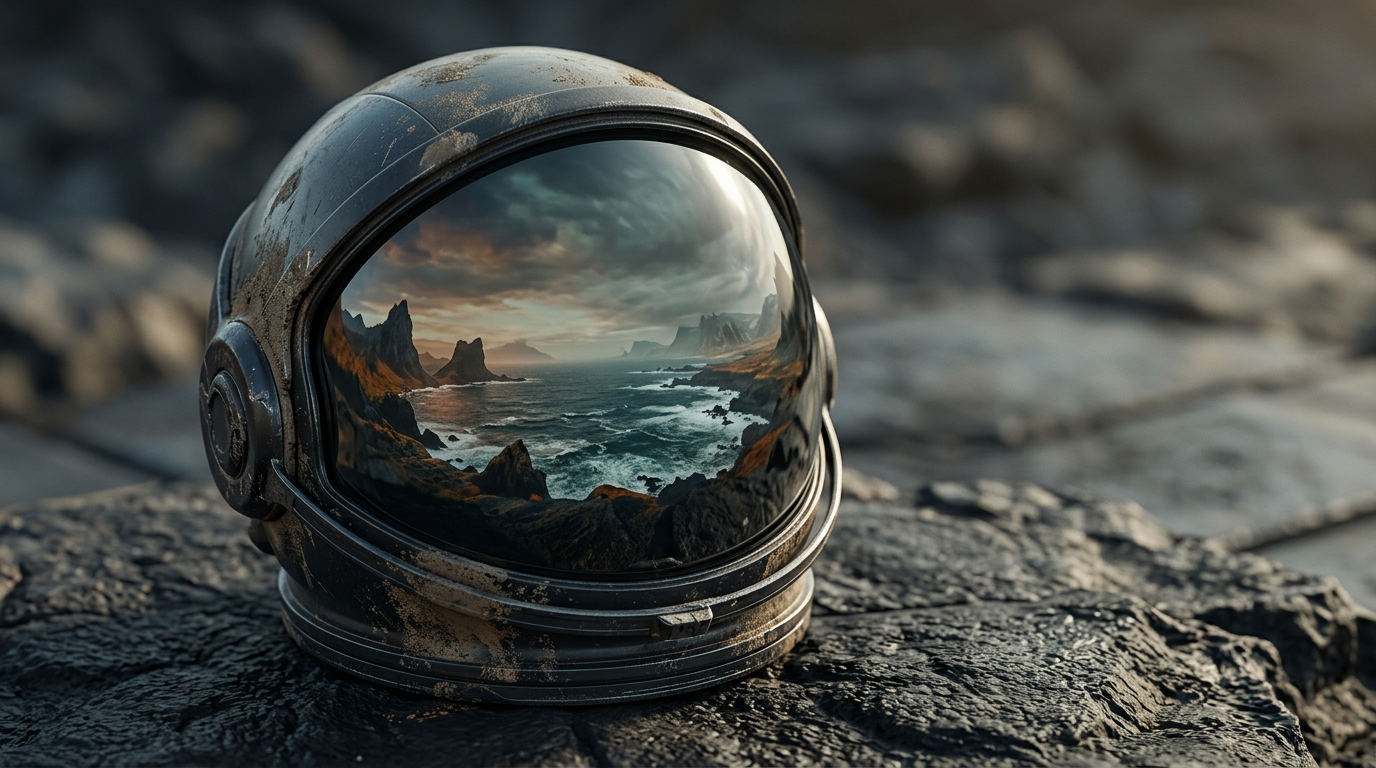
The practical-effects movement has its own bad habits. It can become a fetish. A studio says practical and a certain corner of the internet applauds before seeing the shot. But a rubber creature badly lit is still a rubber creature. A huge set shot without imagination is still dead architecture. Texture is not meaning.
There is also a conservative streak to some practical-effects nostalgia. It can mistake the past for craft and the present for compromise. That flattens the actual history. 2001: A Space Odyssey was a technical experiment. Star Wars combined model work, optical compositing, matte paintings, and reckless invention. Jurassic Park became legendary because Stan Winston’s animatronics and ILM’s CGI knew when to hand the frame to each other. The old magic was never pure. It was collaborative, opportunistic, and frequently held together by tape.
The digital side has a labor problem that viewers can now feel, even if they cannot name it. When VFX houses are squeezed by impossible deadlines and endless revisions, images lose specificity. The shot may be expensive, but it feels under-authored. Marvel fatigue has made this visible across genres, but sci-fi suffers uniquely because its promise depends on convincing us that an impossible world has internal pressure.
Television has another issue: uniform prestige gloom. Too many sci-fi series now confuse dim lighting with seriousness. Shadow can be beautiful. It can also hide unfinished work, vague geography, and timid staging. A practical corridor does not help if the blocking turns every scene into people whispering beside gray walls.
The bigger idea
The argument is really about trust. Sci-fi asks viewers to accept impossible premises: faster-than-light travel, artificial consciousness, alien ecologies, memory manipulation, simulated worlds. The image has to earn that trust before the idea can bloom.
This is where the uncanny valley matters. We usually apply it to faces, but it also applies to worlds. A digital city can be almost convincing and therefore irritating. A synthetic body can move with almost correct weight and therefore feel dead. The closer an image gets to realism without satisfying the body’s expectations, the more the viewer becomes a forensic analyst instead of a participant.
Practical effects help because they smuggle evidence into the frame. They say: this object reflected light; this actor touched it; this surface cast a shadow before the compositor arrived. CGI helps when it respects that evidence or invents a new system just as rigorous. Soft sci-fi and hard sci-fi both need rules. Dune’s sandworms and Interstellar’s black hole are very different propositions, but each works because the filmmaking treats the impossible as something with behavior.
The winner, then, is not practical effects in a museum-piece sense. The winner is material thinking. Build what should be built. Render what cannot be built. Photograph as much as possible like it has a temperature. Let the digital artists enhance authorship, not rescue indecision.
The current scoreboard
Practical effects are winning public affection because they stand for care. Full CGI is winning capability because the tools are astonishing. The best modern sci-fi refuses to choose like a zealot.
Dune: Part Two uses scale as myth. Andor uses tactility as politics. Silo uses production design as social anatomy. The Creator uses location photography to keep its robots grounded. Avatar uses digital performance to create bodies that could never exist physically. Blade Runner 2049 uses atmosphere, miniatures, sets, and VFX to make melancholy architectural. These works do not share a single method. They share a refusal to let the image become disposable.
The losers are the projects that treat world-building as wallpaper. You know the look: floating vehicles with no traffic logic, holograms that exist only to make exposition glow, armor without wear, planets without weather, rooms without ceilings, armies without tactics. Full CGI often takes the blame, but the deeper failure is conceptual. No effects pipeline can save a world no one has imagined beyond the mood board.
What to watch next if you liked this
Pairings matter here. The right double bill can make the craft argument visible.
- Dune: Part Two with Lawrence of Arabia. Not because the former copies the latter, but because both understand bodies against desert scale.
- Alien with Alien: Romulus. Watch how creature presence, sound design, and corridor geography build fear across decades.
- Jurassic Park with Avatar: The Way of Water. A clean lesson in hybrid spectacle versus fully synthetic embodiment, both controlled by filmmakers obsessed with physical behavior.
- Blade Runner 2049 with The Creator. Two different approaches to future architecture: one elegiac and monumental, the other location-driven and scrappy.
- Andor with Silo. Prestige TV sci-fi at its most tactile, where institutions are built into walls, uniforms, elevators, and workspaces.
- Ex Machina with Annihilation. Small-scale control versus biological rupture, both using effects to disturb the boundary between human and other.
For follow-up reading, try Jody Duncan’s The Winston Effect for the Stan Winston legacy, Tanya Lapointe’s The Art and Soul of Dune for Villeneuve-era design thinking, and Piers Bizony’s The Making of Stanley Kubrick’s 2001: A Space Odyssey for the old lesson that innovation usually looks impossible until someone builds a rig for it.
The verdict
Practical effects are not winning because they are older. They are winning because the best filmmakers use them to restore consequence. Full CGI is not losing because it is artificial. It loses when it forgets that even fantasy needs impact, delay, weather, and dirt.
Modern sci-fi looks strongest when pixels have to answer to matter. Give the actor a wall. Give the monster a shadow. Give the spaceship a scratch. Then let the computer do what only the computer can do: open the impossible without draining it of weight.
Discussion (0)
Loading comments…