Mickey 17 makes cloning feel grubby again
Robert Pattinson’s face has rarely looked so employable as a workplace accident.
That is the nasty little miracle of Mickey 17, Bong Joon Ho’s science-fiction comedy of errors about a man whose job is to die, get reprinted, and report back for another shift. The film is funny, broad, grotesque, and sometimes too eager to underline its own targets. But its best idea is superbly simple: cloning is not a miracle of immortality if your boss owns the machine.
Bong has never been interested in clean futures. Snowpiercer turned class structure into a train you could walk through. Okja made global food systems feel cuddly until they became industrial. Mickey 17, adapted from Edward Ashton’s novel Mickey7, pushes that same instinct into biopunk: the body as infrastructure, the body as commodity, the body as a bad contract with teeth.
This is where the movie fits into the current body horror revival. Not because it is the goriest object on the shelf. It is not. The Substance is more vicious in its beauty-industry disgust; David Cronenberg’s Crimes of the Future is more serene about surgical perversity; Brandon Cronenberg’s Possessor and Infinity Pool are colder and more psychically invasive. Mickey 17 is stranger than that lineup because it makes body horror feel bureaucratic. Its terror is not just that flesh can be copied. It is that the copy still has to clock in.
Why it matters now
Science fiction has spent years selling sleek anxieties: A.I. interfaces, immaculate starships, minimalist labs, screens glowing in blue-gray rooms. Mickey 17 drags futuristic speculation back into the mess of tissue and labor. That feels useful in 2026, when the genre is split between prestige puzzle boxes on Apple TV+, franchise maintenance on the big streamers, and a welcome theatrical revival for original sci-fi with actual texture.
Bong’s film is not hard sci-fi in the Interstellar sense. It is not fussing over orbital mechanics or the realistic economics of interstellar colonization. It is soft sci-fi with a hard political bite. Its cloning technology is less an engineering proposal than a moral stress test. If a person can be reproduced, who gets to decide which version counts? The individual? The state? The corporation? The audience, trained by decades of genre rules to accept resurrection as a plot device?
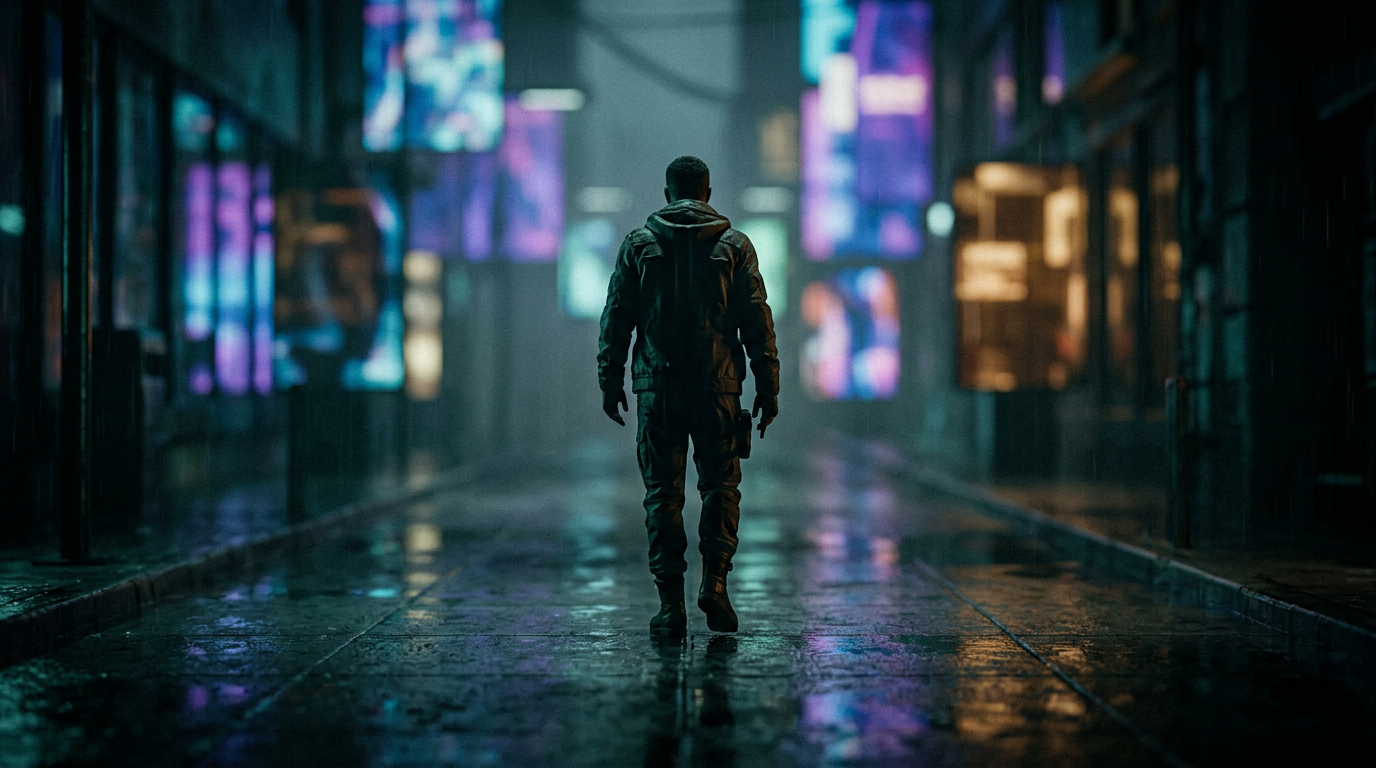
That question lands differently now because contemporary sci-fi has become obsessed with replaceable selves. Severance turns the divided worker into a corporate theology. Black Mirror has repeatedly treated consciousness as software with customer support issues. Foundation and Silo build vast systems that outlast the people trapped inside them. Mickey 17 joins that conversation, but it refuses the glassy elegance. Its future has grime in the corners. Its mise-en-scène suggests that humanity will reach the stars and still bring bad cafeteria food, ugly uniforms, political theater, and a frightening talent for making exploitation sound procedural.
The biopunk label matters here. Cyberpunk imagines bodies swallowed by networks and neon capitalism. Biopunk asks what happens when biology itself becomes the hackable platform. Mickey 17 does not make cloning look like transcendence. It makes it look like managed waste.
What it gets right
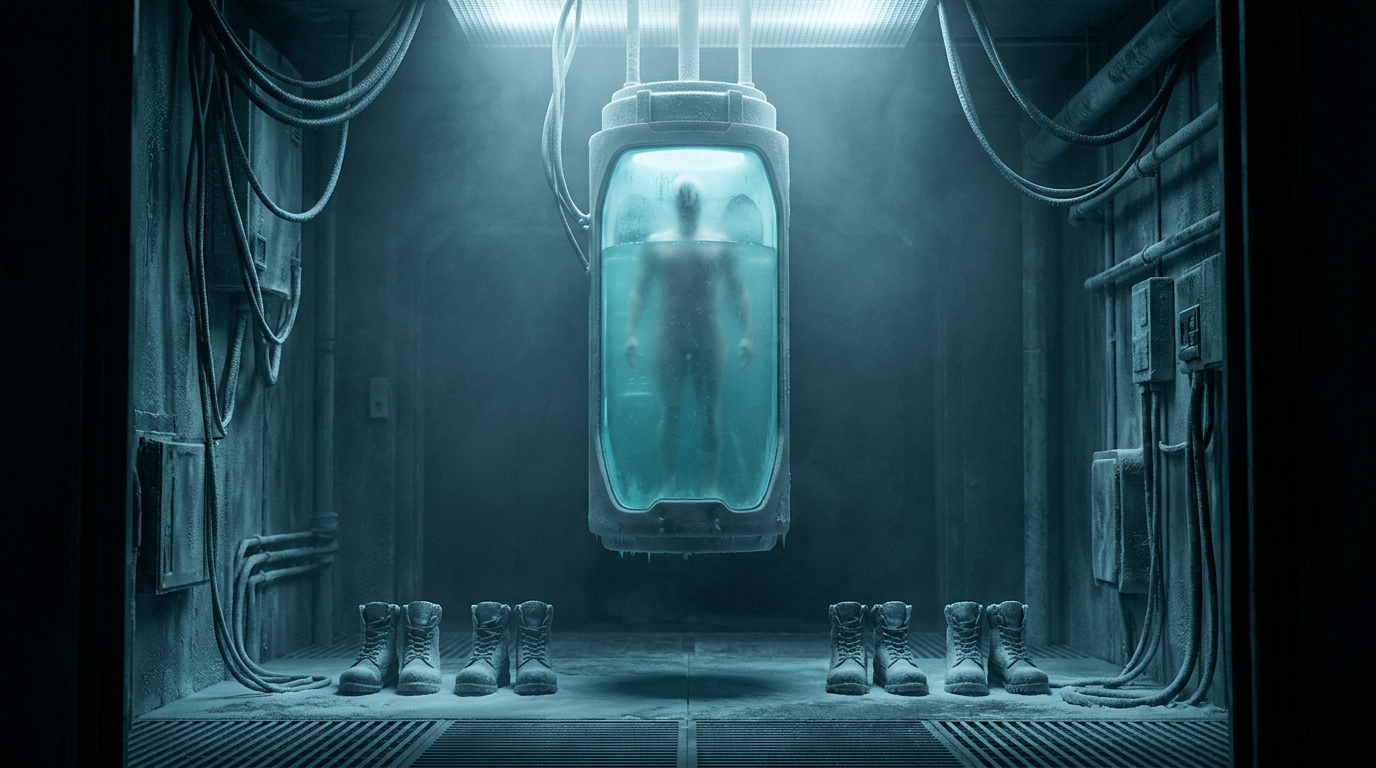
!Grimy sci-fi cloning bay with a glowing human-shaped chamber
Pattinson is the film’s great special effect, and not only because he plays variations on the same man. His Mickey is all nerves and apology, a guy whose survival instinct keeps losing arguments with his self-esteem. Pattinson has become one of the most interesting movie stars of his generation precisely because he enjoys making handsomeness look unstable. In Mickey 17, he weaponizes the tremor in his voice. He makes the character’s expendability feel comic until, quietly, it becomes obscene.
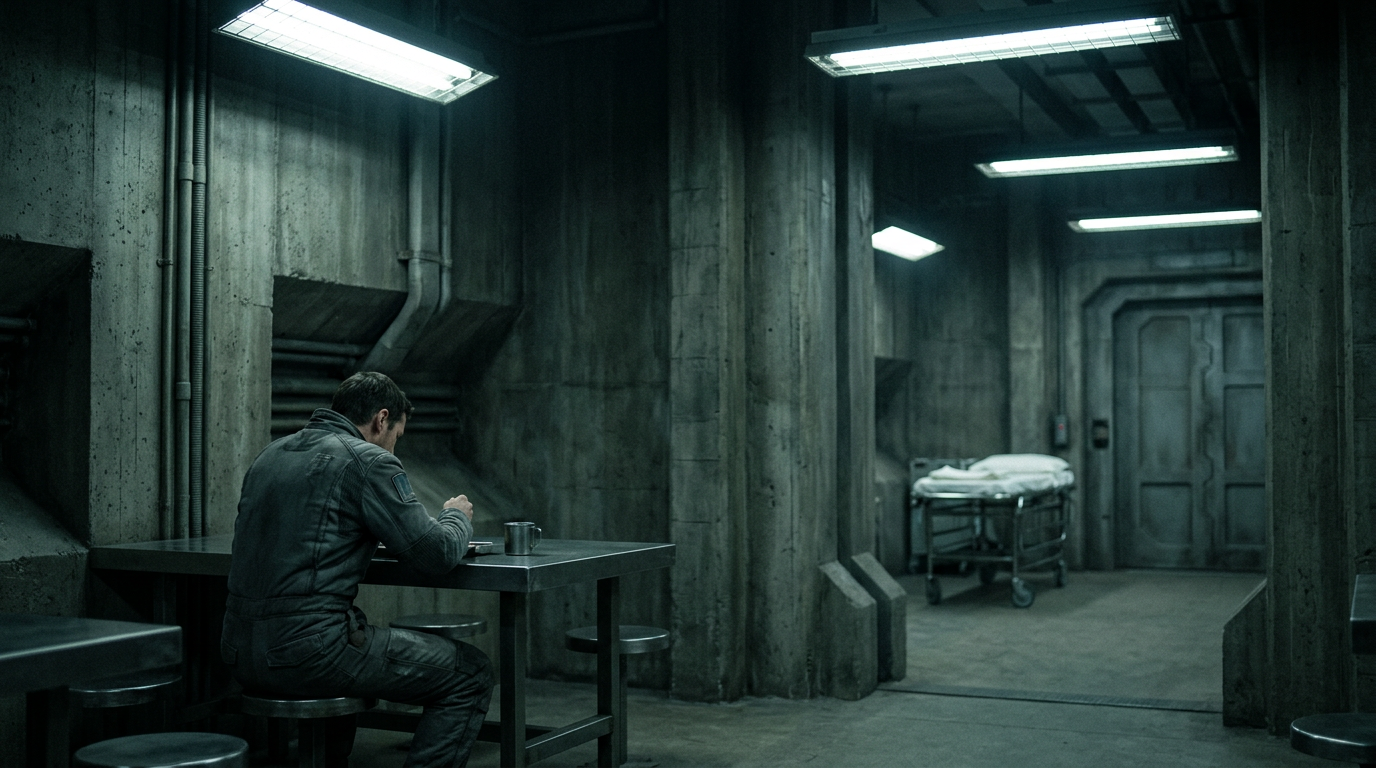
Bong’s direction understands that body horror does not need to be constant mutilation. Sometimes the horror is blocking. Mickey placed where a tool should be. Mickey discussed as inventory. Mickey treated as a malfunctioning appliance with a pulse. The film’s best scenes use space to clarify power: officials elevated, workers compressed, lab environments arranged with the cheerless logic of a slaughterhouse pretending to be a clinic.
The production design is crucial. This is not the Apple Store future. The cloning apparatus and colony interiors have a chunky, overworked quality, closer to industrial machinery than sacred technology. Even when visual effects are doing heavy lifting, the film benefits from a tactile philosophy: condensation, plastic, metal, skin, cold breath. The future looks touched, stained, and mishandled.
Bong also remembers something Hollywood often forgets when it handles speculative premises: satire needs behavior, not just concepts. Mark Ruffalo and Toni Collette push their characters into grotesque political cartoon territory, and the broadness will divide viewers. Still, the choice has a purpose. Mickey 17 is not depicting evil as cool. It depicts power as vain, needy, theatrical, and deeply stupid. That stupidity is not a bug in the system. It is one of the system’s operating conditions.
Naomi Ackie gives the film a steadier emotional register, grounding Mickey’s existential panic in something warmer and more physical. Steven Yeun, meanwhile, threads the movie’s social ladder with a different kind of desperation: the collaborator’s belief that proximity to power might count as safety. Bong has always been sharp on that type. The person who is not the villain, exactly, but helps make villainy efficient.
[SPOILERS AHEAD]
What it gets wrong / where it stumbles
Mickey 17 is not Bong’s cleanest machine. Parasite remains his most elegant work because every tonal swerve tightens the trap. Mickey 17 is baggier. It has the confidence of a filmmaker who knows he can move from slapstick to panic to disgust in a single sequence, but confidence is not the same as control.
The political satire occasionally arrives wearing a sandwich board. Ruffalo and Collette are funny, and sometimes chilling, but the film’s authoritarian buffoonery can feel over-cranked. Bong is not wrong to make fascistic charisma look ridiculous. History gives him plenty of evidence. The issue is dramatic pressure. When the grotesques get too loud, Mickey’s quieter horror risks becoming background noise.
There is also a late-film compression problem. The movie has several competing engines: clone ethics, frontier colonialism, romance, labor satire, ecological encounter, and the internal crisis of multiple selves. Bong handles most of these with flair, but the final stretch works harder to gather them into a conventional collision than the earlier, weirder material deserves. You can feel the movie negotiating with audience expectations: here is the uprising, here is the confrontation, here is the moral arithmetic made visible.
That does not wreck the film. It does make the first half feel more dangerous than the second. Mickey 17 is at its strongest when it lingers on the everyday obscenity of its premise. A man dies, returns, and everyone treats the miracle as paperwork. The larger the movie gets, the less unsettling it becomes.
The bigger idea
!Two identical figures separated by fogged laboratory glass
The obvious philosophical hook is the Ship of Theseus: if the parts are replaced, is it still the same ship? Mickey 17 gives that old problem a union-card twist. If the body is replaced, is the worker still owed the same rights? The same love? The same debts? The same grief?
The film’s answer is not abstract. It insists that continuity is not merely data. A person is not just a pattern waiting to be uploaded, printed, and redeployed. Memory matters, but so do pain, fear, appetite, humiliation, and the stubborn fact of embodiment. Bong’s body horror is moral because it refuses to let the flesh become a metaphor and nothing else.
This is why Mickey 17 sits so comfortably beside the recent wave of body-obsessed cinema. The Substance treats the body as a marketplace where youth is extracted and sold back as punishment. Crimes of the Future imagines evolution as performance art and pathology as celebrity. Titane fuses metal, desire, and identity into a feverish anti-family drama. Mickey 17 adds a workplace comedy from hell: the body as renewable resource.
Its nastiest joke is that the technology works. There is no need for a cautionary malfunction to make the premise disturbing. The cloning system does what it is designed to do. That is the horror. The machine is not rebelling against humanity. It is obeying humanity’s worst instructions.
Biopunk without the cool factor
A lot of biopunk carries a seductive sheen. Gattaca has its immaculate genetic melancholy. Annihilation has the shimmer, all fungal beauty and cellular dread. The Last of Us turns infection into ecology, with cordyceps as both monster engine and environmental revenge fantasy. Even Alien, the grandparent of so much bio-industrial terror, gives its nightmare a terrible elegance through H.R. Giger’s biomechanical design.
Mickey 17 is less elegant by design. Its biopunk is not sexy. It is damp, repetitive, procedural. That is a real contribution to the subgenre. Bong is not asking whether biotechnology will make us gods. He is asking who will clean the god machine after it jams.
The film also refuses the narcissistic version of clone storytelling, where the primary thrill is watching an actor perform against themselves. There is some of that pleasure here, and Pattinson is nimble enough to make it land. But Bong’s interest is social before it is technical. The clone is not a puzzle. The clone is a labor category.
That focus separates Mickey 17 from more metaphysical doubles stories and pulls it closer to Moon, Duncan Jones’s mournful 2009 film about isolation, extraction, and manufactured disposability. Moon is quieter; Mickey 17 is more carnivalesque. Both understand that space capitalism would not necessarily look grand. It might look like a remote worksite where the most replaceable person is the one told he is special.
What to watch next if you liked this
Pair Mickey 17 with films and shows that treat the body as contested territory rather than decoration.
- Mickey 17 and Moon: a clean double-bill about expendable labor in space. Watch how Sam Rockwell and Pattinson approach loneliness from opposite tonal directions.
- Mickey 17 and The Substance: two films about bodies turned into contracts. One attacks beauty culture; the other attacks labor systems. Both understand flesh as a battleground.
- Mickey 17 and Crimes of the Future: Bong gives you messy political farce; Cronenberg gives you surgical calm. Together, they map two poles of modern body horror.
- Mickey 17 and Snowpiercer: Bong’s class politics in two enclosed systems, one on rails and one off-world. The machinery changes. The hierarchy does not.
- Mickey 17 and Severance: not a literal genre match, but spiritually aligned. Both ask what capitalism would do if it could divide a person into usable compartments.
- Mickey 17 and Annihilation: one is bureaucratic biopunk, the other ecological mutation. Both reject the fantasy that the human body is stable.
- Mickey 17 and Scavengers Reign: for viewers interested in alien biology that feels genuinely alien, not just monster design with extra limbs.
For reading, start with Edward Ashton’s Mickey7 to see how Bong reshapes the source material’s tone and emphasis. Then go back to Mary Shelley’s Frankenstein, still the foundational text for created life and abandoned responsibility. Jeff VanderMeer’s Southern Reach trilogy is the modern literary companion for anyone drawn to biology as mystery, threat, and transformation.
The verdict
Mickey 17 is unruly, sometimes blunt, and occasionally too pleased with its own grotesques. Good. A neater version might have been less alive.
Bong’s film arrives at a moment when sci-fi is trying to recover its appetite for original, medium-budget weirdness while studios continue treating known IP as a flotation device. Mickey 17 is not a franchise seed disguised as a movie. It is a prickly, expensive, politically rude object about the oldest problem in futurism: technology changes faster than human decency.
The body horror revival has given us melting faces, surgical rituals, fungal apocalypse, synthetic youth, and identities leaking through the skin. Mickey 17 contributes something more mundane and maybe more frightening: a future where resurrection has been absorbed into management culture. Death is no longer sacred. It is not even dramatic. It is just another line item.
That is why the film lingers. Not because it predicts cloning. Because it understands the first thing we would probably do with cloning if nobody stopped us. We would turn it into a job.
Discussion (0)
Loading comments…